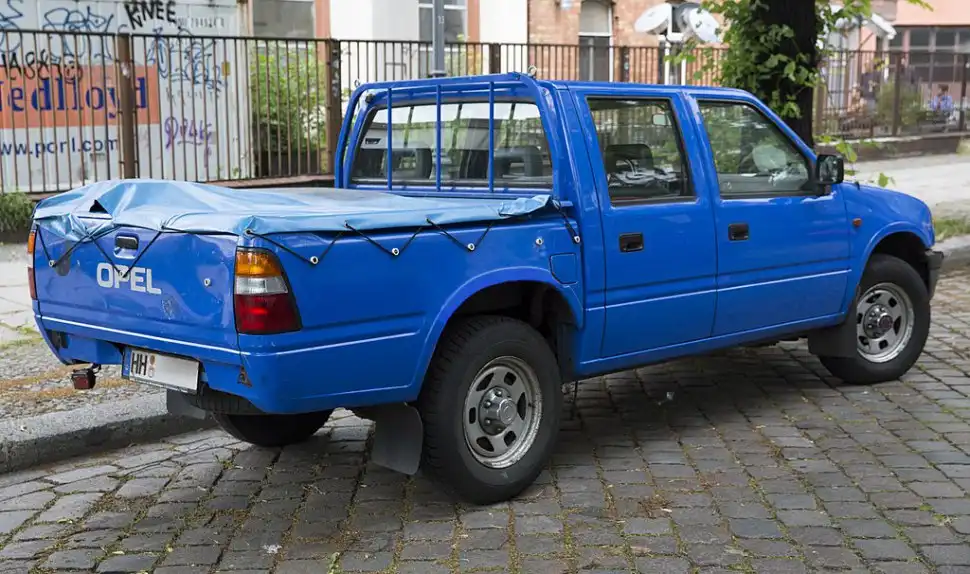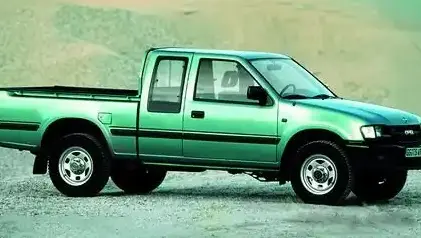
The Opel Campo Half Cab 2.3 (98 hp) 4×4 Automatic, produced between 1994 and 1995, represents a niche offering within the broader Opel Campo pickup range. Positioned as a mid-range variant, it aimed to provide a blend of utility, four-wheel drive capability, and the convenience of an automatic transmission. The Campo itself was a rebadged Isuzu Faster, a result of GM’s partnership with Isuzu, and was primarily marketed in Europe as a workhorse vehicle for both commercial and recreational use. This specific 2.3-liter, automatic configuration offered a compromise between the base models and the more powerful, though less common, diesel options.
Technical Specifications
| Brand | Opel |
| Model | Campo |
| Generation | Campo Half Cab |
| Type (Engine) | 2.3 (98 Hp) 4×4 Automatic |
| Start of production | 1994 |
| End of production | 1995 |
| Powertrain Architecture | Internal Combustion engine |
| Body type | Pick-up |
| Seats | 4 |
| Doors | 2 |
| Fuel Type | Petrol (Gasoline) |
| Power | 98 Hp @ 5000 rpm |
| Power per litre | 43.5 Hp/l |
| Engine Model/Code | 4ZD1 |
| Engine displacement | 2255 cm3 / 137.61 cu. in. |
| Number of cylinders | 4 |
| Engine configuration | Inline |
| Cylinder Bore | 89.3 mm / 3.52 in. |
| Piston Stroke | 90 mm / 3.54 in. |
| Number of valves per cylinder | 2 |
| Engine aspiration | Naturally aspirated engine |
| Valvetrain | SOHC |
| Engine oil capacity | 3.5 l / 3.7 US qt | 3.08 UK qt |
| Coolant | 9 l / 9.51 US qt | 7.92 UK qt |
| Length | 4980 mm / 196.06 in. |
| Width | 1690 mm / 66.54 in. |
| Height | 1710 mm / 67.32 in. |
| Wheelbase | 3025 mm / 119.09 in. |
| Drive wheel | All wheel drive (4×4) |
| Number of gears and type of gearbox | 4 gears, automatic transmission |
| Front suspension | Independent coil spring |
| Front brakes | Ventilated discs |
Powertrain & Engine Architecture
The heart of the Campo Half Cab 2.3 Automatic is the 4ZD1 engine, a 2.3-liter inline-four cylinder gasoline engine. This engine, sourced from Isuzu, is a relatively simple design featuring a single overhead camshaft (SOHC) valvetrain and two valves per cylinder. Fuel delivery is managed by a multi-point fuel injection system, a common setup for the era, providing a balance between efficiency and performance. The 4ZD1 engine produces 98 horsepower at 5000 rpm and a modest amount of torque, suitable for hauling moderate loads and navigating varied terrain. The automatic transmission is a four-speed unit, designed for ease of use rather than outright performance. It’s a conventional hydraulic automatic, lacking the electronic controls found in more modern transmissions.
Driving Characteristics
The driving experience in the Campo 2.3 Automatic is characterized by its utilitarian nature. The 98 hp engine, coupled with the four-speed automatic, doesn’t offer brisk acceleration. The automatic transmission’s gear ratios are geared towards providing sufficient torque for off-road situations and hauling, rather than maximizing speed. Expect a 0-60 mph time well over 12 seconds. The four-wheel drive system, selectable via a lever inside the cabin, provides enhanced traction on loose surfaces. However, it’s a part-time system, meaning it’s not intended for use on dry pavement. The suspension, while independent in the front, is tuned for durability and load-carrying capacity, resulting in a somewhat firm ride, especially when unladen. Compared to the manual transmission versions, the automatic sacrifices some responsiveness and fuel economy, but gains in driver convenience.
Equipment & Trim Levels
The Campo Half Cab 2.3 Automatic was generally equipped with a fairly basic level of features, reflecting its work-oriented purpose. Standard equipment typically included a vinyl interior, basic instrumentation, and a steering wheel. Power steering was often included, but air conditioning and power windows were usually optional extras. The “Half Cab” designation refers to the extended cab configuration, offering limited rear seating suitable for occasional passengers. Optional extras could include upgraded audio systems, alloy wheels (though rare), and a more comfortable interior trim. The trim level sat in the middle of the Campo range, above the bare-bones base models but below the more luxurious (and often diesel-powered) versions.
Chassis & Braking
The Campo’s chassis is a body-on-frame construction, typical of pickup trucks of the era. This provides a robust platform for carrying loads and tackling rough terrain. The front suspension utilizes independent coil springs, offering a degree of ride comfort and handling precision. The rear suspension is a more traditional leaf spring setup, designed for durability and load-carrying capacity. Braking is provided by ventilated discs on the front wheels and drum brakes on the rear. The braking system is adequate for the vehicle’s weight and intended use, but lacks the sophistication of more modern systems. A stabilizer bar was typically fitted to the front suspension to reduce body roll during cornering.
Market Reception & Comparison
The Opel Campo, and specifically the 2.3 Automatic variant, received mixed reviews. Critics generally praised its ruggedness and four-wheel drive capability, but noted its lack of refinement and relatively low power output. The automatic transmission was seen as a convenience feature, but also as a detriment to fuel economy and performance. Compared to its siblings, the 2.3-liter gasoline engine offered a smoother and quieter driving experience than the diesel options, but lacked their torque and fuel efficiency. The diesel models were favored by those who prioritized hauling and fuel economy, while the gasoline version appealed to those who preferred a more refined driving experience, albeit with a compromise in performance. Fuel economy was typically in the range of 18-22 mpg, depending on driving conditions.
Legacy
The Opel Campo Half Cab 2.3 Automatic, while not a high-volume seller, has developed a small but dedicated following among enthusiasts. The 4ZD1 engine is generally considered to be a reliable unit, although age and maintenance are key factors in its longevity. The automatic transmission, while not particularly sophisticated, is also reasonably durable if properly maintained. Today, these vehicles are relatively rare and are often sought after by collectors and those looking for a classic, rugged pickup truck. Parts availability can be a challenge, as many components are specific to the Isuzu Faster and Opel Campo. However, a network of enthusiasts and specialist parts suppliers exists to support these vehicles, ensuring their continued survival on the road.