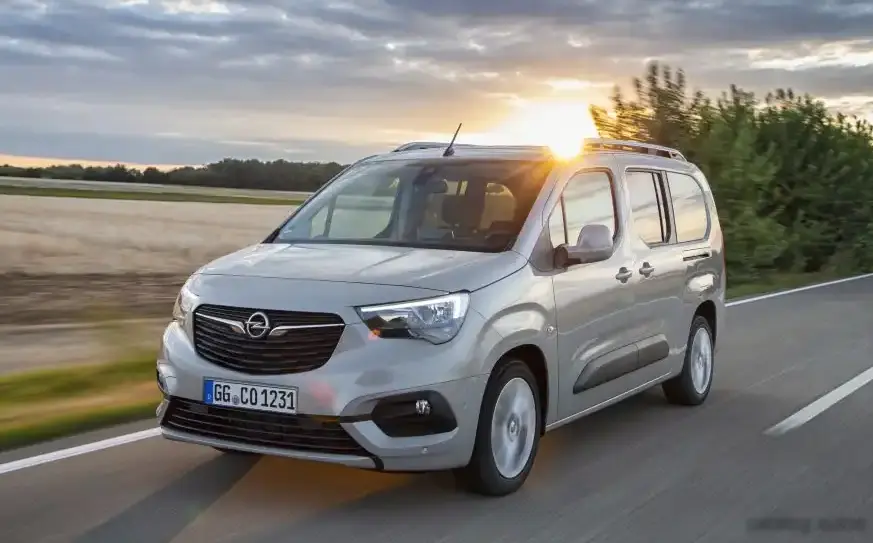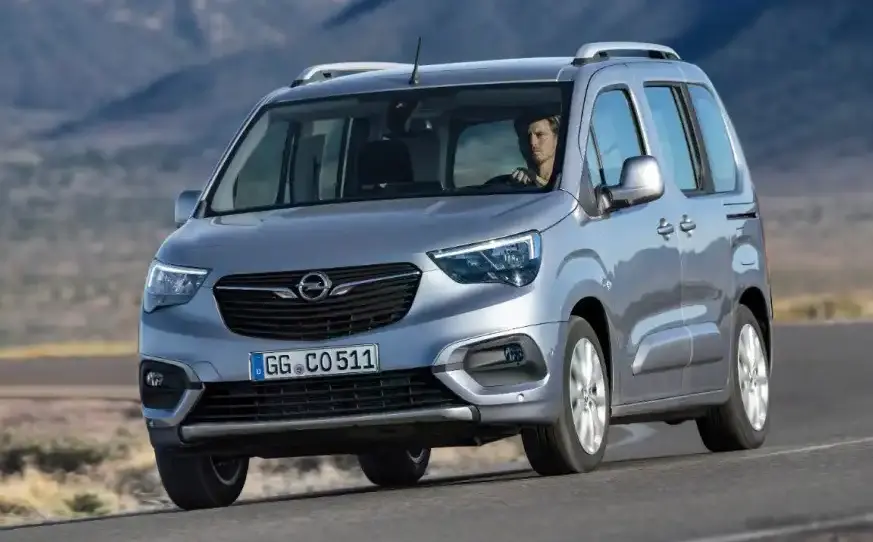
The Opel Combo Life E 1.2i (110 hp) Start/Stop is a five-seater, five-door minivan produced from September 2018 to January 2022. Part of the Combo Life E generation, this variant occupied a key position in the lineup as an entry-level to mid-range offering, appealing to buyers seeking a practical and fuel-efficient family vehicle. It’s based on the EMP2 platform shared with other PSA Group (now Stellantis) vehicles like the Citroën Berlingo and Peugeot Rifter. The Combo Life aimed to provide a spacious and versatile interior combined with reasonable running costs, making it a popular choice in European markets.
Technical Specifications
| Brand | Opel |
| Model | Combo |
| Generation | Combo Life E |
| Type (Engine) | 1.2i (110 Hp) Start/Stop |
| Start of production | September, 2018 |
| End of production | January, 2022 |
| Powertrain Architecture | Internal Combustion engine |
| Body type | Minivan |
| Seats | 5 |
| Doors | 5 |
| Fuel consumption (urban) | 6.3-6.7 l/100 km (37.3 – 35.1 US mpg, 44.8 – 42.2 UK mpg, 15.9 – 14.9 km/l) |
| Fuel consumption (extra urban) | 5.0-5.1 l/100 km (47 – 46.1 US mpg, 56.5 – 55.4 UK mpg, 20 – 19.6 km/l) |
| Fuel consumption (combined) | 5.5-5.7 l/100 km (42.8 – 41.3 US mpg, 51.4 – 49.6 UK mpg, 18.2 – 17.5 km/l) |
| CO2 emissions | 125-130 g/km |
| Fuel Type | Petrol (Gasoline) |
| Acceleration 0 – 100 km/h | 11.9 sec |
| Acceleration 0 – 62 mph | 11.9 sec |
| Acceleration 0 – 60 mph | 11.3 sec |
| Maximum speed | 175 km/h (108.74 mph) |
| Emission standard | Euro 6d |
| Power | 110 Hp @ 5500 rpm |
| Torque | 205 Nm @ 1750 rpm (151.2 lb.-ft. @ 1750 rpm) |
| Engine layout | Front, Transverse |
| Engine Model/Code | D12XHL, F12XHL |
| Engine displacement | 1199 cm3 (73.17 cu. in.) |
| Number of cylinders | 3 |
| Engine configuration | Inline |
| Number of valves per cylinder | 4 |
| Fuel injection system | Direct injection |
| Engine aspiration | Turbocharger, Intercooler |
| Engine oil capacity | 3.5 l (3.7 US qt | 3.08 UK qt) |
| Coolant capacity | 5.7 l (6.02 US qt | 5.02 UK qt) |
| Trunk (boot) space – minimum | 597 l (21.08 cu. ft.) |
| Trunk (boot) space – maximum | 2126 l (75.08 cu. ft.) |
| Fuel tank capacity | 60 l (15.85 US gal | 13.2 UK gal) |
| Max. roof load | 100 kg (220.46 lbs.) |
| Permitted trailer load with brakes (12%) | 1150 kg (2535.32 lbs.) |
| Permitted trailer load without brakes | 600 kg (1322.77 lbs.) |
| Length | 4403 mm (173.35 in.) |
| Width | 1848 mm (72.76 in.) |
| Width with mirrors folded | 1921 mm (75.63 in.) |
| Width including mirrors | 2107 mm (82.95 in.) |
| Height | 1841 mm (72.48 in.) |
| Wheelbase | 2785 mm (109.65 in.) |
| Front track | 1553 mm (61.14 in.) |
| Rear track | 1567 mm (61.69 in.) |
| Front overhang | 892 mm (35.12 in.) |
| Rear overhang | 726 mm (28.58 in.) |
| Minimum turning circle | 10.8-11.0 m (35.43 – 36.09 ft.) |
| Wading depth | 584 mm (22.99 in.) |
| Drivetrain | Front wheel drive |
| Number of gears | 6 |
| Gearbox type | Manual transmission |
| Assisting systems | ABS (Anti-lock braking system) |
| Tires size | 205/60 R16; 205/55 R17 |
| Wheel rims size | 6.5J x 16; 7J x 17 |
Powertrain & Engine Architecture
The Combo Life E 1.2i (110 hp) utilizes the PSA/Stellantis EB2 family of three-cylinder, turbocharged gasoline engines. Specifically, the engine codes D12XHL or F12XHL are commonly found in this variant. This engine features direct fuel injection, a single overhead camshaft (SOHC) with four valves per cylinder, and an integrated exhaust manifold for improved turbocharger response. The turbocharger and intercooler work together to boost power and efficiency. The Start/Stop system, standard on this model, automatically shuts off the engine when the vehicle is stationary to conserve fuel. The engine is transversely mounted at the front of the vehicle. The 6-speed manual transmission was the standard offering, providing a balance between fuel economy and drivability. The gear ratios are tuned for everyday use, prioritizing acceleration in lower gears and comfortable cruising at highway speeds.
Driving Characteristics
The 110 hp 1.2-liter engine, paired with the 6-speed manual transmission, delivers adequate performance for typical daily driving. Acceleration from 0-60 mph takes around 11.3 seconds, and the top speed is 175 km/h (108.74 mph). While not particularly sporty, the engine provides sufficient torque (205 Nm or 151.2 lb.-ft.) at low to mid-range RPMs, making it suitable for city driving and overtaking maneuvers. Compared to higher-output versions of the Combo Life, or diesel variants, this engine feels less powerful, especially when fully loaded with passengers and cargo. However, it offers a smoother and quieter driving experience than the diesel options. The manual transmission allows for greater driver control, but requires more engagement than an automatic.
Equipment & Trim Levels
The 1.2i (110 hp) Start/Stop variant typically came equipped with a reasonable level of standard features. These included air conditioning, a touchscreen infotainment system with Bluetooth connectivity, USB ports, and basic safety features like ABS, ESP (Electronic Stability Program), and multiple airbags. Higher trim levels offered additional features such as a larger touchscreen, navigation system, rear parking sensors, cruise control, and automatic climate control. Interior upholstery was typically cloth, with options for upgraded materials on higher trims. The dashboard layout was functional and straightforward, prioritizing usability over luxury.
Chassis & Braking
The Combo Life E utilizes a conventional front-wheel-drive chassis with MacPherson strut suspension at the front and a torsion beam suspension at the rear. This setup provides a comfortable ride quality, although it’s not as refined as more sophisticated independent rear suspension systems. The braking system consists of disc brakes on the front wheels and drum brakes on the rear wheels. ABS (Anti-lock Braking System) is standard, enhancing braking performance and stability. The steering is electrically assisted, providing light and easy steering feel.
Market Reception & Comparison
The Opel Combo Life E 1.2i (110 hp) Start/Stop was generally well-received by critics as a practical and affordable family vehicle. It was praised for its spacious interior, fuel efficiency, and comfortable ride. However, some reviewers noted that the engine could feel underpowered when fully loaded. Compared to the diesel variants, the 1.2-liter gasoline engine offered lower running costs in terms of fuel price, but potentially higher maintenance costs over the long term. The manual transmission was seen as a positive by driving enthusiasts, but some buyers preferred the convenience of an automatic.
Legacy
The 1.2-liter turbocharged engine has proven to be relatively reliable, although regular maintenance is crucial. Common issues include turbocharger wear and potential problems with the direct injection system. The Combo Life E, in general, has established a reputation as a durable and practical vehicle. On the used car market, this variant represents a good value proposition for buyers seeking an affordable and spacious family vehicle. Its fuel efficiency and relatively low running costs make it an attractive option for those on a budget. The availability of spare parts and a widespread dealer network contribute to its continued appeal.