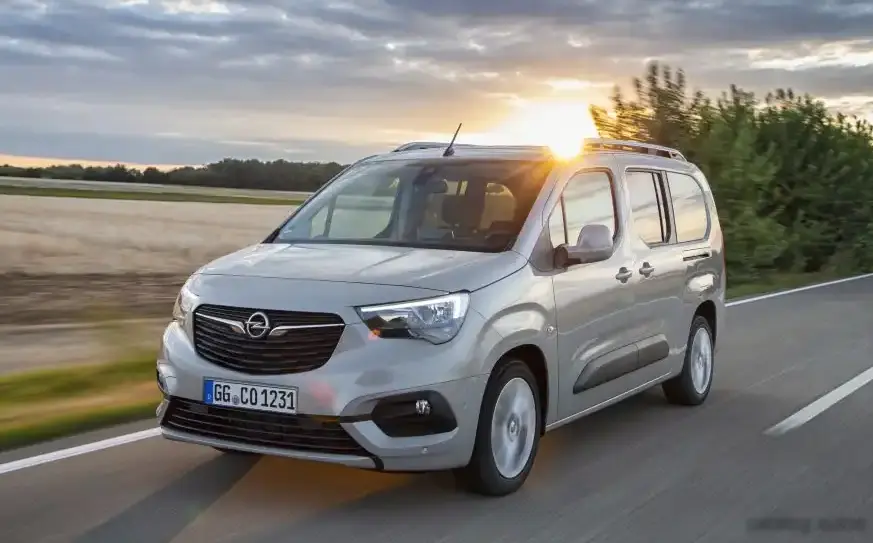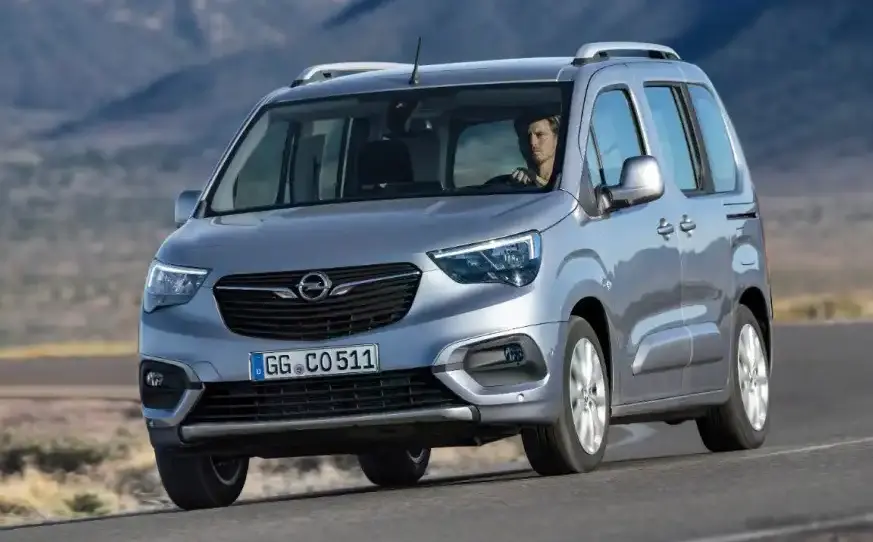
The Opel Combo Life E 1.5d (130 hp) Start/Stop is a compact minivan produced from September 2018 to January 2022. Part of the Combo Life E generation, it represents Opel’s entry into the leisure activity vehicle (LAV) segment, sharing its platform and many components with the Citroën Berlingo and Peugeot Rifter. This variant, powered by a 1.5-liter turbocharged diesel engine, was positioned as a practical and fuel-efficient option for families and those needing versatile cargo space. It aimed to bridge the gap between basic commercial van functionality and the comfort of a passenger vehicle.
Technical Specifications
| Brand | Opel |
| Model | Combo |
| Generation | Combo Life E |
| Type (Engine) | 1.5d (130 Hp) Start/Stop |
| Start of production | September, 2018 |
| End of production | January, 2022 |
| Powertrain Architecture | Internal Combustion engine |
| Body type | Minivan |
| Seats | 5 |
| Doors | 5 |
| Fuel consumption (urban) | 4.8-4.9 l/100 km (49-48 US mpg, 58.9-57.6 UK mpg, 20.8-20.4 km/l) |
| Fuel consumption (extra urban) | 4.0-4.3 l/100 km (58.8-54.7 US mpg, 70.6-65.7 UK mpg, 25-23.3 km/l) |
| Fuel consumption (combined) | 4.3-4.5 l/100 km (54.7-52.3 US mpg, 65.7-62.8 UK mpg, 23.3-22.2 km/l) |
| CO2 emissions | 113-118 g/km |
| Fuel Type | Diesel |
| Acceleration 0 – 100 km/h | 10.6 sec |
| Acceleration 0 – 62 mph | 10.6 sec |
| Acceleration 0 – 60 mph | 10.1 sec |
| Maximum speed | 185 km/h (114.95 mph) |
| Emission standard | Euro 6d |
| Power | 130 Hp @ 3750 rpm |
| Torque | 300 Nm @ 1750 rpm (221.27 lb.-ft. @ 1750 rpm) |
| Engine layout | Front, Transverse |
| Engine Model/Code | D15DTH, F15DTH |
| Engine displacement | 1499 cm3 (91.47 cu. in.) |
| Number of cylinders | 4 |
| Engine configuration | Inline |
| Number of valves per cylinder | 4 |
| Fuel injection system | Diesel Commonrail |
| Engine aspiration | Turbocharger, Intercooler |
| Engine oil capacity | 4 l (4.23 US qt | 3.52 UK qt) |
| Trunk (boot) space – minimum | 597 l (21.08 cu. ft.) |
| Trunk (boot) space – maximum | 2126 l (75.08 cu. ft.) |
| Fuel tank capacity | 50 l (13.21 US gal | 11 UK gal) |
| AdBlue tank | 17 l (4.49 US gal | 3.74 UK gal) |
| Max. roof load | 100 kg (220.46 lbs.) |
| Permitted trailer load with brakes (12%) | 1500 kg (3306.93 lbs.) |
| Permitted trailer load without brakes | 600 kg (1322.77 lbs.) |
| Length | 4403 mm (173.35 in.) |
| Width | 1848 mm (72.76 in.) |
| Width with mirrors folded | 1921 mm (75.63 in.) |
| Width including mirrors | 2107 mm (82.95 in.) |
| Height | 1841 mm (72.48 in.) |
| Wheelbase | 2785 mm (109.65 in.) |
| Front track | 1553 mm (61.14 in.) |
| Rear (Back) track | 1567 mm (61.69 in.) |
| Front overhang | 892 mm (35.12 in.) |
| Rear overhang | 726 mm (28.58 in.) |
| Minimum turning circle | 10.8-11.0 m (35.43 – 36.09 ft.) |
| Wading depth | 584 mm (22.99 in.) |
| Drivetrain Architecture | Front wheel drive |
| Number of gears and type of gearbox | 6 gears, manual transmission |
| Assisting systems | ABS (Anti-lock braking system) |
| Tires size | 205/60 R16; 205/55 R17 |
| Wheel rims size | 6.5J x 16; 7J x 17 |
Powertrain & Engine Architecture
The heart of the Combo Life E 1.5d (130 hp) is the D15DTH or F15DTH engine, a 1.5-liter inline-four cylinder diesel. This engine is part of Opel’s (and PSA Group’s) modular engine family, known for its compact design and efficiency. It utilizes a common rail direct injection system, delivering fuel directly into the combustion chamber at extremely high pressure for optimized combustion. The engine is turbocharged and intercooled, enhancing power output and torque. The Start/Stop system, standard on this variant, automatically shuts off the engine when the vehicle is stationary to reduce fuel consumption and emissions. The 6-speed manual transmission was the only transmission option available for this configuration, prioritizing fuel economy over outright performance.
Driving Characteristics
The 130 hp diesel engine, coupled with the 6-speed manual gearbox, provides adequate performance for everyday driving. Acceleration from 0-60 mph takes around 10.1 seconds, and the top speed is 114.95 mph. While not particularly sporty, the engine delivers a respectable amount of torque (300 Nm or 221 lb-ft) from 1750 rpm, making it suitable for carrying passengers and cargo. The gear ratios are tuned for fuel efficiency, meaning the engine needs to be revved slightly to access its full power. Compared to higher-output versions of the Combo Life, or those equipped with automatic transmissions, this variant feels less responsive but offers better fuel economy.
Equipment & Trim Levels
The Combo Life E 1.5d (130 hp) Start/Stop typically came with a reasonable level of standard equipment. This included air conditioning, a touchscreen infotainment system with Bluetooth connectivity, USB ports, and basic safety features like ABS, ESP (Electronic Stability Program), and multiple airbags. Higher trim levels offered options such as a larger touchscreen, navigation system, rear parking sensors, cruise control, and automatic climate control. Interior upholstery was typically cloth, with options for upgraded materials. The van’s modular interior allowed for flexible seating configurations and ample cargo space.
Chassis & Braking
The Combo Life E utilizes a conventional front-wheel-drive layout with a MacPherson strut front suspension and a torsion beam rear suspension. This setup provides a comfortable ride quality, although it’s not particularly sporty. The braking system consists of disc brakes on the front wheels and drum brakes on the rear wheels. ABS (Anti-lock Braking System) is standard, enhancing braking performance and stability. The suspension is tuned to prioritize comfort and practicality, making it well-suited for carrying loads and navigating urban environments.
Market Reception & Comparison
The Opel Combo Life E 1.5d (130 hp) Start/Stop was generally well-received by critics for its practicality, fuel efficiency, and spacious interior. It was seen as a strong competitor to other compact minivans like the Volkswagen Caddy and Renault Kangoo. Compared to the petrol-powered versions of the Combo Life, the diesel variant offered significantly better fuel economy. However, some critics noted that the engine could be somewhat noisy and that the manual transmission wasn’t as refined as those found in more premium vehicles. The 130 hp output was considered adequate for most users, but those needing more power or preferring an automatic transmission would likely opt for a different trim level.
Legacy
The 1.5-liter diesel engine used in the Combo Life E has proven to be relatively reliable, although, like all diesel engines, it requires regular maintenance, including oil changes and filter replacements. The Start/Stop system can sometimes experience issues with the dual-mass flywheel, which can be a costly repair. On the used car market, the Combo Life E 1.5d (130 hp) Start/Stop represents a good value proposition for buyers seeking a practical and fuel-efficient minivan. Its spacious interior, versatile seating configurations, and reasonable running costs make it a popular choice for families and small businesses.