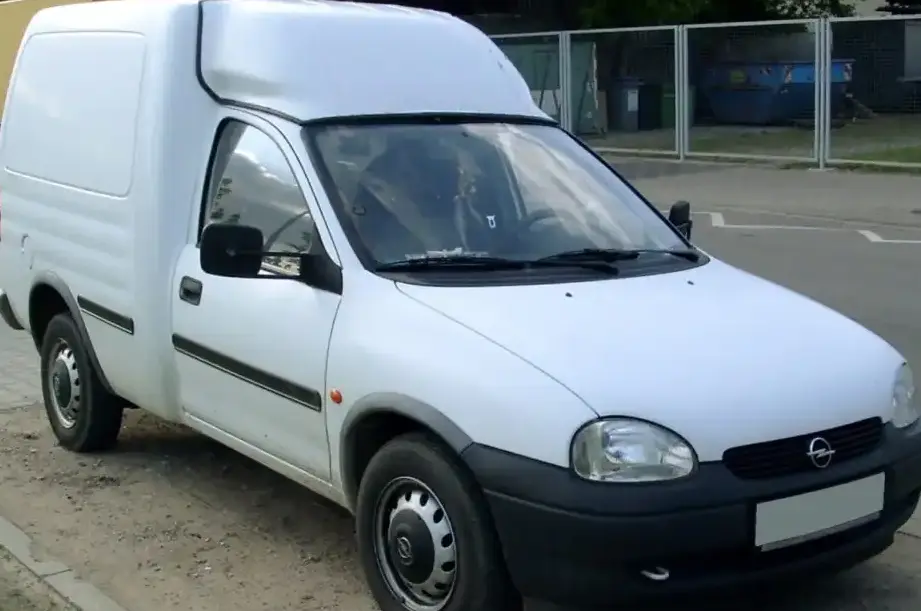
The Opel Combo Tour B 1.7 D (75 hp) was a utilitarian light commercial vehicle produced from October 1993 to June 2001. Part of the Combo Tour B generation, this variant served as an entry-level workhorse, primarily aimed at businesses and tradespeople requiring a compact and affordable van or pickup. It was based on the Corsa B platform, sharing many components with its passenger car sibling. The 1.7 D model occupied the lower end of the Combo Tour B range, offering a diesel-powered option focused on fuel efficiency and durability rather than outright performance. It was typically available as a panel van, crew cab, or pickup, catering to diverse commercial needs.
Technical Specifications
| Brand | Opel |
| Model | Combo |
| Generation | Combo Tour B |
| Type (Engine) | 1.7 D (75 Hp) |
| Start of production | October, 1993 |
| End of production | June, 2001 |
| Powertrain Architecture | Internal Combustion engine |
| Body type | Pick-up |
| Seats | 2 |
| Doors | 3 |
| Fuel Type | Diesel |
| Power | 75 Hp @ 4400 rpm |
| Power per litre | 44.5 Hp/l |
| Torque | 165 Nm @ 1800 rpm / 121.7 lb.-ft. @ 1800 rpm |
| Engine layout | Front, Transverse |
| Engine Model/Code | 17D, X17D |
| Engine displacement | 1686 cm3 / 102.89 cu. in. |
| Number of cylinders | 4 |
| Engine configuration | Inline |
| Cylinder Bore | 79 mm / 3.11 in. |
| Piston Stroke | 86 mm / 3.39 in. |
| Compression ratio | 18.4:1 |
| Number of valves per cylinder | 4 |
| Fuel injection system | Precombustion chamber injection |
| Engine aspiration | Turbocharger |
| Engine oil capacity | 3.5 l / 3.7 US qt | 3.08 UK qt |
| Coolant | 5.8 l / 6.13 US qt | 5.1 UK qt |
| Trunk (boot) space – maximum | 3000 l / 105.94 cu. ft. |
| Fuel tank capacity | 52 l / 13.74 US gal | 11.44 UK gal |
| Length | 4230 mm / 166.54 in. |
| Width | 1686 mm / 66.38 in. |
| Height | 1805 mm / 71.06 in. |
| Wheelbase | 2480 mm / 97.64 in. |
| Front track | 1387 mm / 54.61 in. |
| Rear (Back) track | 1427 mm / 56.18 in. |
| Ride height (ground clearance) | 160 mm / 6.3 in. |
| Drivetrain Architecture | The Internal combustion engine (ICE) drives the front wheels of the vehicle. |
| Drive wheel | Front wheel drive |
| Number of gears and type of gearbox | 5 gears, manual transmission |
Powertrain & Engine Architecture
The heart of the Combo Tour B 1.7 D was the Opel/Isuzu 17D engine, also known as the X17D. This 1.7-liter inline-four diesel engine utilized a precombustion chamber injection system, a common technology for diesel engines of that era. This system involved injecting fuel into a precombustion chamber connected to the main cylinder, promoting more complete combustion and reducing noise. The engine was turbocharged, which helped to boost power output to 75 horsepower at 4400 rpm and 165 Nm (121.7 lb-ft) of torque at 1800 rpm. The engine’s robust construction and relatively simple design contributed to its reputation for reliability. The 17D engine was known for its durability, but also for its relatively noisy operation and modest performance. The engine was transversely mounted in the front of the vehicle, driving the front wheels.
Driving Characteristics
The 1.7 D-powered Combo Tour B was not designed for speed. Its 75 horsepower and 165 Nm of torque provided adequate, but not exhilarating, performance. Acceleration was slow, and overtaking required careful planning. The five-speed manual transmission was well-matched to the engine’s characteristics, with gear ratios optimized for fuel efficiency and low-end torque. The focus was on providing a reliable and economical work vehicle, rather than a sporty driving experience. Compared to higher-spec Combo models with gasoline engines, the 1.7 D offered significantly less power but superior fuel economy. The turbocharger did provide a noticeable boost in power at lower engine speeds, improving drivability around town and when carrying a load.
Equipment & Trim Levels
The Combo Tour B 1.7 D was typically offered in a basic trim level, reflecting its position as an entry-level commercial vehicle. Standard equipment generally included a driver’s airbag, power steering, and a basic instrument cluster. The interior was functional and durable, with hard-wearing plastic trim and cloth upholstery. Options were limited, but could include a radio/cassette player, upgraded seats, and additional security features. The emphasis was on practicality and affordability, with minimal frills. The pickup version often featured a steel load bed with tie-down points, while the panel van offered a configurable cargo area.
Chassis & Braking
The Combo Tour B utilized a simple yet effective chassis design. It featured independent suspension at the front, typically using MacPherson struts, and a twist-beam rear suspension. The braking system consisted of disc brakes at the front and drum brakes at the rear. The suspension was tuned for comfort and load-carrying capacity, rather than sporty handling. Stabilizer bars were often omitted on the base models to keep costs down. The relatively simple suspension setup contributed to the vehicle’s affordability and ease of maintenance. The braking performance was adequate for the vehicle’s weight and intended use, but not particularly powerful.
Market Reception & Comparison
The Opel Combo Tour B 1.7 D was well-received in the commercial vehicle market as a practical and affordable option. Critics praised its fuel efficiency, durability, and low running costs. However, it was also criticized for its lack of power and refinement. Compared to other light commercial vehicles of the time, such as the Citroën Berlingo and Renault Kangoo, the Combo offered a competitive price point and a robust diesel engine. The 1.7 D variant was particularly popular with businesses that prioritized economy over performance. The gasoline-powered Combo models offered more power and a smoother driving experience, but at the expense of fuel efficiency.
Legacy
The Opel Combo Tour B 1.7 D has become a popular choice among classic commercial vehicle enthusiasts and those seeking a reliable and affordable workhorse. The 17D engine is known for its longevity, and many examples are still in use today. Parts availability is generally good, and maintenance is relatively straightforward. While not a particularly glamorous vehicle, the Combo Tour B 1.7 D represents a practical and durable solution for light commercial transport. Its simple design and robust construction have ensured its continued relevance in the used vehicle market, making it a dependable option for those seeking a no-frills, economical van or pickup.