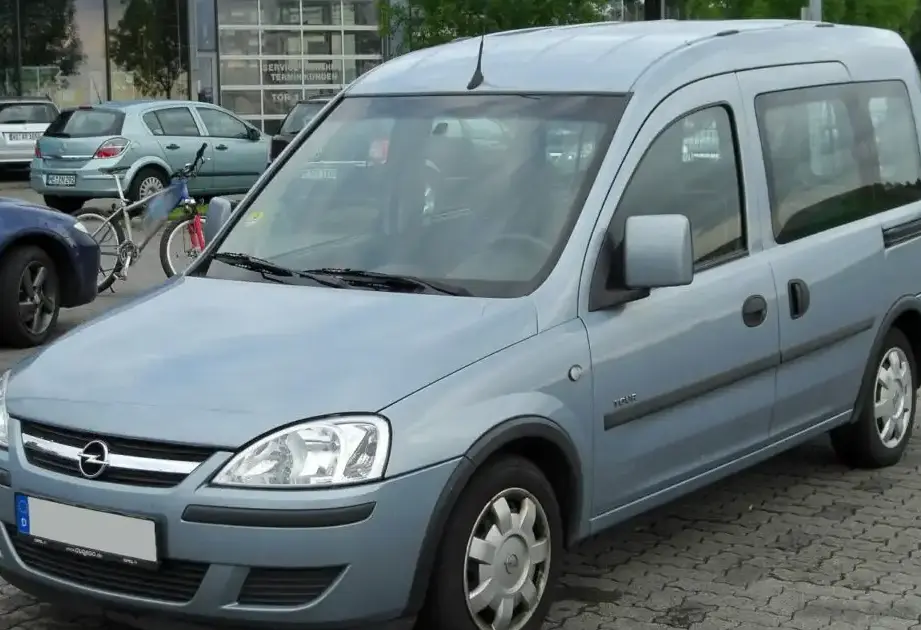
The Opel Combo Tour C (facelifted in 2003) 1.3 CDTI 75 hp variant, produced from November 2005 to September 2010, represented an entry-level offering within the broader Combo Tour C range. Positioned as a practical and economical choice, this version catered to buyers prioritizing fuel efficiency and affordability over outright performance. It was primarily sold in European markets, serving as a compact van ideal for small businesses, families, and those needing a versatile vehicle for both passenger and light cargo duties. The Combo Tour C itself was based on the Fiat Doblo, a result of the partnership between General Motors and Fiat, and shared many components with its Italian counterpart.
Technical Specifications
| Brand | Opel |
| Model | Combo |
| Generation | Combo Tour C (facelift 2003) |
| Type (Engine) | 1.3 CDTI (75 Hp) |
| Start of production | November, 2005 |
| End of production | September, 2010 |
| Powertrain Architecture | Internal Combustion engine |
| Body type | Minivan |
| Seats | 5 |
| Doors | 5 |
| Fuel consumption (urban) | 6.5 l/100 km (36.2 US mpg, 43.5 UK mpg, 15.4 km/l) |
| Fuel consumption (extra urban) | 4.3 l/100 km (54.7 US mpg, 65.7 UK mpg, 23.3 km/l) |
| Fuel consumption (combined) | 5.1 l/100 km (46.1 US mpg, 55.4 UK mpg, 19.6 km/l) |
| Fuel Type | Diesel |
| Acceleration 0 – 100 km/h | 17 sec |
| Acceleration 0 – 62 mph | 17 sec |
| Acceleration 0 – 60 mph | 16.2 sec |
| Maximum speed | 152 km/h (94.45 mph) |
| Weight-to-power ratio | 17 kg/Hp, 58.7 Hp/tonne |
| Weight-to-torque ratio | 7.5 kg/Nm, 133 Nm/tonne |
| Power | 75 Hp @ 4000 rpm |
| Power per litre | 60.1 Hp/l |
| Torque | 170 Nm @ 1750 rpm (125.39 lb.-ft. @ 1750 rpm) |
| Engine layout | Front, Transverse |
| Engine Model/Code | Z13DTJ |
| Engine displacement | 1248 cm3 (76.16 cu. in.) |
| Number of cylinders | 4 |
| Engine configuration | Inline |
| Cylinder Bore | 69.6 mm (2.74 in.) |
| Piston Stroke | 82 mm (3.23 in.) |
| Compression ratio | 18:1 |
| Number of valves per cylinder | 4 |
| Fuel injection system | Diesel Commonrail |
| Engine aspiration | Turbocharger, Intercooler |
| Valvetrain | DOHC |
| Engine oil capacity | 3.3 l (3.49 US qt | 2.9 UK qt) |
| Coolant | 6.3 l (6.66 US qt | 5.54 UK qt) |
| Kerb Weight | 1278 kg (2817.51 lbs.) |
| Max. weight | 1815 kg (4001.39 lbs.) |
| Max load | 537 kg (1183.88 lbs.) |
| Trunk (boot) space – minimum | 455 l (16.07 cu. ft.) |
| Trunk (boot) space – maximum | 2700 l (95.35 cu. ft.) |
| Fuel tank capacity | 52 l (13.74 US gal | 11.44 UK gal) |
| Length | 4322 mm (170.16 in.) |
| Width | 1684 mm (66.3 in.) |
| Width including mirrors | 1892 mm (74.49 in.) |
| Height | 1801 mm (70.91 in.) |
| Wheelbase | 2716 mm (106.93 in.) |
| Front track | 1417 mm (55.79 in.) |
| Rear (Back) track | 1440 mm (56.69 in.) |
| Front overhang | 747 mm (29.41 in.) |
| Rear overhang | 859 mm (33.82 in.) |
| Ride height (ground clearance) | 160 mm (6.3 in.) |
| Drivetrain Architecture | The Internal combustion engine (ICE) drives the front wheels of the vehicle. |
| Drive wheel | Front wheel drive |
| Number of gears and type of gearbox | 5 gears, manual transmission |
| Front suspension | Spring Strut |
| Rear suspension | Coil spring |
| Front brakes | Ventilated discs |
| Rear brakes | Drum |
| Assisting systems | ABS (Anti-lock braking system) |
| Steering type | Steering rack and pinion |
| Power steering | Electric Steering |
| Tires size | 185/60 R15 |
| Wheel rims size | 6J x 15 |
Powertrain & Engine Architecture
The heart of this Combo variant is the Z13DTJ engine, a 1.3-liter inline-four cylinder diesel. This engine is part of Opel/Fiat’s family of small-displacement diesel engines, known for their fuel efficiency. The Z13DTJ utilizes a common rail direct injection system, delivering fuel directly into the combustion chamber at extremely high pressure. This, combined with a turbocharger and intercooler, helps to maximize power output and torque while minimizing emissions. The engine features a double overhead camshaft (DOHC) valvetrain with four valves per cylinder, contributing to improved breathing and overall efficiency. The 5-speed manual transmission was the standard offering, chosen for its simplicity and cost-effectiveness. The transmission’s gear ratios were tuned for economy rather than outright acceleration, prioritizing fuel savings in everyday driving conditions.
Driving Characteristics
The 75 hp output of the 1.3 CDTI engine, coupled with the 5-speed manual transmission, resulted in a driving experience focused on practicality rather than performance. Acceleration was modest, taking approximately 17 seconds to reach 62 mph. The engine’s 170 Nm (125 lb-ft) of torque, available from 1750 rpm, provided adequate pulling power for everyday driving and light cargo hauling. However, overtaking maneuvers required careful planning. Compared to higher-output versions of the Combo, such as those equipped with the 1.7 CDTI engine, this variant felt noticeably slower. The gear ratios were relatively long, further emphasizing fuel economy over responsiveness. The vehicle’s weight, around 1278 kg (2817 lbs), also contributed to the leisurely pace.
Equipment & Trim Levels
The 1.3 CDTI 75 hp Combo Tour C typically came with a basic level of equipment. Standard features generally included power steering, ABS brakes, a driver’s airbag, and basic cloth upholstery. Air conditioning was often an optional extra, as were features like electric windows and a radio/CD player. The interior was designed with practicality in mind, featuring durable materials and a functional layout. Trim levels were relatively limited, with most vehicles being equipped with the essential features for commercial or family use. Optional extras often included upgraded audio systems, alloy wheels, and parking sensors.
Chassis & Braking
The Combo Tour C utilized a relatively simple chassis design. Front suspension consisted of MacPherson struts, while the rear employed a coil spring setup. This configuration provided a reasonable balance between ride comfort and handling. Braking duties were handled by ventilated discs at the front and drum brakes at the rear. While adequate for the vehicle’s weight and performance, the drum brakes on the rear wheels were a cost-saving measure and didn’t offer the same stopping power as disc brakes. The steering was rack and pinion, providing reasonably precise control. Stabilizer bars were typically fitted to improve handling and reduce body roll.
Market Reception & Comparison
The Opel Combo Tour C 1.3 CDTI 75 hp was generally well-received as an affordable and economical workhorse. Critics praised its fuel efficiency and practicality, but noted its lack of outright performance. Compared to other engines in the Combo lineup, such as the 1.7 CDTI, this variant offered lower running costs but at the expense of power and refinement. Against competitors like the Renault Kangoo and Citroen Berlingo, the Combo offered a competitive package in terms of price and fuel economy. However, some rivals offered more sophisticated features and a more refined driving experience.
Legacy
The Z13DTJ engine, while not known for being particularly powerful, proved to be relatively reliable. With proper maintenance, these engines can accumulate high mileage. Common issues include turbocharger wear and potential problems with the fuel injection system. On the used car market, the 1.3 CDTI Combo Tour C remains an affordable option for those seeking a practical and economical van. Its simplicity and relatively low running costs make it an attractive choice for small businesses and budget-conscious buyers. However, potential buyers should be aware of the engine’s limitations in terms of performance and ensure that the vehicle has been well-maintained.