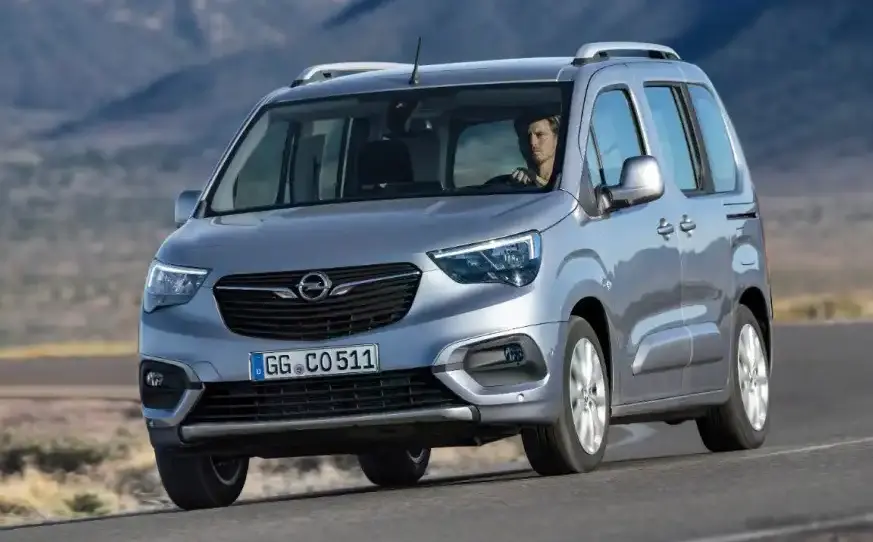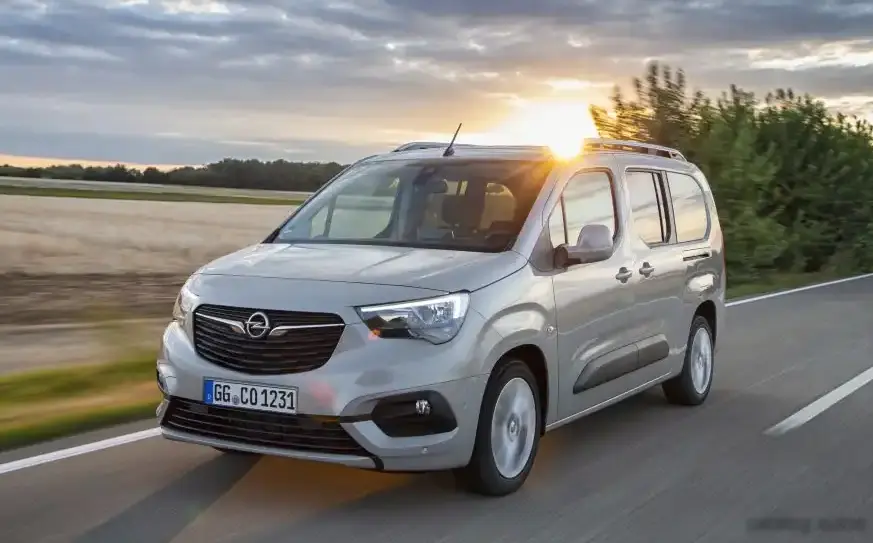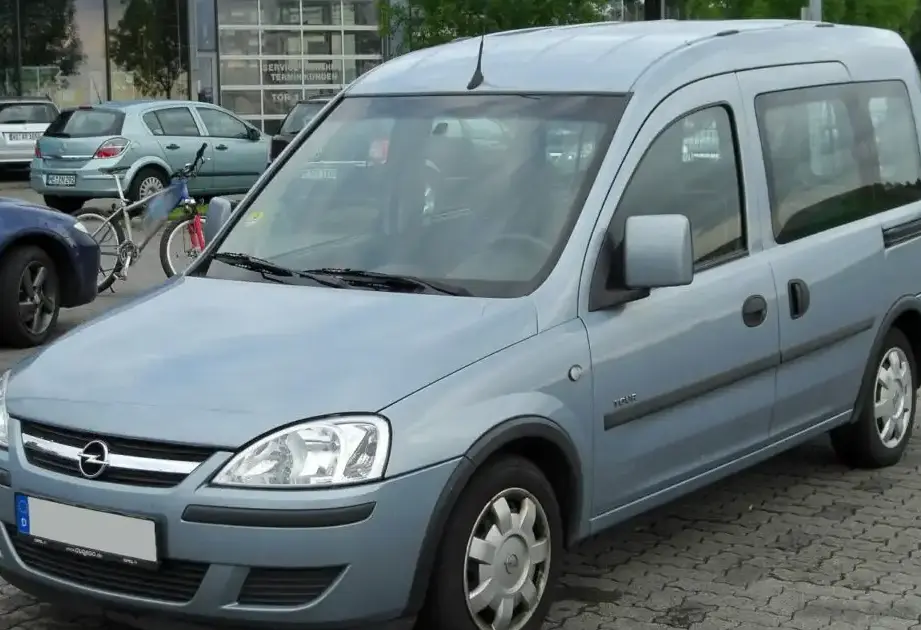
The Opel Combo Tour C (facelifted in 2003) 1.6i, producing 87 horsepower, represented an entry-level offering within the Combo Tour C range. Introduced as part of the facelift, this variant was produced from 2003 until June 2004. Positioned as a practical and affordable light commercial vehicle and passenger van, the Combo Tour C, based on the 1HX0/A3 platform shared with the Fiat Doblo and Renault Kangoo, aimed to provide a versatile solution for both commercial and family needs in the European market. This specific 1.6i engine and five-speed manual transmission combination was designed to balance fuel efficiency with adequate performance for everyday use.
Technical Specifications
| Brand | Opel |
| Model | Combo |
| Generation | Combo Tour C (facelift 2003) |
| Type (Engine) | 1.6i (87 Hp) |
| Start of production | 2003 |
| End of production | June, 2004 |
| Powertrain Architecture | Internal Combustion engine |
| Body type | Minivan |
| Seats | 5 |
| Doors | 5 |
| Fuel consumption (urban) | 9.8 l/100 km (24 US mpg, 28.8 UK mpg, 10.2 km/l) |
| Fuel consumption (extra urban) | 6 l/100 km (39.2 US mpg, 47.1 UK mpg, 16.7 km/l) |
| Fuel consumption (combined) | 7.4 l/100 km (31.8 US mpg, 38.2 UK mpg, 13.5 km/l) |
| Fuel Type | Petrol (Gasoline) |
| Acceleration 0 – 100 km/h | 14 sec |
| Acceleration 0 – 62 mph | 14 sec |
| Acceleration 0 – 60 mph | 13.3 sec |
| Maximum speed | 164 km/h (101.9 mph) |
| Weight-to-power ratio | 13.9 kg/Hp, 71.9 Hp/tonne |
| Weight-to-torque ratio | 8.8 kg/Nm, 114 Nm/tonne |
| Power | 87 Hp @ 5400 rpm |
| Power per litre | 54.4 Hp/l |
| Torque | 138 Nm @ 3000 rpm (101.78 lb.-ft. @ 3000 rpm) |
| Engine layout | Front, Transverse |
| Engine Model/Code | Z16SE |
| Engine displacement | 1598 cm3 (97.52 cu. in.) |
| Number of cylinders | 4 |
| Engine configuration | Inline |
| Cylinder Bore | 79 mm (3.11 in.) |
| Piston Stroke | 81.5 mm (3.21 in.) |
| Compression ratio | 9.6:1 |
| Number of valves per cylinder | 2 |
| Fuel injection system | Multi-port manifold injection |
| Engine aspiration | Naturally aspirated engine |
| Valvetrain | OHC |
| Engine oil capacity | 3.5 l (3.7 US qt | 3.08 UK qt) |
| Coolant | 5.8 l (6.13 US qt | 5.1 UK qt) |
| Kerb Weight | 1210 kg (2667.59 lbs.) |
| Max. weight | 1745 kg (3847.07 lbs.) |
| Max load | 535 kg (1179.47 lbs.) |
| Trunk (boot) space – minimum | 455 l (16.07 cu. ft.) |
| Trunk (boot) space – maximum | 2700 l (95.35 cu. ft.) |
| Fuel tank capacity | 52 l (13.74 US gal | 11.44 UK gal) |
| Length | 4322 mm (170.16 in.) |
| Width | 1684 mm (66.3 in.) |
| Width including mirrors | 1892 mm (74.49 in.) |
| Height | 1801 mm (70.91 in.) |
| Wheelbase | 2716 mm (106.93 in.) |
| Front track | 1417 mm (55.79 in.) |
| Rear (Back) track | 1440 mm (56.69 in.) |
| Front overhang | 747 mm (29.41 in.) |
| Rear overhang | 859 mm (33.82 in.) |
| Ride height (ground clearance) | 160 mm (6.3 in.) |
| Drivetrain Architecture | The Internal combustion engine (ICE) drives the front wheels of the vehicle. |
| Drive wheel | Front wheel drive |
| Number of gears and type of gearbox | 5 gears, manual transmission |
| Front suspension | Spring Strut |
| Rear suspension | Coil spring |
| Front brakes | Ventilated discs |
| Rear brakes | Drum |
| Assisting systems | ABS (Anti-lock braking system) |
| Steering type | Steering rack and pinion |
| Power steering | Hydraulic Steering |
| Tires size | 175/65 R14 |
| Wheel rims size | 14 |
Powertrain & Engine Architecture
The Combo Tour C 1.6i utilized the Opel Z16SE engine, a 1.6-liter inline-four cylinder gasoline engine. This engine was a common sight in various Opel/Vauxhall models of the era. The Z16SE featured a single overhead camshaft (OHC) design with two valves per cylinder. Fuel delivery was managed by a multi-port fuel injection system, providing a balance between efficiency and performance. The engine produced 87 horsepower at 5400 rpm and 138 Nm (101.78 lb-ft) of torque at 3000 rpm. The engine’s relatively simple design contributed to its reliability and ease of maintenance. The five-speed manual transmission was the standard offering for this variant, providing a reasonably spaced gear ratio for everyday driving. The transmission was a conventional setup, known for its durability and straightforward operation.
Driving Characteristics
The 1.6i engine, paired with the five-speed manual transmission, offered adequate, though not exhilarating, performance. Acceleration from 0 to 100 km/h (0-62 mph) took approximately 14 seconds. The engine felt most comfortable in the mid-range, providing sufficient power for overtaking and highway cruising, although it required downshifting for quicker acceleration. Compared to higher-output versions of the Combo Tour C, such as those equipped with the 1.7 CDTi diesel engine, the 1.6i felt noticeably less powerful. However, it offered a smoother and quieter driving experience. The gear ratios were well-suited for everyday driving, with a relatively long fifth gear aimed at improving fuel economy on the open road. The front-wheel-drive configuration provided predictable handling, although it wasn’t particularly sporty.
Equipment & Trim Levels
The 1.6i variant of the Combo Tour C typically came with a basic level of equipment, reflecting its position as an entry-level model. Standard features generally included power steering, ABS brakes, a driver’s airbag, and basic cloth upholstery. Air conditioning, central locking, and electric windows were often optional extras. Interior trim was functional and durable, prioritizing practicality over luxury. The dashboard layout was straightforward and easy to use, with clearly labeled controls. Depending on the market, different trim packages were available, offering upgrades such as upgraded seat fabrics, body-colored bumpers, and alloy wheels.
Chassis & Braking
The Combo Tour C utilized a relatively simple chassis design. Front suspension consisted of MacPherson struts, while the rear employed a coil spring setup. This configuration provided a comfortable ride, although it wasn’t particularly refined. The braking system featured ventilated discs on the front wheels and drum brakes on the rear. ABS (Anti-lock Braking System) was standard, enhancing safety during emergency braking situations. The steering was rack and pinion, providing reasonably precise control. The 175/65 R14 tires offered a good balance between grip and ride comfort.
Market Reception & Comparison
The Opel Combo Tour C 1.6i was generally well-received as a practical and affordable light commercial vehicle and passenger van. Critics praised its versatility, spacious interior, and reasonable fuel economy. However, the 1.6i engine was often criticized for its lack of power, particularly when the vehicle was fully loaded. Compared to the diesel variants, the 1.6i offered lower running costs in terms of fuel, but it lacked the torque and fuel efficiency of the diesel engines. The 1.6i was often seen as a good choice for drivers who primarily used the vehicle for short trips and light loads.
Legacy
The Z16SE engine, while not known for being particularly groundbreaking, proved to be a reliable and durable unit. The Combo Tour C 1.6i remains a relatively affordable option in the used car market. Common issues are generally limited to age-related wear and tear, such as corrosion and worn suspension components. The simplicity of the engine and transmission makes it relatively easy and inexpensive to maintain. Today, these vehicles are often sought after by small businesses and individuals looking for a practical and affordable van for light commercial or family use. The Combo Tour C, in its various configurations, helped establish Opel as a key player in the European light commercial vehicle segment.