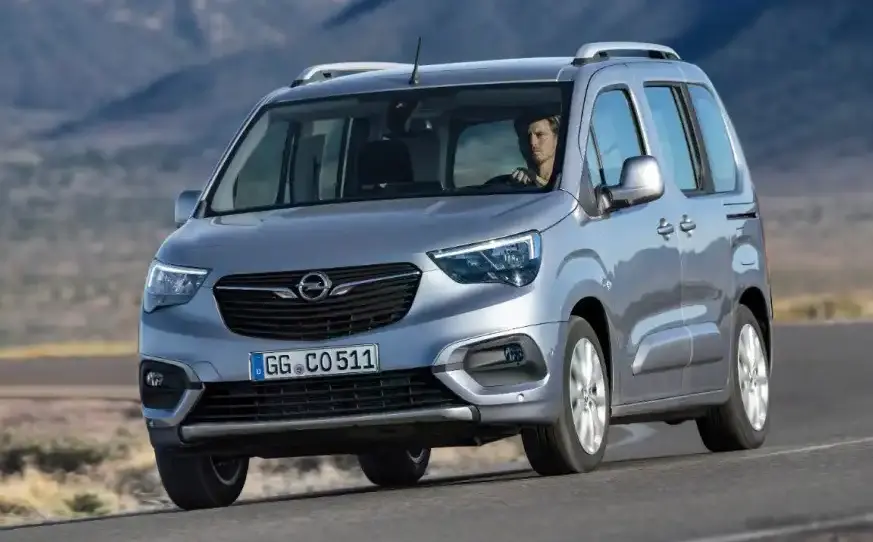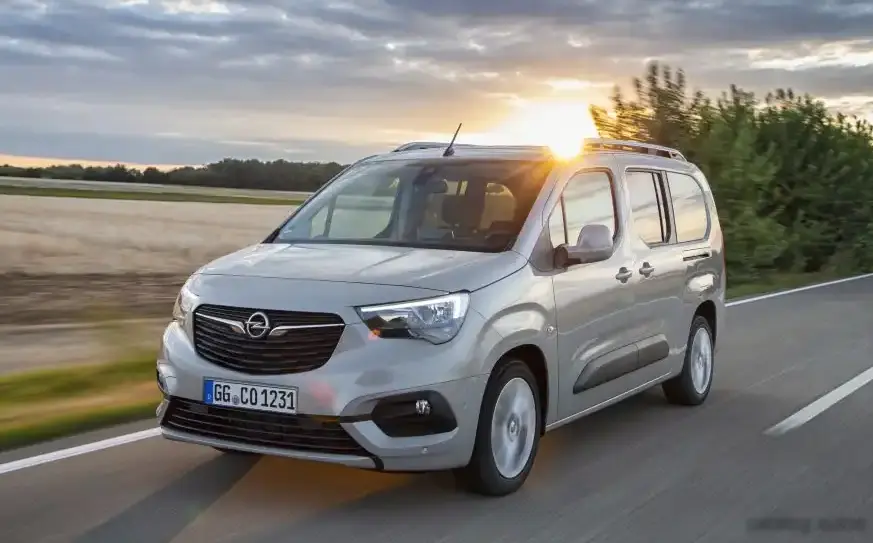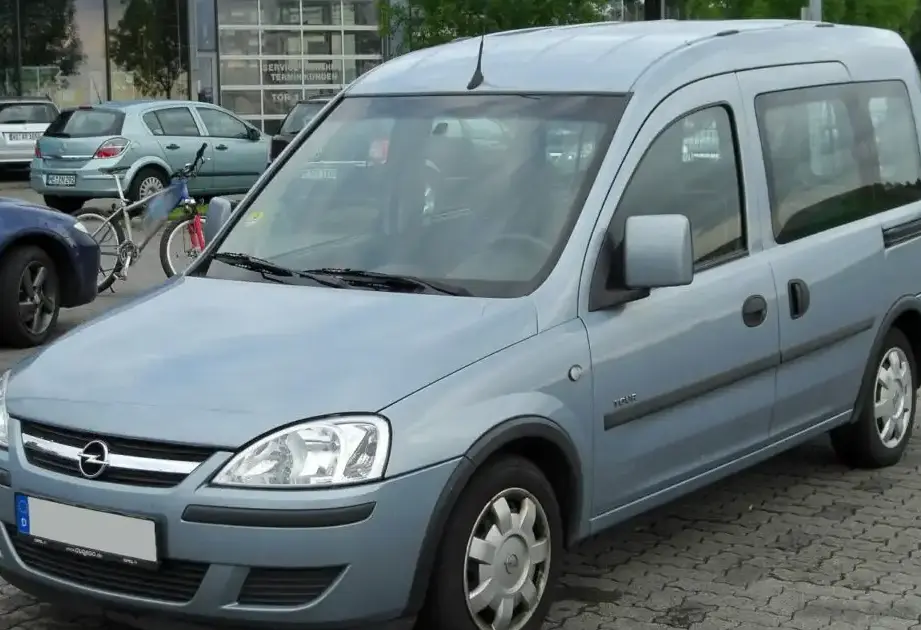
The Opel Combo Tour C (facelift, introduced in 2003) 1.7 CDTI, producing 100 horsepower, represents a practical and economical choice within the compact van segment. Production of this specific variant ran from July 2004 to September 2010. Positioned as a workhorse vehicle, the Combo Tour C catered to families and commercial users alike, offering a blend of affordability, functionality, and reasonable running costs. It was built on the General Motors’ global 1HX0/A3 platform, shared with models like the Opel Corsa and Fiat Combo, reflecting a collaborative engineering approach. This version of the Combo Tour C aimed to provide a diesel-powered option with a balance between fuel efficiency and adequate performance for everyday tasks.
Technical Specifications
| Brand | Opel |
| Model | Combo |
| Generation | Combo Tour C (facelift 2003) |
| Type (Engine) | 1.7 CDTI (100 Hp) |
| Start of production | July, 2004 |
| End of production | September, 2010 |
| Powertrain Architecture | Internal Combustion engine |
| Body type | Minivan |
| Seats | 5 |
| Doors | 5 |
| Fuel consumption (urban) | 6.6 l/100 km (35.6 US mpg, 42.8 UK mpg, 15.2 km/l) |
| Fuel consumption (extra urban) | 4.4 l/100 km (53.5 US mpg, 64.2 UK mpg, 22.7 km/l) |
| Fuel consumption (combined) | 5.2 l/100 km (45.2 US mpg, 54.3 UK mpg, 19.2 km/l) |
| Fuel Type | Diesel |
| Acceleration 0 – 100 km/h | 12.5 sec |
| Acceleration 0 – 62 mph | 12.5 sec |
| Acceleration 0 – 60 mph | 11.9 sec |
| Maximum speed | 170 km/h (105.63 mph) |
| Weight-to-power ratio | 13 kg/Hp, 77.2 Hp/tonne |
| Weight-to-torque ratio | 5.4 kg/Nm, 185.3 Nm/tonne |
| Power | 100 Hp @ 4400 rpm |
| Power per litre | 59.3 Hp/l |
| Torque | 240 Nm @ 2300 rpm (177.01 lb.-ft. @ 2300 rpm) |
| Engine layout | Front, Transverse |
| Engine Model/Code | Z17DTH |
| Engine displacement | 1686 cm3 (102.89 cu. in.) |
| Number of cylinders | 4 |
| Engine configuration | Inline |
| Cylinder Bore | 79 mm (3.11 in.) |
| Piston Stroke | 86 mm (3.39 in.) |
| Compression ratio | 18.4:1 |
| Number of valves per cylinder | 2 |
| Fuel injection system | Diesel Commonrail |
| Engine aspiration | Turbocharger, Intercooler |
| Engine oil capacity | 5 l (5.28 US qt | 4.4 UK qt) |
| Coolant | 6.3 l (6.66 US qt | 5.54 UK qt) |
| Kerb Weight | 1295 kg (2854.99 lbs.) |
| Max. weight | 1855 kg (4089.57 lbs.) |
| Max load | 560 kg (1234.59 lbs.) |
| Trunk (boot) space – minimum | 455 l (16.07 cu. ft.) |
| Trunk (boot) space – maximum | 2700 l (95.35 cu. ft.) |
| Fuel tank capacity | 52 l (13.74 US gal | 11.44 UK gal) |
| Length | 4322 mm (170.16 in.) |
| Width | 1684 mm (66.3 in.) |
| Width including mirrors | 1892 mm (74.49 in.) |
| Height | 1801 mm (70.91 in.) |
| Wheelbase | 2716 mm (106.93 in.) |
| Front track | 1417 mm (55.79 in.) |
| Rear (Back) track | 1440 mm (56.69 in.) |
| Front overhang | 747 mm (29.41 in.) |
| Rear overhang | 859 mm (33.82 in.) |
| Ride height (ground clearance) | 160 mm (6.3 in.) |
| Drivetrain Architecture | The Internal combustion engine (ICE) drives the front wheels of the vehicle. |
| Drive wheel | Front wheel drive |
| Number of gears and type of gearbox | 5 gears, manual transmission |
| Front suspension | Spring Strut |
| Rear suspension | Coil spring |
| Front brakes | Ventilated discs |
| Rear brakes | Disc |
| Assisting systems | ABS (Anti-lock braking system) |
| Steering type | Steering rack and pinion |
| Tires size | 185/60 R15 |
| Wheel rims size | 6J x 15 |
Powertrain & Engine Architecture
The heart of this Combo Tour C variant is the Z17DTH, a 1.7-liter inline-four cylinder diesel engine. This engine belongs to Opel/Vauxhall’s ‘D’ family of diesel engines, known for their relatively simple construction and durability. The Z17DTH utilizes a common rail direct injection system, delivering fuel at extremely high pressure for improved combustion efficiency and reduced emissions. A turbocharger with an intercooler is employed to boost power output, providing 100 horsepower at 4400 rpm and 240 Nm (177 lb-ft) of torque at 2300 rpm. The engine features two valves per cylinder and a compression ratio of 18.4:1. The engine is transversely mounted in the front of the vehicle. The 5-speed manual transmission was the standard offering, designed to efficiently transfer power to the front wheels. While an automatic transmission was available on other Combo Tour C models, it was not offered with the 1.7 CDTI engine.
Driving Characteristics
The 1.7 CDTI engine, paired with the 5-speed manual gearbox, provided adequate, though not exhilarating, performance. Acceleration from 0-60 mph took around 11.9 seconds, and top speed was limited to 170 km/h (105.63 mph). The engine’s torque peak at 2300 rpm meant that usable power was available from relatively low engine speeds, making it suitable for everyday driving and carrying loads. Compared to the more powerful 1.9 CDTI variants, the 1.7 CDTI felt noticeably less responsive, particularly when fully loaded or climbing hills. However, the lower power output translated to improved fuel economy, making it a more economical choice for drivers prioritizing efficiency over outright performance. The gear ratios were tuned for economy, with a relatively long fifth gear designed to reduce engine speed at highway cruising speeds.
Equipment & Trim Levels
The 1.7 CDTI variant of the Combo Tour C typically came with a fairly basic level of equipment, reflecting its positioning as a value-oriented vehicle. Standard features generally included power steering, central locking, driver and passenger airbags, and an adjustable steering column. Interior upholstery was typically cloth, and the dashboard featured a functional, if somewhat utilitarian, design. Optional extras included air conditioning, electric windows, and a radio/CD player. Higher trim levels, available with other engine options, offered features like alloy wheels, upgraded interior trim, and more advanced audio systems, but these were rarely fitted to the 1.7 CDTI model.
Chassis & Braking
The Combo Tour C utilized a relatively simple chassis design. Front suspension consisted of MacPherson struts, while the rear employed a coil spring setup. The front brakes were ventilated discs, providing adequate stopping power, while the rear brakes were solid discs. ABS (Anti-lock Braking System) was standard, enhancing safety during emergency braking. The suspension was tuned for comfort and practicality, prioritizing ride quality over sporty handling. Stabilizer bars were fitted to both the front and rear axles to reduce body roll during cornering.
Market Reception & Comparison
The Opel Combo Tour C 1.7 CDTI was generally well-received as a practical and economical van. Critics praised its fuel efficiency and low running costs, but noted its lack of outright performance compared to higher-powered variants. Compared to the 1.9 CDTI models, the 1.7 CDTI offered better fuel economy but significantly less power. It also provided a more affordable entry point into the Combo Tour C range. The 1.7 CDTI was often seen as a good choice for drivers who primarily used the van for commuting or light commercial duties, where outright performance was less critical.
Legacy
The Z17DTH engine, while not known for being particularly sophisticated, proved to be reasonably reliable in the Combo Tour C. Common issues included turbocharger wear and potential problems with the fuel injection system, but these were generally manageable with regular maintenance. Today, used examples of the 1.7 CDTI Combo Tour C are readily available and represent an affordable option for those seeking a practical and economical van. Its simplicity and relatively low maintenance costs continue to make it an attractive choice for budget-conscious buyers. However, potential buyers should be aware of the engine’s limitations in terms of performance and ensure that the vehicle has been properly maintained.