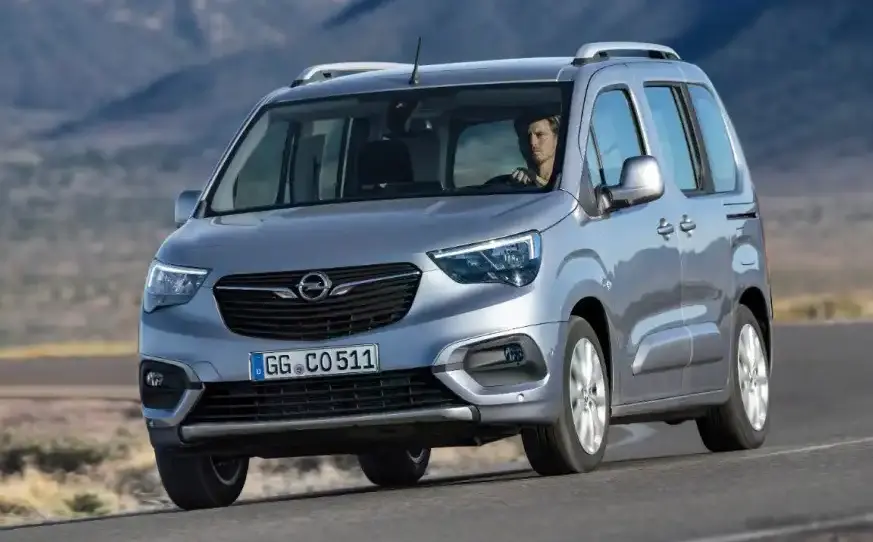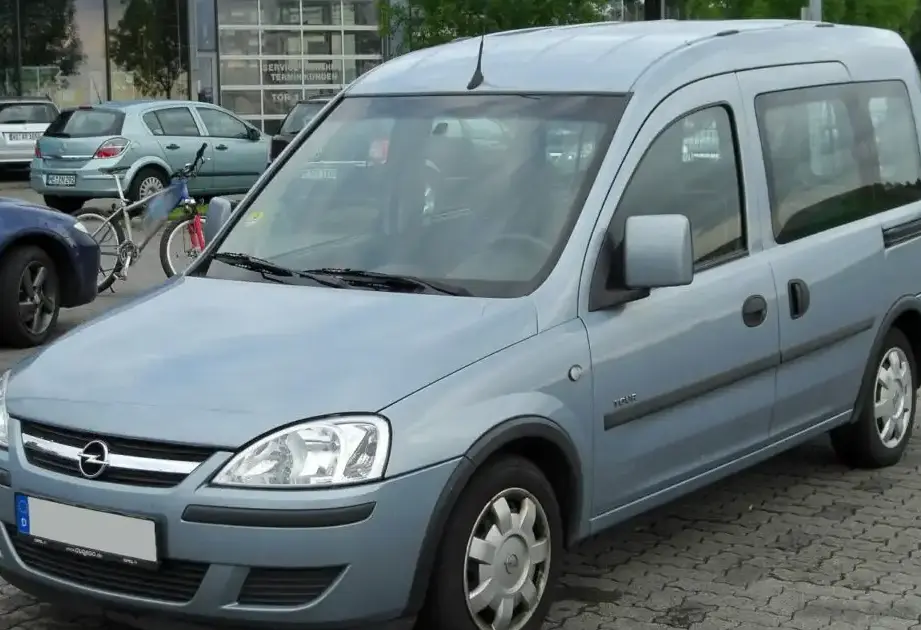
The Opel Combo Tour C (facelifted in 2003) 1.7 DTI, producing 75 horsepower, represents an entry-level offering within the Combo Tour C range, which spanned from 2001 to 2004. This variant was primarily aimed at the European market, offering a practical and affordable light commercial vehicle solution for small businesses and families. The facelift in 2003 brought minor cosmetic updates and refinements to the original Combo Tour C, which itself was based on the shared platform with the Fiat Doblo and Renault Kangoo – the 1HX0/A3 platform. The 1.7 DTI engine was a key component of Opel’s diesel lineup during this period, focusing on fuel efficiency and utilitarian performance rather than outright speed.
Technical Specifications
| Brand | Opel |
| Model | Combo |
| Generation | Combo Tour C (facelift 2003) |
| Type (Engine) | 1.7 DTI (75 Hp) |
| Start of production | 2003 |
| End of production | June, 2004 |
| Powertrain Architecture | Internal Combustion engine |
| Body type | Minivan |
| Seats | 5 |
| Doors | 5 |
| Fuel consumption (urban) | 6.6 l/100 km (35.6 US mpg, 42.8 UK mpg, 15.2 km/l) |
| Fuel consumption (extra urban) | 4.7 l/100 km (50 US mpg, 60.1 UK mpg, 21.3 km/l) |
| Fuel consumption (combined) | 5.4 l/100 km (43.6 US mpg, 52.3 UK mpg, 18.5 km/l) |
| Fuel Type | Diesel |
| Acceleration 0 – 100 km/h | 15.5 sec |
| Acceleration 0 – 62 mph | 15.5 sec |
| Acceleration 0 – 60 mph | 14.7 sec |
| Maximum speed | 155 km/h (96.31 mph) |
| Weight-to-power ratio | 16.1 kg/Hp, 62.2 Hp/tonne |
| Weight-to-torque ratio | 7.3 kg/Nm, 136.9 Nm/tonne |
| Power | 75 Hp @ 4400 rpm |
| Power per litre | 44.5 Hp/l |
| Torque | 165 Nm @ 1800 rpm (121.7 lb.-ft. @ 1800 rpm) |
| Engine layout | Front, Transverse |
| Engine Model/Code | Y17DT |
| Engine displacement | 1686 cm3 (102.89 cu. in.) |
| Number of cylinders | 4 |
| Engine configuration | Inline |
| Cylinder Bore | 79 mm (3.11 in.) |
| Piston Stroke | 86 mm (3.39 in.) |
| Compression ratio | 18.4:1 |
| Number of valves per cylinder | 2 |
| Fuel injection system | Direct injection |
| Engine aspiration | Turbocharger, Intercooler |
| Engine oil capacity | 4.5 l (4.76 US qt | 3.96 UK qt) |
| Coolant capacity | 6.1 l (6.45 US qt | 5.37 UK qt) |
| Kerb Weight | 1205 kg (2656.57 lbs.) |
| Max. weight | 1795 kg (3957.3 lbs.) |
| Max load | 590 kg (1300.73 lbs.) |
| Trunk (boot) space – minimum | 455 l (16.07 cu. ft.) |
| Trunk (boot) space – maximum | 2700 l (95.35 cu. ft.) |
| Fuel tank capacity | 52 l (13.74 US gal | 11.44 UK gal) |
| Length | 4322 mm (170.16 in.) |
| Width | 1684 mm (66.3 in.) |
| Width including mirrors | 1892 mm (74.49 in.) |
| Height | 1801 mm (70.91 in.) |
| Wheelbase | 2716 mm (106.93 in.) |
| Front track | 1417 mm (55.79 in.) |
| Rear track | 1440 mm (56.69 in.) |
| Front overhang | 747 mm (29.41 in.) |
| Rear overhang | 859 mm (33.82 in.) |
| Ride height (ground clearance) | 160 mm (6.3 in.) |
| Drivetrain Architecture | Front wheel drive |
| Number of gears | 5 |
| Gearbox type | Manual transmission |
| Front suspension | Independent coil spring |
| Rear suspension | Semi-independent, coil spring |
| Front brakes | Ventilated discs |
| Rear brakes | Drum |
| Assisting systems | ABS (Anti-lock braking system) |
| Steering type | Steering rack and pinion |
| Tires size | 185/60 R15 |
| Wheel rims size | 6J x 15 |
Powertrain & Engine Architecture
The heart of the Combo Tour C 1.7 DTI is the Y17DT engine, a 1.7-liter inline-four cylinder diesel. This engine belongs to Opel’s family of common-rail direct injection (CDI) diesels. The direct injection system, coupled with a turbocharger and intercooler, allowed for a reasonable balance between fuel economy and torque output. The Y17DT featured a single overhead camshaft (SOHC) valvetrain with two valves per cylinder. The engine’s 18.4:1 compression ratio is typical for a diesel engine, contributing to its efficiency. The 75 horsepower and 165 Nm (121.7 lb-ft) of torque were delivered at 4400 and 1800 rpm respectively. The engine was paired with a five-speed manual transmission, which was the standard offering for this variant. While an automatic transmission was available on other Combo Tour C models, it was not offered with the 1.7 DTI engine.
Driving Characteristics
The 1.7 DTI-equipped Combo Tour C prioritized practicality over performance. Acceleration was modest, taking around 15.5 seconds to reach 62 mph. The engine’s torque, however, was readily available from low engine speeds, making it suitable for carrying loads and navigating urban environments. The five-speed manual transmission offered a reasonable spread of gears, but the engine lacked the outright power to fully exploit them. Compared to the more powerful 1.9-liter CDTI variants, the 1.7 DTI felt noticeably slower, especially when fully loaded. The gear ratios were tuned for economy, resulting in a relaxed cruising experience but requiring frequent downshifts when overtaking or climbing hills.
Equipment & Trim Levels
The 1.7 DTI Combo Tour C typically represented the base trim level. Standard equipment included power steering, central locking, and a basic audio system. Interior upholstery was typically a durable cloth material. Optional extras included air conditioning, electric windows, and upgraded audio systems. Safety features were relatively basic, consisting primarily of ABS brakes and driver/passenger airbags. The interior was functional and utilitarian, designed for durability and ease of cleaning rather than luxury.
Chassis & Braking
The Combo Tour C utilized a relatively simple chassis design. Front suspension consisted of independent coil springs, while the rear suspension employed a semi-independent coil spring setup. This configuration provided a comfortable ride, particularly when unladen. The front brakes were ventilated discs, offering adequate stopping power, while the rear brakes were drums. This combination was typical for vehicles in this weight class and price range. The steering was a rack and pinion system, providing reasonable precision and feedback.
Market Reception & Comparison
The Combo Tour C 1.7 DTI was generally well-received as a practical and affordable light commercial vehicle. Critics praised its fuel efficiency and low running costs, but noted its lack of outright performance. Compared to the more powerful diesel variants, the 1.7 DTI offered a lower purchase price but compromised on performance and refinement. The 1.9-liter CDTI models, while more expensive, provided significantly more power and a more enjoyable driving experience. However, the 1.7 DTI appealed to buyers who prioritized economy and practicality over performance.
Legacy
The Y17DT engine, while not known for being particularly sophisticated, proved to be relatively reliable. Common issues included turbocharger wear and potential problems with the fuel injection system. However, with regular maintenance, these engines could provide many years of service. Today, the Combo Tour C 1.7 DTI can be found as an affordable used vehicle, often appealing to those seeking a basic and economical van for light commercial or personal use. Its simplicity and relatively low maintenance costs make it a viable option for those on a budget, though potential buyers should be aware of the engine’s limitations and the age-related wear and tear that may be present.