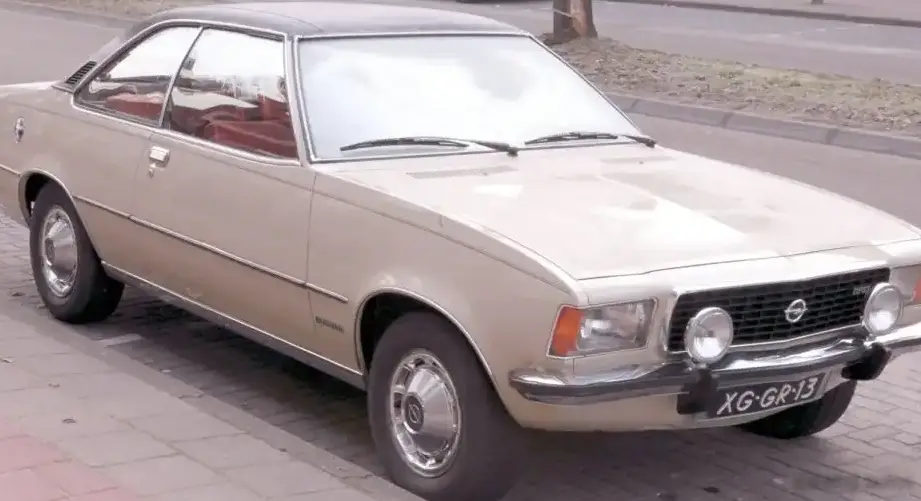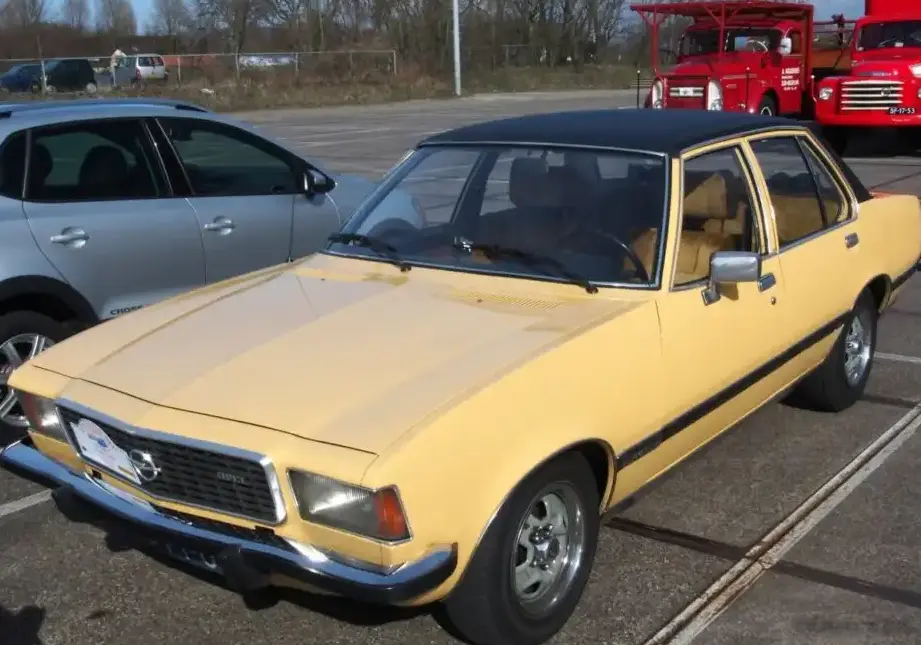
The Opel Commodore B 2.8 GS, produced between 1973 and 1975, represented a significant iteration of Opel’s flagship model. Positioned as a comfortable and relatively sporty grand tourer, the Commodore B aimed to provide a premium experience within the European market. The 2.8 GS variant, with its 130 horsepower engine, occupied a middle ground in the Commodore B lineup, offering a balance between performance and affordability. It sat above the base models with smaller engines and below the more potent Commodore GS/E, which featured fuel injection. The Commodore B was built on the GM A-platform, shared with other GM products globally, and was a key model in Opel’s strategy to compete with established brands like Ford and BMW.
Technical Specifications
| Brand | Opel |
| Model | Commodore |
| Generation | Commodore B |
| Type (Engine) | 2.8 GS (130 Hp) |
| Start of production | 1973 |
| End of production | 1975 |
| Powertrain Architecture | Internal Combustion engine |
| Body type | Sedan |
| Seats | 5 |
| Doors | 4 |
| Fuel Type | Petrol (Gasoline) |
| Acceleration 0 – 100 km/h | 11.5 sec |
| Acceleration 0 – 62 mph | 11.5 sec |
| Acceleration 0 – 60 mph | 10.9 sec |
| Maximum speed | 180 km/h (111.85 mph) |
| Weight-to-power ratio | 9.3 kg/Hp, 107 Hp/tonne |
| Weight-to-torque ratio | 5.9 kg/Nm, 169.5 Nm/tonne |
| Power | 130 Hp @ 5000 rpm |
| Power per litre | 46.7 Hp/l |
| Torque | 206 Nm @ 3800 rpm (151.94 lb.-ft. @ 3800 rpm) |
| Engine Model/Code | 28HC |
| Engine displacement | 2784 cm3 (169.89 cu. in.) |
| Number of cylinders | 6 |
| Engine configuration | Inline |
| Cylinder Bore | 92 mm (3.62 in.) |
| Piston Stroke | 69.8 mm (2.75 in.) |
| Compression ratio | 9.5:1 |
| Number of valves per cylinder | 2 |
| Fuel injection system | Carburettor |
| Engine aspiration | Naturally aspirated engine |
| Valvetrain | SOHC |
| Engine oil capacity | 5.5 l (5.81 US qt | 4.84 UK qt) |
| Kerb Weight | 1215 kg (2678.62 lbs.) |
| Max. weight | 1640 kg (3615.58 lbs.) |
| Max load | 425 kg (936.96 lbs.) |
| Trunk (boot) space – minimum | 408 l (14.41 cu. ft.) |
| Fuel tank capacity | 70 l (18.49 US gal | 15.4 UK gal) |
| Length | 4607 mm (181.38 in.) |
| Width | 1728 mm (68.03 in.) |
| Height | 1405 mm (55.31 in.) |
| Wheelbase | 2668 mm (105.04 in.) |
| Front track | 1434 mm (56.46 in.) |
| Rear (Back) track | 1400 mm (55.12 in.) |
| Ride height (ground clearance) | 140 mm (5.51 in.) |
| Drag coefficient (Cd) | 0.46 |
| Minimum turning circle (turning diameter) | 11.2 m (36.75 ft.) |
| Drivetrain Architecture | The Internal combustion engine (ICE) drives the rear wheels of the vehicle. |
| Drive wheel | Rear wheel drive |
| Number of gears and type of gearbox | 4 gears, manual transmission |
| Front brakes | Disc |
| Rear brakes | Drum |
Powertrain & Engine Architecture
The heart of the Commodore B 2.8 GS was the 28HC inline-six cylinder engine, displacing 2.8 liters (2784 cc). This engine utilized a single overhead camshaft (SOHC) valvetrain, operating two valves per cylinder. Fuel delivery was managed by a carburetor, a common setup for the era, though less efficient than fuel injection. The 28HC engine was known for its relatively smooth operation and decent power output for its time. The engine produced 130 horsepower at 5000 rpm and 206 Nm (151.94 lb-ft) of torque at 3800 rpm. The engine’s design was relatively simple, contributing to its robustness and ease of maintenance. The Commodore B 2.8 GS was equipped with a four-speed manual transmission as standard, delivering power to the rear wheels. This transmission was chosen to balance cost and driving experience.
Driving Characteristics
The 2.8 GS offered a respectable driving experience for the early 1970s. While not a sports car, the 130 hp engine provided adequate acceleration, achieving 0-60 mph in approximately 10.9 seconds. The four-speed manual transmission allowed drivers to effectively utilize the engine’s torque, providing reasonable responsiveness in everyday driving situations. Compared to the smaller-engined Commodores, the 2.8 GS offered a noticeable improvement in performance, particularly when carrying passengers or luggage. However, it lacked the outright punch of the fuel-injected GS/E model. The rear-wheel-drive configuration provided a traditional driving feel, favored by many enthusiasts of the period. The suspension, while comfortable, was not particularly sporty, resulting in some body roll during cornering.
Equipment & Trim Levels
The Commodore B 2.8 GS came reasonably well-equipped for its time. Standard features typically included cloth upholstery, a wood-trimmed dashboard, and basic instrumentation. The GS trim level added some additional comfort and convenience features compared to the base models, such as upgraded interior trim and exterior brightwork. Optional extras included a sunroof, power steering, and a more advanced radio system. The interior design was typical of European cars of the era, prioritizing functionality and durability over outright luxury. The Commodore B aimed to provide a comfortable and practical cabin for both driver and passengers.
Chassis & Braking
The Commodore B utilized a traditional body-on-frame construction, providing a robust and durable chassis. The suspension consisted of independent front suspension with coil springs and a live axle rear suspension with leaf springs. The 2.8 GS was equipped with disc brakes on the front wheels and drum brakes on the rear. While the disc/drum setup was adequate for normal driving, it lacked the stopping power of fully disc-braked systems. The suspension was tuned for comfort, prioritizing a smooth ride over sharp handling. Stabilizer bars were fitted to both the front and rear axles to reduce body roll, but the overall handling characteristics were still biased towards comfort.
Market Reception & Comparison
The Opel Commodore B 2.8 GS was generally well-received by automotive critics. It was praised for its comfortable ride, spacious interior, and relatively strong engine. However, some critics noted that the handling was not as sharp as some of its competitors, such as the Ford Capri or BMW 2002. Compared to the smaller-engined Commodores, the 2.8 GS offered a significant performance upgrade, making it a more appealing option for drivers who prioritized power and responsiveness. Fuel economy was typical for a large-displacement, carbureted engine of the era, averaging around 18-22 mpg. Reliability was generally good, although maintenance costs could be higher than those of smaller, simpler cars.
Legacy
The Opel Commodore B 2.8 GS remains a popular classic car among enthusiasts today. The 28HC engine is known for its durability and relative simplicity, making it a relatively easy engine to maintain and repair. Parts availability is generally good, although some specific components can be difficult to find. The Commodore B 2.8 GS represents a significant piece of automotive history, embodying the design and engineering philosophies of the early 1970s. While not a high-performance sports car, it offered a comfortable, spacious, and reliable grand touring experience, earning it a loyal following among classic car collectors and enthusiasts. Well-maintained examples command reasonable prices in the used car market, reflecting their enduring appeal and historical significance.