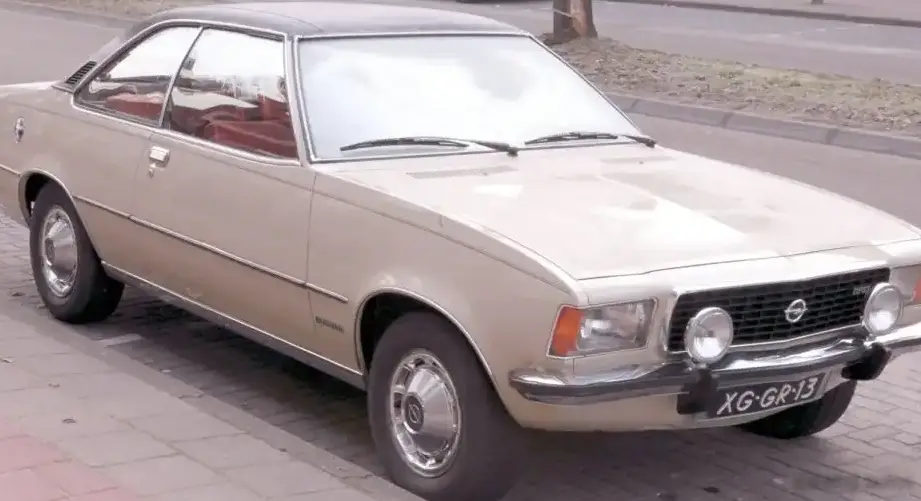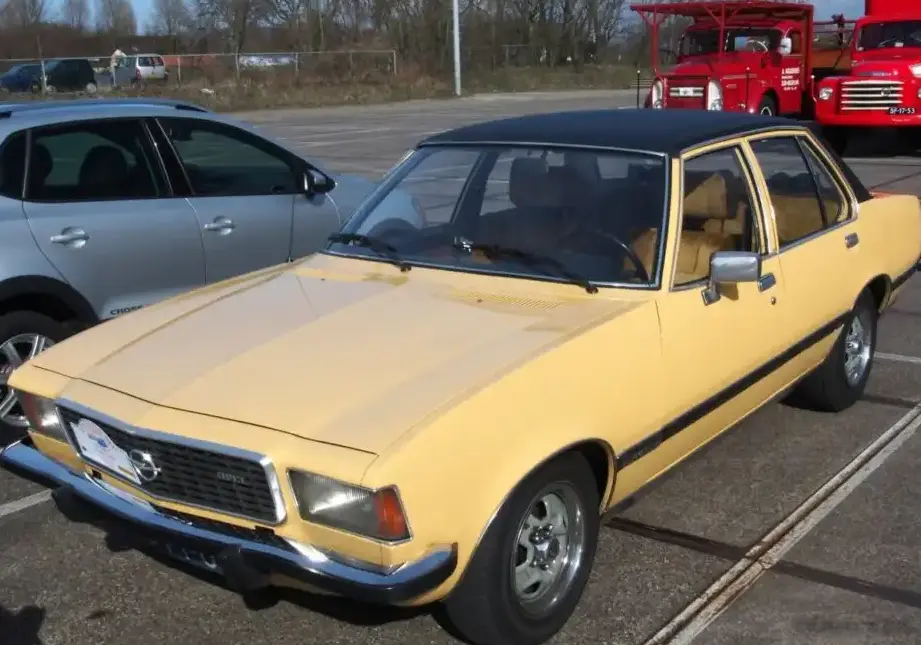
The Opel Commodore B 2.8 GS, produced between 1975 and 1978, represented a significant iteration of Opel’s flagship model. Part of the Commodore B generation (1972-1978), the 2.8 GS was positioned as a performance-oriented variant within the lineup, offering a blend of comfort and respectable power for the era. It served as a competitor to other large sedans in the European market, such as the Ford Granada and Peugeot 504, appealing to buyers seeking a spacious, well-equipped, and relatively sporty vehicle. The Commodore B was a key model for Opel, solidifying their reputation for building durable and comfortable family cars.
Technical Specifications
| Brand | Opel |
| Model | Commodore |
| Generation | Commodore B |
| Type (Engine) | 2.8 GS (140 Hp) |
| Start of production | 1975 |
| End of production | 1978 |
| Powertrain Architecture | Internal Combustion engine |
| Body type | Sedan |
| Seats | 5 |
| Doors | 4 |
| Fuel Type | Petrol (Gasoline) |
| Acceleration 0 – 100 km/h | 10.5 sec |
| Acceleration 0 – 62 mph | 10.5 sec |
| Acceleration 0 – 60 mph | 10 sec |
| Maximum speed | 185 km/h (114.95 mph) |
| Weight-to-power ratio | 9 kg/Hp, 110.7 Hp/tonne |
| Weight-to-torque ratio | 5.9 kg/Nm, 169.2 Nm/tonne |
| Power | 140 Hp @ 5200 rpm |
| Power per litre | 50.3 Hp/l |
| Torque | 214 Nm @ 3400-3800 rpm (157.84 lb.-ft. @ 3400-3800 rpm) |
| Engine Model/Code | 28HC |
| Engine displacement | 2784 cm3 (169.89 cu. in.) |
| Number of cylinders | 6 |
| Engine configuration | Inline |
| Cylinder Bore | 92 mm (3.62 in.) |
| Piston Stroke | 69.8 mm (2.75 in.) |
| Compression ratio | 9:1 |
| Number of valves per cylinder | 2 |
| Fuel injection system | Carburettor |
| Engine aspiration | Naturally aspirated engine |
| Valvetrain | SOHC |
| Engine oil capacity | 5.5 l (5.81 US qt | 4.84 UK qt) |
| Kerb Weight | 1265 kg (2788.85 lbs.) |
| Max. weight | 1720 kg (3791.95 lbs.) |
| Max load | 455 kg (1003.1 lbs.) |
| Trunk (boot) space – minimum | 408 l (14.41 cu. ft.) |
| Fuel tank capacity | 70 l (18.49 US gal | 15.4 UK gal) |
| Length | 4607 mm (181.38 in.) |
| Width | 1728 mm (68.03 in.) |
| Height | 1415 mm (55.71 in.) |
| Wheelbase | 2668 mm (105.04 in.) |
| Front track | 1450 mm (57.09 in.) |
| Rear (Back) track | 1400 mm (55.12 in.) |
| Ride height (ground clearance) | 140 mm (5.51 in.) |
| Drag coefficient (Cd) | 0.46 |
| Minimum turning circle (turning diameter) | 11.2 m (36.75 ft.) |
| Drivetrain Architecture | The Internal combustion engine (ICE) drives the rear wheels of the vehicle. |
| Drive wheel | Rear wheel drive |
| Number of gears and type of gearbox | 4 gears, manual transmission |
| Front brakes | Disc |
| Rear brakes | Disc |
Powertrain & Engine Architecture
The heart of the Commodore B 2.8 GS was the 28HC inline-six cylinder engine, displacing 2.8 liters (2784 cc). This engine featured a single overhead camshaft (SOHC) valvetrain and utilized a carburetor for fuel delivery. While not the most technologically advanced system by modern standards, the carburetor provided adequate fuel atomization for the engine’s output. The 28HC engine produced 140 horsepower at 5200 rpm and 214 Nm (157.84 lb-ft) of torque between 3400 and 3800 rpm. The engine’s relatively high torque output, even at lower revolutions, contributed to its usability in everyday driving. The 2.8 GS was exclusively offered with a four-speed manual transmission, providing drivers with direct control over the engine’s power. This transmission was chosen to complement the engine’s performance characteristics and appeal to drivers who preferred a more engaging driving experience.
Driving Characteristics
The Commodore B 2.8 GS offered a driving experience that was typical of large, rear-wheel-drive sedans of the 1970s. Acceleration to 100 km/h (62 mph) took approximately 10.5 seconds, and the car could achieve a top speed of 185 km/h (114.95 mph). While these figures weren’t groundbreaking, they were respectable for the time and positioned the 2.8 GS as one of the quicker Commodore variants. The manual transmission allowed for precise gear selection, and the engine’s torque made it relatively easy to drive in various conditions. Compared to the base Commodore models with smaller engines, the 2.8 GS offered a noticeable improvement in performance. However, it didn’t possess the outright sportiness of some of its competitors, such as the BMW 5 Series or the Porsche 924. The car’s weight (1265 kg / 2788.85 lbs) and rear-wheel-drive layout meant that it required a degree of driver skill, particularly in adverse weather conditions.
Equipment & Trim Levels
The “GS” designation indicated a higher level of equipment compared to the standard Commodore. Standard features typically included comfortable cloth upholstery, a wood-trimmed dashboard, and a comprehensive instrument cluster. Power steering and four-wheel disc brakes were also standard, enhancing the driving experience. Optional extras included a sunroof, upgraded audio systems, and air conditioning. The interior of the 2.8 GS was designed to provide a comfortable and refined environment for both the driver and passengers. The spacious cabin and well-designed seats made it suitable for long journeys. The overall aesthetic was typical of the 1970s, with a focus on practicality and durability.
Chassis & Braking
The Commodore B utilized a traditional body-on-frame construction, providing a robust and durable chassis. The suspension consisted of independent front suspension with coil springs and a rigid rear axle with leaf springs. This setup provided a comfortable ride, but it wasn’t particularly sporty. The 2.8 GS was equipped with four-wheel disc brakes, offering good stopping power for the time. The braking system was hydraulically assisted, providing a consistent pedal feel. The car’s relatively wide track and stable chassis contributed to its handling characteristics, although it wasn’t designed for aggressive cornering.
Market Reception & Comparison
The Opel Commodore B 2.8 GS was generally well-received by automotive critics. It was praised for its spacious interior, comfortable ride, and respectable performance. However, some critics noted that it lacked the refinement and handling of some of its more expensive competitors. Compared to other Commodore variants, the 2.8 GS offered a significant performance upgrade, but it also came with a higher price tag. Fuel economy was typical for a large, carbureted engine of the era, averaging around 12-15 mpg. Reliability was generally good, although maintenance costs could be higher due to the complexity of the inline-six engine.
Legacy
The Opel Commodore B 2.8 GS remains a popular classic car among enthusiasts. The 28HC engine is known for its durability and relatively simple construction, making it easier to maintain than some of its more complex counterparts. While parts availability can be a challenge, a dedicated community of owners and suppliers exists to support the Commodore B. Today, the 2.8 GS is valued for its classic styling, comfortable ride, and nostalgic appeal. It represents a bygone era of automotive engineering, when large, rear-wheel-drive sedans were the dominant force in the market. A well-maintained example can provide a rewarding and enjoyable driving experience for classic car enthusiasts.