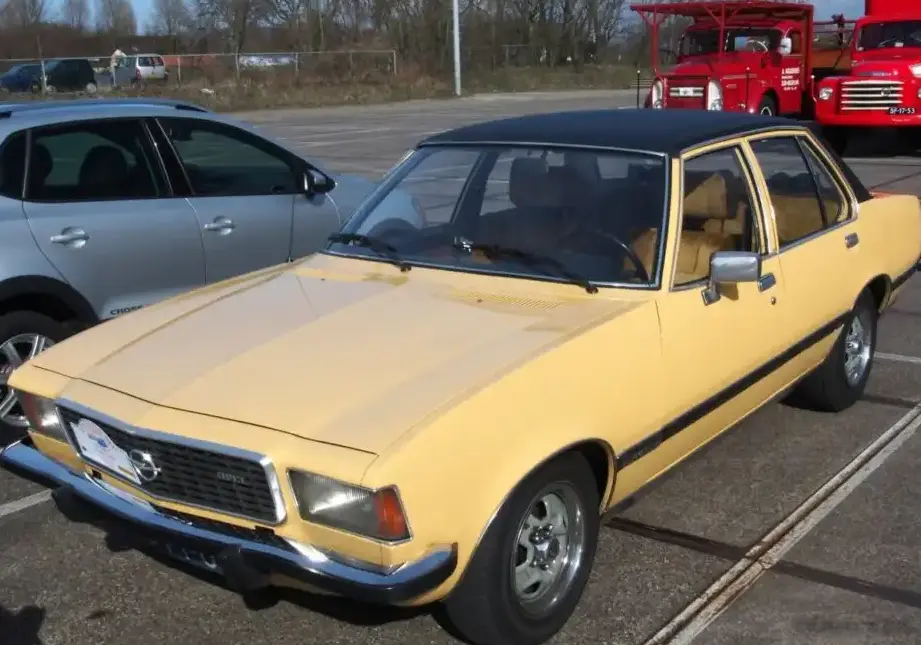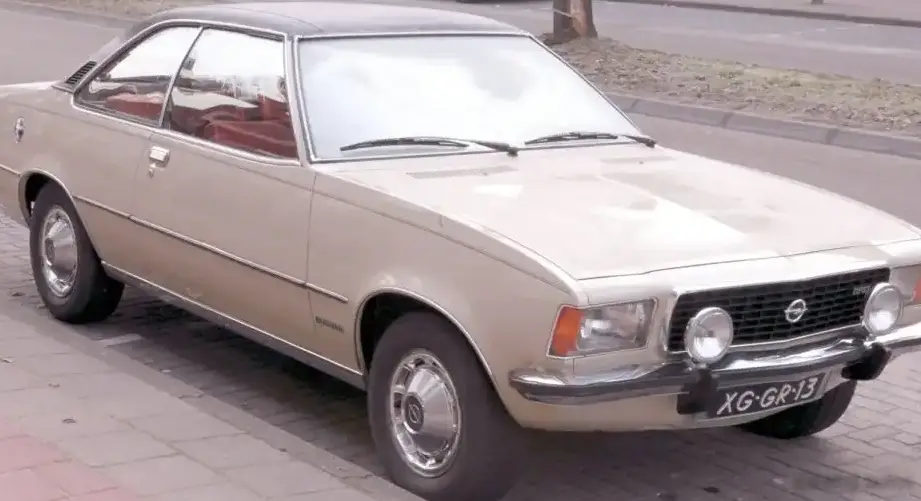
The Opel Commodore B Coupe 2.5, producing 115 horsepower, was a significant model within the Commodore B range, manufactured between 1972 and 1977. Positioned as a stylish and relatively affordable grand tourer, the Coupe variant offered a more sporting aesthetic than the four-door sedan. It represented Opel’s attempt to capture a segment of the market desiring a comfortable, yet reasonably powerful, coupe. The Commodore B series, built on the GM A-platform, was a key offering for Opel in Europe during the early to mid-1970s, competing with vehicles like the Ford Capri and the BMW 3.0 CS.
Technical Specifications
| Brand | Opel |
| Model | Commodore |
| Generation | Commodore B Coupe |
| Type (Engine) | 2.5 (115 Hp) |
| Start of production | 1972 |
| End of production | 1977 |
| Powertrain Architecture | Internal Combustion engine |
| Body type | Coupe |
| Seats | 5 |
| Doors | 2 |
| Fuel consumption (urban) | 17.3 l/100 km (13.6 US mpg, 16.3 UK mpg, 5.8 km/l) |
| Fuel consumption (extra urban) | 11.9 l/100 km (19.8 US mpg, 23.7 UK mpg, 8.4 km/l) |
| Fuel consumption (combined) | 12.2 l/100 km (19.3 US mpg, 23.2 UK mpg, 8.2 km/l) |
| Fuel Type | Petrol (Gasoline) |
| Acceleration 0 – 100 km/h | 13 sec |
| Acceleration 0 – 62 mph | 13 sec |
| Acceleration 0 – 60 mph | 12.4 sec |
| Maximum speed | 180 km/h (111.85 mph) |
| Weight-to-power ratio | 10.2 kg/Hp, 97.9 Hp/tonne |
| Weight-to-torque ratio | 6.8 kg/Nm, 148.1 Nm/tonne |
| Power | 115 Hp @ 5200 rpm |
| Power per litre | 46.2 Hp/l |
| Torque | 174 Nm @ 3800 rpm (128.34 lb.-ft. @ 3800 rpm) |
| Engine Model/Code | 25S |
| Engine displacement | 2490 cm3 (151.95 cu. in.) |
| Number of cylinders | 6 |
| Engine configuration | Inline |
| Number of valves per cylinder | 2 |
| Fuel injection system | Carburettor |
| Engine aspiration | Naturally aspirated |
| Engine oil capacity | 5.5 l (5.81 US qt, 4.84 UK qt) |
| Kerb Weight | 1175 kg (2590.43 lbs) |
| Max. weight | 1600 kg (3527.4 lbs) |
| Max load | 425 kg (936.96 lbs) |
| Trunk (boot) space – minimum | 434 l (15.33 cu. ft.) |
| Fuel tank capacity | 70 l (18.49 US gal, 15.4 UK gal) |
| Length | 4607 mm (181.38 in) |
| Width | 1728 mm (68.03 in) |
| Height | 1370 mm (53.94 in) |
| Wheelbase | 2668 mm (105.04 in) |
| Front track | 1434 mm (56.46 in) |
| Rear (Back) track | 1400 mm (55.12 in) |
| Ride height (ground clearance) | 140 mm (5.51 in) |
| Drag coefficient (Cd) | 0.45 |
| Minimum turning circle | 11.2 m (36.75 ft) |
| Drivetrain Architecture | Rear wheel drive |
| Number of gears | 4 |
| Type of gearbox | Manual transmission |
| Front brakes | Disc |
| Rear brakes | Drum |
Powertrain & Engine Architecture
The Commodore B Coupe 2.5 was powered by the 25S engine, a 2.5-liter (2490 cc) inline-six cylinder engine. This engine featured a single overhead camshaft (SOHC) valvetrain with two valves per cylinder. Fuel delivery was managed by a carburetor, a common setup for the era, rather than fuel injection. The engine produced 115 horsepower at 5200 rpm and 174 Nm (128.34 lb-ft) of torque at 3800 rpm. The engine’s design was relatively simple and robust, prioritizing reliability and ease of maintenance over outright performance. The four-speed manual transmission was the standard offering, providing a direct connection to the rear wheels. The engine block was constructed from cast iron, contributing to its durability, while the cylinder head was made of aluminum alloy.
Driving Characteristics
The 115 hp engine, coupled with the four-speed manual transmission, provided adequate, but not exhilarating, performance. Acceleration from 0 to 60 mph took approximately 12.4 seconds, and the car had a top speed of around 112 mph. The engine’s torque curve was relatively flat, offering usable power across a broad range of engine speeds. However, it lacked the punch of the larger displacement Commodore variants. The manual transmission offered a more engaging driving experience than the optional automatic, allowing for greater control over the engine’s power. The rear-wheel-drive layout provided a balanced feel, although the car’s weight and relatively soft suspension meant it wasn’t particularly nimble in corners. The gear ratios were spaced to prioritize cruising comfort over rapid acceleration.
Equipment & Trim Levels
The Commodore B Coupe 2.5 was generally well-equipped for its time, though options were available to enhance the interior and exterior. Standard features typically included cloth upholstery, a basic instrument cluster, and a heater. Optional extras included a vinyl roof, upgraded audio systems, and power-assisted steering. The interior design was functional and straightforward, reflecting the car’s focus on practicality and affordability. Trim levels varied depending on the market, but generally, the 2.5-liter Coupe occupied a mid-range position in the Commodore B lineup, offering a step up in performance and features compared to the base models.
Chassis & Braking
The Commodore B Coupe utilized a traditional body-on-frame construction. The front suspension consisted of independent coil springs, while the rear suspension employed a solid axle with leaf springs. Braking was handled by disc brakes at the front and drum brakes at the rear. The braking system was adequate for normal driving conditions, but lacked the stopping power of more modern systems. The car’s relatively heavy weight and soft suspension contributed to a comfortable ride, but also limited its handling capabilities. Stabilizer bars were often included to reduce body roll during cornering.
Market Reception & Comparison
The Commodore B Coupe 2.5 was generally well-received by automotive critics as a comfortable and stylish grand tourer. However, its performance was often criticized as being somewhat underwhelming, particularly when compared to more sporting rivals like the Ford Capri. Fuel economy was also a concern, with the 2.5-liter engine consuming a significant amount of fuel, especially in urban driving. Compared to the larger Commodore 2.8-liter models, the 2.5 offered a more affordable entry point into the Commodore range, but at the expense of performance. The 2.5-liter engine also proved to be more reliable than some of the larger, more complex engines offered in the Commodore B lineup.
Legacy
The Opel Commodore B Coupe 2.5 has become a sought-after classic car among enthusiasts. Its simple mechanical design and robust engine make it relatively easy to maintain and repair. While not a high-performance machine by modern standards, it offers a charming and nostalgic driving experience. The 25S engine is known for its durability, and many examples are still on the road today. The Commodore B Coupe 2.5 represents a significant piece of automotive history, embodying the styling and engineering of the early 1970s. Values for well-maintained examples have been steadily increasing in recent years, reflecting the growing interest in classic European coupes.