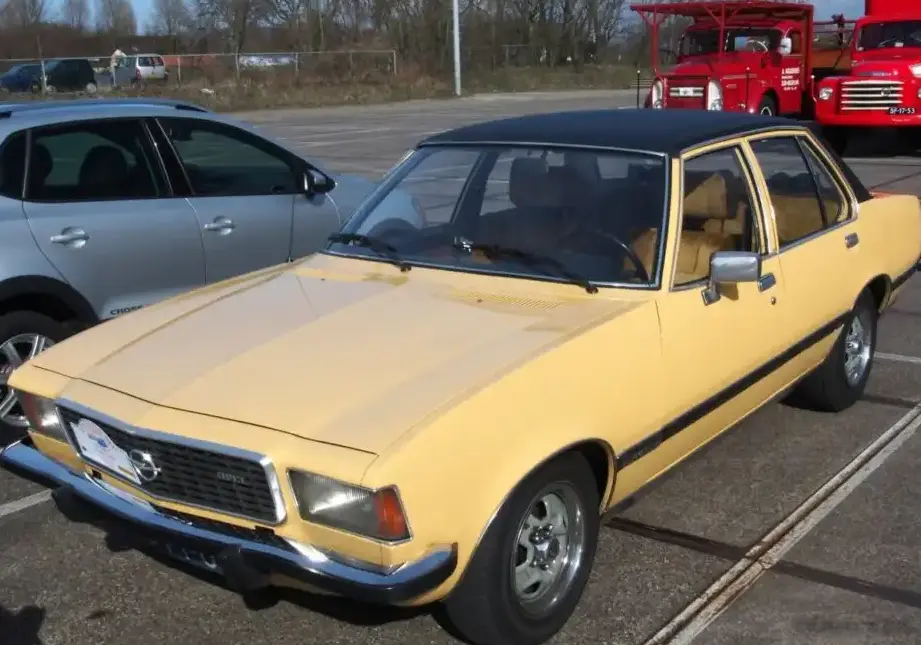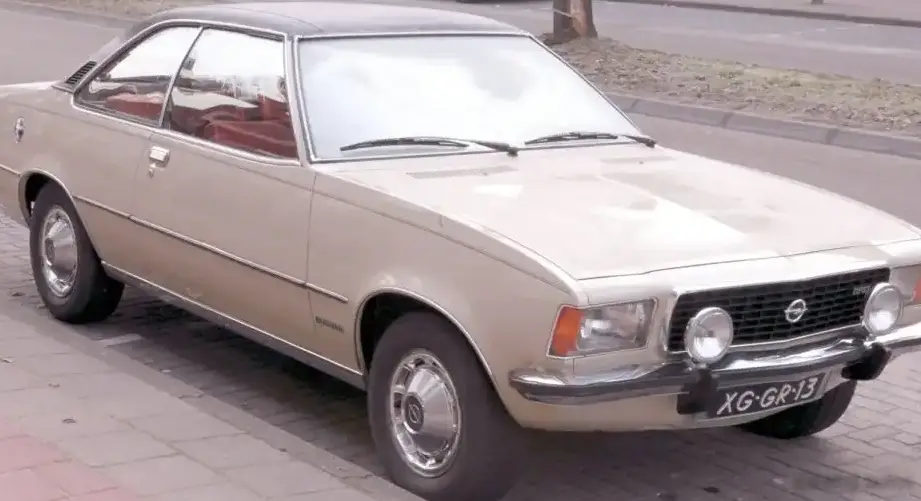
The Opel Commodore B Coupe 2.8 GS, produced between 1972 and 1973, represented a high-performance variant within the Commodore B series. This coupe, built upon the GM A-platform, aimed to deliver a blend of style, comfort, and respectable performance for the European market. It occupied a position as a premium offering within the Commodore range, appealing to buyers seeking a more sporting alternative to the standard saloon models. The “GS” designation signified “Grand Sport,” indicating a focus on enhanced performance and aesthetics. The Commodore B series, as a whole, was Opel’s flagship model, intended to compete with larger, more luxurious vehicles from British and Swedish manufacturers.
Technical Specifications
| Brand | Opel |
| Model | Commodore |
| Generation | Commodore B Coupe |
| Type (Engine) | 2.8 GS (142 Hp) |
| Start of production | 1972 |
| End of production | 1973 |
| Powertrain Architecture | Internal Combustion engine |
| Body type | Coupe |
| Seats | 5 |
| Doors | 2 |
| Fuel Type | Petrol (Gasoline) |
| Acceleration 0 – 100 km/h | 11.5 sec |
| Acceleration 0 – 62 mph | 11.5 sec |
| Acceleration 0 – 60 mph | 10.9 sec |
| Maximum speed | 190 km/h (118.06 mph) |
| Weight-to-power ratio | 8.4 kg/Hp, 118.8 Hp/tonne |
| Weight-to-torque ratio | 5.5 kg/Nm, 182.4 Nm/tonne |
| Power | 142 Hp @ 5200 rpm |
| Power per litre | 51 Hp/l |
| Torque | 218 Nm @ 3600 rpm (160.79 lb.-ft. @ 3600 rpm) |
| Engine Model/Code | 28HC |
| Engine displacement | 2784 cm3 (169.89 cu. in.) |
| Number of cylinders | 6 |
| Engine configuration | Inline |
| Cylinder Bore | 92 mm (3.62 in.) |
| Piston Stroke | 69.8 mm (2.75 in.) |
| Compression ratio | 9:1 |
| Fuel injection system | Carburettor |
| Engine aspiration | Naturally aspirated engine |
| Valvetrain | SOHC |
| Engine oil capacity | 5.5 l (5.81 US qt | 4.84 UK qt) |
| Kerb Weight | 1195 kg (2634.52 lbs.) |
| Max. weight | 1615 kg (3560.47 lbs.) |
| Max load | 420 kg (925.94 lbs.) |
| Trunk (boot) space – minimum | 434 l (15.33 cu. ft.) |
| Fuel tank capacity | 70 l (18.49 US gal | 15.4 UK gal) |
| Length | 4607 mm (181.38 in.) |
| Width | 1728 mm (68.03 in.) |
| Height | 1370 mm (53.94 in.) |
| Wheelbase | 2668 mm (105.04 in.) |
| Front track | 1450 mm (57.09 in.) |
| Rear (Back) track | 1400 mm (55.12 in.) |
| Ride height (ground clearance) | 140 mm (5.51 in.) |
| Drag coefficient (Cd) | 0.45 |
| Minimum turning circle (turning diameter) | 11.2 m (36.75 ft.) |
| Drivetrain Architecture | Rear wheel drive |
| Number of gears and type of gearbox | 4 gears, manual transmission |
Powertrain & Engine Architecture
The heart of the Commodore B Coupe 2.8 GS was the 28HC inline-six cylinder engine, displacing 2784cc (169.89 cubic inches). This engine featured a single overhead camshaft (SOHC) valvetrain and utilized a carburettor for fuel delivery. The 9:1 compression ratio contributed to its output of 142 horsepower at 5200 rpm and 218 Nm (160.79 lb-ft) of torque at 3600 rpm. The engine’s design was relatively conventional for the period, prioritizing durability and ease of maintenance over outright technological innovation. The four-speed manual transmission was standard, providing a direct connection between the engine and the rear wheels. This configuration was chosen to maximize the available power and provide a more engaging driving experience compared to the automatic options available on other Commodore models.
Driving Characteristics
The 2.8 GS offered a noticeable step up in performance compared to the lower-spec Commodore models. The 0-60 mph time of around 10.9 seconds, while not blistering by modern standards, was respectable for a large coupe in the early 1970s. The engine delivered a smooth power delivery, with usable torque available from relatively low engine speeds. The manual transmission allowed for precise control over gear selection, enabling drivers to exploit the engine’s power band effectively. Handling was generally considered competent, although the Commodore B Coupe was a relatively heavy vehicle. The rear-wheel-drive layout provided a balanced feel, but understeer was present when pushed hard. The suspension, while comfortable for everyday driving, lacked the sophistication of more modern designs.
Equipment & Trim Levels
The “GS” trim level included several features designed to enhance both the aesthetic and functional appeal of the Commodore B Coupe. Standard equipment typically included upgraded interior upholstery, often featuring cloth or vinyl combinations, and a wood-trimmed dashboard. Additional features could include a sports steering wheel, a comprehensive instrument cluster, and optional extras such as a radio, power windows, and a sunroof. The exterior was distinguished by chrome trim, distinctive badging, and often, a two-tone paint scheme. The Commodore B Coupe 2.8 GS was positioned as a premium offering, and its equipment level reflected this status.
Chassis & Braking
The Commodore B Coupe utilized a body-on-frame construction, which was common for the era. The suspension consisted of independent front suspension with coil springs and a live axle rear suspension with leaf springs. Braking was accomplished via disc brakes at the front and drum brakes at the rear. While adequate for normal driving conditions, the braking system lacked the stopping power and modulation of more advanced systems. The chassis was designed to provide a comfortable ride, but it did not offer the same level of handling precision as more modern unibody constructions.
Market Reception & Comparison
The Opel Commodore B Coupe 2.8 GS was generally well-received by automotive critics in Europe. It was praised for its stylish design, comfortable interior, and respectable performance. However, some critics noted its relatively high weight and lack of cutting-edge technology. Compared to other Commodore B variants, the 2.8 GS offered a significant performance advantage over the smaller-engined models. It was positioned as a competitor to vehicles such as the Ford Capri and the Volvo 164, offering a similar blend of style, comfort, and performance. The 2.8 GS was generally considered to be a more engaging and rewarding driving experience than the automatic transmission equipped models.
Legacy
The Opel Commodore B Coupe 2.8 GS remains a sought-after classic car today. Its combination of stylish design, robust engineering, and respectable performance has ensured its enduring appeal. The 28HC engine is known for its durability, and well-maintained examples can still provide reliable service. However, parts availability can be a challenge, and restoration projects can be costly. The Commodore B Coupe 2.8 GS represents a significant chapter in Opel’s history, embodying the company’s ambition to produce high-quality, stylish, and capable automobiles for the European market. It’s a testament to a time when coupes were grand, comfortable, and offered a genuine driving experience.