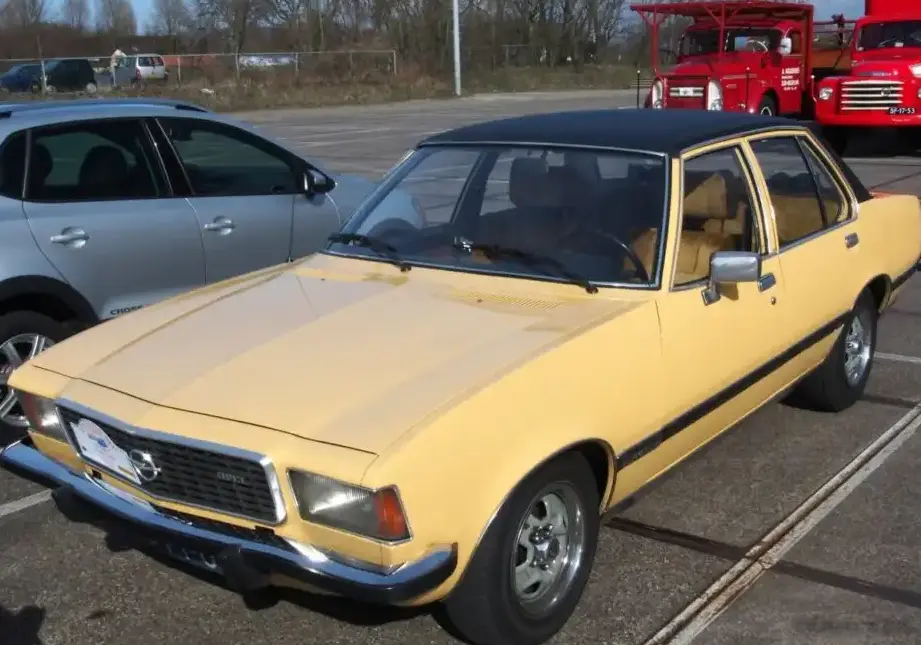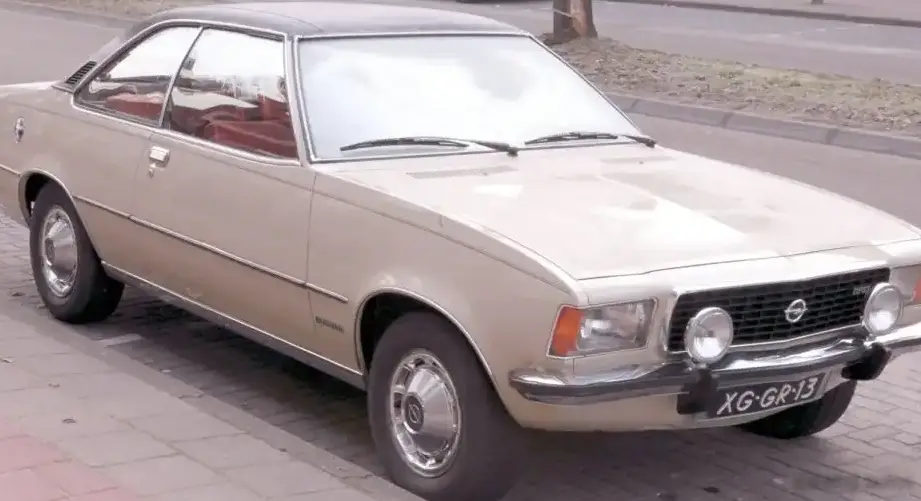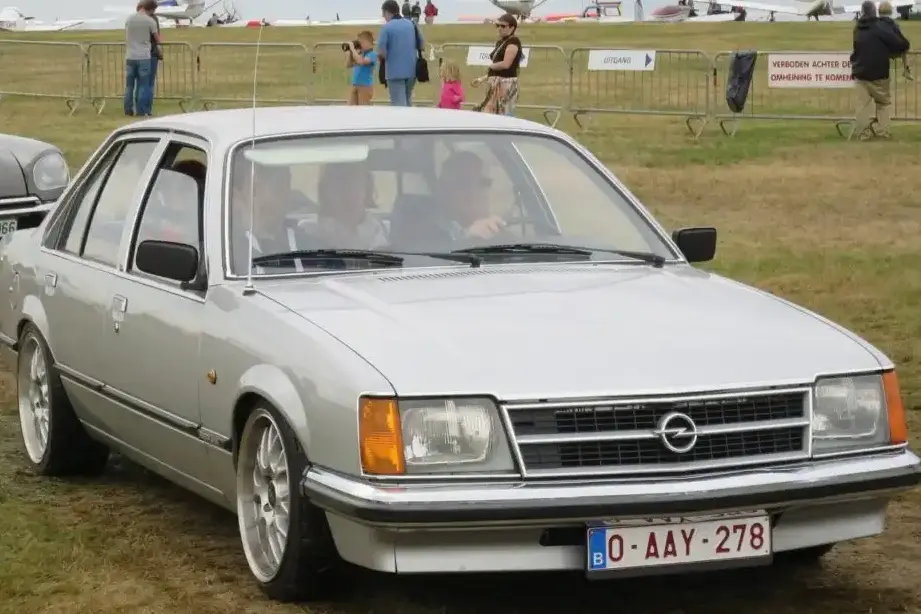
The Opel Commodore C 2.5 E, produced between 1981 and 1982, represented a refinement of the Commodore C line, a large family car manufactured by Opel. This variant, powered by a 2.5-liter inline-six engine producing 130 horsepower, occupied a middle ground within the Commodore C range, offering a balance between performance and economy. It was positioned as a step up from the smaller four-cylinder models, but below the more potent Commodore GS/E. The Commodore C itself was part of the larger Opel Rekord series, sharing its basic platform (the ‘D’ platform) but offering more luxurious appointments and a larger engine selection. The C-series Commodore aimed to provide comfortable, reliable transportation for families and business travelers in the European market.
Technical Specifications
| Brand | Opel |
| Model | Commodore |
| Generation | Commodore C |
| Type (Engine) | 2.5 E (130 Hp) |
| Start of production | 1981 |
| End of production | 1982 |
| Powertrain Architecture | Internal Combustion engine |
| Body type | Sedan |
| Seats | 5 |
| Doors | 2-4 |
| Fuel consumption (combined) | 10.5 l/100 km |
| Fuel consumption (US mpg) | 22.4 US mpg |
| Fuel consumption (UK mpg) | 26.9 UK mpg |
| Fuel consumption (km/l) | 9.5 km/l |
| Fuel Type | Petrol (Gasoline) |
| Acceleration 0 – 100 km/h | 11 sec |
| Acceleration 0 – 62 mph | 11 sec |
| Acceleration 0 – 60 mph | 10.5 sec |
| Maximum speed | 190 km/h (118.06 mph) |
| Weight-to-power ratio | 9.5 kg/Hp |
| Weight-to-torque ratio | 6.7 kg/Nm |
| Power | 130 Hp @ 5600 rpm |
| Power per litre | 52.2 Hp/l |
| Torque | 185 Nm @ 4600 rpm (136.45 lb.-ft. @ 4600 rpm) |
| Engine Model/Code | 25E |
| Engine displacement | 2490 cm3 (151.95 cu. in.) |
| Number of cylinders | 6 |
| Engine configuration | Inline |
| Cylinder Bore | 87 mm (3.43 in.) |
| Piston Stroke | 69.8 mm (2.75 in.) |
| Compression ratio | 9.2:1 |
| Number of valves per cylinder | 2 |
| Fuel injection system | Multi-port manifold injection |
| Engine aspiration | Naturally aspirated engine |
| Valvetrain | SOHC |
| Engine oil capacity | 5.5 l (5.81 US qt | 4.84 UK qt) |
| Kerb Weight | 1240 kg (2733.73 lbs.) |
| Max. weight | 1765 kg (3891.16 lbs.) |
| Max load | 525 kg (1157.43 lbs.) |
| Trunk (boot) space – minimum | 480 l (16.95 cu. ft.) |
| Trunk (boot) space – maximum | 630 l (22.25 cu. ft.) |
| Fuel tank capacity | 70 l (18.49 US gal | 15.4 UK gal) |
| Permitted trailer load with brakes (12%) | 1400 kg (3086.47 lbs.) |
| Permitted trailer load without brakes | 630 kg (1388.91 lbs.) |
| Length | 4705 mm (185.24 in.) |
| Width | 1722 mm (67.8 in.) |
| Height | 1410 mm (55.51 in.) |
| Wheelbase | 2668 mm (105.04 in.) |
| Front track | 1443 mm (56.81 in.) |
| Rear (Back) track | 1424 mm (56.06 in.) |
| Ride height (ground clearance) | 140 mm (5.51 in.) |
| Drag coefficient (Cd) | 0.43 |
| Minimum turning circle (turning diameter) | 10.8 m (35.43 ft.) |
| Drivetrain Architecture | Rear wheel drive |
| Drive wheel | Rear wheel drive |
| Number of gears and type of gearbox | 4 gears, manual transmission |
| Front brakes | Ventilated discs |
| Rear brakes | Drum |
| Tires size | 175/88 R14 |
| Wheel rims size | 6J x 14 |
Powertrain & Engine Architecture
The heart of the Commodore C 2.5 E was the Opel 25E engine, a 2.5-liter (2490 cc) inline-six cylinder powerplant. This engine utilized a single overhead camshaft (SOHC) valvetrain, operating two valves per cylinder. Fuel delivery was managed by a multi-port fuel injection system, a relatively modern feature for the early 1980s, contributing to improved fuel efficiency and smoother operation compared to carbureted engines. The engine produced 130 horsepower at 5600 rpm and 185 Nm (136.45 lb-ft) of torque at 4600 rpm. The 25E engine was known for its relatively smooth operation and decent power output for its displacement. The Commodore C 2.5 E was typically equipped with a four-speed manual transmission, although an automatic transmission was also available as an option. The automatic transmission, a three-speed unit, was geared for comfortable cruising rather than outright performance.
Driving Characteristics
The Commodore C 2.5 E with the manual transmission offered reasonably brisk acceleration, achieving 0-60 mph in around 10.5 seconds. The automatic version was slightly slower due to the transmission’s inherent efficiency losses and gear ratios. The inline-six engine provided a broad torque curve, making the car feel responsive in everyday driving situations. However, it wasn’t a particularly high-revving engine, and its power began to taper off noticeably above 5000 rpm. The rear-wheel-drive configuration provided a traditional driving experience, with predictable handling characteristics. The suspension, while comfortable, wasn’t particularly sporty, resulting in some body roll during cornering. Compared to the Commodore GS/E, which featured a more powerful engine and sportier suspension, the 2.5 E prioritized comfort and fuel economy.
Equipment & Trim Levels
The Commodore C 2.5 E typically came equipped with a respectable level of standard features for its time. These included cloth upholstery, a basic radio, and power-assisted steering. Optional extras included a more advanced radio with cassette player, electric windows, central locking, and a sunroof. The interior was generally well-appointed, with a focus on practicality and durability. The dashboard layout was straightforward and functional, with clearly labeled controls. Trim levels varied slightly depending on the market, but generally, the 2.5 E offered a good balance of comfort and convenience features.
Chassis & Braking
The Commodore C utilized a traditional body-on-frame construction, providing a robust and durable chassis. The front suspension consisted of independent coil springs and wishbones, while the rear suspension employed a live axle with leaf springs. The braking system featured ventilated disc brakes at the front and drum brakes at the rear. The brakes were adequate for normal driving conditions, but lacked the stopping power of more modern braking systems. The tires were typically 175/88 R14, providing a reasonable compromise between comfort and grip.
Market Reception & Comparison
The Opel Commodore C 2.5 E was generally well-received by automotive critics as a comfortable and reliable family car. It was praised for its spacious interior, smooth ride, and decent fuel economy. However, it was also criticized for its somewhat dated styling and lack of sporting pretensions. Compared to other trims in the Commodore C lineup, the 2.5 E offered a more affordable entry point, appealing to buyers who prioritized practicality and value over performance. The smaller four-cylinder Commodores were more fuel-efficient but lacked the power of the 2.5 E, while the GS/E offered superior performance but came at a higher price.
Legacy
The Opel Commodore C 2.5 E, while not a particularly rare or collectible car today, remains a popular choice among classic car enthusiasts. The 25E engine is known for its durability and relative simplicity, making it relatively easy to maintain. However, parts availability can be a challenge, as the Commodore C is now a relatively old vehicle. The Commodore C 2.5 E represents a significant chapter in Opel’s history, embodying the company’s commitment to building comfortable, reliable, and affordable family cars. It continues to be appreciated for its classic styling, comfortable ride, and enduring appeal.