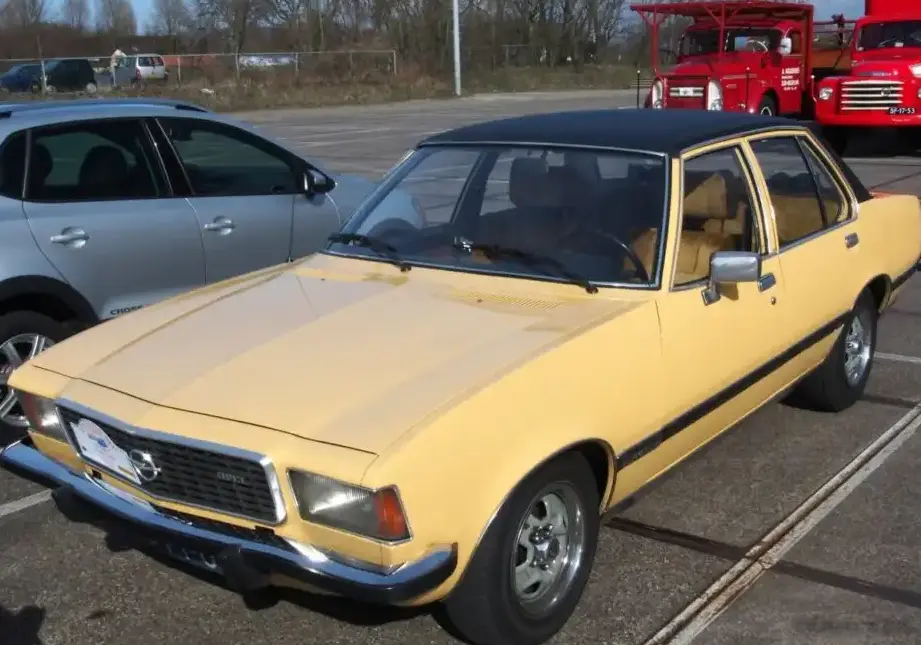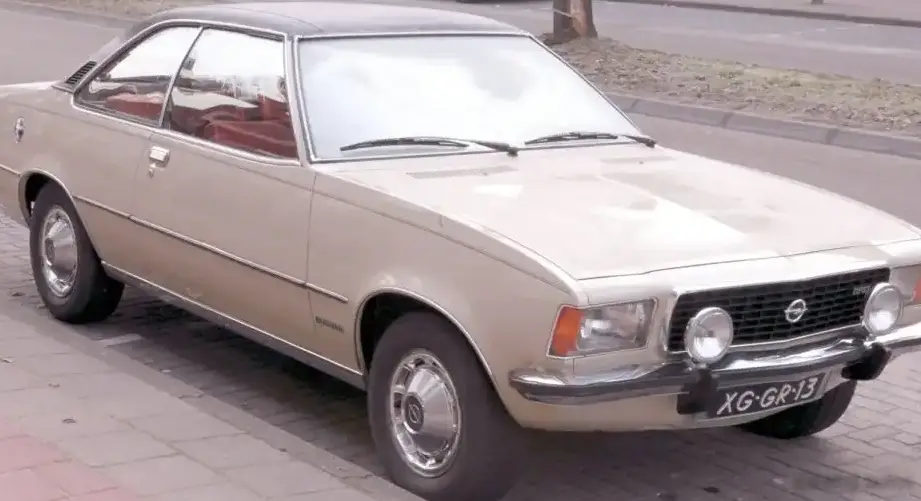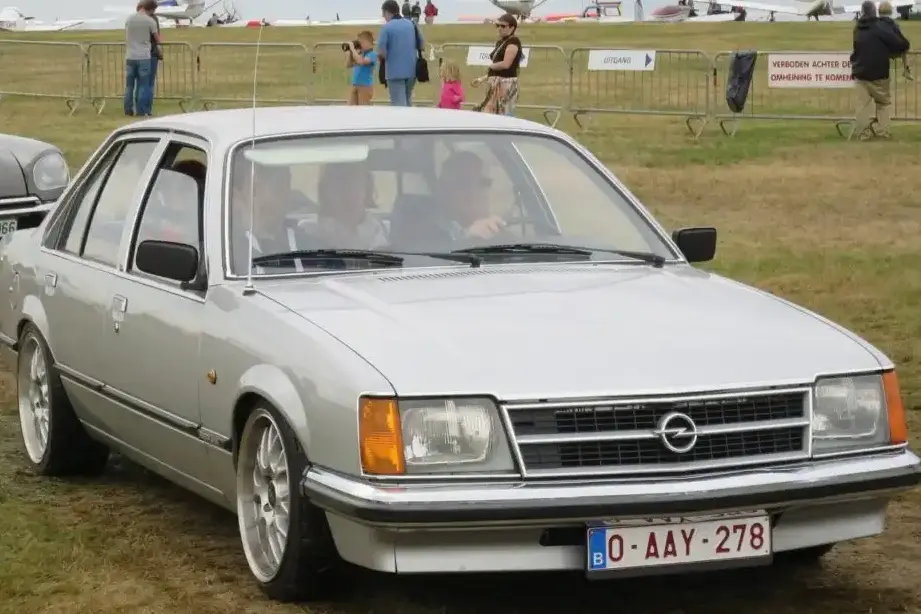
The Opel Commodore C 2.5 E Automatic, produced between 1981 and 1982, represented a refined iteration of Opel’s long-running Commodore line. Positioned as a comfortable and relatively luxurious offering within the C-series range, the 2.5 E Automatic catered to buyers seeking a blend of performance and convenience. It sat in the mid-to-upper segment of the Commodore C lineup, offering more power than the base 2.0L models but lacking the outright sporting focus of potential future performance variants. The Commodore C itself was built upon the GM’s V-platform, shared with other European Opel and Vauxhall models, and aimed to provide a spacious and well-equipped family sedan.
Technical Specifications
| Brand | Opel |
| Model | Commodore |
| Generation | Commodore C |
| Type (Engine) | 2.5 E (130 Hp) Automatic |
| Start of production | 1981 |
| End of production | 1982 |
| Powertrain Architecture | Internal Combustion engine |
| Body type | Sedan |
| Seats | 5 |
| Doors | 2-4 |
| Fuel Type | Petrol (Gasoline) |
| Acceleration 0 – 100 km/h | 12.5 sec |
| Acceleration 0 – 62 mph | 12.5 sec |
| Acceleration 0 – 60 mph | 11.9 sec |
| Maximum speed | 185 km/h (114.95 mph) |
| Weight-to-power ratio | 9.7 kg/Hp, 103.2 Hp/tonne |
| Weight-to-torque ratio | 6.8 kg/Nm, 146.8 Nm/tonne |
| Power | 130 Hp @ 5600 rpm |
| Power per litre | 52.2 Hp/l |
| Torque | 185 Nm @ 4600 rpm (136.45 lb.-ft. @ 4600 rpm) |
| Engine layout | Front, Longitudinal |
| Engine Model/Code | 25E |
| Engine displacement | 2490 cm3 (151.95 cu. in.) |
| Number of cylinders | 6 |
| Engine configuration | Inline |
| Cylinder Bore | 87 mm (3.43 in.) |
| Piston Stroke | 69.8 mm (2.75 in.) |
| Compression ratio | 9.2:1 |
| Number of valves per cylinder | 2 |
| Fuel injection system | Multi-port manifold injection |
| Engine aspiration | Naturally aspirated engine |
| Valvetrain | SOHC |
| Engine oil capacity | 5.5 l (5.81 US qt | 4.84 UK qt) |
| Kerb Weight | 1260 kg (2777.82 lbs.) |
| Max. weight | 1765 kg (3891.16 lbs.) |
| Max load | 505 kg (1113.33 lbs.) |
| Trunk (boot) space – minimum | 480 l (16.95 cu. ft.) |
| Trunk (boot) space – maximum | 630 l (22.25 cu. ft.) |
| Fuel tank capacity | 70 l (18.49 US gal | 15.4 UK gal) |
| Permitted trailer load with brakes (12%) | 1400 kg (3086.47 lbs.) |
| Permitted trailer load without brakes | 630 kg (1388.91 lbs.) |
| Length | 4705 mm (185.24 in.) |
| Width | 1722 mm (67.8 in.) |
| Height | 1410 mm (55.51 in.) |
| Wheelbase | 2668 mm (105.04 in.) |
| Front track | 1443 mm (56.81 in.) |
| Rear (Back) track | 1424 mm (56.06 in.) |
| Ride height (ground clearance) | 140 mm (5.51 in.) |
| Drag coefficient (Cd) | 0.43 |
| Minimum turning circle (turning diameter) | 10.8 m (35.43 ft.) |
| Drivetrain Architecture | The Internal combustion engine (ICE) drives the rear wheels of the vehicle. |
| Drive wheel | Rear wheel drive |
| Number of gears and type of gearbox | 3 gears, automatic transmission |
| Front suspension | Independent, type McPherson with coil spring and anti-roll bar |
| Front brakes | Ventilated discs |
| Rear brakes | Drum |
| Tires size | 175/88 R14 |
| Wheel rims size | 6J x 14 |
Powertrain & Engine Architecture
The heart of the Commodore C 2.5 E Automatic was the 25E inline-six cylinder engine. This 2.5-liter (2490 cc) engine featured a single overhead camshaft (SOHC) valvetrain operating two valves per cylinder. The 25E utilized Bosch multi-port fuel injection, a significant advancement over earlier carbureted Opel engines, contributing to improved fuel efficiency and smoother power delivery. The engine produced 130 horsepower at 5600 rpm and 185 Nm (136.45 lb-ft) of torque at 4600 rpm. The engine was mounted longitudinally in the front of the vehicle, driving the rear wheels. Paired with the engine was a three-speed automatic transmission, providing convenient shifting for everyday driving. This transmission, while not particularly advanced by modern standards, was known for its durability and relatively smooth operation.
Driving Characteristics
The 2.5 E Automatic offered a comfortable and relaxed driving experience. Acceleration was adequate, with a 0-60 mph time of around 11.9 seconds, but it wasn’t designed for outright speed. The automatic transmission, while convenient, did result in some power loss compared to the available manual transmission options. The gear ratios were optimized for cruising, making it a pleasant vehicle for long highway journeys. The rear-wheel-drive layout provided balanced handling, although it lacked the agility of more modern front-wheel-drive cars. Compared to the 2.0L Commodore models, the 2.5 E offered noticeably more power and torque, making it easier to accelerate and maintain speed, especially when fully loaded. However, it didn’t possess the sporty character of potential higher-performance Commodore variants that might have featured larger engines or more aggressive tuning.
Equipment & Trim Levels
The Commodore C 2.5 E Automatic typically came well-equipped for its time. Standard features included comfortable cloth upholstery, a woodgrain-trimmed dashboard, and power-assisted steering. Optional extras included a sunroof, upgraded audio systems, and air conditioning. The interior was spacious and well-appointed, reflecting Opel’s commitment to providing a comfortable and refined driving experience. Trim levels varied slightly depending on the market, but generally, the 2.5 E Automatic represented a step up in terms of luxury and features compared to the base Commodore models.
Chassis & Braking
The Commodore C featured an independent McPherson strut front suspension with coil springs and an anti-roll bar, providing a comfortable ride and reasonable handling. The rear suspension utilized a solid axle with leaf springs. Braking was accomplished via ventilated discs on the front wheels and drum brakes on the rear. While adequate for normal driving conditions, the rear drum brakes were a limitation compared to all-disc setups found on some competing vehicles. The steering was power-assisted, making it easy to maneuver at low speeds. The 175/88 R14 tires provided a good balance of comfort and grip.
Market Reception & Comparison
The Commodore C 2.5 E Automatic was generally well-received by automotive critics as a comfortable and practical family sedan. It was praised for its spacious interior, smooth ride, and relatively powerful engine. However, some critics noted that the automatic transmission dulled performance somewhat and that the handling wasn’t as sharp as some of its competitors. Fuel economy was typical for a vehicle of its size and engine displacement in the early 1980s. Compared to other Commodore C trims, the 2.5 E Automatic offered a good balance of performance and convenience, appealing to buyers who prioritized comfort and ease of driving over outright sportiness.
Legacy
The Opel Commodore C 2.5 E Automatic, while not a particularly rare or collectible vehicle today, holds a place in automotive history as a representative of 1980s European family sedans. The 25E engine proved to be a durable and reliable powerplant, and many examples are still on the road today. However, finding well-maintained examples can be challenging, as age and corrosion have taken their toll. The automatic transmission, while generally reliable, may require occasional servicing. In the used car market, the Commodore C 2.5 E Automatic is often sought after by enthusiasts looking for a classic European car that offers a comfortable and nostalgic driving experience.