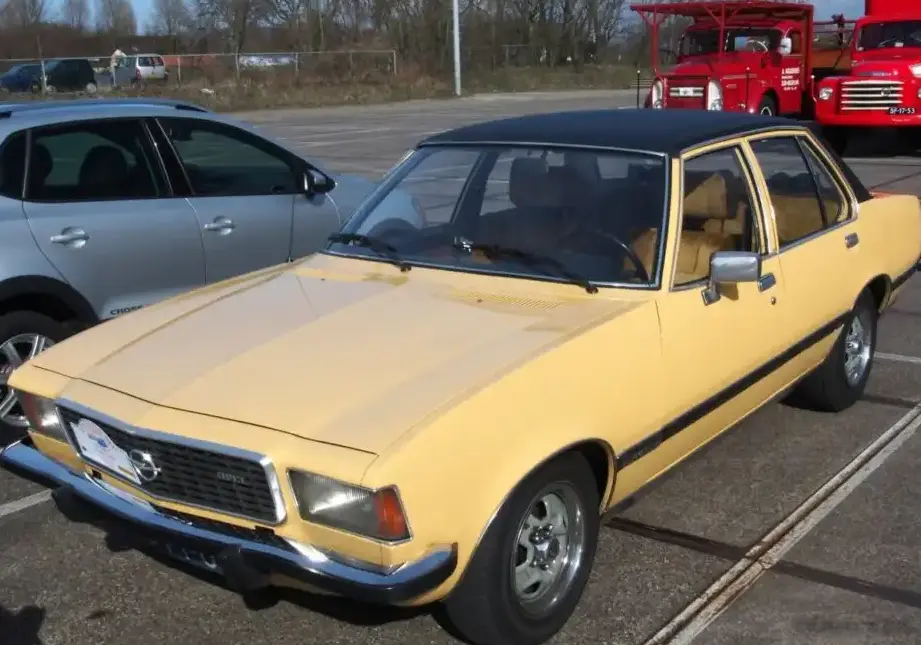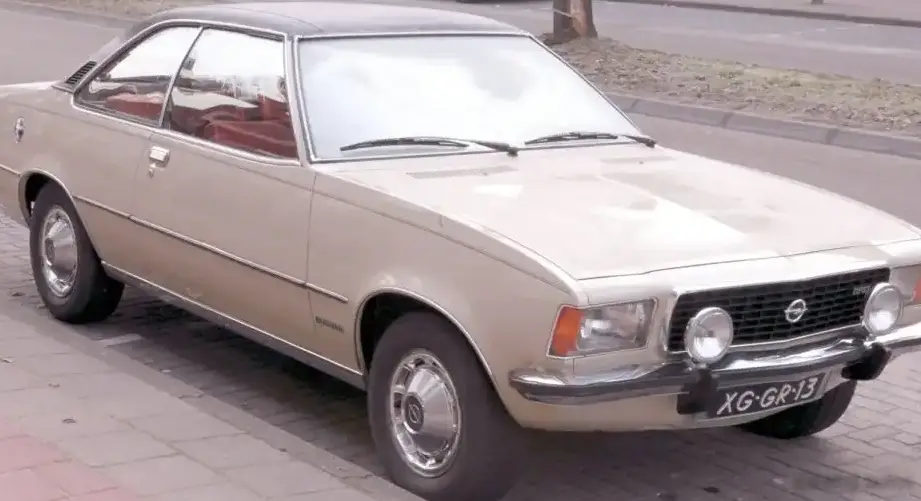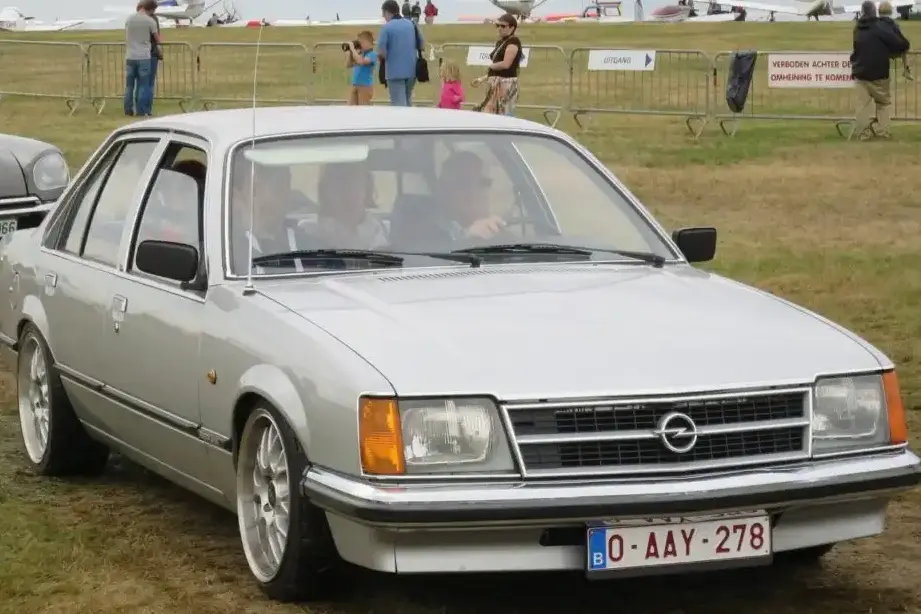
The Opel Commodore C 2.5 S Automatic, produced between 1978 and 1982, represented a comfortable and relatively affordable entry point into the Commodore C range. Positioned as a mid-range offering, it catered to buyers seeking a spacious, six-cylinder sedan with the convenience of an automatic transmission. The Commodore C, built upon the GM’s V-body platform, was Opel’s flagship model, aiming to provide a blend of luxury and practicality for family transportation. This 2.5 S variant, with its 115 horsepower engine and three-speed automatic, was a popular choice in European markets, offering a balance between performance and fuel economy for the time.
Technical Specifications
| Brand | Opel |
| Model | Commodore |
| Generation | Commodore C |
| Type (Engine) | 2.5 S (115 Hp) Automatic |
| Start of production | 1978 |
| End of production | 1982 |
| Powertrain Architecture | Internal Combustion engine |
| Body type | Sedan |
| Seats | 5 |
| Doors | 2-4 |
| Fuel consumption (combined) | 11.9 l/100 km (19.8 US mpg, 23.7 UK mpg, 8.4 km/l) |
| Fuel Type | Petrol (Gasoline) |
| Acceleration 0 – 100 km/h | 13 sec |
| Acceleration 0 – 62 mph | 13 sec |
| Acceleration 0 – 60 mph | 12.4 sec |
| Maximum speed | 175 km/h (108.74 mph) |
| Weight-to-power ratio | 10.6 kg/Hp, 94.3 Hp/tonne |
| Weight-to-torque ratio | 6.6 kg/Nm, 151.6 Nm/tonne |
| Power | 115 Hp @ 5200 rpm |
| Power per litre | 46.2 Hp/l |
| Torque | 185 Nm @ 4600 rpm (136.45 lb.-ft. @ 4600 rpm) |
| Engine layout | Front, Longitudinal |
| Engine Model/Code | 25S |
| Engine displacement | 2490 cm3 (151.95 cu. in.) |
| Number of cylinders | 6 |
| Engine configuration | Inline |
| Cylinder Bore | 87 mm (3.43 in.) |
| Piston Stroke | 69.8 mm (2.75 in.) |
| Compression ratio | 9.2:1 |
| Number of valves per cylinder | 2 |
| Fuel injection system | Carburettor |
| Engine aspiration | Naturally aspirated engine |
| Valvetrain | SOHC |
| Engine oil capacity | 5.5 l (5.81 US qt | 4.84 UK qt) |
| Coolant | 10.1 l (10.67 US qt | 8.89 UK qt) |
| Kerb Weight | 1220 kg (2689.64 lbs.) |
| Max. weight | 1740 kg (3836.04 lbs.) |
| Max load | 520 kg (1146.4 lbs.) |
| Trunk (boot) space – minimum | 630 l (22.25 cu. ft.) |
| Fuel tank capacity | 70 l (18.49 US gal | 15.4 UK gal) |
| Permitted trailer load with brakes (12%) | 1600 kg (3527.4 lbs.) |
| Permitted trailer load without brakes | 630 kg (1388.91 lbs.) |
| Length | 4705 mm (185.24 in.) |
| Width | 1730 mm (68.11 in.) |
| Height | 1410 mm (55.51 in.) |
| Wheelbase | 2668 mm (105.04 in.) |
| Front track | 1443 mm (56.81 in.) |
| Rear (Back) track | 1424 mm (56.06 in.) |
| Ride height (ground clearance) | 140 mm (5.51 in.) |
| Drag coefficient (Cd) | 0.45 |
| Minimum turning circle (turning diameter) | 11.5 m (37.73 ft.) |
| Drivetrain Architecture | The Internal combustion engine (ICE) drives the rear wheels of the vehicle. |
| Drive wheel | Rear wheel drive |
| Number of gears and type of gearbox | 3 gears, automatic transmission |
| Front suspension | Independent, type McPherson with coil spring and anti-roll bar |
| Front brakes | Ventilated discs |
| Rear brakes | Drum |
| Tires size | 175/80 R14 |
| Wheel rims size | 6J x 14 |
Powertrain & Engine Architecture
The heart of the Commodore C 2.5 S Automatic was the 25S inline-six cylinder engine, displacing 2.5 liters (2490 cc). This engine utilized a single overhead camshaft (SOHC) valvetrain with two valves per cylinder. Fuel delivery was managed by a carburetor, a common setup for the era, rather than fuel injection. The engine produced 115 horsepower at 5200 rpm and 185 Nm (136.45 lb-ft) of torque at 4600 rpm. The engine was mounted longitudinally in the front of the vehicle, driving the rear wheels. The three-speed automatic transmission, while providing convenience, was a relatively simple unit, prioritizing smooth shifts over outright performance. It was a General Motors design, commonly found in various Opel and other GM vehicles of the period.
Driving Characteristics
The 2.5 S Automatic offered a comfortable, if not particularly sporty, driving experience. The automatic transmission, while convenient, did detract from the engine’s potential. Acceleration to 60 mph took around 12.4 seconds, and the top speed was approximately 108.74 mph. Compared to the manual transmission versions of the 2.5 S, or the more powerful Commodore GS/E models, the automatic felt noticeably slower. The gear ratios were optimized for cruising and fuel economy, rather than rapid acceleration. The suspension, featuring McPherson struts at the front and a solid axle with coil springs at the rear, provided a reasonably comfortable ride, but handling was somewhat compromised by the car’s weight and the relatively soft suspension setup.
Equipment & Trim Levels
The Commodore C 2.5 S Automatic came reasonably well-equipped for its time. Standard features typically included cloth upholstery, a basic radio, and manual windows. The interior was functional and spacious, prioritizing comfort over luxury. Optional extras included a more powerful radio, upgraded upholstery, and a sunroof. The trim level was generally considered mid-range within the Commodore C lineup, offering a step up from the base models but lacking the more luxurious appointments of the GS/E or Diplomat variants.
Chassis & Braking
The Commodore C featured a body-on-frame construction, providing a robust and durable chassis. The front suspension utilized independent McPherson struts with coil springs and an anti-roll bar, while the rear suspension employed a solid axle with coil springs. Braking was accomplished via ventilated discs at the front and drum brakes at the rear. The braking system was adequate for the car’s weight and performance, but lacked the stopping power of more modern systems. The 175/80 R14 tires provided reasonable grip, but were not particularly sporty.
Market Reception & Comparison
The Commodore C 2.5 S Automatic was generally well-received by critics as a practical and comfortable family car. However, the automatic transmission was often criticized for diminishing the engine’s performance. Compared to the manual transmission versions, the automatic offered less engaging driving experience. The 2.5 S also lagged behind the more powerful Commodore GS/E models in terms of performance and handling. Fuel economy, at around 19.8 US mpg, was typical for a large, six-cylinder sedan of the era. Reliability was generally good, although carburetor maintenance could be required periodically.
Legacy
The Opel Commodore C 2.5 S Automatic, while not a performance icon, remains a fondly remembered classic. The 25S engine, while not particularly sophisticated, proved to be durable and relatively easy to maintain. Today, these cars are sought after by classic car enthusiasts, particularly those looking for a comfortable and spacious vintage cruiser. Parts availability can be a challenge, but a dedicated community of owners and suppliers helps to keep these vehicles on the road. The combination of a comfortable ride, spacious interior, and relatively simple mechanicals makes the Commodore C 2.5 S Automatic a charming and enjoyable classic car.