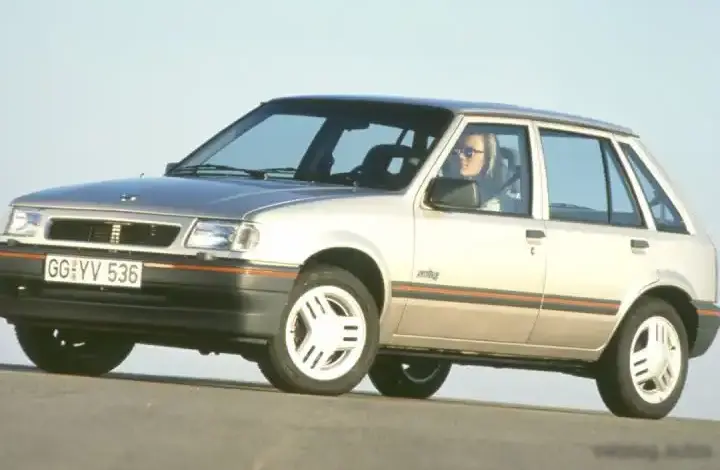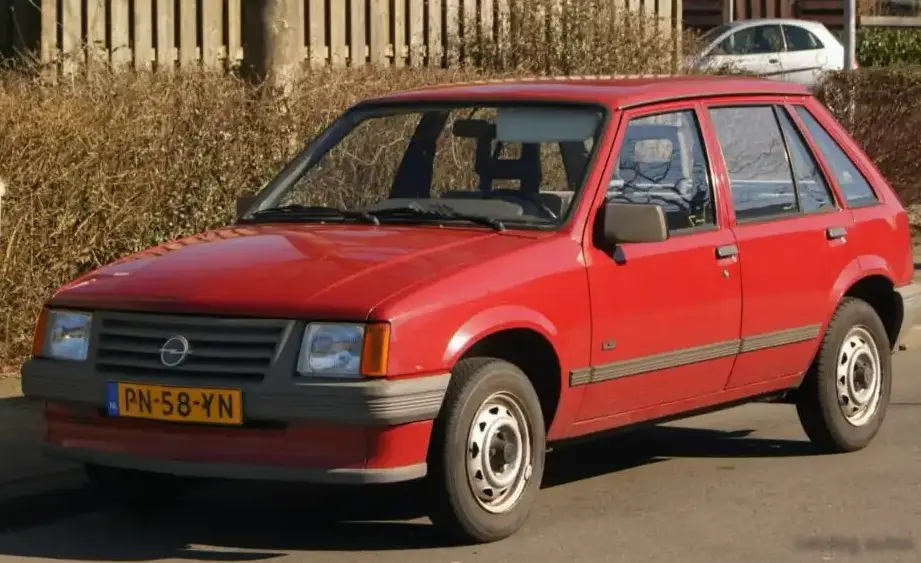
The Opel Corsa A 1.0, producing 45 horsepower, represents the entry point into the first generation Corsa range, launched in 1982 and continuing through 1983. Positioned as an affordable and economical city car, the 1.0-liter variant was crucial in establishing the Corsa’s presence in the European market, particularly appealing to first-time buyers and those seeking low running costs. It was built on Opel’s new ‘small car’ platform, intended to replace the aging Kadett C and Ascona B in the lower segments. This model laid the foundation for a lineage that would become a mainstay in Opel’s lineup for decades.
Technical Specifications
| Brand | Opel |
| Model | Corsa |
| Generation | Corsa A |
| Type (Engine) | 1.0 (45 Hp) |
| Start of production | 1982 |
| End of production | 1983 |
| Powertrain Architecture | Internal Combustion engine |
| Body type | Hatchback |
| Seats | 5 |
| Doors | 3 |
| Fuel consumption (urban) | 7.5 l/100 km (31.4 US mpg) |
| Fuel consumption (extra urban) | 4.9 l/100 km (48 US mpg) |
| Fuel consumption (combined) | 6.6 l/100 km (35.6 US mpg) |
| Fuel Type | Petrol (Gasoline) |
| Acceleration 0 – 100 km/h | 19.5 sec |
| Acceleration 0 – 62 mph | 19.5 sec |
| Acceleration 0 – 60 mph | 18.5 sec |
| Maximum speed | 140 km/h (86.99 mph) |
| Weight-to-power ratio | 16.9 kg/Hp |
| Weight-to-torque ratio | 11.2 kg/Nm |
| Power | 45 Hp @ 5400 rpm |
| Torque | 68 Nm @ 2600-3800 rpm (50.15 lb.-ft.) |
| Engine layout | Front, Transverse |
| Engine Model/Code | 10S |
| Engine displacement | 993 cm3 (60.6 cu. in.) |
| Number of cylinders | 4 |
| Engine configuration | Inline |
| Cylinder Bore | 72 mm (2.83 in.) |
| Piston Stroke | 61 mm (2.4 in.) |
| Compression ratio | 9.2:1 |
| Number of valves per cylinder | 2 |
| Fuel injection system | Carburettor |
| Engine aspiration | Naturally aspirated |
| Engine oil capacity | 2.75 l (2.91 US qt) |
| Coolant capacity | 5.5 l (5.81 US qt) |
| Kerb Weight | 760 kg (1675.51 lbs.) |
| Max. weight | 1255 kg (2766.8 lbs.) |
| Max load | 495 kg (1091.29 lbs.) |
| Trunk (boot) space – minimum | 270 l (9.53 cu. ft.) |
| Trunk (boot) space – maximum | 1060 l (37.43 cu. ft.) |
| Fuel tank capacity | 42 l (11.1 US gal) |
| Length | 3622 mm (142.6 in.) |
| Width | 1532 mm (60.31 in.) |
| Height | 1365 mm (53.74 in.) |
| Wheelbase | 2343 mm (92.24 in.) |
| Front track | 1320 mm (51.97 in.) |
| Rear track | 1300 mm (51.18 in.) |
| Ride height | 140 mm (5.51 in.) |
| Drag coefficient (Cd) | 0.36 |
| Minimum turning circle | 10 m (32.81 ft.) |
| Drivetrain | Front wheel drive |
| Number of gears | 4 |
| Gearbox type | Manual transmission |
| Front suspension | Coil spring |
| Rear suspension | Coil spring |
| Front brakes | Disc |
| Rear brakes | Drum |
| Tires size | 165/65R14 |
| Wheel rims size | 5J x 14 |
Introduction
The Opel Corsa A 1.0 was the foundational model for the entire Corsa A range, entering production in 1982. It was designed to be a modern, front-wheel-drive supermini, replacing the rear-wheel-drive Opel Kadett C in the entry-level market. The Corsa A represented a significant shift for Opel, embracing more contemporary engineering and design principles. The 1.0-liter engine was specifically chosen to provide a balance between affordability, fuel efficiency, and usability for everyday driving. It was a key component in Opel’s strategy to compete with rivals like the Ford Fiesta and Volkswagen Polo.
Powertrain & Engine Architecture
The heart of the Corsa A 1.0 is the 10S engine, a 993cc inline-four cylinder petrol engine. This engine utilized a single overhead valve (OHV) valvetrain, a relatively simple and cost-effective design for the time. Fuel delivery was managed by a single carburetor, rather than fuel injection, contributing to its lower price point. The engine produced 45 horsepower at 5400 rpm and 68 Nm (50.15 lb-ft) of torque between 2600 and 3800 rpm. The engine’s transverse mounting and front-wheel-drive configuration were relatively new for Opel at the time, offering improved packaging and handling characteristics. The transmission was a four-speed manual gearbox, chosen for its simplicity and durability. This combination, while not offering blistering performance, was designed for reliability and low running costs.
Driving Characteristics
The Corsa A 1.0’s driving experience was defined by its modest power output. Acceleration was leisurely, taking approximately 19.5 seconds to reach 62 mph (100 km/h). Top speed was around 87 mph (140 km/h). The four-speed gearbox was geared for economy, meaning that highway cruising required the engine to work relatively hard. Compared to higher-spec Corsa A models with larger engines (like the 1.2 or 1.6), the 1.0 felt significantly slower. However, its light weight (760 kg) and nimble handling made it surprisingly enjoyable to drive around town. The steering was light and responsive, and the suspension provided a comfortable, if somewhat basic, ride. The manual transmission offered a direct connection to the engine, but the gear ratios were spaced to prioritize fuel efficiency over outright performance.
Equipment & Trim Levels
The Corsa A 1.0 was typically offered in a basic trim level, reflecting its position as the entry-level model. Standard features included cloth upholstery, a basic instrument cluster, and manually operated windows and door locks. Optional extras were limited, but could include a radio, upgraded interior trim, and occasionally, a sunroof. The interior design was functional and utilitarian, prioritizing practicality over luxury. The dashboard layout was simple and easy to use, with clearly labeled controls. The focus was on providing a comfortable and reliable driving environment at an affordable price.
Chassis & Braking
The Corsa A featured a relatively simple chassis design. Front suspension utilized coil springs and independent struts, while the rear suspension employed a twist-beam axle with coil springs. This setup provided a reasonable balance between ride comfort and handling. Braking was handled by disc brakes on the front wheels and drum brakes on the rear. The braking system was adequate for the car’s performance, but lacked the sophistication of more advanced systems found on higher-spec models. Anti-lock braking (ABS) was not available on the 1.0-liter variant. The steering system was a rack and pinion setup, providing precise and responsive steering feel.
Market Reception & Comparison
The Corsa A 1.0 was generally well-received by critics as a practical and affordable city car. Its fuel economy was a major selling point, particularly in a period of rising fuel prices. However, its performance was often criticized as being underpowered, especially when compared to rivals like the Ford Fiesta and Volkswagen Polo. The 1.2-liter Corsa A offered a noticeable improvement in performance, but came at a higher price. The 1.0-liter model appealed to buyers who prioritized economy and low running costs over outright speed. Its simplicity and reliability also contributed to its popularity.
Legacy
The Opel Corsa A 1.0, while not the most powerful or technologically advanced version of the Corsa A, played a vital role in establishing the model’s reputation for affordability and reliability. The 10S engine proved to be a durable and long-lasting unit, and many examples are still on the road today. In the used car market, the Corsa A 1.0 remains a popular choice for those seeking a classic, inexpensive, and easy-to-maintain vehicle. Its simplicity makes it relatively easy to repair and maintain, and parts availability is generally good. The Corsa A 1.0 represents a significant milestone in Opel’s history, marking the transition to modern front-wheel-drive technology and establishing the Corsa as a key player in the European supermini segment.