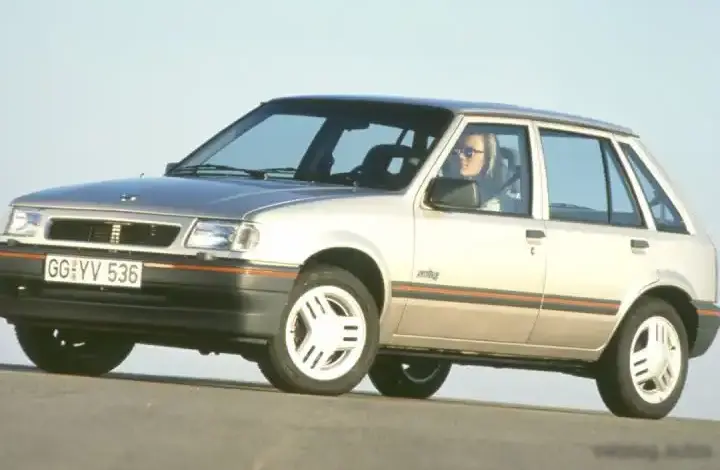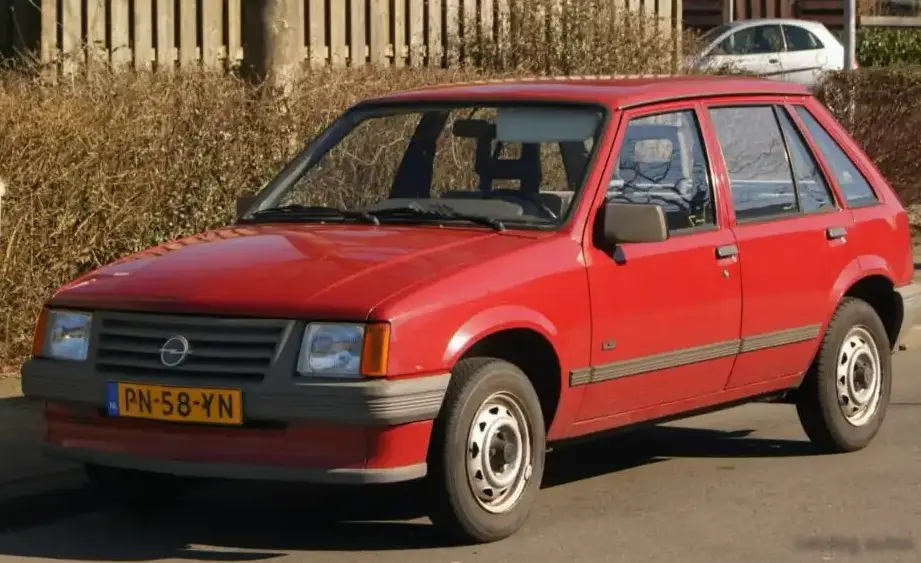
The Opel Corsa A 1.3 S, produced between 1982 and 1987, represented a significant entry in the supermini segment for Opel, and a crucial step in the brand’s modernization. Positioned as a slightly more sporting variant within the initial Corsa A range, the 1.3 S offered a modest performance upgrade over the base models, appealing to buyers seeking a bit more driving engagement. This first generation Corsa (internally designated as the 1HX0) was Opel’s replacement for the aging Kadett C-based Opel Corsa B, and aimed to compete directly with popular European rivals like the Fiat Uno, Peugeot 205, and Volkswagen Polo. The ‘S’ designation denoted a specific trim level focused on a balance of affordability and a slightly more dynamic driving experience.
Technical Specifications
| Brand | Opel |
| Model | Corsa |
| Generation | Corsa A |
| Type (Engine) | 1.3 S (70 Hp) |
| Start of production | 1982 |
| End of production | 1987 |
| Powertrain Architecture | Internal Combustion engine |
| Body type | Hatchback |
| Seats | 5 |
| Doors | 3 |
| Fuel consumption (combined) | 7.6 l/100 km |
| Fuel consumption (US mpg) | 30.9 US mpg |
| Fuel consumption (UK mpg) | 37.2 UK mpg |
| Fuel consumption (km/l) | 13.2 km/l |
| Fuel Type | Petrol (Gasoline) |
| Acceleration 0 – 100 km/h | 13.5 sec |
| Acceleration 0 – 62 mph | 13.5 sec |
| Acceleration 0 – 60 mph | 12.8 sec |
| Maximum speed | 161 km/h (100.04 mph) |
| Weight-to-power ratio | 10.7 kg/Hp |
| Weight-to-torque ratio | 7.4 kg/Nm |
| Power | 70 Hp @ 5800 rpm |
| Power per litre | 54 Hp/l |
| Torque | 101 Nm @ 3800 rpm (74.49 lb.-ft. @ 3800 rpm) |
| Engine layout | Front, Transverse |
| Engine Model/Code | 13SB |
| Engine displacement | 1297 cm3 (79.15 cu. in.) |
| Number of cylinders | 4 |
| Engine configuration | Inline |
| Cylinder Bore | 75 mm (2.95 in.) |
| Piston Stroke | 73.4 mm (2.89 in.) |
| Compression ratio | 9.2:1 |
| Number of valves per cylinder | 2 |
| Fuel injection system | Carburettor |
| Engine aspiration | Naturally aspirated engine |
| Valvetrain | SOHC |
| Engine oil capacity | 3 l (3.17 US qt | 2.64 UK qt) |
| Coolant capacity | 6.1 l (6.45 US qt | 5.37 UK qt) |
| Kerb Weight | 750 kg (1653.47 lbs.) |
| Max. weight | 1215 kg (2678.62 lbs.) |
| Max load | 465 kg (1025.15 lbs.) |
| Trunk (boot) space – minimum | 270 l (9.53 cu. ft.) |
| Trunk (boot) space – maximum | 1060 l (37.43 cu. ft.) |
| Fuel tank capacity | 42 l (11.1 US gal | 9.24 UK gal) |
| Length | 3622 mm (142.6 in.) |
| Width | 1532 mm (60.31 in.) |
| Height | 1365 mm (53.74 in.) |
| Wheelbase | 2343 mm (92.24 in.) |
| Front track | 1320 mm (51.97 in.) |
| Rear track | 1300 mm (51.18 in.) |
| Ride height (ground clearance) | 140 mm (5.51 in.) |
| Drag coefficient (Cd) | 0.36 |
| Minimum turning circle | 10 m (32.81 ft.) |
| Drivetrain | Front wheel drive |
| Number of gears | 5 |
| Gearbox type | Manual transmission |
| Front brakes | Disc |
| Rear brakes | Drum |
| Tires size | 145/70 R13 |
| Wheel rims size | 13 |
Introduction
The Opel Corsa A 1.3 S, launched in 1982, was a key component of Opel’s strategy to revitalize its small car offerings. Replacing the aging Corsa B, the A-series represented a clean-sheet design, moving to a front-wheel-drive layout and offering a more modern driving experience. The 1.3 S trim sat in the middle of the initial Corsa A lineup, offering a step up in performance from the base 1.0L and 1.2L models, but remaining more affordable than the later 1.6L variants. It was aimed at buyers who wanted a practical, economical, and reasonably enjoyable supermini for everyday use. The Corsa A was a significant departure for Opel, embracing contemporary design and engineering principles.
Powertrain & Engine Architecture
The heart of the Corsa A 1.3 S was the 13SB engine, a 1.3-liter inline-four cylinder petrol engine. This engine, producing 70 horsepower at 5800 rpm and 101 Nm (74.49 lb-ft) of torque at 3800 rpm, was a relatively simple design featuring a single overhead camshaft (SOHC) valvetrain with two valves per cylinder. Crucially, the 1.3 S utilized a carburetor for fuel delivery, a common practice for vehicles of this era, prioritizing simplicity and cost-effectiveness over the more advanced fuel injection systems. The engine’s transverse mounting and front-wheel-drive configuration were a significant change for Opel, offering improved packaging and handling characteristics. The 1.3 S was exclusively offered with a five-speed manual transmission, designed to maximize the engine’s limited power output and provide reasonable fuel economy. The transmission was known for its light shift action, contributing to a more engaging driving experience.
Driving Characteristics
The Corsa A 1.3 S offered a modest but usable level of performance. Acceleration from 0 to 60 mph took around 12.8 seconds, and it had a top speed of approximately 100 mph. While not particularly quick by modern standards, the 1.3 S provided adequate power for everyday driving, particularly in urban and suburban environments. The five-speed manual transmission allowed drivers to keep the engine in its optimal power band, making the most of the available horsepower. Compared to the base 1.0L and 1.2L models, the 1.3 S felt noticeably more responsive, especially when accelerating or overtaking. However, it lacked the outright punch of the later 1.6L versions. The Corsa A’s front-wheel-drive layout provided predictable handling, although it was prone to understeer when pushed hard. The relatively light weight of the vehicle (around 750 kg) helped to mitigate the effects of the modest power output.
Equipment & Trim Levels
The ‘S’ trim level of the Corsa A offered a step up in equipment compared to the base models. Standard features typically included cloth upholstery, a basic instrument cluster, and a steering wheel. While not lavish, the interior was functional and reasonably well-built for its price point. Optional extras included a sunroof, upgraded stereo systems, and different wheel covers. The interior design was simple and utilitarian, focusing on practicality and durability. The Corsa A 1.3 S was generally considered to be well-equipped for its price range, offering a good balance of features and affordability.
Chassis & Braking
The Corsa A featured a MacPherson strut front suspension and a twist-beam rear suspension. This setup provided a comfortable ride quality, although it wasn’t particularly sporty. The front brakes were disc brakes, offering adequate stopping power, while the rear brakes were drum brakes, a cost-saving measure common in vehicles of this era. The steering was rack-and-pinion, providing precise and responsive handling. The relatively small tires (145/70 R13) contributed to the Corsa A’s comfortable ride, but also limited its grip in cornering. The suspension was tuned for comfort rather than outright performance, making it well-suited for everyday driving.
Market Reception & Comparison
The Opel Corsa A 1.3 S was generally well-received by automotive critics. It was praised for its modern design, comfortable ride, and reasonable fuel economy. However, some critics noted that the engine was somewhat underpowered, particularly when fully loaded. Compared to its rivals, such as the Fiat Uno and Peugeot 205, the Corsa A offered a good balance of practicality, affordability, and driving enjoyment. The 1.3 S variant offered a noticeable performance improvement over the base models, making it a popular choice for buyers who wanted a bit more power. Fuel economy was competitive for the time, averaging around 30.9 US mpg.
Legacy
The Opel Corsa A 1.3 S, while not a performance icon, played a significant role in establishing the Corsa as a popular and reliable supermini. The 13SB engine, while simple, proved to be reasonably durable and relatively easy to maintain. Today, the Corsa A 1.3 S is becoming increasingly sought after by classic car enthusiasts, particularly those who appreciate its retro styling and simple engineering. Finding well-maintained examples can be challenging, but the Corsa A 1.3 S remains a charming and affordable entry point into the world of classic European motoring. Its enduring appeal lies in its blend of practicality, affordability, and a touch of sporting character.