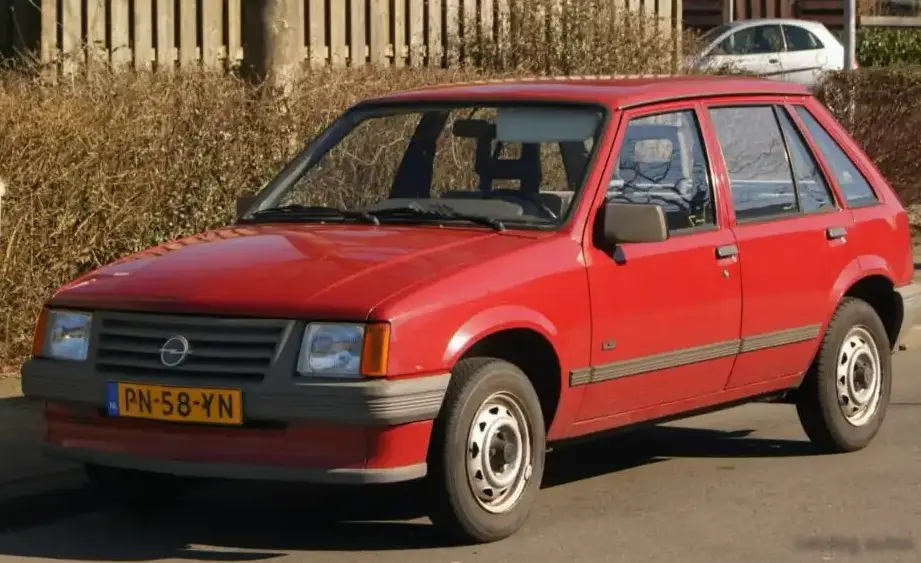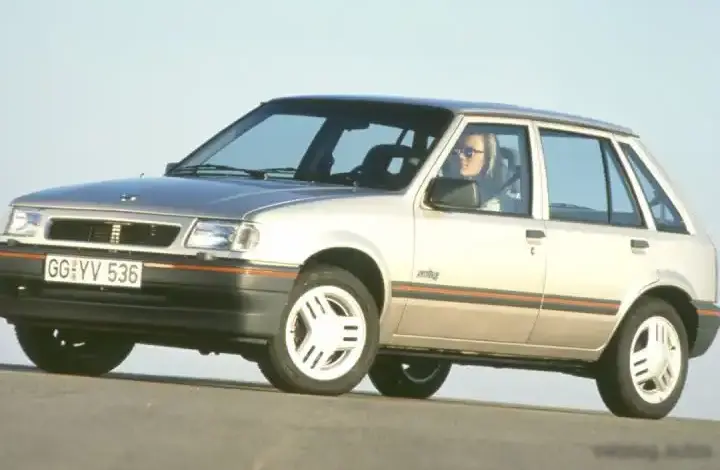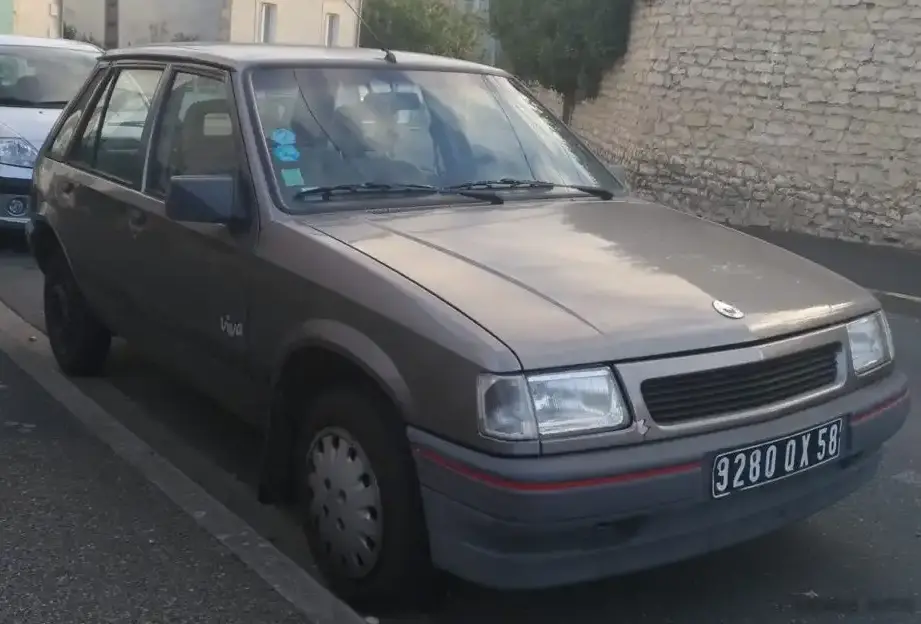
The Opel Corsa A (facelifted in 1990) 1.2 S, producing 52 horsepower, represented an entry-level offering within the broader Corsa A range produced between 1990 and 1992. Positioned as a budget-friendly and economical hatchback, it aimed to provide basic transportation for a wide demographic. The Corsa A, launched in 1982 as a replacement for the Kadett, was Opel’s foray into the supermini segment, and the 1990 facelift brought subtle styling updates and refinements. This particular 1.2 S variant was primarily sold in European markets, offering a practical and affordable option for first-time car buyers or those seeking a small, efficient city car.
Technical Specifications
| Brand | Opel |
| Model | Corsa |
| Generation | Corsa A (facelift 1990) |
| Type (Engine) | 1.2 S (52 Hp) |
| Start of production | 1990 |
| End of production | 1992 |
| Powertrain Architecture | Internal Combustion engine |
| Body type | Hatchback |
| Seats | 5 |
| Doors | 3 |
| Fuel consumption (combined) | 7.1 l/100 km (33.1 US mpg, 39.8 UK mpg, 14.1 km/l) |
| Fuel Type | Petrol (Gasoline) |
| Acceleration 0 – 100 km/h | 16.5 sec |
| Acceleration 0 – 62 mph | 16.5 sec |
| Acceleration 0 – 60 mph | 15.7 sec |
| Maximum speed | 150 km/h (93.21 mph) |
| Weight-to-power ratio | 14.2 kg/Hp (70.3 Hp/tonne) |
| Weight-to-torque ratio | 8.4 kg/Nm (118.9 Nm/tonne) |
| Power | 52 Hp @ 5600 rpm |
| Power per litre | 43.5 Hp/l |
| Torque | 88 Nm @ 2600 rpm (64.91 lb.-ft. @ 2600 rpm) |
| Engine layout | Front, Transverse |
| Engine Model/Code | 12ST, 12NC |
| Engine displacement | 1195 cm3 (72.92 cu. in.) |
| Number of cylinders | 4 |
| Engine configuration | Inline |
| Cylinder Bore | 72 mm (2.83 in.) |
| Piston Stroke | 73.4 mm (2.89 in.) |
| Compression ratio | 9.1:1 |
| Number of valves per cylinder | 2 |
| Fuel injection system | Carburettor |
| Engine aspiration | Naturally aspirated engine |
| Valvetrain | SOHC |
| Engine oil capacity | 3 l (3.17 US qt | 2.64 UK qt) |
| Coolant | 6.1 l (6.45 US qt | 5.37 UK qt) |
| Kerb Weight | 740 kg (1631.42 lbs.) |
| Max. weight | 1215 kg (2678.62 lbs.) |
| Max load | 475 kg (1047.2 lbs.) |
| Trunk (boot) space – minimum | 270 l (9.53 cu. ft.) |
| Trunk (boot) space – maximum | 1060 l (37.43 cu. ft.) |
| Fuel tank capacity | 42 l (11.1 US gal | 9.24 UK gal) |
| Length | 3652 mm (143.78 in.) |
| Width | 1535 mm (60.43 in.) |
| Height | 1365 mm (53.74 in.) |
| Wheelbase | 2343 mm (92.24 in.) |
| Front track | 1320 mm (51.97 in.) |
| Rear (Back) track | 1300 mm (51.18 in.) |
| Ride height (ground clearance) | 140 mm (5.51 in.) |
| Drag coefficient (Cd) | 0.36 |
| Minimum turning circle | 10 m (32.81 ft.) |
| Drivetrain Architecture | The Internal combustion engine (ICE) drives the front wheels of the vehicle. |
| Drive wheel | Front wheel drive |
| Number of gears and type of gearbox | 5 gears, manual transmission |
| Front brakes | Disc |
| Rear brakes | Drum |
| Tires size | 145/70 R13 |
| Wheel rims size | 13 |
Powertrain & Engine Architecture
The 1.2 S variant of the Corsa A utilized the 12ST or 12NC engine code, a 1195cc inline-four cylinder engine. This engine was characterized by its simplicity and durability, relying on a single overhead camshaft (SOHC) valvetrain with two valves per cylinder. Fuel delivery was managed by a carburetor, a common feature for vehicles of this era and price point. The carburetor system, while less precise than fuel injection, contributed to the engine’s affordability and ease of maintenance. The engine produced a modest 52 horsepower at 5600 rpm and 88 Nm (64.91 lb-ft) of torque at 2600 rpm. The engine was transversely mounted, driving the front wheels. The transmission was a standard five-speed manual gearbox, optimized for fuel efficiency rather than outright performance.
Driving Characteristics
The Corsa A 1.2 S, with its 52 horsepower and relatively lightweight construction (740 kg / 1631 lbs), offered adequate, though not exhilarating, performance. Acceleration from 0 to 100 km/h (0-62 mph) took approximately 16.5 seconds, and top speed was around 150 km/h (93 mph). The five-speed manual transmission helped to keep the engine within its optimal power band, but the lack of significant torque meant that frequent downshifts were necessary for overtaking or climbing hills. Compared to higher-spec Corsa A models equipped with larger engines (like the 1.4 or 1.6), the 1.2 S felt noticeably slower. However, its nimble handling and relatively direct steering made it enjoyable to drive in urban environments. The gear ratios were spaced to prioritize fuel economy, resulting in a somewhat ‘busy’ driving experience on the highway.
Equipment & Trim Levels
The 1.2 S trim level was considered the base model within the Corsa A range. Standard equipment typically included basic steel wheels, cloth upholstery, and a simple dashboard layout. Power steering and central locking were generally not standard features on this trim, but could be added as optional extras. Interior appointments were functional rather than luxurious, with a focus on durability and ease of cleaning. Optional extras included a radio, upgraded seat fabrics, and occasionally, a sunroof. The overall interior design was typical of small European hatchbacks of the early 1990s – practical and utilitarian.
Chassis & Braking
The Corsa A featured a MacPherson strut front suspension and a twist-beam rear suspension. The 1.2 S variant typically utilized drum brakes on the rear wheels and disc brakes on the front, a common configuration for vehicles in this class at the time. The suspension setup prioritized ride comfort over sporty handling, providing a reasonably compliant ride on most road surfaces. Stabilizer bars were often omitted on the base 1.2 S model, further contributing to the softer ride quality. The relatively light weight of the vehicle helped to compensate for the less sophisticated braking system.
Market Reception & Comparison
The Opel Corsa A 1.2 S was generally well-received as an affordable and reliable city car. Critics praised its fuel efficiency and ease of driving, but noted its lack of power and refinement compared to more expensive rivals. Compared to other trims in the Corsa A lineup, such as the 1.4 or 1.6-liter models, the 1.2 S offered significantly lower running costs but at the expense of performance. Its main competitors included the Ford Fiesta, Renault Clio, and Peugeot 205, all of which offered similar levels of practicality and affordability. The Corsa A 1.2 S often represented the most accessible entry point into Opel ownership.
Legacy
The Corsa A 1.2 S, while not a performance icon, proved to be a durable and reliable vehicle. The simple engine design and robust mechanical components contributed to its longevity. Today, surviving examples are relatively rare, but those that remain are often sought after by enthusiasts looking for a classic and affordable European hatchback. The 12ST/12NC engine is known for its relative simplicity, making it easier to maintain and repair compared to more complex modern powertrains. While not particularly collectible, well-maintained examples of the Corsa A 1.2 S represent a piece of automotive history and a testament to Opel’s commitment to providing affordable transportation.