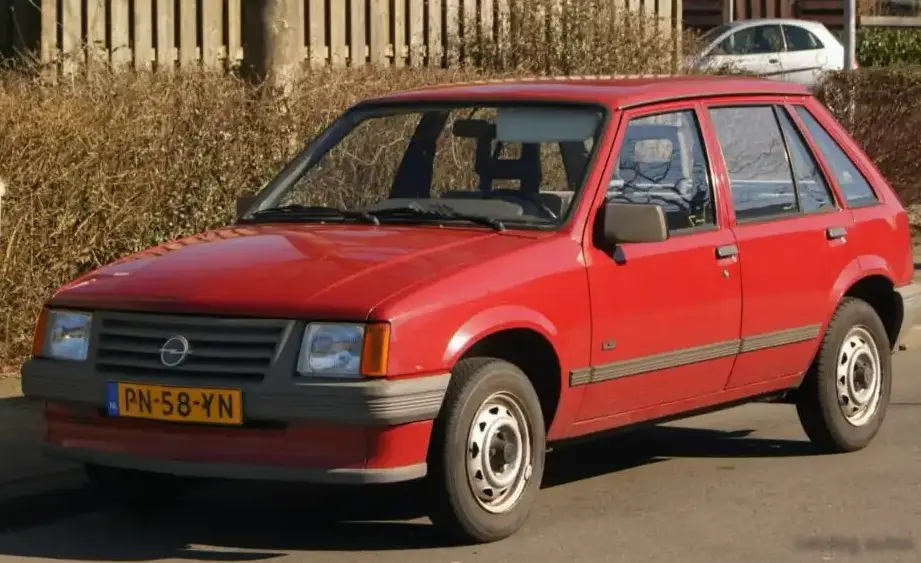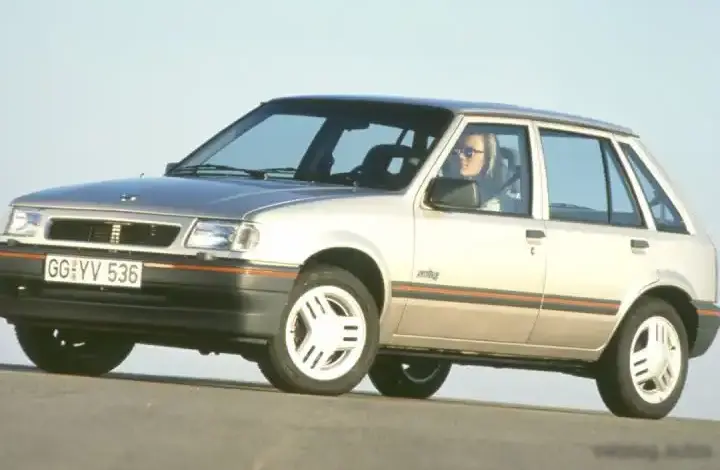
The Opel Corsa A 1.3 S (70 hp), produced from 1987 to 1989, represented a key variant within the first generation of the Corsa. This facelifted model, designated internally as the 1HX0 series, was positioned as an affordable and practical entry point into the supermini segment, particularly in European markets. It offered a balance between economy and usability, appealing to buyers seeking a small, reliable hatchback for daily commuting and urban driving. The 1.3 S trim sat below the more powerful 1.4 and 1.6-liter versions, and above the base 1.0-liter model, offering a modest performance upgrade without a significant price increase.
Technical Specifications
| Brand | Opel |
| Model | Corsa |
| Generation | Corsa A (facelift 1987) |
| Type (Engine) | 1.3 S (70 Hp) |
| Start of production | 1987 |
| End of production | 1989 |
| Powertrain Architecture | Internal Combustion engine |
| Body type | Hatchback |
| Seats | 5 |
| Doors | 3 |
| Fuel consumption (combined) | 7.6 l/100 km (30.9 US mpg, 37.2 UK mpg, 13.2 km/l) |
| Fuel Type | Petrol (Gasoline) |
| Acceleration 0 – 100 km/h | 13.5 sec |
| Acceleration 0 – 62 mph | 13.5 sec |
| Acceleration 0 – 60 mph | 12.8 sec |
| Maximum speed | 161 km/h (100.04 mph) |
| Weight-to-power ratio | 10.9 kg/Hp, 91.5 Hp/tonne |
| Weight-to-torque ratio | 7.6 kg/Nm, 132 Nm/tonne |
| Power | 70 Hp @ 5800 rpm |
| Power per litre | 54 Hp/l |
| Torque | 101 Nm @ 3800 rpm (74.49 lb.-ft. @ 3800 rpm) |
| Engine layout | Front, Transverse |
| Engine Model/Code | 13SB |
| Engine displacement | 1297 cm3 (79.15 cu. in.) |
| Number of cylinders | 4 |
| Engine configuration | Inline |
| Cylinder Bore | 75 mm (2.95 in.) |
| Piston Stroke | 73.4 mm (2.89 in.) |
| Compression ratio | 9.2:1 |
| Number of valves per cylinder | 2 |
| Fuel injection system | Carburettor |
| Engine aspiration | Naturally aspirated engine |
| Valvetrain | SOHC |
| Engine oil capacity | 3 l (3.17 US qt | 2.64 UK qt) |
| Coolant | 6.1 l (6.45 US qt | 5.37 UK qt) |
| Kerb Weight | 765 kg (1686.54 lbs.) |
| Max. weight | 1245 kg (2744.76 lbs.) |
| Max load | 480 kg (1058.22 lbs.) |
| Trunk (boot) space – minimum | 270 l (9.53 cu. ft.) |
| Trunk (boot) space – maximum | 1060 l (37.43 cu. ft.) |
| Fuel tank capacity | 42 l (11.1 US gal | 9.24 UK gal) |
| Permitted trailer load with brakes (12%) | 800 kg (1763.7 lbs.) |
| Permitted trailer load without brakes | 400 kg (881.85 lbs.) |
| Length | 3622 mm (142.6 in.) |
| Width | 1532 mm (60.31 in.) |
| Height | 1365 mm (53.74 in.) |
| Wheelbase | 2343 mm (92.24 in.) |
| Front track | 1320 mm (51.97 in.) |
| Rear (Back) track | 1307 mm (51.46 in.) |
| Ride height (ground clearance) | 140 mm (5.51 in.) |
| Drag coefficient (Cd) | 0.36 |
| Minimum turning circle (turning diameter) | 10 m (32.81 ft.) |
| Drivetrain Architecture | The Internal combustion engine (ICE) drives the front wheels of the vehicle. |
| Drive wheel | Front wheel drive |
| Number of gears and type of gearbox | 5 gears, manual transmission |
| Front brakes | Disc |
| Rear brakes | Drum |
| Tires size | 145/70 R13 |
| Wheel rims size | 13 |
Powertrain & Engine Architecture
The Corsa A 1.3 S was powered by the Opel 13SB engine, a 1.3-liter inline-four cylinder petrol engine. This engine featured a single overhead camshaft (SOHC) valvetrain with two valves per cylinder. Crucially, this variant utilized a carburetor for fuel delivery, a cost-saving measure compared to the fuel injection systems found in higher-spec Corsas. The carburetor, while simpler and cheaper, resulted in slightly lower fuel efficiency and less precise throttle response. The engine produced 70 horsepower at 5800 rpm and 101 Nm (74.49 lb-ft) of torque at 3800 rpm. The engine was transversely mounted at the front of the vehicle, driving the front wheels. The transmission was a five-speed manual gearbox, providing a reasonable spread of ratios for everyday driving.
Driving Characteristics
The 1.3 S offered modest performance. Acceleration from 0 to 60 mph took around 12.8 seconds, and the top speed was approximately 100 mph. While not particularly quick, the engine provided sufficient power for urban and suburban driving. The carburetor contributed to a slightly sluggish throttle response, particularly at lower engine speeds. The five-speed gearbox allowed drivers to keep the engine in its optimal power band, but frequent shifting was often necessary, especially when overtaking. Compared to the 1.4 and 1.6-liter versions, the 1.3 S felt noticeably less powerful, but it also offered better fuel economy. The manual transmission provided a more engaging driving experience than the optional three-speed automatic available on some Corsa A models.
Equipment & Trim Levels
The 1.3 S trim level offered a step up in equipment compared to the base Corsa. Standard features typically included cloth upholstery, a basic instrument cluster, and a steering wheel. Optional extras included a sunroof, upgraded stereo system, and central locking. The interior was functional and durable, prioritizing practicality over luxury. The dashboard layout was simple and easy to use, with clearly labeled controls. The 1.3 S often featured body-colored bumpers and door handles, distinguishing it from the more basic models.
Chassis & Braking
The Corsa A featured a MacPherson strut front suspension and a twist-beam rear suspension. The front brakes were disc brakes, providing adequate stopping power, while the rear brakes were drum brakes, a cost-saving measure common in this class of vehicle. The suspension provided a comfortable ride, absorbing bumps and imperfections in the road surface reasonably well. The steering was light and easy to use, making it well-suited for urban driving. The 1.3 S typically featured a smaller diameter stabilizer bar compared to the higher-spec models, resulting in slightly more body roll during cornering.
Market Reception & Comparison
The Opel Corsa A 1.3 S was generally well-received by critics as an affordable and practical supermini. It was praised for its fuel efficiency, reliability, and ease of driving. However, it was also criticized for its modest performance and basic interior. Compared to rivals such as the Ford Fiesta and Volkswagen Polo, the Corsa A 1.3 S offered a competitive package, particularly in terms of price. The 1.4 and 1.6-liter Corsas offered more performance, but at a higher cost. The 1.0-liter Corsa was more economical, but lacked the power of the 1.3 S.
Legacy
The Opel Corsa A 1.3 S remains a relatively common sight on European roads today, testament to its durability and reliability. The 13SB engine is known for its robustness, and with regular maintenance, it can provide many years of service. However, age-related issues such as corrosion and wear and tear on rubber components are common. The carburetor requires periodic cleaning and adjustment to maintain optimal performance. In the used car market, the 1.3 S represents an affordable and practical classic, appealing to enthusiasts and first-time car buyers alike. Its simplicity and ease of maintenance make it a popular choice for those seeking a reliable and inexpensive mode of transportation.