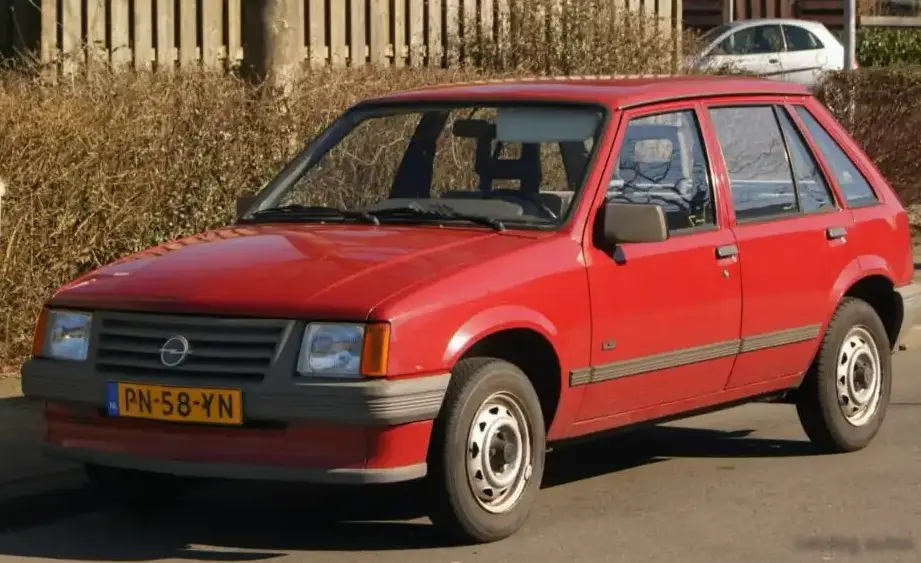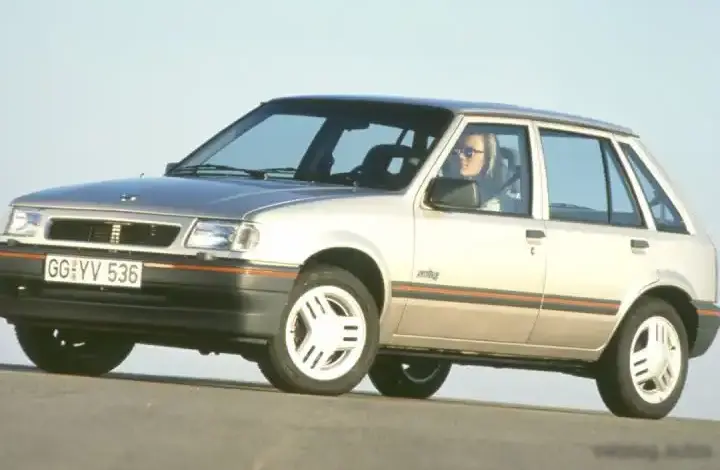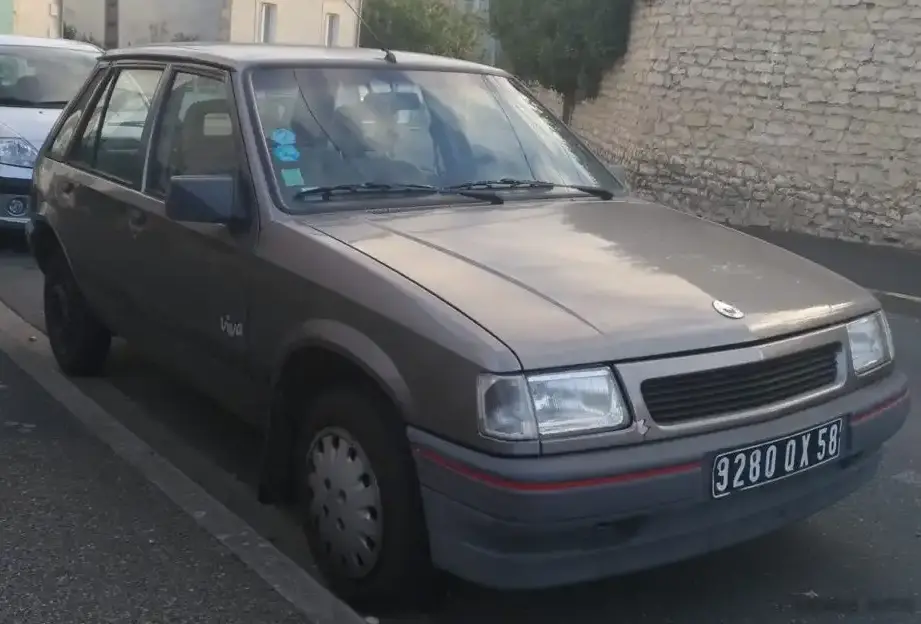
The Opel Corsa A (facelifted in 1990) 1.4i, producing 82 horsepower, was a key variant in the first generation of the Corsa, produced from August 1991 to March 1993. Positioned as a mainstream offering within the Corsa A range, it aimed to provide affordable and practical transportation for European buyers. This model represented a significant step for Opel, moving away from the Ascona and Kadett names towards a more modern and globally-marketed small car. The facelift brought subtle styling changes and refinements to the original Corsa A design, enhancing its appeal in a competitive segment.
Technical Specifications
| Brand | Opel |
| Model | Corsa |
| Generation | Corsa A (facelift 1990) |
| Type (Engine) | 1.4i (82 Hp) |
| Start of production | August, 1991 |
| End of production | March, 1993 |
| Powertrain Architecture | Internal Combustion engine |
| Body type | Hatchback |
| Seats | 5 |
| Doors | 3 |
| Fuel consumption (urban) | 8.7 l/100 km (27 US mpg, 32.5 UK mpg, 11.5 km/l) |
| Fuel consumption (extra urban) | 5 l/100 km (47 US mpg, 56.5 UK mpg, 20 km/l) |
| Fuel consumption (combined) | 6.8 l/100 km (34.6 US mpg, 41.5 UK mpg, 14.7 km/l) |
| Fuel Type | Petrol (Gasoline) |
| Acceleration 0 – 100 km/h | 11 sec |
| Acceleration 0 – 62 mph | 11 sec |
| Acceleration 0 – 60 mph | 10.5 sec |
| Maximum speed | 175 km/h (108.74 mph) |
| Weight-to-power ratio | 9.8 kg/Hp, 102.1 Hp/tonne |
| Weight-to-torque ratio | 7 kg/Nm, 142 Nm/tonne |
| Power | 82 Hp @ 5800 rpm |
| Power per litre | 59 Hp/l |
| Torque | 114 Nm @ 3400 rpm (84.08 lb.-ft. @ 3400 rpm) |
| Engine layout | Front, Transverse |
| Engine Model/Code | C14SE |
| Engine displacement | 1389 cm3 (84.76 cu. in.) |
| Number of cylinders | 4 |
| Engine configuration | Inline |
| Cylinder Bore | 77.6 mm (3.06 in.) |
| Piston Stroke | 73.4 mm (2.89 in.) |
| Compression ratio | 10:1 |
| Number of valves per cylinder | 2 |
| Fuel injection system | Multi-port manifold injection |
| Engine aspiration | Naturally aspirated engine |
| Valvetrain | OHC |
| Engine oil capacity | 3.5 l (3.7 US qt | 3.08 UK qt) |
| Coolant | 5.7 l (6.02 US qt | 5.02 UK qt) |
| Kerb Weight | 803 kg (1770.31 lbs.) |
| Max. weight | 1250 kg (2755.78 lbs.) |
| Max load | 447 kg (985.47 lbs.) |
| Trunk (boot) space – minimum | 270 l (9.53 cu. ft.) |
| Trunk (boot) space – maximum | 1060 l (37.43 cu. ft.) |
| Fuel tank capacity | 42 l (11.1 US gal | 9.24 UK gal) |
| Permitted trailer load with brakes (12%) | 800 kg (1763.7 lbs.) |
| Permitted trailer load without brakes | 400 kg (881.85 lbs.) |
| Length | 3652 mm (143.78 in.) |
| Width | 1542 mm (60.71 in.) |
| Height | 1365 mm (53.74 in.) |
| Wheelbase | 2343 mm (92.24 in.) |
| Front track | 1320 mm (51.97 in.) |
| Rear (Back) track | 1307 mm (51.46 in.) |
| Ride height (ground clearance) | 140 mm (5.51 in.) |
| Drag coefficient (Cd) | 0.36 |
| Minimum turning circle (turning diameter) | 10 m (32.81 ft.) |
| Drivetrain Architecture | The Internal combustion engine (ICE) drives the front wheels of the vehicle. |
| Drive wheel | Front wheel drive |
| Number of gears and type of gearbox | 5 gears, manual transmission |
| Front suspension | Coil spring |
| Rear suspension | Coil spring |
| Front brakes | Ventilated discs |
| Rear brakes | Drum |
| Assisting systems | ABS (Anti-lock braking system) |
| Steering type | Steering rack and pinion |
| Tires size | 175/65 R14 |
| Wheel rims size | 14 |
Powertrain & Engine Architecture
The heart of the Corsa A 1.4i was the C14SE engine, a 1.4-liter (1389cc) inline-four cylinder petrol engine. This engine featured a single overhead camshaft (OHC) valvetrain with two valves per cylinder. It utilized multi-port fuel injection, a relatively modern system for the time, contributing to improved fuel efficiency and smoother operation compared to carbureted engines. The C14SE was known for its relative simplicity and durability. The engine’s 82 horsepower output was achieved at 5800 rpm, while peak torque of 114 Nm (84 lb-ft) arrived at 3400 rpm. The engine was transversely mounted in the front of the vehicle, driving the front wheels. The standard transmission was a five-speed manual, though a three-speed automatic was also offered, albeit less common. The automatic transmission was a traditional hydraulic unit, offering smooth but not particularly sporty shifts.
Driving Characteristics
The Corsa A 1.4i with the manual transmission offered adequate performance for everyday driving. Acceleration to 60 mph took around 10.5 seconds, and top speed was approximately 109 mph. The 82 hp engine didn’t provide exhilarating acceleration, but it was sufficient for navigating city streets and country roads. The automatic version, however, noticeably dulled performance due to the transmission’s inherent efficiency losses and conservative gear ratios. The automatic felt sluggish, particularly when attempting to overtake or climb hills. The gear ratios were optimized for fuel economy rather than outright speed. Steering was light and precise, making the Corsa easy to maneuver. The suspension provided a comfortable ride, although it could feel somewhat bouncy on uneven surfaces.
Equipment & Trim Levels
The 1.4i trim level generally represented a mid-range offering in the Corsa A lineup. Standard equipment typically included central locking, electric front windows, and a basic stereo system. Interior upholstery was usually cloth, with a simple dashboard layout. Optional extras included a sunroof, upgraded stereo systems, and alloy wheels. Higher trim levels, such as the ‘Swing’ or ‘City’ models, added features like power steering, upgraded interior trim, and more sophisticated audio systems. The base models were very spartan, lacking even basic features like a radio.
Chassis & Braking
The Corsa A utilized a relatively simple chassis design. Front suspension consisted of coil springs and MacPherson struts, while the rear featured a twist-beam axle with coil springs. This setup provided a good balance between ride comfort and handling. Braking was typically accomplished with ventilated discs on the front wheels and drum brakes on the rear. An anti-lock braking system (ABS) was available as an option, enhancing safety in slippery conditions. The steering system employed a rack and pinion setup, providing precise and responsive steering feel.
Market Reception & Comparison
The Opel Corsa A 1.4i was generally well-received by automotive critics as a practical and affordable small car. It was praised for its fuel efficiency, comfortable ride, and ease of driving. However, some critics noted its lack of refinement and relatively modest performance, particularly in the automatic transmission variant. Compared to other small cars of the era, such as the Ford Fiesta and Volkswagen Polo, the Corsa A offered a competitive package in terms of price and features. The 1.4i engine struck a balance between fuel economy and performance, making it a popular choice for buyers who didn’t require the extra power of the higher-spec engines.
Legacy
The Corsa A 1.4i, particularly with the manual transmission, proved to be a reliable and durable vehicle. The C14SE engine is known for its longevity, and many examples are still on the road today. The automatic transmission, while less desirable due to its performance limitations, also proved reasonably reliable with proper maintenance. In the used car market, the Corsa A 1.4i remains an affordable and accessible classic, appealing to enthusiasts and those seeking a simple and economical runabout. Its significance lies in establishing the Corsa as a major player in the European small car segment, paving the way for subsequent generations of the model.