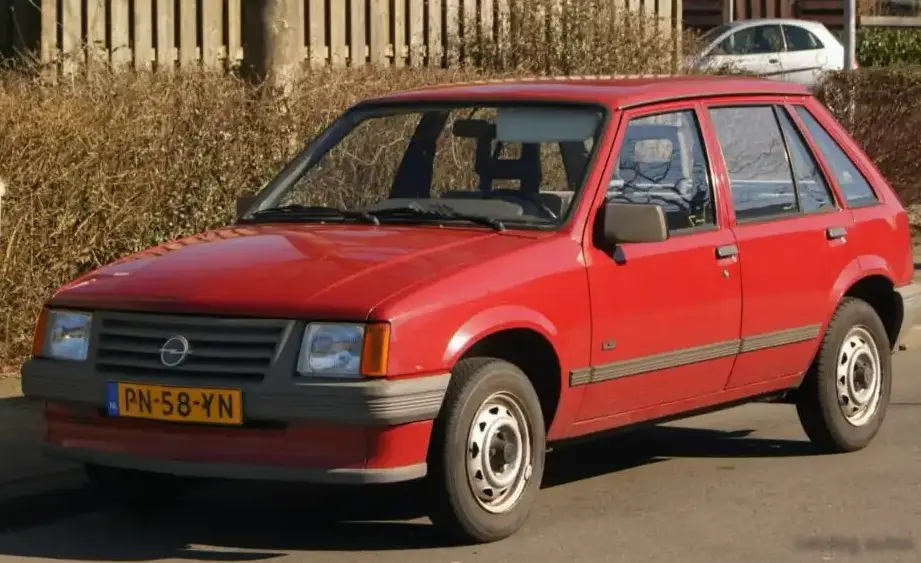
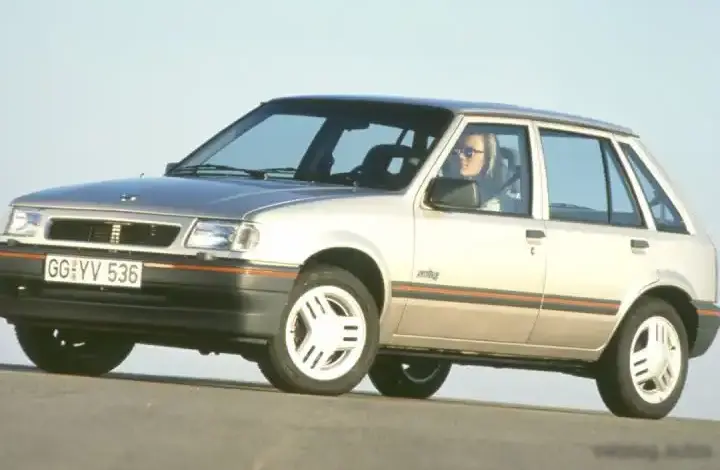
The Opel Corsa A Sedan, specifically the 1.0-liter (45 hp) variant produced from 1987 to 1990, represented the entry point into the Corsa A range following the 1987 facelift. Positioned as an affordable and economical subcompact, this model aimed to provide basic transportation for budget-conscious buyers in Europe. The Corsa A, replacing the aging Kadett, was Opel’s attempt to compete in the increasingly popular supermini segment. The sedan body style, while less common than the hatchback in some markets, offered a more traditional appearance and a slightly larger trunk capacity. This particular engine and transmission combination was designed for maximizing fuel efficiency rather than outright performance, making it a popular choice for urban commuting.
Technical Specifications
| Brand | Opel |
| Model | Corsa |
| Generation | Corsa A Sedan (facelift 1987) |
| Type (Engine) | 1.0 (45 Hp) |
| Start of production | 1987 |
| End of production | 1990 |
| Powertrain Architecture | Internal Combustion engine |
| Body type | Sedan |
| Seats | 5 |
| Doors | 4 |
| Fuel consumption (combined) | 6.7 l/100 km (35.1 US mpg, 42.2 UK mpg, 14.9 km/l) |
| Fuel Type | Petrol (Gasoline) |
| Acceleration 0 – 100 km/h | 19.5 sec |
| Acceleration 0 – 62 mph | 19.5 sec |
| Acceleration 0 – 60 mph | 18.5 sec |
| Maximum speed | 140 km/h (86.99 mph) |
| Weight-to-power ratio | 16.8 kg/Hp (59.6 Hp/tonne) |
| Weight-to-torque ratio | 11.1 kg/Nm (90.1 Nm/tonne) |
| Power | 45 Hp @ 5400 rpm |
| Power per litre | 45.3 Hp/l |
| Torque | 68 Nm @ 2600-3800 rpm (50.15 lb.-ft. @ 2600-3800 rpm) |
| Engine layout | Front, Transverse |
| Engine Model/Code | 10S |
| Engine displacement | 993 cm3 (60.6 cu. in.) |
| Number of cylinders | 4 |
| Engine configuration | Inline |
| Cylinder Bore | 72 mm (2.83 in.) |
| Piston Stroke | 61 mm (2.4 in.) |
| Compression ratio | 9.2:1 |
| Number of valves per cylinder | 2 |
| Fuel injection system | Carburettor |
| Engine aspiration | Naturally aspirated engine |
| Valvetrain | OHV |
| Engine oil capacity | 2.75 l (2.91 US qt | 2.42 UK qt) |
| Coolant | 5.5 l (5.81 US qt | 4.84 UK qt) |
| Kerb Weight | 755 kg (1664.49 lbs.) |
| Max. weight | 1235 kg (2722.71 lbs.) |
| Max load | 480 kg (1058.22 lbs.) |
| Trunk (boot) space – minimum | 430 l (15.19 cu. ft.) |
| Fuel tank capacity | 42 l (11.1 US gal | 9.24 UK gal) |
| Length | 3955 mm (155.71 in.) |
| Width | 1540 mm (60.63 in.) |
| Height | 1360 mm (53.54 in.) |
| Wheelbase | 2343 mm (92.24 in.) |
| Front track | 1320 mm (51.97 in.) |
| Rear (Back) track | 1307 mm (51.46 in.) |
| Ride height (ground clearance) | 140 mm (5.51 in.) |
| Drag coefficient (Cd) | 0.38 |
| Minimum turning circle | 10 m (32.81 ft.) |
| Drivetrain Architecture | The Internal combustion engine (ICE) drives the front wheels of the vehicle. |
| Drive wheel | Front wheel drive |
| Number of gears and type of gearbox | 4 gears, manual transmission |
| Front suspension | Coil spring |
| Rear suspension | Coil spring |
| Front brakes | Disc |
| Rear brakes | Drum |
| Assisting systems | ABS (Anti-lock braking system) |
| Steering type | Steering rack and pinion |
| Tires size | 165/65 R14 |
| Wheel rims size | 5J x 14 |
Powertrain & Engine Architecture
The heart of this Corsa A Sedan was the 10S engine, a 993cc inline-four cylinder unit. This engine utilized a single overhead valve (OHV) valvetrain and a carburetor for fuel delivery. The carburetor system, while simple and reliable, was less efficient and produced higher emissions compared to fuel injection systems becoming more prevalent at the time. The engine produced 45 horsepower at 5400 rpm and 68 Nm (50.15 lb-ft) of torque between 2600 and 3800 rpm. This power was transmitted to the front wheels through a four-speed manual transmission. The engine’s relatively small displacement and simple design prioritized reliability and fuel economy over performance. The transverse engine layout, common for front-wheel-drive vehicles, helped maximize interior space.
Driving Characteristics
The 1.0-liter Corsa A Sedan with a manual transmission offered modest performance. Acceleration was slow, taking approximately 19.5 seconds to reach 100 km/h (62 mph). Top speed was limited to around 140 km/h (87 mph). The four-speed gearbox provided adequate spacing for everyday driving, but required frequent shifting to maintain momentum, especially when overtaking or climbing hills. Compared to the more powerful 1.2 or 1.4-liter versions, or even the diesel options, this variant felt significantly underpowered. However, its light weight and nimble handling made it relatively easy to maneuver in urban environments. The steering was light and responsive, contributing to a pleasant driving experience at lower speeds.
Equipment & Trim Levels
The 1.0-liter Corsa A Sedan was typically the base model, featuring a relatively sparse equipment list. Standard features generally included cloth upholstery, basic instrumentation (speedometer, fuel gauge, temperature gauge), and a simple two-speaker audio system. Power steering and central locking were often optional extras. The interior was functional and durable, prioritizing practicality over luxury. Exterior features typically included steel wheels with hubcaps, black plastic bumpers, and basic trim. Optional extras could include upgraded upholstery, a sunroof, and alloy wheels.
Chassis & Braking
The Corsa A Sedan utilized a relatively simple chassis design. Front suspension consisted of coil springs and MacPherson struts, while the rear suspension employed a twist-beam axle with coil springs. The front brakes were disc brakes, providing adequate stopping power, while the rear brakes were drum brakes, a cost-saving measure common in this class of vehicle. ABS (Anti-lock Braking System) was available as an option, enhancing safety in emergency braking situations. The suspension setup prioritized ride comfort over sporty handling, providing a reasonably smooth ride on typical road surfaces.
Market Reception & Comparison
The 1.0-liter Corsa A Sedan was generally well-received as an affordable and economical option. Critics praised its fuel efficiency and ease of driving, but noted its lack of power. Compared to competitors like the Fiat Uno and Peugeot 205, the Corsa A offered a similar level of practicality and affordability. However, the Uno often boasted a more modern interior and the 205 offered a more engaging driving experience. The Corsa A’s reliability was generally considered good, although the carburetor system required periodic maintenance. Fuel economy was a strong point, averaging around 6.7 liters per 100 kilometers (35.1 US mpg).
Legacy
The 1.0-liter Corsa A Sedan, while not the most powerful or luxurious variant, played a significant role in establishing the Corsa as a popular choice in the European subcompact market. The 10S engine, despite its simplicity, proved to be relatively durable and reliable. Today, these cars are increasingly rare and sought after by classic car enthusiasts. While maintenance can be challenging due to the age of the vehicles and the availability of parts, the Corsa A Sedan remains a testament to Opel’s commitment to providing affordable and practical transportation. The 1.0-liter version, in particular, is valued for its simplicity and fuel efficiency, offering a nostalgic driving experience for those seeking a classic subcompact.