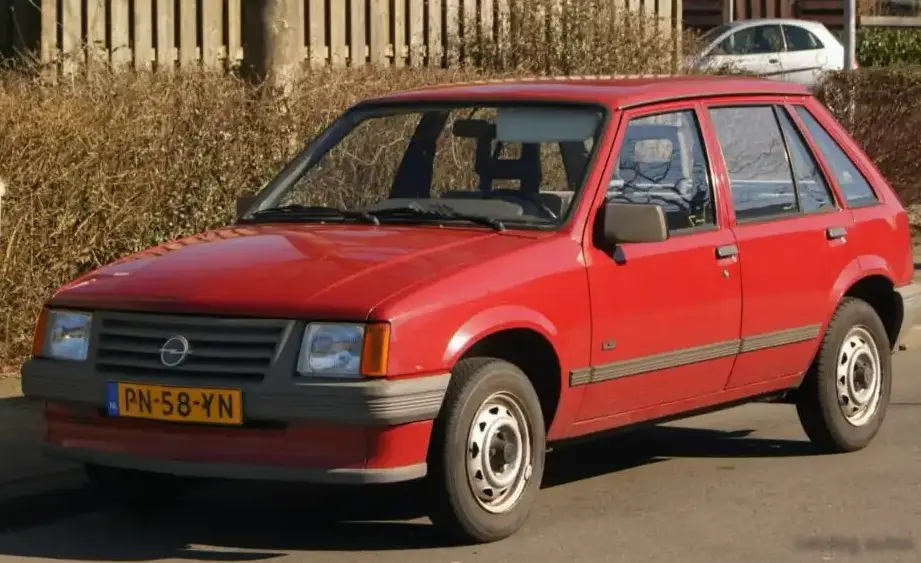
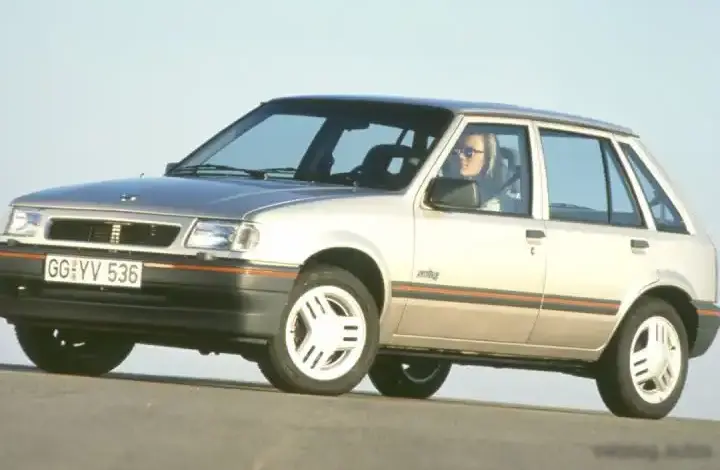
The Opel Corsa A Sedan (facelift 1987) 1.2 S, producing 55 horsepower, represented an entry-level offering within the Corsa A range. Introduced as part of the facelift in 1987, this variant aimed to provide affordable and economical transportation for the European market. The Corsa A, Opel’s foray into the supermini segment, was based on the GM’s ‘T-Car’ platform, and the sedan body style was particularly popular in certain European countries. Production of this specific 1.2 S configuration continued through 1990, before being superseded by later iterations of the Corsa.
Technical Specifications
| Brand | Opel |
| Model | Corsa |
| Generation | Corsa A Sedan (facelift 1987) |
| Type (Engine) | 1.2 S (55 Hp) |
| Start of production | 1987 |
| End of production | 1990 |
| Powertrain Architecture | Internal Combustion engine |
| Body type | Sedan |
| Seats | 5 |
| Doors | 4 |
| Fuel consumption (combined) | 7.1 l/100 km (33.1 US mpg, 39.8 UK mpg, 14.1 km/l) |
| Fuel Type | Petrol (Gasoline) |
| Acceleration 0 – 100 km/h | 16.5 sec |
| Acceleration 0 – 62 mph | 16.5 sec |
| Acceleration 0 – 60 mph | 15.7 sec |
| Maximum speed | 152 km/h (94.45 mph) |
| Weight-to-power ratio | 14.2 kg/Hp, 70.5 Hp/tonne |
| Weight-to-torque ratio | 11.5 kg/Nm, 87.2 Nm/tonne |
| Power | 55 Hp @ 5600 rpm |
| Power per litre | 46 Hp/l |
| Torque | 68 Nm @ 2200 rpm (50.15 lb.-ft. @ 2200 rpm) |
| Engine layout | Front, Transverse |
| Engine Model/Code | 12ST, S12ST |
| Engine displacement | 1196 cm3 (72.98 cu. in.) |
| Number of cylinders | 4 |
| Engine configuration | Inline |
| Cylinder Bore | 77.8 mm (3.06 in.) |
| Piston Stroke | 62.9 mm (2.48 in.) |
| Compression ratio | 9.2:1 |
| Number of valves per cylinder | 2 |
| Fuel injection system | Carburettor |
| Engine aspiration | Naturally aspirated engine |
| Valvetrain | SOHC |
| Engine oil capacity | 3 l (3.17 US qt | 2.64 UK qt) |
| Coolant | 6.1 l (6.45 US qt | 5.37 UK qt) |
| Kerb Weight | 780 kg (1719.61 lbs.) |
| Max. weight | 1245 kg (2744.76 lbs.) |
| Max load | 465 kg (1025.15 lbs.) |
| Trunk (boot) space – minimum | 430 l (15.19 cu. ft.) |
| Fuel tank capacity | 42 l (11.1 US gal | 9.24 UK gal) |
| Length | 3955 mm (155.71 in.) |
| Width | 1540 mm (60.63 in.) |
| Height | 1360 mm (53.54 in.) |
| Wheelbase | 2343 mm (92.24 in.) |
| Front track | 1320 mm (51.97 in.) |
| Rear (Back) track | 1300 mm (51.18 in.) |
| Ride height (ground clearance) | 140 mm (5.51 in.) |
| Drag coefficient (Cd) | 0.38 |
| Minimum turning circle | 10 m (32.81 ft.) |
| Drivetrain Architecture | The Internal combustion engine (ICE) drives the front wheels of the vehicle. |
| Drive wheel | Front wheel drive |
| Number of gears and type of gearbox | 4 gears, manual transmission |
| Front brakes | Disc |
| Rear brakes | Drum |
| Tires size | 145/70 R13 |
| Wheel rims size | 13 |
Powertrain & Engine Architecture
The 1.2 S variant of the Corsa A Sedan was powered by the 12ST engine, a four-cylinder, inline engine displacing 1196 cc. This engine utilized a single overhead camshaft (SOHC) valvetrain with two valves per cylinder. Crucially, this engine employed a carburetor for fuel delivery, a common feature for entry-level cars of the era, prioritizing cost-effectiveness over the more sophisticated fuel injection systems found in higher-spec models. The engine code, S12ST, is often used to identify this specific configuration. The 12ST engine was known for its simplicity and relative ease of maintenance. The four-speed manual transmission was the only gearbox option available with this engine, providing a straightforward driving experience.
Driving Characteristics
The 55 horsepower output of the 1.2 S engine translated to modest performance. Acceleration from 0 to 100 km/h (0-62 mph) took approximately 16.5 seconds, and the top speed was around 152 km/h (94.45 mph). Compared to other Corsa A variants, such as those equipped with larger engines (e.g., 1.4 or 1.6 liter), the 1.2 S felt noticeably slower, particularly when fully loaded or tackling inclines. The four-speed gearbox, while reliable, had relatively widely spaced gear ratios, requiring frequent shifting to maintain optimal engine speed. The focus was on fuel economy and everyday usability rather than outright performance. The car’s light weight (780 kg) helped to mitigate the lack of power to some extent.
Equipment & Trim Levels
The 1.2 S trim level was considered the base model within the Corsa A Sedan range. Standard equipment was fairly basic, typically including cloth upholstery, a simple dashboard layout, and manual windows and door locks. Features like a radio, central locking, and power steering were generally offered as optional extras. The interior was functional and durable, designed to withstand the rigors of daily use. The exterior trim was also minimal, with steel wheels and black plastic bumpers being common features. The emphasis was on providing a practical and affordable vehicle, with buyers able to customize it with optional extras according to their budget and preferences.
Chassis & Braking
The Corsa A Sedan featured a front-wheel-drive layout with a MacPherson strut suspension at the front and a twist-beam suspension at the rear. The braking system consisted of disc brakes on the front wheels and drum brakes on the rear. This configuration was typical for small, economy cars of the late 1980s. The suspension setup prioritized ride comfort over sporty handling, providing a reasonably smooth ride on typical road surfaces. The relatively narrow tires (145/70 R13) contributed to the car’s fuel efficiency but offered limited grip in challenging conditions.
Market Reception & Comparison
The Opel Corsa A Sedan 1.2 S was generally well-received as an affordable and reliable city car. Critics praised its fuel economy and ease of driving, but noted its lack of power and basic equipment levels. Compared to other superminis of the time, such as the Ford Fiesta and Volkswagen Polo, the Corsa A offered a competitive price point and a spacious interior for its size. However, the Fiesta and Polo often offered more refined driving experiences and a wider range of available features. The 1.2 S variant was primarily targeted at budget-conscious buyers who prioritized practicality and economy over performance and luxury.
Legacy
The Opel Corsa A 1.2 S, while not a performance icon, proved to be a durable and reliable vehicle. The 12ST engine, despite its carburetor-based fuel system, was known for its longevity and relatively low maintenance costs. Today, these cars are increasingly sought after by classic car enthusiasts and collectors, particularly those looking for a nostalgic reminder of the 1980s. Parts availability can be a challenge, but the simplicity of the engine and chassis makes it relatively easy to repair and maintain. The Corsa A 1.2 S represents a significant milestone in Opel’s history, marking its successful entry into the competitive supermini segment.