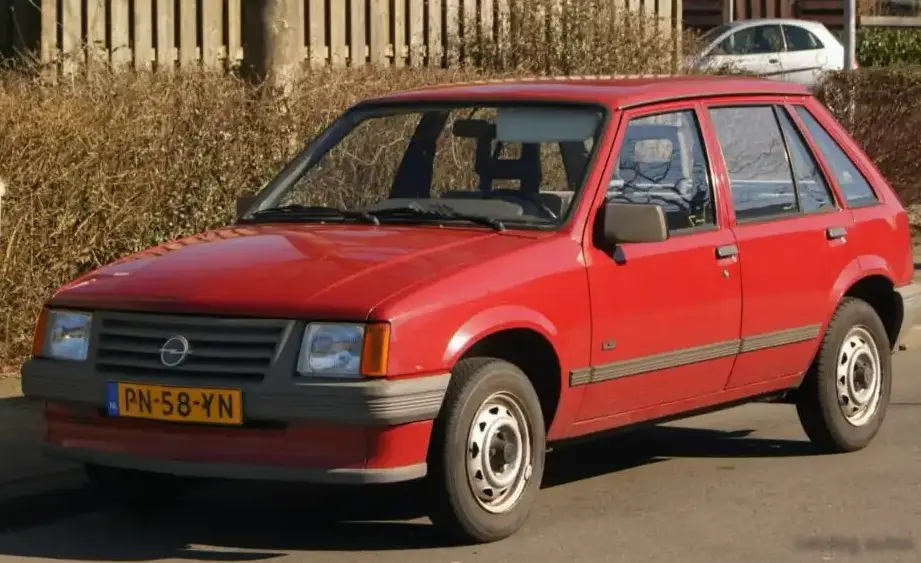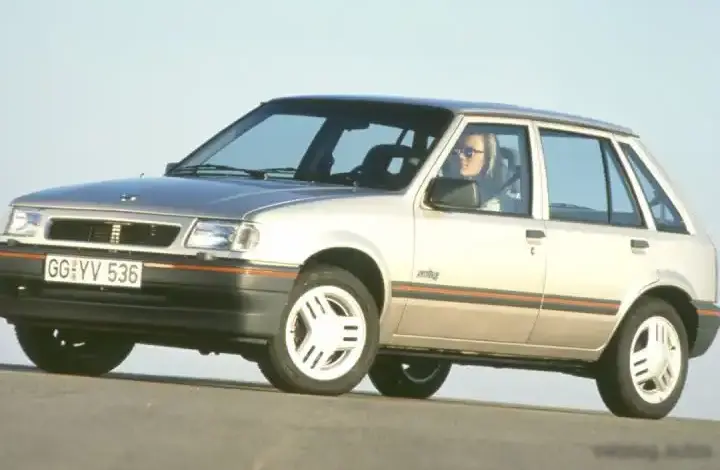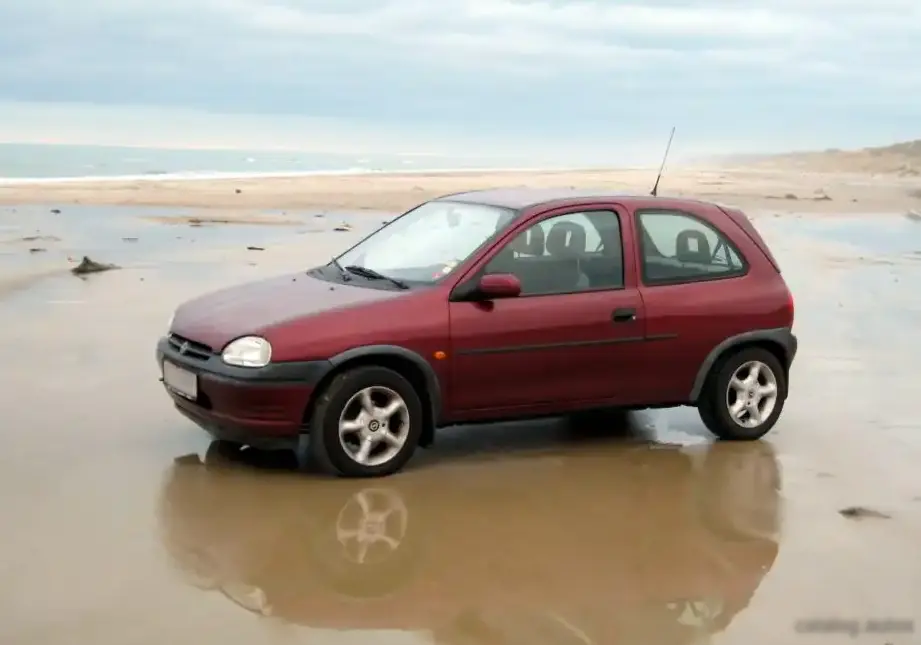
The Opel Corsa B 1.2i 16V Automatic, produced between March 1998 and August 2000, represented an entry-level offering within the broader Corsa B range (1993-2000). Positioned as a practical and economical city car, this variant aimed at buyers prioritizing ease of use and affordability over outright performance. The Corsa B itself was a significant model for Opel, building upon the success of the original Corsa A and establishing a strong presence in the European supermini segment. This particular configuration, pairing the 1.2-liter 16-valve engine with a four-speed automatic transmission, was primarily sold in European markets, offering a convenient alternative to the more common manual gearbox options.
Technical Specifications
| Brand | Opel |
| Model | Corsa |
| Generation | Corsa B |
| Type (Engine) | 1.2i 16V (65 Hp) Automatic |
| Start of production | March, 1998 |
| End of production | August, 2000 |
| Powertrain Architecture | Internal Combustion engine |
| Body type | Hatchback |
| Seats | 5 |
| Doors | 3-5 |
| Fuel consumption (urban) | 8.3 l/100 km (28.3 US mpg, 34 UK mpg, 12 km/l) |
| Fuel consumption (extra urban) | 5.1 l/100 km (46.1 US mpg, 55.4 UK mpg, 19.6 km/l) |
| Fuel Type | Petrol (Gasoline) |
| Acceleration 0 – 100 km/h | 17 sec |
| Acceleration 0 – 62 mph | 17 sec |
| Acceleration 0 – 60 mph | 16.2 sec |
| Maximum speed | 155 km/h (96.31 mph) |
| Weight-to-power ratio | 13.5 kg/Hp, 74.3 Hp/tonne |
| Weight-to-torque ratio | 8 kg/Nm, 125.7 Nm/tonne |
| Power | 65 Hp @ 5600 rpm |
| Power per litre | 54.2 Hp/l |
| Torque | 110 Nm @ 4000 rpm (81.13 lb.-ft. @ 4000 rpm) |
| Engine layout | Front, Transverse |
| Engine Model/Code | X12XE |
| Engine displacement | 1199 cm3 (73.17 cu. in.) |
| Number of cylinders | 4 |
| Engine configuration | Inline |
| Cylinder Bore | 72.5 mm (2.85 in.) |
| Piston Stroke | 72.6 mm (2.86 in.) |
| Compression ratio | 10.1:1 |
| Number of valves per cylinder | 4 |
| Fuel injection system | Multi-port manifold injection |
| Engine aspiration | Naturally aspirated engine |
| Valvetrain | DOHC |
| Engine oil capacity | 3.5 l (3.7 US qt | 3.08 UK qt) |
| Coolant | 5.2 l (5.49 US qt | 4.58 UK qt) |
| Kerb Weight | 875 kg (1929.04 lbs.) |
| Max. weight | 1370 kg (3020.33 lbs.) |
| Max load | 495 kg (1091.29 lbs.) |
| Trunk (boot) space – minimum | 260 l (9.18 cu. ft.) |
| Trunk (boot) space – maximum | 1050 l (37.08 cu. ft.) |
| Fuel tank capacity | 46 l (12.15 US gal | 10.12 UK gal) |
| Length | 3740 mm (147.24 in.) |
| Width | 1610 mm (63.39 in.) |
| Height | 1420 mm (55.91 in.) |
| Wheelbase | 2445 mm (96.26 in.) |
| Front track | 1385 mm (54.53 in.) |
| Rear (Back) track | 1390 mm (54.72 in.) |
| Ride height (ground clearance) | 140 mm (5.51 in.) |
| Drag coefficient (Cd) | 0.34 |
| Drivetrain Architecture | The Internal combustion engine (ICE) drives the front wheels of the vehicle. |
| Drive wheel | Front wheel drive |
| Number of gears and type of gearbox | 4 gears, automatic transmission |
| Front suspension | Coil spring |
| Rear suspension | Coil spring |
| Front brakes | Disc |
| Rear brakes | Drum |
| Steering type | Steering rack and pinion |
| Power steering | Hydraulic Steering |
| Tires size | 165/70 R13 |
| Wheel rims size | 5J x 13 |
Powertrain & Engine Architecture
The heart of this Corsa B variant is the Opel X12XE engine, a 1.2-liter inline-four cylinder unit. This engine, part of Opel’s ‘E’ family of engines, featured a cast iron block and an aluminum cylinder head. The ‘16V’ designation indicates the use of four valves per cylinder, contributing to improved breathing and a slightly higher power output compared to earlier 8-valve versions. Fuel delivery is managed by a multi-port fuel injection system, providing precise fuel metering for optimal combustion. The X12XE engine is known for its relative simplicity and durability, though it isn’t a powerhouse. The four-speed automatic transmission, while offering convenience, was a relatively basic unit. It lacked the sophistication of more modern automatic gearboxes, with noticeable shifts and a tendency to hunt for gears under heavy load. The transmission’s gear ratios were geared towards fuel efficiency rather than spirited acceleration.
Driving Characteristics
The 1.2i 16V Automatic Corsa B offered a decidedly unhurried driving experience. With only 65 horsepower on tap, acceleration was slow, taking approximately 17 seconds to reach 62 mph (100 km/h). The automatic transmission further dampened performance, as it lacked the responsiveness of a manual gearbox. However, the car was perfectly adequate for urban driving and short commutes. The automatic transmission made it exceptionally easy to drive in stop-and-go traffic. Compared to the more powerful 1.4 or 1.6-liter versions, or even the diesel options, this variant felt significantly underpowered, especially when fully loaded or tackling inclines. The gear ratios were spaced to prioritize fuel economy, resulting in a noticeable lack of punch when attempting to overtake.
Equipment & Trim Levels
The 1.2i 16V Automatic typically came with a fairly basic level of equipment. Standard features generally included power steering, central locking, and an adjustable steering column. Interior upholstery was typically cloth, and the dashboard featured a simple, functional design. Optional extras, depending on the market and specific package, could include air conditioning, electric windows, and a radio/cassette player. This trim level was often seen as a stepping stone into the Corsa range, offering essential features at an affordable price point.
Chassis & Braking
The Corsa B utilized a relatively simple chassis design. Front suspension consisted of coil springs and MacPherson struts, while the rear employed a torsion beam setup. This configuration provided a reasonable balance between ride comfort and handling. Braking was typically comprised of disc brakes on the front wheels and drum brakes on the rear. The braking system was adequate for the car’s weight and performance, but lacked the stopping power of more advanced setups. Stabilizer bars were often omitted on the base models, contributing to a slightly more pronounced body roll during cornering.
Market Reception & Comparison
The Corsa B 1.2i 16V Automatic received mixed reviews. Critics generally praised its affordability and ease of use, but criticized its lack of performance. Compared to the manual transmission versions, the automatic suffered from slower acceleration and reduced fuel economy. The diesel variants, while more expensive, offered significantly better fuel efficiency and torque. However, the automatic appealed to buyers who prioritized convenience and a relaxed driving experience over sporty performance. It was often favored by novice drivers and those who primarily used the car for short urban journeys.
Legacy
The Opel Corsa B 1.2i 16V Automatic, while not a particularly exciting car, proved to be a reliable and economical option for many European drivers. The X12XE engine, when properly maintained, is known for its longevity. Today, these Corsas are relatively inexpensive to purchase on the used car market, but finding well-maintained examples can be challenging. Common issues include wear and tear on the automatic transmission and potential oil leaks from the engine. Despite its age, the Corsa B remains a popular choice for first-time car owners and those seeking a simple, affordable, and practical city car.