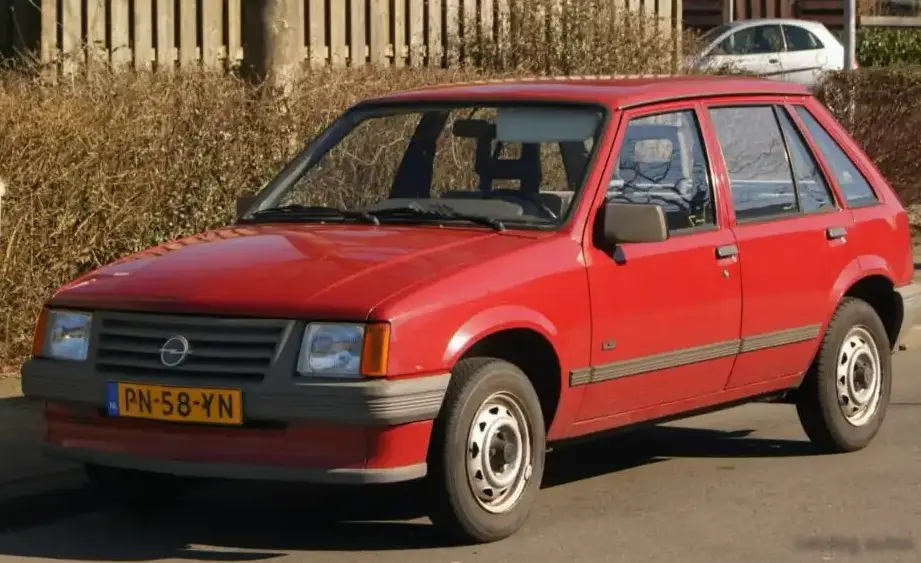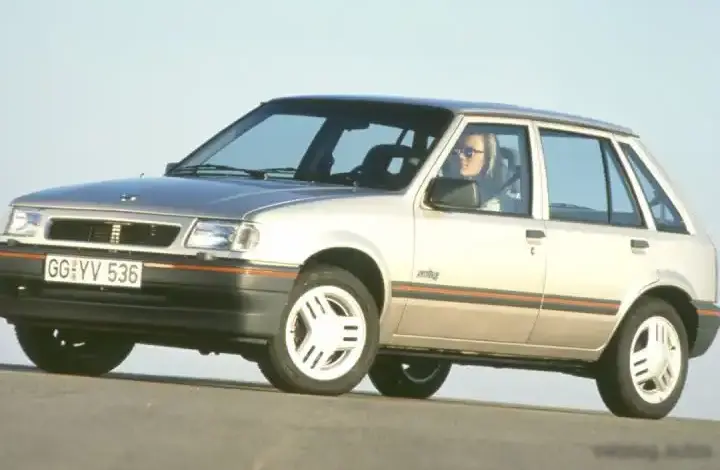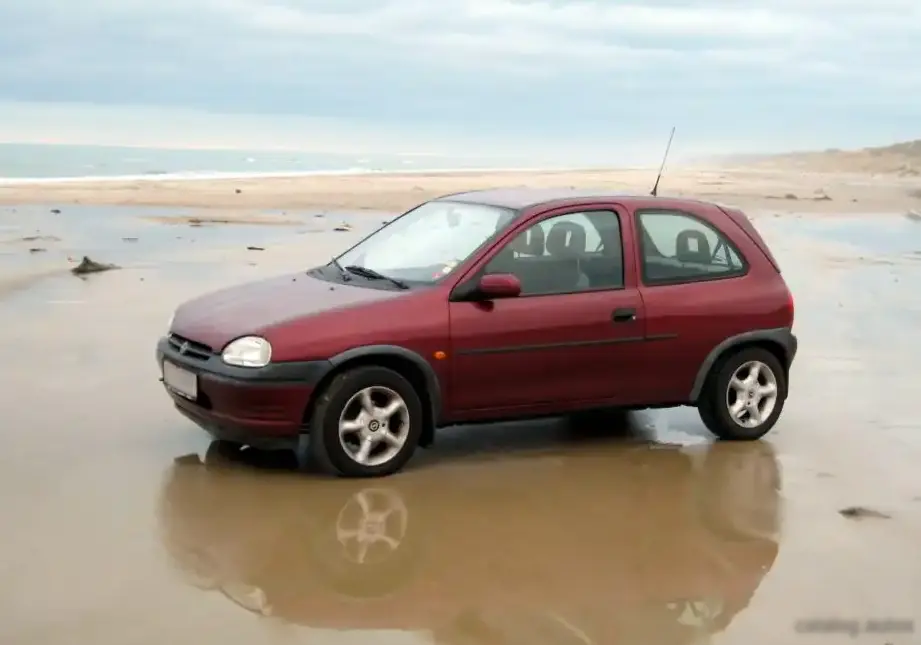
The Opel Corsa B 1.5 D, produced from March 1993 to 1996, represented the entry-level diesel offering within the second generation Corsa (B) lineup. Positioned as the most economical variant, it catered to buyers prioritizing fuel efficiency and low running costs over outright performance. This model played a significant role in the European market, particularly in countries where diesel fuel was heavily favored due to taxation and government incentives. The Corsa B, built on the GM121 platform, aimed to modernize the small car segment with improved safety and comfort features compared to its predecessor.
Technical Specifications
| Brand | Opel |
| Model | Corsa |
| Generation | Corsa B |
| Type (Engine) | 1.5 D (50 Hp) |
| Start of production | March, 1993 |
| End of production | 1996 |
| Powertrain Architecture | Internal Combustion engine |
| Body type | Hatchback |
| Seats | 5 |
| Doors | 3-5 |
| Fuel consumption (urban) | 6 l/100 km (39.2 US mpg, 47.1 UK mpg, 16.7 km/l) |
| Fuel consumption (extra urban) | 4 l/100 km (58.8 US mpg, 70.6 UK mpg, 25 km/l) |
| Fuel consumption (combined) | 5.7 l/100 km (41.3 US mpg, 49.6 UK mpg, 17.5 km/l) |
| Fuel Type | Diesel |
| Acceleration 0 – 100 km/h | 19.5 sec |
| Acceleration 0 – 62 mph | 19.5 sec |
| Acceleration 0 – 60 mph | 18.5 sec |
| Maximum speed | 150 km/h (93.21 mph) |
| Weight-to-power ratio | 17.8 kg/Hp, 56.2 Hp/tonne |
| Weight-to-torque ratio | 9.9 kg/Nm, 101.1 Nm/tonne |
| Power | 50 Hp @ 4800 rpm |
| Power per litre | 33.6 Hp/l |
| Torque | 90 Nm @ 2400 rpm (66.38 lb.-ft. @ 2400 rpm) |
| Engine layout | Front, Transverse |
| Engine Model/Code | 15D, 4EC1 |
| Engine displacement | 1488 cm3 (90.8 cu. in.) |
| Number of cylinders | 4 |
| Engine configuration | Inline |
| Cylinder Bore | 76 mm (2.99 in.) |
| Piston Stroke | 82 mm (3.23 in.) |
| Compression ratio | 23:1 |
| Number of valves per cylinder | 2 |
| Fuel injection system | Precombustion chamber injection |
| Engine aspiration | Naturally aspirated engine |
| Valvetrain | OHC |
| Engine oil capacity | 3.75 l (3.96 US qt | 3.3 UK qt) |
| Coolant | 6 l (6.34 US qt | 5.28 UK qt) |
| Kerb Weight | 890 kg (1962.11 lbs.) |
| Max. weight | 1390 kg (3064.43 lbs.) |
| Max load | 500 kg (1102.31 lbs.) |
| Trunk (boot) space – minimum | 260 l (9.18 cu. ft.) |
| Trunk (boot) space – maximum | 1050 l (37.08 cu. ft.) |
| Fuel tank capacity | 46 l (12.15 US gal | 10.12 UK gal) |
| Length | 3740 mm (147.24 in.) |
| Width | 1610 mm (63.39 in.) |
| Height | 1420 mm (55.91 in.) |
| Wheelbase | 2445 mm (96.26 in.) |
| Front track | 1385 mm (54.53 in.) |
| Rear (Back) track | 1390 mm (54.72 in.) |
| Ride height (ground clearance) | 140 mm (5.51 in.) |
| Drag coefficient (Cd) | 0.35 |
| Drivetrain Architecture | The Internal combustion engine (ICE) drives the front wheels of the vehicle. |
| Drive wheel | Front wheel drive |
| Number of gears and type of gearbox | 5 gears, manual transmission |
| Front suspension | Coil spring |
| Rear suspension | Coil spring |
| Front brakes | Disc |
| Rear brakes | Drum |
| Assisting systems | ABS (Anti-lock braking system) |
| Steering type | Steering rack and pinion |
| Tires size | 145/70 R13 |
| Wheel rims size | 5 J X 13 |
Introduction
The Opel Corsa B 1.5 D, launched in 1993, was a crucial component of Opel’s strategy to offer an affordable and economical small car to European consumers. It represented a significant update over the outgoing Corsa A, featuring a more modern design, improved safety features, and a range of updated engines. The 1.5 D variant, with its modest 50 horsepower, was specifically targeted at buyers seeking low running costs and reliability, often serving as a first car or a practical city vehicle. It was available in both 3-door and 5-door hatchback configurations.
Powertrain & Engine Architecture
The heart of the Corsa B 1.5 D is the 1488cc (90.8 cu. in.) inline-four cylinder diesel engine, designated as the 15D or 4EC1. This engine utilizes a precombustion chamber injection system, a common technology for diesel engines of that era. This system involves injecting fuel into a precombustion chamber connected to the main cylinder, promoting more complete combustion and reducing noise. The engine features an overhead camshaft (OHC) valvetrain with two valves per cylinder. The engine’s relatively low compression ratio of 23:1 contributed to its durability and ability to run on lower-quality diesel fuel. The engine was paired with a standard five-speed manual transmission, optimized for fuel efficiency rather than sporty performance. The transmission’s gear ratios were relatively tall, prioritizing economy at cruising speeds.
Driving Characteristics
The Corsa B 1.5 D’s driving experience was defined by its modest power output. Acceleration was slow, taking approximately 19.5 seconds to reach 62 mph (100 km/h). Top speed was limited to around 93 mph (150 km/h). However, the engine delivered a reasonable amount of torque at low RPMs (90 Nm or 66.38 lb-ft at 2400 rpm), making it reasonably tractable in urban driving conditions. Compared to higher-spec Corsa B models, such as those equipped with the 1.6-liter gasoline engine, the 1.5 D felt significantly slower. The manual transmission, while not particularly refined, was durable and easy to operate. The focus was clearly on practicality and fuel economy, rather than driving enjoyment.
Equipment & Trim Levels
The 1.5 D variant of the Corsa B typically came with a basic level of equipment. Standard features generally included power steering, central locking, and a basic stereo system. Interior upholstery was typically cloth, with a simple dashboard layout. Optional extras included electric windows, a sunroof, and upgraded stereo systems. Trim levels were relatively limited for the 1.5 D, with the emphasis on keeping costs down. The interior plastics were durable but not particularly luxurious, reflecting the car’s budget-oriented positioning.
Chassis & Braking
The Corsa B 1.5 D utilized a relatively simple chassis design. Front suspension consisted of coil springs, while the rear suspension also employed coil springs. Brakes were disc brakes at the front and drum brakes at the rear. ABS (Anti-lock Braking System) was available as an option, enhancing safety. The car’s relatively light weight (approximately 890 kg or 1962 lbs) helped to offset the engine’s limited power. Stabilizer bars were fitted to improve handling, but the overall driving experience was geared towards comfort and ease of use rather than sporty handling.
Market Reception & Comparison
The Corsa B 1.5 D was generally well-received by critics as a practical and economical small car. Its fuel economy (around 41.3 US mpg combined) was a major selling point, particularly in Europe where fuel prices were high. Compared to other diesel-powered small cars of the time, such as the Peugeot 205 and Renault Clio, the Corsa B 1.5 D offered a competitive level of fuel efficiency and reliability. However, its performance was often criticized as being sluggish. The 1.6-liter gasoline version of the Corsa B offered significantly more power but at the expense of fuel economy. The 1.5 D was primarily aimed at buyers who prioritized running costs over performance.
Legacy
The Opel Corsa B 1.5 D powertrain proved to be remarkably durable and reliable. Many examples are still on the road today, testament to the engine’s robust design and relatively simple mechanicals. In the used car market, these models are often sought after by buyers looking for an affordable and dependable vehicle. Maintenance costs are generally low, and spare parts are readily available. While not a particularly exciting car to drive, the Corsa B 1.5 D remains a practical and economical choice for those seeking a reliable small car.