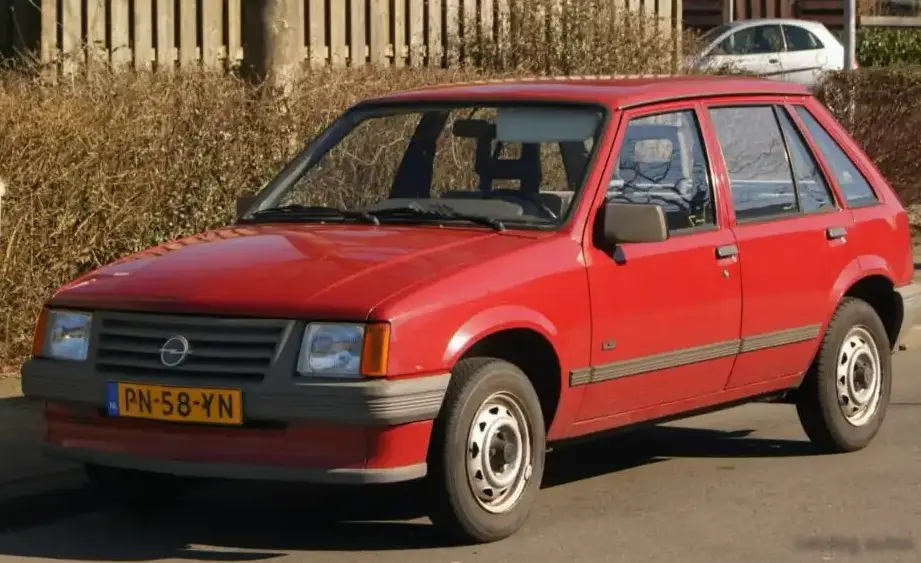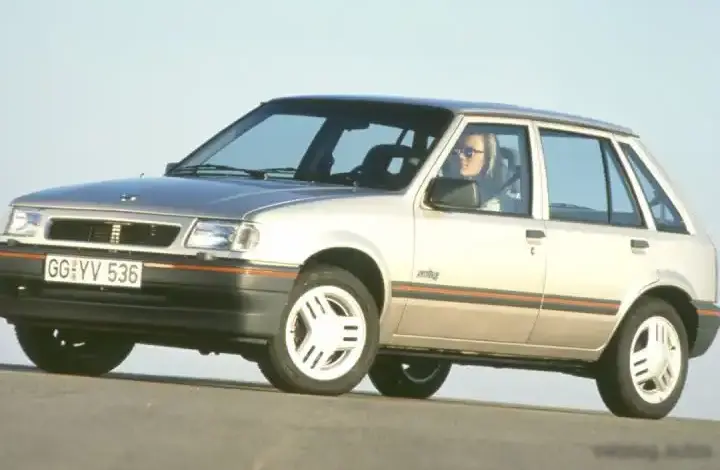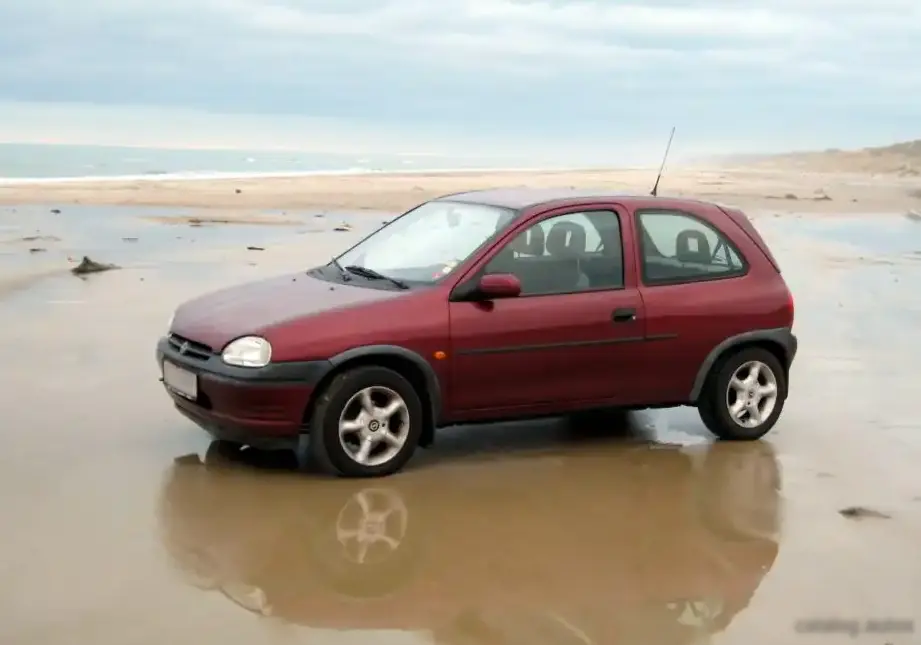
The Opel Corsa B 1.6i 16V, produced between August 1994 and February 1997, represented a significant step up in performance and refinement for the second-generation Corsa (B) range. Positioned as a mid-range offering within the lineup, it catered to drivers seeking a more spirited driving experience than the base models, while remaining more accessible than the later, more focused performance variants. This model was primarily sold in European markets, where the Corsa B competed directly with rivals like the Peugeot 205, Renault Clio, and Volkswagen Polo.
Technical Specifications
| Brand | Opel |
| Model | Corsa |
| Generation | Corsa B |
| Type (Engine) | 1.6i 16V (106 Hp) |
| Start of production | August, 1994 |
| End of production | February, 1997 |
| Powertrain Architecture | Internal Combustion engine |
| Body type | Hatchback |
| Seats | 5 |
| Doors | 3 |
| Fuel consumption (urban) | 10.8 l/100 km (21.8 US mpg, 26.2 UK mpg, 9.3 km/l) |
| Fuel consumption (extra urban) | 6.1 l/100 km (38.6 US mpg, 46.3 UK mpg, 16.4 km/l) |
| Fuel consumption (combined) | 7.8 l/100 km (30.2 US mpg, 36.2 UK mpg, 12.8 km/l) |
| CO2 emissions | 186 g/km |
| Fuel Type | Petrol (Gasoline) |
| Acceleration 0 – 100 km/h | 9.5 sec |
| Acceleration 0 – 62 mph | 9.5 sec |
| Acceleration 0 – 60 mph | 9 sec |
| Maximum speed | 195 km/h (121.17 mph) |
| Weight-to-power ratio | 9.1 kg/Hp, 110.4 Hp/tonne |
| Weight-to-torque ratio | 6.5 kg/Nm, 154.2 Nm/tonne |
| Power | 106 Hp @ 6000 rpm |
| Power per litre | 66.3 Hp/l |
| Torque | 148 Nm @ 4000 rpm (109.16 lb.-ft. @ 4000 rpm) |
| Engine layout | Front, Transverse |
| Engine Model/Code | X16XE |
| Engine displacement | 1598 cm3 (97.52 cu. in.) |
| Number of cylinders | 4 |
| Engine configuration | Inline |
| Cylinder Bore | 79 mm (3.11 in.) |
| Piston Stroke | 81.5 mm (3.21 in.) |
| Compression ratio | 10.5:1 |
| Number of valves per cylinder | 4 |
| Fuel injection system | Multi-port manifold injection |
| Engine aspiration | Naturally aspirated engine |
| Valvetrain | DOHC |
| Engine oil capacity | 3.25 l (3.43 US qt | 2.86 UK qt) |
| Coolant | 5.6 l (5.92 US qt | 4.93 UK qt) |
| Kerb Weight | 960 kg (2116.44 lbs.) |
| Max. weight | 1415 kg (3119.54 lbs.) |
| Max load | 455 kg (1003.1 lbs.) |
| Trunk (boot) space – minimum | 260 l (9.18 cu. ft.) |
| Trunk (boot) space – maximum | 1050 l (37.08 cu. ft.) |
| Fuel tank capacity | 46 l (12.15 US gal | 10.12 UK gal) |
| Length | 3740 mm (147.24 in.) |
| Width | 1610 mm (63.39 in.) |
| Height | 1420 mm (55.91 in.) |
| Wheelbase | 2443 mm (96.18 in.) |
| Front track | 1385 mm (54.53 in.) |
| Rear (Back) track | 1390 mm (54.72 in.) |
| Ride height (ground clearance) | 140 mm (5.51 in.) |
| Drag coefficient (Cd) | 0.35 |
| Drivetrain Architecture | The Internal combustion engine (ICE) drives the front wheels of the vehicle. |
| Drive wheel | Front wheel drive |
| Number of gears and type of gearbox | 5 gears, manual transmission |
| Front suspension | Coil spring |
| Rear suspension | Coil spring |
| Front brakes | Disc |
| Rear brakes | Drum |
| Assisting systems | ABS (Anti-lock braking system) |
| Steering type | Steering rack and pinion |
| Power steering | Hydraulic Steering |
| Tires size | 185/60 R14 |
| Wheel rims size | 14 |
Powertrain & Engine Architecture
The heart of the Corsa B 1.6i 16V is the X16XE engine, a 1.6-liter inline-four cylinder powerplant. This engine is a naturally aspirated unit featuring multi-port fuel injection and a double overhead camshaft (DOHC) valvetrain. The 16 valves (four per cylinder) contribute to improved breathing and higher-revving capability compared to engines with fewer valves. The X16XE was known for its relatively robust construction and decent power output for its displacement. The engine produced 106 horsepower at 6000 rpm and 148 Nm (109 lb-ft) of torque at 4000 rpm. The five-speed manual transmission was the standard offering, providing a direct connection between the engine and the front wheels. The transmission’s gear ratios were tuned for a balance of acceleration and fuel efficiency, though it wasn’t particularly sporty in its gearing.
Driving Characteristics
The 1.6i 16V Corsa B offered a noticeable improvement in performance over the lower-displacement engines available in the range. Acceleration to 60 mph took around 9.5 seconds, and it could achieve a top speed of approximately 121 mph. While not a sports car, the 1.6-liter engine provided sufficient power for confident overtaking and comfortable cruising. Compared to the 1.4-liter models, the 1.6i 16V felt more responsive and less strained, especially when carrying passengers or luggage. The manual transmission allowed for precise control, but the shift quality wasn’t particularly refined. The suspension, while adequate, was tuned for comfort rather than outright handling prowess. The Corsa B 1.6i 16V offered a reasonably engaging driving experience for its class, but it didn’t match the agility of more focused hot hatches.
Equipment & Trim Levels
The 1.6i 16V trim typically included features such as power steering, central locking, and an upgraded interior trim compared to the base models. Interior upholstery was usually cloth, with a relatively simple dashboard layout. Options available included electric windows, a sunroof, and upgraded audio systems. The level of equipment varied depending on the specific market and optional packages selected by the original buyer. Generally, the 1.6i 16V offered a good balance of comfort and convenience features for its price point.
Chassis & Braking
The Corsa B utilized a relatively simple chassis design, with coil springs and dampers at all four corners. Front suspension consisted of MacPherson struts, while the rear employed a torsion beam setup. Braking was handled by disc brakes at the front and drum brakes at the rear. ABS (Anti-lock Braking System) was often included as standard equipment, enhancing safety. The suspension was tuned for a comfortable ride, prioritizing everyday usability over sporty handling. The braking system was adequate for normal driving conditions, but lacked the stopping power of more advanced setups.
Market Reception & Comparison
The Corsa B 1.6i 16V was generally well-received by automotive critics as a competent and practical small hatchback. It was praised for its improved performance compared to the lower-displacement models, as well as its relatively comfortable ride. However, some critics noted that the interior was somewhat basic and the handling wasn’t particularly engaging. Compared to the 1.4-liter versions, the 1.6i 16V offered a significant performance boost, but at the cost of slightly higher fuel consumption. It provided a good alternative to rivals like the Peugeot 205 and Renault Clio, offering a blend of practicality, affordability, and reasonable performance.
Legacy
The Opel Corsa B 1.6i 16V has proven to be a relatively reliable vehicle, with the X16XE engine being known for its durability. However, like all older cars, it is susceptible to age-related issues such as corrosion and wear and tear on suspension components. In the used car market, these Corsas are often sought after by enthusiasts looking for an affordable and relatively simple-to-maintain classic hatchback. Parts availability is generally good, and the car’s straightforward mechanical design makes it relatively easy to work on for DIY mechanics. While not a collector’s item, the Corsa B 1.6i 16V remains a popular choice for those seeking a practical and affordable small car with a bit more pep than the base models.