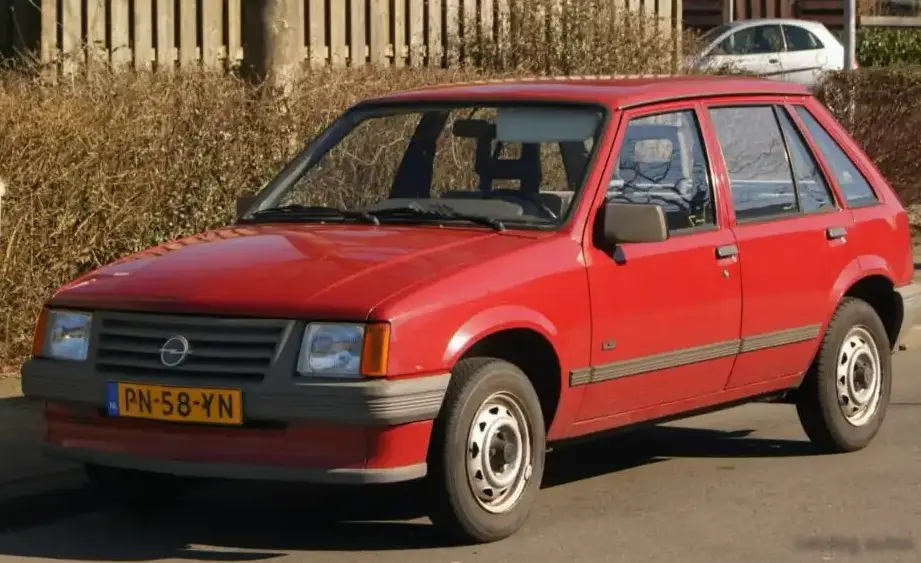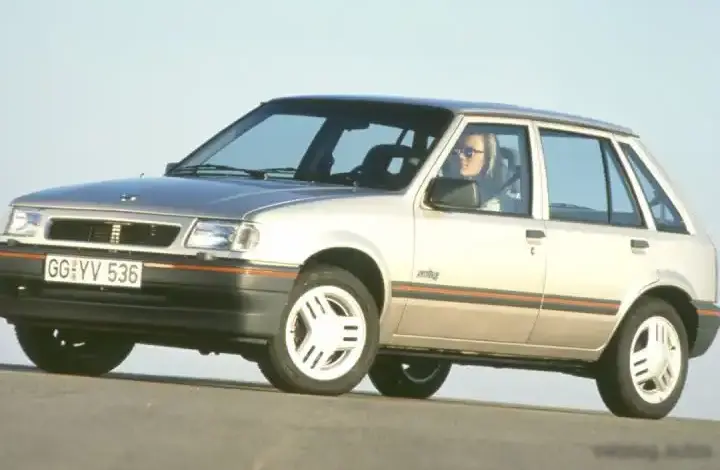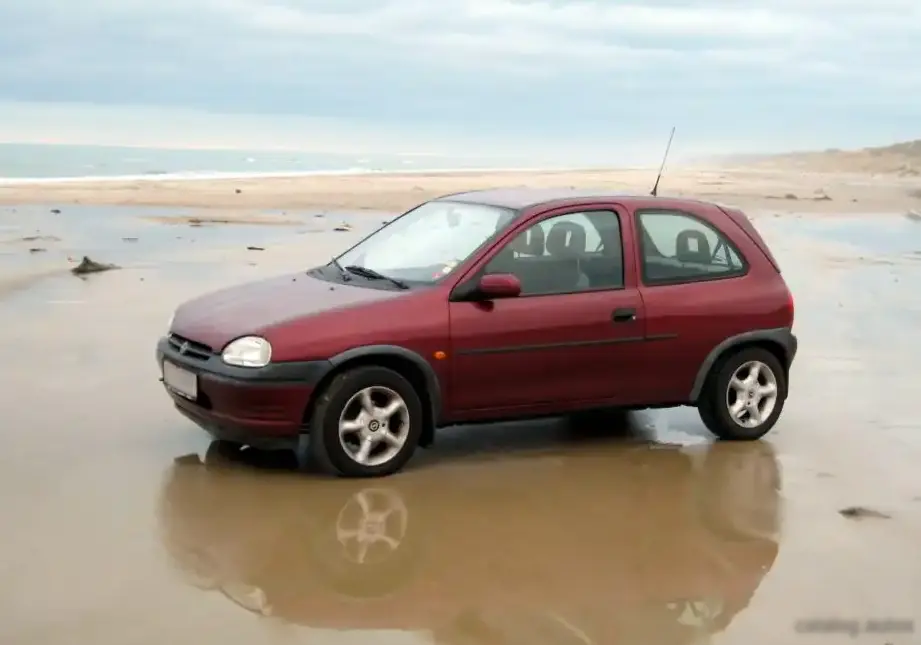
The Opel Corsa B 1.7 D, produced from January 1996 to February 1997, represented an entry-level diesel offering within the broader Corsa B range (1993-2000). Positioned as the most economical variant, it catered to buyers prioritizing fuel efficiency over outright performance. The Corsa B itself was a significant step forward for Opel, built on the GM13 platform (also known as the 1HX0/A3 platform shared with the Fiat Punto and Lancia Ypsilon), offering improved safety, comfort, and refinement compared to its predecessor. This particular 1.7-liter diesel version was primarily sold in European markets, where diesel engines held a substantial market share due to favorable taxation and fuel costs.
Technical Specifications
| Brand | Opel |
| Model | Corsa |
| Generation | Corsa B |
| Type (Engine) | 1.7 D (60 Hp) |
| Start of production | January, 1996 |
| End of production | February, 1997 |
| Powertrain Architecture | Internal Combustion engine |
| Body type | Hatchback |
| Seats | 5 |
| Doors | 3-5 |
| Fuel consumption (urban) | 6.9 l/100 km (34.1 US mpg, 40.9 UK mpg, 14.5 km/l) |
| Fuel consumption (extra urban) | 4.2 l/100 km (56 US mpg, 67.3 UK mpg, 23.8 km/l) |
| Fuel consumption (combined) | 5.2 l/100 km (45.2 US mpg, 54.3 UK mpg, 19.2 km/l) |
| Fuel Type | Diesel |
| Acceleration 0 – 100 km/h | 16.5 sec |
| Acceleration 0 – 62 mph | 16.5 sec |
| Acceleration 0 – 60 mph | 15.7 sec |
| Maximum speed | 155 km/h (96.31 mph) |
| Weight-to-power ratio | 15.8 kg/Hp |
| Weight-to-torque ratio | 8.4 kg/Nm |
| Power | 60 Hp @ 4400 rpm |
| Power per litre | 35.6 Hp/l |
| Torque | 112 Nm @ 2650 rpm (82.61 lb.-ft. @ 2650 rpm) |
| Engine layout | Front, Transverse |
| Engine Model/Code | X17D, 4EE1 |
| Engine displacement | 1686 cm3 (102.89 cu. in.) |
| Number of cylinders | 4 |
| Engine configuration | Inline |
| Cylinder Bore | 79 mm (3.11 in.) |
| Piston Stroke | 86 mm (3.39 in.) |
| Compression ratio | 22:1 |
| Number of valves per cylinder | 2 |
| Fuel injection system | Precombustion chamber injection |
| Engine aspiration | Naturally aspirated |
| Engine oil capacity | 3.75 l (3.96 US qt, 3.3 UK qt) |
| Coolant capacity | 6 l (6.34 US qt, 5.28 UK qt) |
| Kerb Weight | 945 kg (2083.37 lbs.) |
| Max. weight | 1410 kg (3108.52 lbs.) |
| Max load | 465 kg (1025.15 lbs.) |
| Trunk (boot) space – minimum | 260 l (9.18 cu. ft.) |
| Trunk (boot) space – maximum | 1050 l (37.08 cu. ft.) |
| Fuel tank capacity | 46 l (12.15 US gal, 10.12 UK gal) |
| Length | 3740 mm (147.24 in.) |
| Width | 1610 mm (63.39 in.) |
| Height | 1420 mm (55.91 in.) |
| Wheelbase | 2445 mm (96.26 in.) |
| Front track | 1385 mm (54.53 in.) |
| Rear track | 1390 mm (54.72 in.) |
| Ride height (ground clearance) | 140 mm (5.51 in.) |
| Drag coefficient (Cd) | 0.35 |
| Minimum turning circle | 10.5 m (34.45 ft.) |
| Drivetrain Architecture | Front wheel drive |
| Number of gears | 5 |
| Gearbox type | Manual transmission |
| Front suspension | Independent, McPherson with coil spring and anti-roll bar |
| Rear suspension | Semi-independent, longitudinal arms with transverse torsion shafts |
| Front brakes | Ventilated discs |
| Rear brakes | Drum |
| Assisting systems | ABS (Anti-lock braking system) |
| Steering type | Steering rack and pinion |
| Power steering | Hydraulic |
| Tires size | 165/70 R13 |
| Wheel rims size | 5J x 13 |
Powertrain & Engine Architecture
The Corsa B 1.7 D utilized the Opel/Isuzu X17D engine, also known as the 4EE1. This is a naturally aspirated, inline-four cylinder diesel engine with a displacement of 1686 cc (102.89 cubic inches). It employed a precombustion chamber injection system, a common technology for diesel engines of that era. This system involved injecting fuel into a precombustion chamber connected to the main cylinder, promoting more complete combustion and reducing noise. The engine featured two valves per cylinder and a relatively high compression ratio of 22:1, typical for indirect injection diesels. The 5-speed manual transmission was the only gearbox option available with this engine, prioritizing fuel economy over sporty driving. The engine’s design emphasized durability and low maintenance, characteristics valued in the European diesel market.
Driving Characteristics
The 1.7 D-powered Corsa B offered modest performance. With 60 horsepower and 82.61 lb-ft of torque, acceleration was leisurely, taking approximately 16.5 seconds to reach 62 mph. The focus was on providing adequate power for everyday driving and maximizing fuel efficiency. The manual transmission featured relatively long gear ratios, further emphasizing economy. Compared to the more powerful 1.6-liter gasoline versions or the later 1.7 TDI common-rail diesel, the 1.7 D felt significantly slower. However, its torque delivery was reasonably strong at lower RPMs, making it suitable for city driving and carrying loads. The driving experience was characterized by a noticeable diesel clatter and a lack of refinement compared to more modern engines.
Equipment & Trim Levels
The 1.7 D trim level was generally considered the base model in the Corsa B range. Standard equipment typically included basic cloth upholstery, a simple dashboard layout, and manual windows and door locks. Power steering was often included, but air conditioning and central locking were usually optional extras. The interior was functional and durable, prioritizing practicality over luxury. Optional extras could include upgraded stereo systems, alloy wheels, and metallic paint finishes. The overall aim was to provide affordable transportation with essential features.
Chassis & Braking
The Corsa B 1.7 D utilized a McPherson strut front suspension with a coil spring and anti-roll bar, providing a reasonable level of comfort and handling. The rear suspension employed a semi-independent torsion beam setup, which was cost-effective and space-efficient. Braking consisted of ventilated discs on the front wheels and drum brakes on the rear. ABS (Anti-lock Braking System) was often included as standard equipment, enhancing safety. The suspension setup was tuned for comfort and stability, rather than sporty handling. The relatively lightweight nature of the Corsa B helped to compensate for the modest braking performance.
Market Reception & Comparison
The Corsa B 1.7 D was well-received in markets where diesel fuel was affordable and fuel economy was a primary concern. Critics praised its fuel efficiency and low running costs, but noted its lack of performance and refinement. Compared to the gasoline-powered Corsas, the 1.7 D offered significantly better fuel economy but considerably slower acceleration. The later introduction of the 1.7 TDI common-rail diesel engine offered a significant improvement in both power and refinement, eventually replacing the older 1.7 D in the Corsa B lineup. The 1.7 D appealed to buyers seeking a practical and economical city car.
Legacy
The Opel Corsa B 1.7 D, while not a performance icon, proved to be a reliable and durable vehicle. The X17D engine is known for its longevity, and well-maintained examples can still be found on the road today. In the used car market, these Corsas are valued for their affordability and fuel efficiency. However, potential buyers should be aware of the age-related issues common to older vehicles, such as corrosion and wear and tear on suspension components. The 1.7 D represents a significant era in European automotive history, showcasing the popularity of diesel engines and the focus on fuel economy.