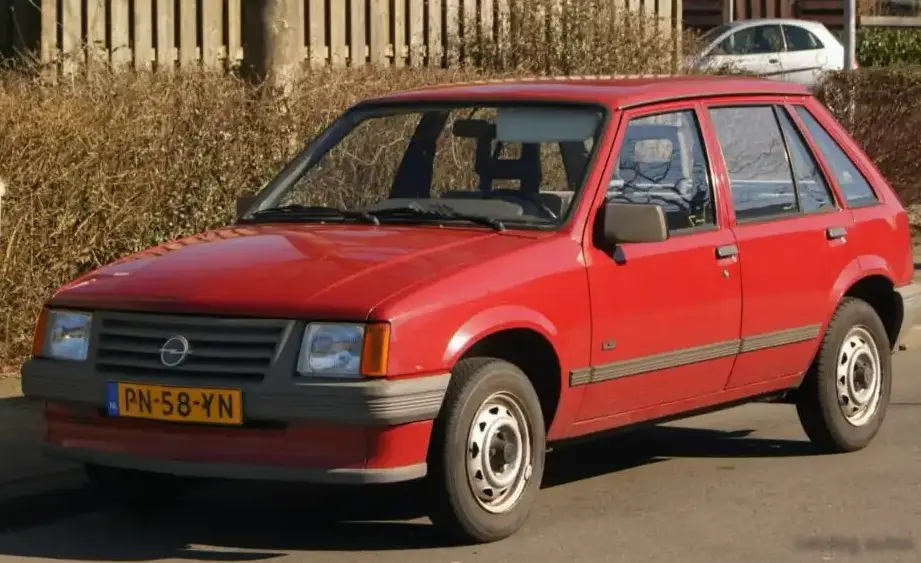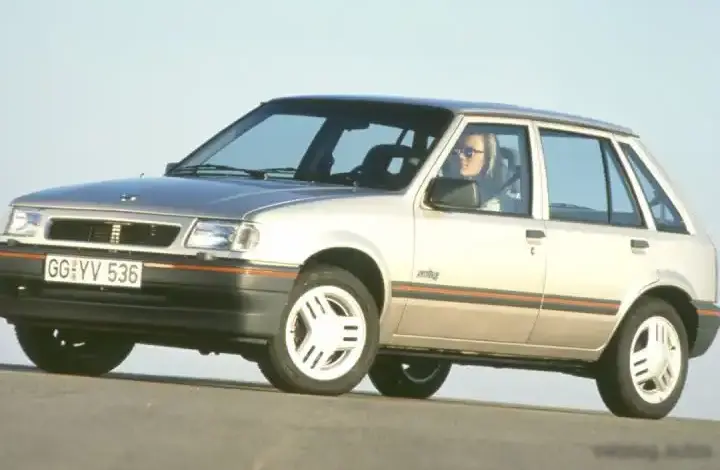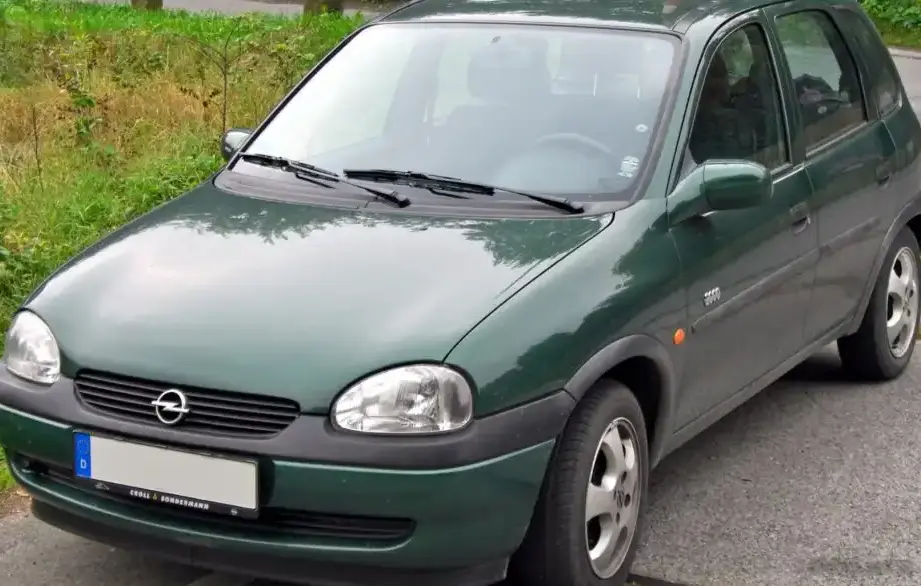
The Opel Corsa B, specifically the 1.0i 12V variant produced from March 1997 to July 2000, represented the entry point into the second generation of Opel’s popular supermini. This facelifted version of the Corsa B (internally designated as the 1HX0/A3 platform) aimed to provide affordable and economical transportation, primarily targeting first-time buyers, city commuters, and those seeking a low-cost vehicle. Positioned as the base model, it offered a more accessible price point compared to higher-spec Corsas with larger engines and more comprehensive equipment lists. The 1.0i 12V was a significant seller in European markets, particularly in Germany, the United Kingdom, and France, where fuel efficiency and low running costs were highly valued.
Technical Specifications
| Brand | Opel |
| Model | Corsa |
| Generation | Corsa B (facelift 1997) |
| Type (Engine) | 1.0i 12V (54 Hp) |
| Start of production | March, 1997 |
| End of production | July, 2000 |
| Powertrain Architecture | Internal Combustion engine |
| Body type | Hatchback |
| Seats | 5 |
| Doors | 3-5 |
| Fuel consumption (urban) | 7.5 l/100 km (31.4 US mpg, 37.7 UK mpg, 13.3 km/l) |
| Fuel consumption (extra urban) | 4.7 l/100 km (50 US mpg, 60.1 UK mpg, 21.3 km/l) |
| Fuel consumption (combined) | 6 l/100 km (39.2 US mpg, 47.1 UK mpg, 16.7 km/l) |
| CO2 emissions | 136 g/km |
| Fuel Type | Petrol (Gasoline) |
| Acceleration 0 – 100 km/h | 18 sec |
| Acceleration 0 – 62 mph | 18 sec |
| Acceleration 0 – 60 mph | 17.1 sec |
| Maximum speed | 150 km/h (93.21 mph) |
| Weight-to-power ratio | 16.1 kg/Hp, 61.9 Hp/tonne |
| Weight-to-torque ratio | 10.6 kg/Nm, 94 Nm/tonne |
| Power | 54 Hp @ 5600 rpm |
| Power per litre | 55.5 Hp/l |
| Torque | 82 Nm @ 2800 rpm (60.48 lb.-ft. @ 2800 rpm) |
| Engine layout | Front, Transverse |
| Engine Model/Code | X10XE |
| Engine displacement | 973 cm3 (59.38 cu. in.) |
| Number of cylinders | 3 |
| Engine configuration | Inline |
| Cylinder Bore | 72.5 mm (2.85 in.) |
| Piston Stroke | 78.6 mm (3.09 in.) |
| Compression ratio | 10.1:1 |
| Number of valves per cylinder | 4 |
| Fuel injection system | Multi-port manifold injection |
| Engine aspiration | Naturally aspirated engine |
| Valvetrain | DOHC |
| Engine oil capacity | 3 l (3.17 US qt | 2.64 UK qt) |
| Coolant | 4.3 l (4.54 US qt | 3.78 UK qt) |
| Kerb Weight | 872 kg (1922.43 lbs.) |
| Max. weight | 1380 kg (3042.38 lbs.) |
| Max load | 508 kg (1119.95 lbs.) |
| Trunk (boot) space – minimum | 260 l (9.18 cu. ft.) |
| Trunk (boot) space – maximum | 1050 l (37.08 cu. ft.) |
| Fuel tank capacity | 46 l (12.15 US gal | 10.12 UK gal) |
| Length | 3740 mm (147.24 in.) |
| Width | 1610 mm (63.39 in.) |
| Height | 1420 mm (55.91 in.) |
| Wheelbase | 2445 mm (96.26 in.) |
| Front track | 1385 mm (54.53 in.) |
| Rear (Back) track | 1390 mm (54.72 in.) |
| Ride height (ground clearance) | 140 mm (5.51 in.) |
| Drag coefficient (Cd) | 0.34 |
| Drivetrain Architecture | The Internal combustion engine (ICE) drives the front wheels of the vehicle. |
| Drive wheel | Front wheel drive |
| Number of gears and type of gearbox | 5 gears, manual transmission |
| Front suspension | Coil spring |
| Rear suspension | Coil spring |
| Front brakes | Disc |
| Rear brakes | Drum |
| Assisting systems | ABS (Anti-lock braking system) |
| Steering type | Steering rack and pinion |
| Tires size | 165/70 R13 |
| Wheel rims size | 5J x 13 |
Powertrain & Engine Architecture
The heart of the Corsa B 1.0i 12V was the Opel X10XE engine, a three-cylinder, naturally aspirated petrol engine displacing 973cc. This engine featured a multi-port fuel injection system and a double overhead camshaft (DOHC) valvetrain, contributing to its relatively efficient operation for its size. The 12-valve configuration (four valves per cylinder) helped improve breathing and, consequently, power output compared to earlier 8-valve designs. The X10XE was known for its simplicity and robustness, though it wasn’t a powerhouse. The engine was transversely mounted in the front of the vehicle, driving the front wheels. The standard transmission was a five-speed manual gearbox, although a four-speed automatic transmission was also available, albeit less common. The automatic transmission, while offering convenience, did impact fuel economy and performance.
Driving Characteristics
The 1.0i 12V Corsa B was not designed for outright speed. With only 54 horsepower, acceleration was leisurely, taking approximately 18 seconds to reach 62 mph. However, the engine proved surprisingly flexible for urban driving, with adequate torque at lower revs. The five-speed manual gearbox allowed drivers to keep the engine in its optimal power band, while the optional automatic transmission prioritized ease of use over performance. The automatic version felt noticeably slower, particularly when overtaking or climbing hills. The Corsa B’s light weight helped mitigate the lack of power, making it feel nimble and easy to maneuver in city traffic. The suspension, tuned for comfort, provided a reasonably smooth ride, although it could feel somewhat wallowy on uneven surfaces.
Equipment & Trim Levels
The 1.0i 12V typically came with a basic level of equipment. Standard features included power steering, central locking, and a basic stereo system. Interior upholstery was typically cloth, and the dashboard featured a simple, functional design. Optional extras included air conditioning, electric windows, and alloy wheels. Higher trim levels, such as the “Swing” or “Sport,” added more features, but the 1.0i 12V remained the entry-level offering. Safety features were limited by the standards of the time, with ABS being an optional extra on some models.
Chassis & Braking
The Corsa B utilized a relatively simple chassis design. Front suspension consisted of coil springs and MacPherson struts, while the rear suspension employed a torsion beam setup. Brakes were disc brakes on the front wheels and drum brakes on the rear, a common configuration for vehicles in this price segment. ABS was available as an option, improving braking performance and stability, particularly on slippery surfaces. The relatively light weight of the 1.0i 12V helped to compensate for the less powerful braking system.
Market Reception & Comparison
The Corsa B 1.0i 12V was generally well-received as an affordable and economical city car. Critics praised its fuel efficiency and low running costs, but noted its lack of power and basic equipment levels. Compared to other engines in the Corsa B lineup, such as the 1.4L and 1.6L variants, the 1.0i 12V offered significantly less performance. However, it was more economical and cheaper to insure. Compared to competitors like the Ford Fiesta and Volkswagen Polo, the Corsa B 1.0i 12V offered a competitive package in terms of price and fuel efficiency.
Legacy
The Opel Corsa B 1.0i 12V, while not a performance icon, proved to be a reliable and durable vehicle. The X10XE engine, despite its small displacement, is known for its longevity when properly maintained. Today, these Corsas are relatively common on the used car market, often appealing to buyers seeking a cheap and cheerful runabout. Maintenance is generally straightforward and affordable, thanks to the engine’s simple design and the widespread availability of spare parts. However, potential buyers should be aware of potential issues such as corrosion and wear and tear on suspension components, common in vehicles of this age.