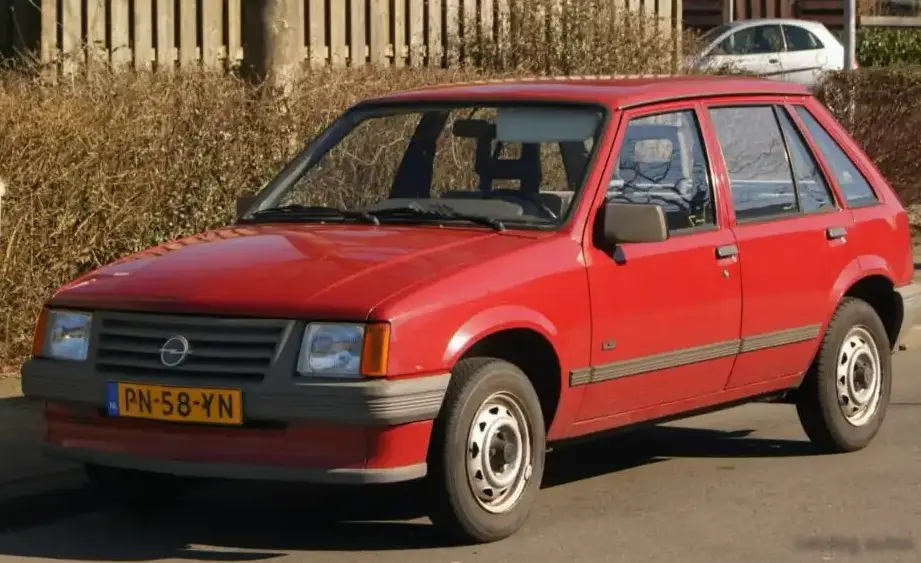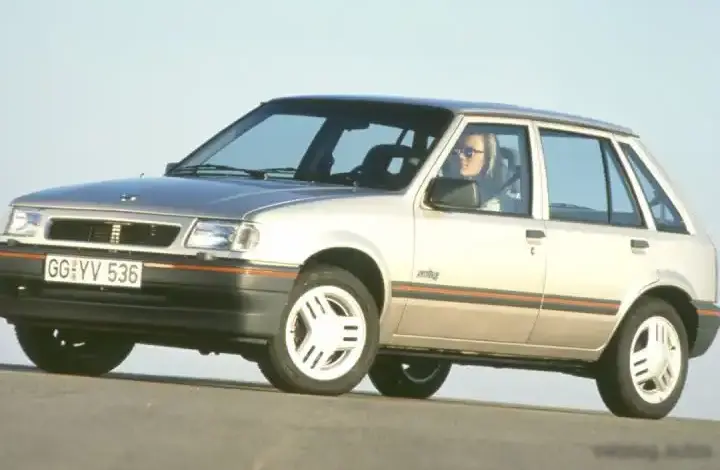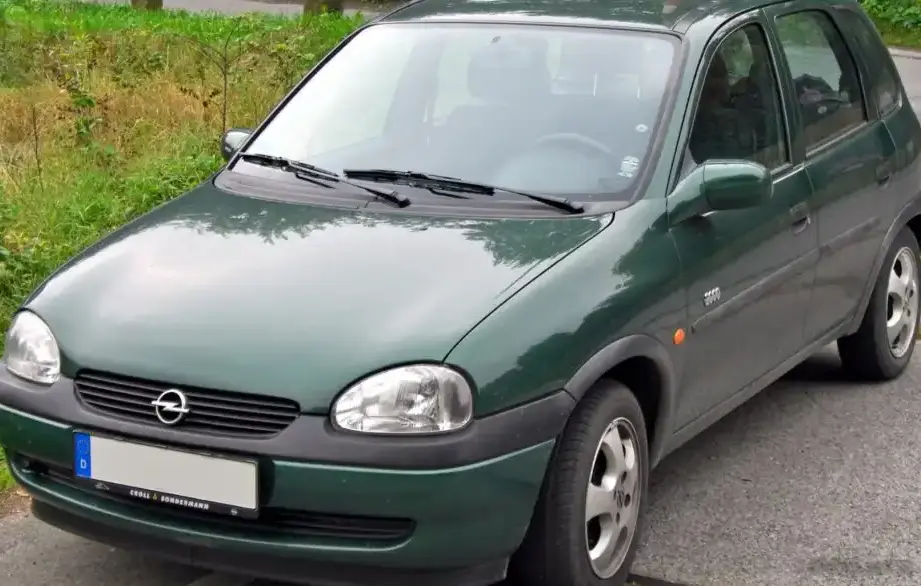
The Opel Corsa B, specifically the 1.4i 16V variant produced from March 1997 to July 2000, represented a significant step forward for Opel’s supermini offering. This facelifted version of the Corsa B (internally designated as the 1HX0/A3 platform) aimed to broaden the model’s appeal with a more refined engine and transmission combination. The 1.4i 16V with 90 horsepower and an automatic transmission occupied a middle ground in the Corsa B lineup, positioned above the base 1.0L and 1.2L models, but below the sportier 1.6L versions. It was targeted towards buyers seeking a balance of fuel efficiency, ease of use, and acceptable performance for everyday driving.
Technical Specifications
| Brand | Opel |
| Model | Corsa |
| Generation | Corsa B (facelift 1997) |
| Type (Engine) | 1.4i 16V (90 Hp) |
| Start of production | March, 1997 |
| End of production | July, 2000 |
| Powertrain Architecture | Internal Combustion engine |
| Body type | Hatchback |
| Seats | 5 |
| Doors | 3-5 |
| Fuel consumption (urban) | 10.7 l/100 km (22 US mpg, 26.4 UK mpg, 9.3 km/l) |
| Fuel consumption (extra urban) | 5.6 l/100 km (42 US mpg, 50.4 UK mpg, 17.9 km/l) |
| Fuel consumption (combined) | 7.4 l/100 km (31.8 US mpg, 38.2 UK mpg, 13.5 km/l) |
| CO2 emissions | 176 g/km |
| Fuel Type | Petrol (Gasoline) |
| Acceleration 0 – 100 km/h | 11 sec |
| Acceleration 0 – 62 mph | 11 sec |
| Acceleration 0 – 60 mph | 10.5 sec |
| Maximum speed | 180 km/h (111.85 mph) |
| Weight-to-power ratio | 10.6 kg/Hp, 94.7 Hp/tonne |
| Weight-to-torque ratio | 8.3 kg/Nm, 120 Nm/tonne |
| Power | 90 Hp @ 6000 rpm |
| Power per litre | 64.8 Hp/l |
| Torque | 114 Nm @ 3400 rpm (84.08 lb.-ft. @ 3400 rpm) |
| Engine layout | Front, Transverse |
| Engine Model/Code | X14XE |
| Engine displacement | 1389 cm3 (84.76 cu. in.) |
| Number of cylinders | 4 |
| Engine configuration | Inline |
| Cylinder Bore | 77.6 mm (3.06 in.) |
| Piston Stroke | 73.4 mm (2.89 in.) |
| Compression ratio | 10:1 |
| Number of valves per cylinder | 4 |
| Fuel injection system | Multi-port manifold injection |
| Engine aspiration | Naturally aspirated engine |
| Valvetrain | DOHC |
| Engine oil capacity | 3.5 l (3.7 US qt | 3.08 UK qt) |
| Coolant | 5.6 l (5.92 US qt | 4.93 UK qt) |
| Kerb Weight | 950 kg (2094.39 lbs.) |
| Max. weight | 1445 kg (3185.68 lbs.) |
| Max load | 495 kg (1091.29 lbs.) |
| Trunk (boot) space – minimum | 260 l (9.18 cu. ft.) |
| Trunk (boot) space – maximum | 1050 l (37.08 cu. ft.) |
| Fuel tank capacity | 46 l (12.15 US gal | 10.12 UK gal) |
| Length | 3740 mm (147.24 in.) |
| Width | 1610 mm (63.39 in.) |
| Height | 1420 mm (55.91 in.) |
| Wheelbase | 2445 mm (96.26 in.) |
| Front track | 1385 mm (54.53 in.) |
| Rear (Back) track | 1390 mm (54.72 in.) |
| Ride height (ground clearance) | 140 mm (5.51 in.) |
| Drag coefficient (Cd) | 0.35 |
| Drivetrain Architecture | The Internal combustion engine (ICE) drives the front wheels of the vehicle. |
| Drive wheel | Front wheel drive |
| Number of gears and type of gearbox | 5 gears, manual transmission |
| Front suspension | Coil spring |
| Rear suspension | Coil spring |
| Front brakes | Disc |
| Rear brakes | Drum |
| Assisting systems | ABS (Anti-lock braking system) |
| Steering type | Steering rack and pinion |
| Power steering | Hydraulic Steering |
| Tires size | 165/70 R13 |
| Wheel rims size | 5J x 13 |
Powertrain & Engine Architecture
The heart of this Corsa variant is the X14XE engine, a 1.4-liter inline-four cylinder gasoline engine. This engine featured multi-port fuel injection and a double overhead camshaft (DOHC) valvetrain, contributing to its relatively high output for its displacement. The X14XE was known for its reasonable reliability, though it wasn’t without its potential issues, such as occasional coolant leaks from the intake manifold gasket. The engine’s 90 horsepower output was achieved at 6000 rpm, with peak torque of 114 Nm (84 lb-ft) arriving at 3400 rpm. Paired with this engine was a four-speed automatic transmission. This transmission, while providing convenience, was not known for its sportiness or efficiency. It featured a traditional hydraulic control system and was geared towards smooth, comfortable shifts rather than rapid acceleration.
Driving Characteristics
The 1.4i 16V automatic Corsa B offered a comfortable, if not particularly exciting, driving experience. Acceleration from 0-60 mph took around 10.5 seconds, and top speed was approximately 112 mph. The automatic transmission dulled the engine’s performance somewhat, requiring frequent downshifts for overtaking maneuvers. Compared to the five-speed manual version, the automatic felt noticeably slower. The gear ratios were optimized for fuel economy and ease of driving in urban environments, rather than maximizing performance. The suspension, tuned for comfort, provided a reasonably smooth ride, but body roll was evident during cornering.
Equipment & Trim Levels
The 1.4i 16V automatic typically came with a reasonable level of standard equipment. This included power steering, central locking, electric front windows, and an adjustable steering column. Interior upholstery was typically cloth, with a relatively basic dashboard layout. Optional extras included air conditioning, alloy wheels, and a radio/cassette player. Higher trim levels, such as the “Swing” or “Sport” variants, added features like upgraded interior trim, body-colored bumpers, and fog lights.
Chassis & Braking
The Corsa B utilized a relatively simple chassis design, with coil springs and a torsion beam rear suspension. The front suspension featured MacPherson struts. Braking was handled by disc brakes on the front wheels and drum brakes on the rear. Anti-lock Braking System (ABS) was often included as standard equipment, enhancing safety. The steering was a rack and pinion system with hydraulic power assistance, providing light and easy steering feel. The relatively light weight of the Corsa B (around 950 kg or 2094 lbs) helped to offset the modest engine output.
Market Reception & Comparison
The 1.4i 16V automatic Corsa B was generally well-received as a practical and affordable city car. Critics praised its fuel efficiency and ease of use, but noted its lack of outright performance. Compared to the 1.6L versions, the 1.4L automatic offered significantly less power and a slower driving experience. However, it was more economical and generally cheaper to insure. The 1.0L and 1.2L models were even more fuel-efficient but lacked the 1.4L’s power. Reliability was generally good, although the automatic transmission could be prone to issues with age and high mileage.
Legacy
Today, the Opel Corsa B 1.4i 16V automatic is a relatively common sight in the used car market, particularly in Europe. While not a particularly sought-after variant, it represents a reliable and affordable option for those seeking a basic, no-frills city car. The X14XE engine is known for its durability, and parts availability remains good. However, potential buyers should be aware of the possibility of coolant leaks and transmission issues. The Corsa B, in general, helped establish Opel as a major player in the European supermini segment, and the 1.4i 16V automatic played a role in broadening its appeal to a wider range of buyers.