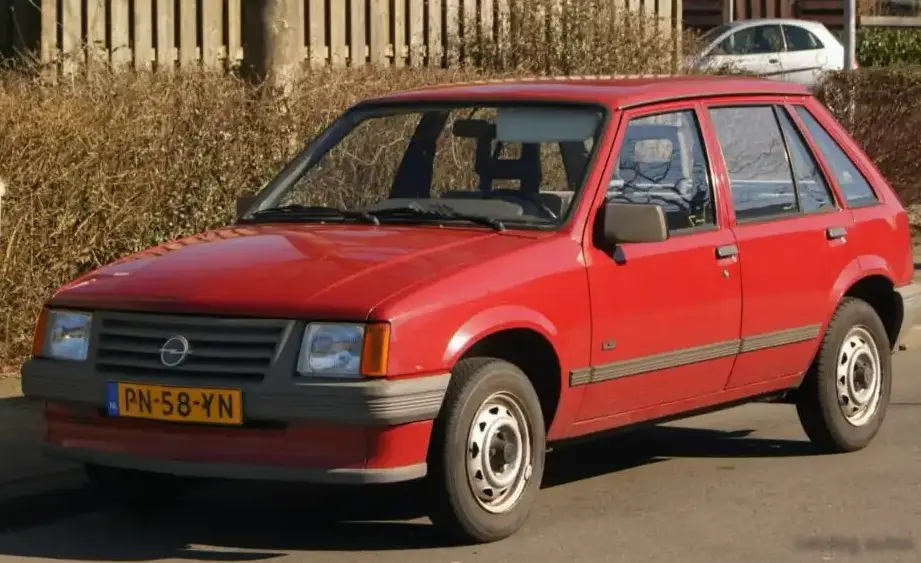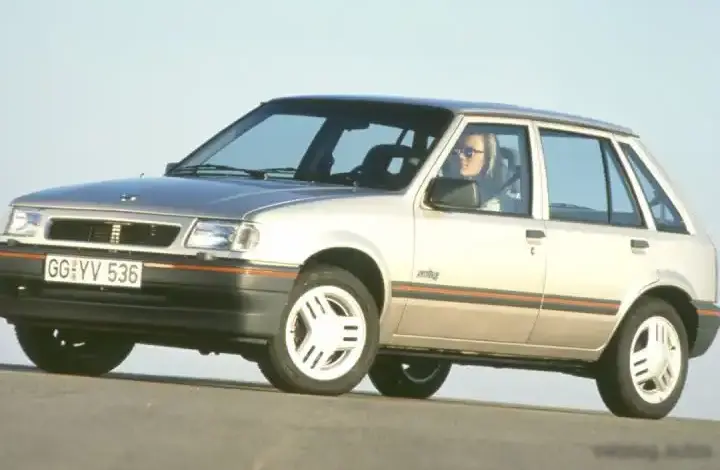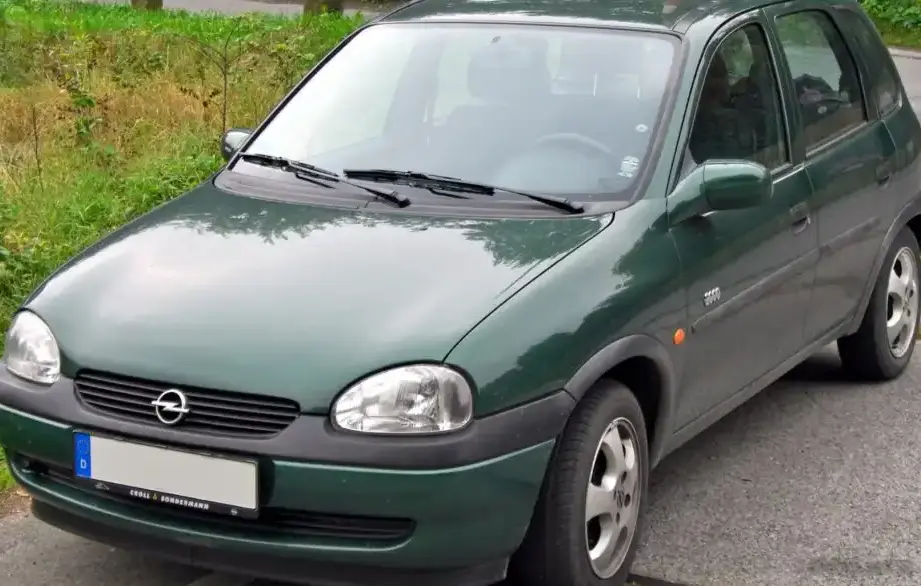
The Opel Corsa B 1.5 TD, specifically the facelifted version introduced in March 1997 and continuing through July 2000, represented an important entry point into the popular supermini segment for European buyers. Positioned as a fuel-efficient and practical option, this variant utilized a turbocharged diesel engine paired with a five-speed manual transmission. It played a significant role in establishing the Corsa B as a strong competitor against rivals like the Peugeot 206, Renault Clio, and Volkswagen Polo. The Corsa B itself was a crucial model for Opel, building upon the success of its predecessor and introducing a more modern design and improved features.
Technical Specifications
| Brand | Opel |
| Model | Corsa |
| Generation | Corsa B (facelift 1997) |
| Type (Engine) | 1.5 TD (67 Hp) |
| Start of production | March, 1997 |
| End of production | July, 2000 |
| Powertrain Architecture | Internal Combustion engine |
| Body type | Hatchback |
| Seats | 5 |
| Doors | 3-5 |
| Fuel consumption (urban) | 7 l/100 km (33.6 US mpg, 40.4 UK mpg, 14.3 km/l) |
| Fuel consumption (extra urban) | 4.5 l/100 km (52.3 US mpg, 62.8 UK mpg, 22.2 km/l) |
| Fuel consumption (combined) | 5.4 l/100 km (43.6 US mpg, 52.3 UK mpg, 18.5 km/l) |
| Fuel Type | Diesel |
| Acceleration 0 – 100 km/h | 14 sec |
| Acceleration 0 – 62 mph | 14 sec |
| Acceleration 0 – 60 mph | 13.3 sec |
| Maximum speed | 165 km/h (102.53 mph) |
| Weight-to-power ratio | 14 kg/Hp, 71.5 Hp/tonne |
| Weight-to-torque ratio | 7.1 kg/Nm, 140.9 Nm/tonne |
| Power | 67 Hp @ 4600 rpm |
| Power per litre | 45 Hp/l |
| Torque | 132 Nm @ 2600 rpm (97.36 lb.-ft. @ 2600 rpm) |
| Engine layout | Front, Transverse |
| Engine Model/Code | X15DT |
| Engine displacement | 1488 cm3 (90.8 cu. in.) |
| Number of cylinders | 4 |
| Engine configuration | Inline |
| Cylinder Bore | 76 mm (2.99 in.) |
| Piston Stroke | 82 mm (3.23 in.) |
| Compression ratio | 22:1 |
| Number of valves per cylinder | 2 |
| Fuel injection system | Precombustion chamber injection |
| Engine aspiration | Turbocharger |
| Engine oil capacity | 3.75 l (3.96 US qt | 3.3 UK qt) |
| Coolant | 6.3 l (6.66 US qt | 5.54 UK qt) |
| Kerb Weight | 937 kg (2065.73 lbs.) |
| Max. weight | 1465 kg (3229.77 lbs.) |
| Max load | 528 kg (1164.04 lbs.) |
| Trunk (boot) space – minimum | 260 l (9.18 cu. ft.) |
| Trunk (boot) space – maximum | 1050 l (37.08 cu. ft.) |
| Fuel tank capacity | 46 l (12.15 US gal | 10.12 UK gal) |
| Length | 3740 mm (147.24 in.) |
| Width | 1610 mm (63.39 in.) |
| Height | 1420 mm (55.91 in.) |
| Wheelbase | 2445 mm (96.26 in.) |
| Front track | 1385 mm (54.53 in.) |
| Rear (Back) track | 1390 mm (54.72 in.) |
| Ride height (ground clearance) | 140 mm (5.51 in.) |
| Drag coefficient (Cd) | 0.35 |
| Drivetrain Architecture | The Internal combustion engine (ICE) drives the front wheels of the vehicle. |
| Drive wheel | Front wheel drive |
| Number of gears and type of gearbox | 5 gears, manual transmission |
| Front suspension | Coil spring |
| Rear suspension | Coil spring |
| Front brakes | Disc |
| Rear brakes | Drum |
| Assisting systems | ABS (Anti-lock braking system) |
| Steering type | Steering rack and pinion |
| Tires size | 165/70 R13 |
| Wheel rims size | 5J x 13 |
Powertrain & Engine Architecture
The heart of the Corsa B 1.5 TD was the X15DT engine, a 1.5-liter inline-four cylinder diesel. This engine utilized a precombustion chamber injection system, a common technology for diesel engines of the era, which improved combustion efficiency and reduced noise compared to direct injection systems. A turbocharger was employed to boost power output, bringing it to 67 horsepower at 4600 rpm and 132 Nm (97.36 lb-ft) of torque at 2600 rpm. The five-speed manual transmission was chosen for its efficiency and affordability, aligning with the car’s overall positioning. The engine’s relatively simple design contributed to its durability and ease of maintenance.
Driving Characteristics
The 1.5 TD variant of the Corsa B offered a practical and economical driving experience. While not particularly quick – achieving 0-100 km/h in around 14 seconds – it provided sufficient power for everyday driving situations. The turbocharger helped to mitigate some of the inherent lag associated with diesel engines, delivering a usable amount of torque at lower engine speeds. The five-speed gearbox was well-matched to the engine’s characteristics, allowing drivers to keep the engine in its optimal power band. Compared to the more powerful petrol versions of the Corsa B, the 1.5 TD prioritized fuel economy and low-speed drivability over outright performance.
Equipment & Trim Levels
The Corsa B 1.5 TD typically came with a fairly basic level of equipment, reflecting its position as an entry-level model. Standard features generally included power steering, central locking, and a basic audio system. Interior upholstery was typically cloth, and the dashboard featured a functional, if somewhat spartan, design. Optional extras could include air conditioning, electric windows, and upgraded audio systems. Trim levels varied slightly depending on the market, but the focus remained on providing a cost-effective and reliable vehicle.
Chassis & Braking
The Corsa B 1.5 TD utilized a relatively simple chassis design, featuring coil spring suspension at both the front and rear. Front brakes were discs, providing adequate stopping power, while rear brakes were drums, a cost-saving measure common in this class of vehicle. The suspension was tuned for comfort and ride quality, rather than sporty handling. The car’s relatively light weight (around 937 kg or 2065.73 lbs) helped to compensate for the modest power output and contributed to its fuel efficiency.
Market Reception & Comparison
The Opel Corsa B 1.5 TD was generally well-received by critics and buyers alike, particularly those seeking a fuel-efficient and affordable supermini. It was praised for its practicality, reliability, and low running costs. Compared to the petrol-powered versions of the Corsa B, the 1.5 TD offered significantly better fuel economy, making it an attractive option for drivers covering long distances. However, it lacked the performance and refinement of the more expensive trims. Against competitors like the Peugeot 206 and Renault Clio, the Corsa B 1.5 TD offered a competitive package, although some rivals offered more sophisticated features or a more engaging driving experience.
Legacy
The Opel Corsa B 1.5 TD has proven to be a durable and reliable vehicle, with many examples still on the road today. The X15DT engine, while not known for its high performance, is generally considered to be robust and relatively easy to maintain. In the used car market, these Corsas are often sought after by buyers looking for an affordable and economical runabout. While not a particularly collectible model, the Corsa B 1.5 TD represents a significant chapter in Opel’s history and remains a popular choice for those seeking a practical and dependable supermini.