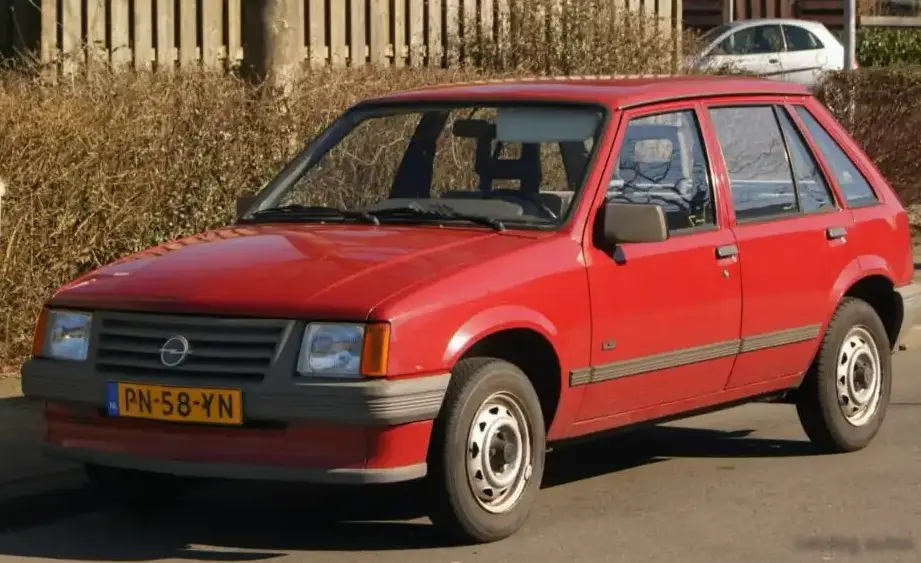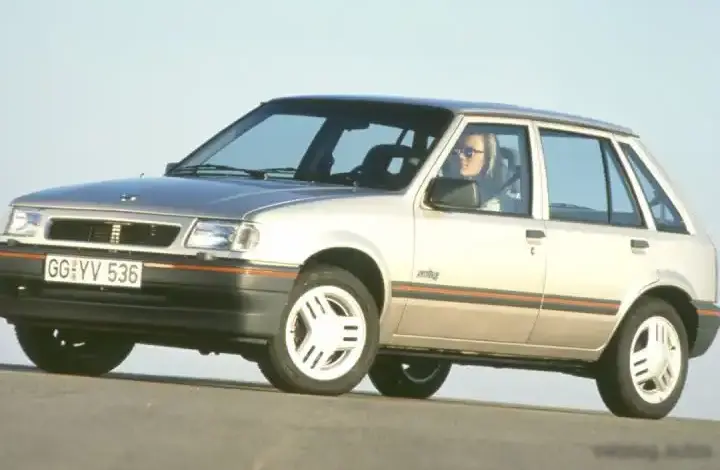
The Opel Corsa B Kasten 1.7 D, produced between 1999 and 2000, was a utilitarian variant of the popular Corsa B series, primarily aimed at commercial and fleet buyers. This model, a five-door station wagon (estate) configuration, offered a practical and economical solution for small businesses and individuals needing a compact cargo carrier. It occupied the entry-level position within the Corsa B Kasten range, focusing on affordability and fuel efficiency rather than outright performance. The “Kasten” designation signifies a panel van or wagon intended for commercial use, though this version retained rear side windows and a more conventional interior than a dedicated cargo van.
Technical Specifications
| Brand | Opel |
| Model | Corsa |
| Generation | Corsa B Kasten |
| Type (Engine) | 1.7 D (60 Hp) |
| Start of production | 1999 |
| End of production | 2000 |
| Powertrain Architecture | Internal Combustion engine |
| Body type | Station wagon (estate) |
| Seats | 5 |
| Doors | 5 |
| Fuel consumption (urban) | 8.1 l/100 km (29 US mpg, 34.9 UK mpg, 12.3 km/l) |
| Fuel consumption (extra urban) | 4.9 l/100 km (48 US mpg, 57.6 UK mpg, 20.4 km/l) |
| Fuel Type | Diesel |
| Acceleration 0 – 100 km/h | 18 sec |
| Acceleration 0 – 62 mph | 18 sec |
| Acceleration 0 – 60 mph | 17.1 sec |
| Maximum speed | 150 km/h (93.21 mph) |
| Weight-to-power ratio | 16.8 kg/Hp, 59.4 Hp/tonne |
| Weight-to-torque ratio | 9 kg/Nm, 110.9 Nm/tonne |
| Power | 60 Hp @ 4400 rpm |
| Power per litre | 35.6 Hp/l |
| Torque | 112 Nm @ 2650 rpm (82.61 lb.-ft. @ 2650 rpm) |
| Engine layout | Front, Transverse |
| Engine Model/Code | X17D |
| Engine displacement | 1686 cm3 (102.89 cu. in.) |
| Number of cylinders | 4 |
| Engine configuration | Inline |
| Cylinder Bore | 79 mm (3.11 in.) |
| Piston Stroke | 86 mm (3.39 in.) |
| Compression ratio | 22:1 |
| Number of valves per cylinder | 2 |
| Fuel injection system | Precombustion chamber injection |
| Engine aspiration | Naturally aspirated engine |
| Engine oil capacity | 3.75 l (3.96 US qt, 3.3 UK qt) |
| Coolant capacity | 6 l (6.34 US qt, 5.28 UK qt) |
| Kerb Weight | 1010 kg (2226.67 lbs.) |
| Max. weight | 1435 kg (3163.63 lbs.) |
| Max load | 425 kg (936.96 lbs.) |
| Trunk (boot) space – minimum | 400 l (14.13 cu. ft.) |
| Fuel tank capacity | 46 l (12.15 US gal, 10.12 UK gal) |
| Length | 4026 mm (158.5 in.) |
| Width | 1610 mm (63.39 in.) |
| Height | 1470 mm (57.87 in.) |
| Wheelbase | 2443 mm (96.18 in.) |
| Front track | 1387 mm (54.61 in.) |
| Rear track | 1388 mm (54.65 in.) |
| Drivetrain Architecture | Front wheel drive |
| Number of gears | 5 |
| Gearbox type | Manual transmission |
| Front suspension | Coil spring |
| Rear suspension | Coil spring |
| Front brakes | Disc |
| Rear brakes | Drum |
| Assisting systems | ABS (Anti-lock braking system) |
| Steering type | Steering rack and pinion |
| Power steering | Hydraulic Steering |
| Tires size | 185/60R14 |
| Wheel rims size | 5J x 13 |
Powertrain & Engine Architecture
The Corsa B Kasten 1.7 D was powered by the Opel/Isuzu X17D engine, a 1.7-liter inline-four diesel. This engine, a mainstay in various Opel and Vauxhall models of the era, utilized a precombustion chamber injection system. This system, common in older diesel engines, involved injecting fuel into a precombustion chamber connected to the main cylinder, promoting more complete combustion. The X17D featured a relatively low compression ratio of 22:1, contributing to its durability but also limiting peak power output. The engine produced 60 horsepower at 4400 rpm and 112 Nm (82.61 lb-ft) of torque at 2650 rpm. The engine was transversely mounted, driving the front wheels through a five-speed manual transmission. This transmission was chosen for its simplicity and cost-effectiveness, aligning with the Kasten’s utilitarian focus.
Driving Characteristics
The 1.7 D engine in the Corsa B Kasten prioritized fuel economy and low-end torque over outright speed. Acceleration was leisurely, taking approximately 18 seconds to reach 100 km/h (62 mph). The five-speed manual transmission offered a reasonable spread of gears, but the limited horsepower meant frequent downshifting was necessary, especially when laden with cargo or navigating hilly terrain. Compared to the more powerful 1.6-liter gasoline versions of the Corsa B, the 1.7 D felt significantly slower. However, it offered a substantial advantage in fuel efficiency, making it a popular choice for delivery drivers and businesses prioritizing operating costs. The gear ratios were optimized for maximizing fuel economy and providing sufficient torque for hauling loads, rather than sporty acceleration.
Equipment & Trim Levels
The Corsa B Kasten 1.7 D was sparsely equipped, reflecting its commercial orientation. Standard features typically included basic steel wheels, black plastic bumpers, and a simple interior with cloth upholstery. Power steering was often included, but air conditioning, electric windows, and central locking were usually optional extras. The dashboard layout was functional and straightforward, prioritizing practicality over aesthetics. The Kasten trim level generally lacked the cosmetic enhancements found on passenger-oriented Corsa B models. Options were limited, focusing primarily on upgrades to the audio system or the addition of a load securing system in the cargo area.
Chassis & Braking
The Corsa B Kasten utilized a relatively simple chassis design. Front suspension consisted of coil springs, while the rear employed a coil spring setup. Front brakes were discs, providing adequate stopping power for the vehicle’s weight and performance. However, rear brakes were drums, a cost-saving measure that reduced braking performance compared to all-disc setups. ABS (Anti-lock Braking System) was often included as standard equipment, enhancing safety in emergency braking situations. The suspension was tuned for comfort and load-carrying capacity, rather than sporty handling. Stabilizer bars were typically smaller in diameter compared to those found on higher-spec Corsa B models.
Market Reception & Comparison
The Corsa B Kasten 1.7 D was well-received in the commercial vehicle segment, particularly in Europe. Critics praised its fuel efficiency, low running costs, and practicality. However, its lack of power and basic equipment levels were often noted. Compared to other small diesel vans and estates of the time, such as the Renault Clio Van or the Peugeot 206 Van, the Corsa B Kasten offered a competitive combination of price, fuel economy, and cargo capacity. The 1.7 D engine was known for its reliability, but its precombustion chamber injection system required regular maintenance to prevent issues with injector clogging and combustion efficiency. The manual transmission was generally considered durable and easy to maintain.
Legacy
The Opel Corsa B Kasten 1.7 D, while not a performance icon, remains a popular choice in the used commercial vehicle market due to its affordability and reliability. The X17D engine, when properly maintained, is known to be a long-lasting unit. However, potential buyers should be aware of the maintenance requirements associated with the precombustion chamber injection system. Today, these vehicles are often found in the hands of small businesses, tradespeople, and individuals seeking a simple and economical workhorse. The Corsa B Kasten represents a practical and functional approach to small vehicle design, prioritizing utility over luxury.