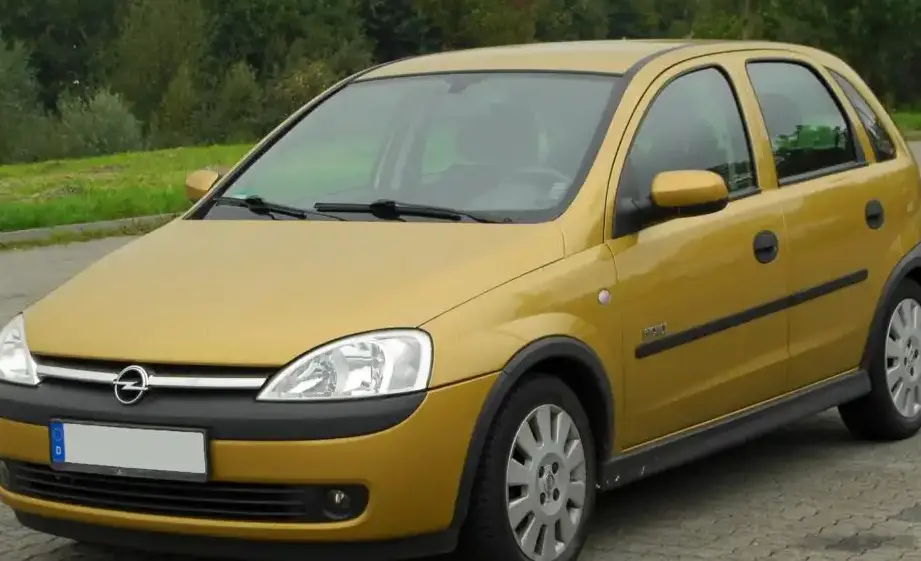
The Opel Corsa C 1.7 DTI 16V, produced from October 2000 to June 2003, represented an entry-level diesel offering within the broader Corsa C range (1999-2006). Positioned as a fuel-efficient and affordable option, it catered to buyers prioritizing economy over outright performance. This variant utilized the Y17DT engine, a 1.7-liter common rail diesel, and was typically paired with a five-speed manual transmission, though an automatic option was also available. The Corsa C itself was a significant model for Opel, representing a substantial step forward in design, safety, and refinement compared to its predecessor, the Corsa B, and played a key role in Opel’s presence in the European supermini segment.
Technical Specifications
| Brand | Opel |
| Model | Corsa |
| Generation | Corsa C |
| Type (Engine) | 1.7 DTI 16V (75 Hp) |
| Start of production | October, 2000 |
| End of production | June, 2003 |
| Powertrain Architecture | Internal Combustion engine |
| Body type | Hatchback |
| Seats | 5 |
| Doors | 3-5 |
| Fuel consumption (urban) | 5.8 l/100 km (40.6 US mpg, 48.7 UK mpg, 17.2 km/l) |
| Fuel consumption (extra urban) | 4.1 l/100 km (57.4 US mpg, 68.9 UK mpg, 24.4 km/l) |
| Fuel consumption (combined) | 4.7 l/100 km (50 US mpg, 60.1 UK mpg, 21.3 km/l) |
| CO2 emissions | 126 g/km |
| Fuel Type | Diesel |
| Acceleration 0 – 100 km/h | 13.5 sec |
| Acceleration 0 – 62 mph | 13.5 sec |
| Acceleration 0 – 60 mph | 12.8 sec |
| Maximum speed | 170 km/h (105.63 mph) |
| Weight-to-power ratio | 13.9 kg/Hp, 72.1 Hp/tonne |
| Weight-to-torque ratio | 6.3 kg/Nm, 158.7 Nm/tonne |
| Power | 75 Hp @ 4400 rpm |
| Power per litre | 44.5 Hp/l |
| Torque | 165 Nm @ 1800 rpm (121.7 lb.-ft. @ 1800 rpm) |
| Engine layout | Front, Transverse |
| Engine Model/Code | Y17DT |
| Engine displacement | 1686 cm3 (102.89 cu. in.) |
| Number of cylinders | 4 |
| Engine configuration | Inline |
| Cylinder Bore | 79 mm (3.11 in.) |
| Piston Stroke | 86 mm (3.39 in.) |
| Compression ratio | 18.4:1 |
| Number of valves per cylinder | 4 |
| Fuel injection system | Diesel Commonrail |
| Engine aspiration | Turbocharger |
| Valvetrain | DOHC |
| Engine oil capacity | 4.5 l (4.76 US qt | 3.96 UK qt) |
| Coolant capacity | 7.1 l (7.5 US qt | 6.25 UK qt) |
| Kerb Weight | 1040 kg (2292.81 lbs.) |
| Max. weight | 1580 kg (3483.3 lbs.) |
| Max load | 540 kg (1190.5 lbs.) |
| Trunk (boot) space – minimum | 260 l (9.18 cu. ft.) |
| Trunk (boot) space – maximum | 1060 l (37.43 cu. ft.) |
| Fuel tank capacity | 44 l (11.62 US gal | 9.68 UK gal) |
| Length | 3817 mm (150.28 in.) |
| Width | 1646 mm (64.8 in.) |
| Height | 1440 mm (56.69 in.) |
| Wheelbase | 2491 mm (98.07 in.) |
| Front track | 1415 mm (55.71 in.) |
| Rear track | 1410 mm (55.51 in.) |
| Ride height (ground clearance) | 140 mm (5.51 in.) |
| Drivetrain Architecture | Front wheel drive |
| Number of gears | 5 |
| Gearbox type | Manual transmission |
| Front suspension | Coil spring |
| Rear suspension | Coil spring |
| Front brakes | Disc |
| Rear brakes | Drum |
| Steering type | Steering rack and pinion |
| Tires size | 175/65 R14 |
| Wheel rims size | 14 |
Powertrain & Engine Architecture
The heart of the Corsa C 1.7 DTI 16V is the Y17DT engine, a 1.7-liter inline-four cylinder diesel. This engine belongs to Opel/Isuzu’s family of diesel engines, known for their robustness and relatively simple design. The “16V” designation indicates a four-valve-per-cylinder configuration, enhancing breathing and contributing to improved efficiency. Crucially, the Y17DT utilizes a common rail direct injection system, a significant advancement over older diesel technologies. This system allows for precise control of fuel delivery, resulting in quieter operation, reduced emissions, and improved fuel economy. The turbocharger, a variable geometry unit, further enhances performance by forcing more air into the cylinders. The five-speed manual transmission, standard on most examples, was a conventional unit, chosen for its durability and cost-effectiveness. An optional four-speed automatic transmission was available, but it was less common and generally considered less refined than the manual.
Driving Characteristics
The 1.7 DTI 16V, producing 75 horsepower, wasn’t designed for spirited driving. Acceleration was modest, taking around 13.5 seconds to reach 62 mph. However, the engine’s 165 Nm (121.7 lb-ft) of torque, available from a low 1800 rpm, provided adequate pulling power for everyday driving situations. The manual transmission offered a more engaging driving experience and allowed the driver to make the most of the available power. The automatic transmission, while convenient, resulted in noticeable performance loss due to its less efficient power transfer and wider gear ratios. The Corsa C’s relatively light weight helped to mitigate the engine’s limitations, making it feel reasonably nimble in urban environments. Fuel economy was a major strength, with combined figures around 50 US mpg.
Equipment & Trim Levels
The Corsa C 1.7 DTI 16V typically came with a basic level of equipment. Standard features generally included power steering, central locking, and an adjustable steering column. Interior upholstery was typically cloth, and the dashboard featured a simple, functional design. Optional extras included air conditioning, electric windows, and an upgraded audio system. Trim levels varied slightly depending on the market, but the 1.7 DTI 16V generally occupied the lower end of the range, appealing to budget-conscious buyers. Safety features were relatively basic for the time, with driver and passenger airbags being standard on most models.
Chassis & Braking
The Corsa C utilized a relatively simple chassis design. Front suspension consisted of coil springs and MacPherson struts, while the rear employed a torsion beam setup. This configuration provided a reasonable balance between ride comfort and handling. Braking was typically accomplished with front disc brakes and rear drum brakes. The braking system was adequate for the car’s performance, but lacked the stopping power of higher-spec Corsa models with all-disc brakes. Stabilizer bars were fitted to both the front and rear axles, helping to reduce body roll during cornering.
Market Reception & Comparison
The Corsa C 1.7 DTI 16V was generally well-received as an economical and practical city car. Critics praised its fuel efficiency and low running costs, but noted its lack of outright performance. Compared to the more powerful Corsa variants, such as the 1.0-liter or 1.4-liter petrol engines, the 1.7 DTI offered significantly better fuel economy but slower acceleration. Compared to other diesel options in the segment, like the Volkswagen Polo TDI, the Corsa offered a competitive price point but lacked some of the refinement and build quality of its German rival. Reliability was generally good, although the common rail diesel system could be prone to issues if not properly maintained.
Legacy
The Opel Corsa C 1.7 DTI 16V remains a relatively common sight on European roads today, a testament to its durability and affordability. The Y17DT engine, while not known for its high performance, is generally considered a reliable unit when properly maintained. Used examples are typically inexpensive to purchase and maintain, making them a popular choice for first-time drivers or those seeking a budget-friendly runabout. However, potential buyers should be aware of the potential for issues with the common rail system and ensure that the car has been regularly serviced. The Corsa C 1.7 DTI 16V represents a practical and economical choice for those prioritizing fuel efficiency and low running costs over outright performance.