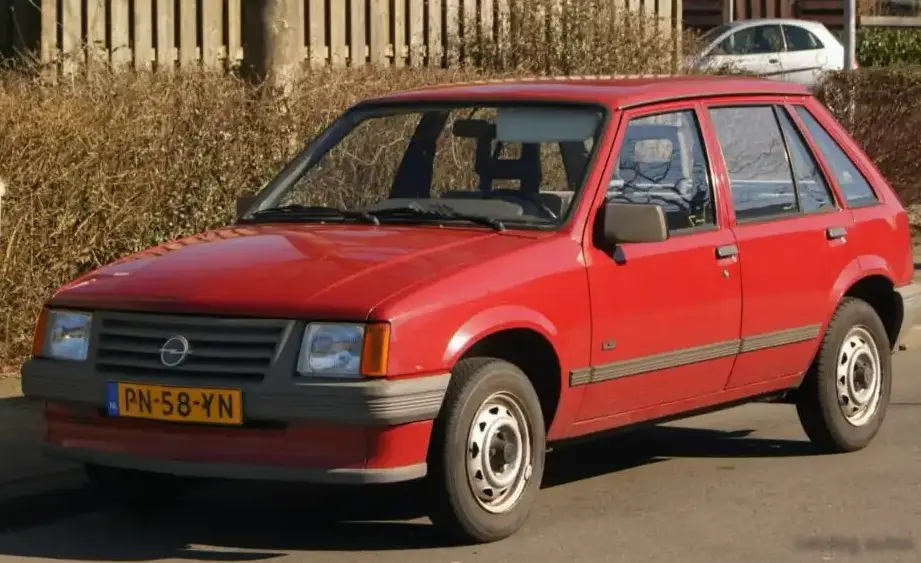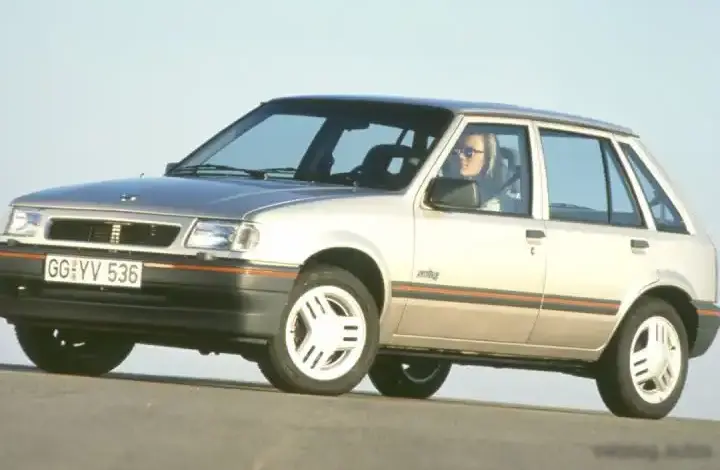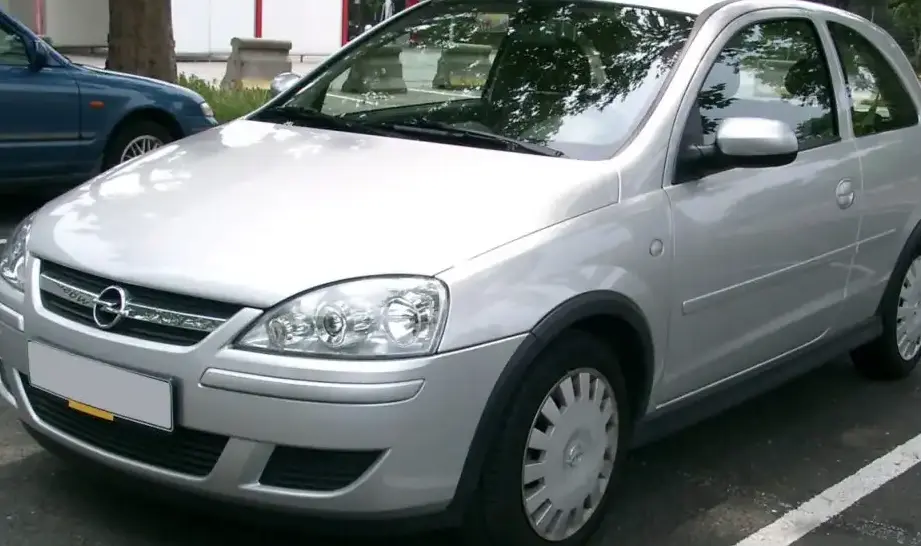
The Opel Corsa C, specifically the 1.2 16V variant produced from 2003 to June 2004, represented an entry-level offering within the Corsa C facelift range. Positioned as an affordable and economical hatchback, it served as a key model for Opel in the European small car segment. This version, powered by the Z12XE engine, was designed to appeal to buyers prioritizing fuel efficiency and low running costs over outright performance. The Corsa C itself was a significant model for Opel, building upon the success of its predecessors and introducing a more modern design and improved interior space. The facelift in 2003 brought revised styling and minor mechanical updates, enhancing the car’s appeal.
Technical Specifications
| Brand | Opel |
| Model | Corsa |
| Generation | Corsa C (facelift 2003) |
| Type (Engine) | 1.2 16V (75 Hp) |
| Start of production | 2003 |
| End of production | June, 2004 |
| Powertrain Architecture | Internal Combustion engine |
| Body type | Hatchback |
| Seats | 5 |
| Doors | 3-5 |
| Fuel consumption (urban) | 8.2 l/100 km (28.7 US mpg, 34.4 UK mpg, 12.2 km/l) |
| Fuel consumption (extra urban) | 5.2 l/100 km (45.2 US mpg, 54.3 UK mpg, 19.2 km/l) |
| Fuel consumption (combined) | 6.3 l/100 km (37.3 US mpg, 44.8 UK mpg, 15.9 km/l) |
| CO2 emissions | 151 g/km |
| Fuel Type | Petrol (Gasoline) |
| Acceleration 0 – 100 km/h | 13 sec |
| Acceleration 0 – 62 mph | 13 sec |
| Acceleration 0 – 60 mph | 12.4 sec |
| Maximum speed | 170 km/h (105.63 mph) |
| Weight-to-power ratio | 12.1 kg/Hp, 82.4 Hp/tonne |
| Weight-to-torque ratio | 8.3 kg/Nm, 120.9 Nm/tonne |
| Power | 75 Hp @ 5600 rpm |
| Power per litre | 62.6 Hp/l |
| Torque | 110 Nm @ 4000 rpm (81.13 lb.-ft. @ 4000 rpm) |
| Engine layout | Front, Transverse |
| Engine Model/Code | Z12XE |
| Engine displacement | 1199 cm3 (73.17 cu. in.) |
| Number of cylinders | 4 |
| Engine configuration | Inline |
| Cylinder Bore | 72.5 mm (2.85 in.) |
| Piston Stroke | 72.6 mm (2.86 in.) |
| Compression ratio | 10.1:1 |
| Number of valves per cylinder | 4 |
| Fuel injection system | Multi-port manifold injection |
| Engine aspiration | Naturally aspirated engine |
| Valvetrain | DOHC |
| Engine oil capacity | 3.5 l (3.7 US qt | 3.08 UK qt) |
| Coolant | 5 l (5.28 US qt | 4.4 UK qt) |
| Kerb Weight | 910-930 kg (2006.21 – 2050.3 lbs.) |
| Max. weight | 1430 kg (3152.61 lbs.) |
| Max load | 500-520 kg (1102.31 – 1146.4 lbs.) |
| Trunk (boot) space – minimum | 260 l (9.18 cu. ft.) |
| Trunk (boot) space – maximum | 1060 l (37.43 cu. ft.) |
| Fuel tank capacity | 44 l (11.62 US gal | 9.68 UK gal) |
| Length | 3839 mm (151.14 in.) |
| Width | 1646 mm (64.8 in.) |
| Height | 1440 mm (56.69 in.) |
| Wheelbase | 2491 mm (98.07 in.) |
| Front track | 1429 mm (56.26 in.) |
| Rear (Back) track | 1420 mm (55.91 in.) |
| Ride height (ground clearance) | 140 mm (5.51 in.) |
| Drag coefficient (Cd) | 0.32 |
| Drivetrain Architecture | The Internal combustion engine (ICE) drives the front wheels of the vehicle. |
| Drive wheel | Front wheel drive |
| Number of gears and type of gearbox | 5 gears, manual transmission |
| Front suspension | Coil spring |
| Rear suspension | Coil spring |
| Front brakes | Disc |
| Rear brakes | Drum |
| Assisting systems | ABS (Anti-lock braking system) |
| Steering type | Steering rack and pinion |
| Tires size | 175/65 R13 |
| Wheel rims size | 13 |
Powertrain & Engine Architecture
The heart of the Corsa C 1.2 16V is the Z12XE engine, a 1.2-liter (1199 cc) inline-four cylinder petrol engine. This engine is characterized by its dual overhead camshafts (DOHC) and sixteen valves, contributing to improved breathing and efficiency. It utilizes a multi-port fuel injection system, delivering fuel directly to the intake ports. The Z12XE is a naturally aspirated engine, meaning it doesn’t rely on a turbocharger or supercharger for forced induction. The engine produces 75 horsepower at 5600 rpm and 110 Nm (81.13 lb-ft) of torque at 4000 rpm. The engine’s relatively simple design and robust construction made it known for its reliability. The transmission paired with this engine was typically a five-speed manual, although a four-speed automatic transmission was also available, albeit less common. The automatic transmission was designed for smooth, comfortable operation, prioritizing fuel economy over sporty performance.
Driving Characteristics
The 1.2 16V Corsa C with the manual transmission offered adequate performance for urban driving and shorter trips. Acceleration from 0-60 mph took around 12.4 seconds, and top speed was approximately 105.63 mph. The engine felt somewhat underpowered when fully loaded or tackling steep inclines. The automatic transmission, while providing convenience, further reduced acceleration times. Gear ratios were optimized for fuel efficiency rather than rapid acceleration. The steering was light and easy, making it maneuverable in city traffic. The suspension provided a comfortable ride, absorbing bumps and imperfections in the road surface reasonably well. Compared to the more powerful 1.4 or 1.6-liter versions, the 1.2 16V felt noticeably slower, but it offered a more economical driving experience.
Equipment & Trim Levels
The Corsa C 1.2 16V typically came with a basic level of equipment, reflecting its position as an entry-level model. Standard features generally included power steering, central locking, and an adjustable steering column. Interior upholstery was typically cloth, and the dashboard featured a simple, functional design. Optional extras included air conditioning, electric windows, and an upgraded audio system. Higher trim levels, such as the ‘Enjoy’ or ‘Sport’ variants, added features like alloy wheels, body-colored bumpers, and more luxurious interior trim. The base model focused on providing essential transportation at an affordable price.
Chassis & Braking
The Corsa C featured a front-wheel-drive layout with a MacPherson strut suspension at the front and a torsion beam suspension at the rear. The front brakes were disc brakes, providing adequate stopping power, while the rear brakes were drum brakes, a cost-saving measure common in this segment. ABS (Anti-lock Braking System) was often included as standard equipment, enhancing safety. The chassis was designed to provide a balance between comfort and handling. Stabilizer bars were used to reduce body roll during cornering, improving stability. The relatively lightweight construction of the Corsa C contributed to its nimble handling characteristics.
Market Reception & Comparison
The Opel Corsa C 1.2 16V was generally well-received as an affordable and economical small car. Critics praised its fuel efficiency and low running costs, but noted its lack of outright performance. Compared to other trims in the Corsa C lineup, such as the 1.4 or 1.6-liter versions, the 1.2 16V offered lower fuel consumption but significantly less power. It competed with other small hatchbacks like the Ford Fiesta, Volkswagen Polo, and Renault Clio. The Corsa C 1.2 16V often represented a good value proposition for buyers seeking a practical and reliable city car.
Legacy
The Z12XE engine, while not known for its high performance, proved to be a reliable and durable unit. The Corsa C 1.2 16V remains a relatively common sight on used car markets today. Its simplicity and robust construction contribute to its longevity. Maintenance costs are generally low, making it an attractive option for budget-conscious buyers. However, potential buyers should be aware of the possibility of age-related issues, such as corrosion and wear and tear on suspension components. Overall, the Corsa C 1.2 16V represents a practical and economical choice for those seeking a reliable small car.