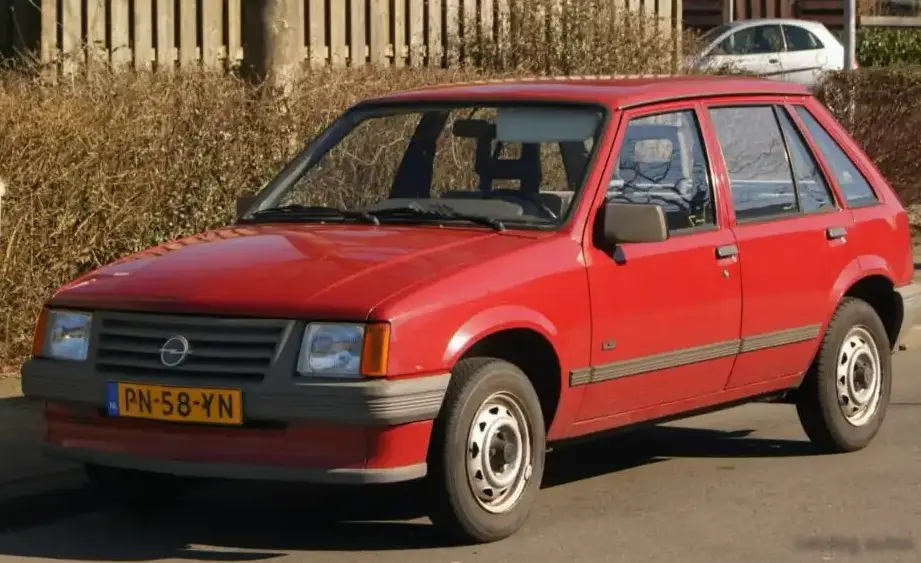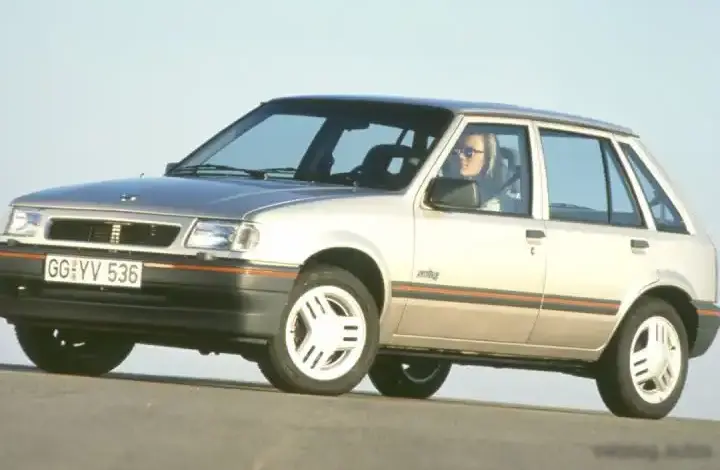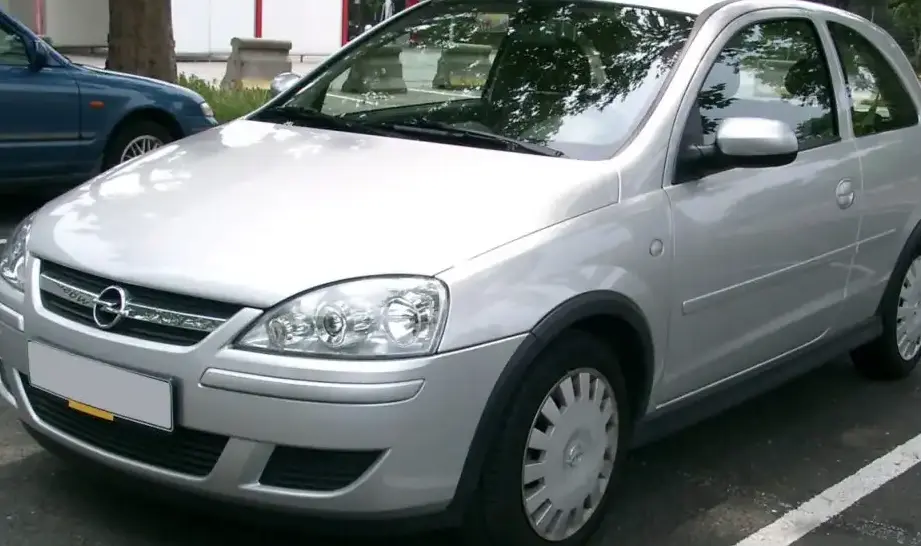
The Opel Corsa C (facelift, introduced in 2003) 1.3 CDTI 70 hp variant represented an entry-level diesel offering within the Corsa C range. Produced from July 2003 to June 2006, this model aimed to provide fuel efficiency and affordability to buyers in the European market. It sat below the more powerful 1.7 CDTI models in the lineup, targeting drivers prioritizing economy over outright performance. The Corsa C itself was a significant model for Opel, building on the success of its predecessors and offering a modern, practical hatchback in the supermini segment. This facelift brought revised styling and, crucially, the introduction of common-rail diesel engines like the 1.3 CDTI.
Technical Specifications
| Brand | Opel |
| Model | Corsa |
| Generation | Corsa C (facelift 2003) |
| Type (Engine) | 1.3 CDTI (70 Hp) |
| Start of production | July, 2003 |
| End of production | June, 2006 |
| Powertrain Architecture | Internal Combustion engine |
| Body type | Hatchback |
| Seats | 5 |
| Doors | 3-5 |
| Fuel consumption (urban) | 5.7 l/100 km (41.3 US mpg, 49.6 UK mpg, 17.5 km/l) |
| Fuel consumption (extra urban) | 3.8 l/100 km (61.9 US mpg, 74.3 UK mpg, 26.3 km/l) |
| Fuel consumption (combined) | 4.5 l/100 km (52.3 US mpg, 62.8 UK mpg, 22.2 km/l) |
| Fuel Type | Diesel |
| Acceleration 0 – 100 km/h | 14.5 sec |
| Acceleration 0 – 62 mph | 14.5 sec |
| Acceleration 0 – 60 mph | 13.8 sec |
| Maximum speed | 165 km/h (102.53 mph) |
| Weight-to-power ratio | 14.8 kg/Hp, 67.6 Hp/tonne |
| Weight-to-torque ratio | 6.1 kg/Nm, 164.3 Nm/tonne |
| Power | 70 Hp @ 4000 rpm |
| Power per litre | 56.1 Hp/l |
| Torque | 170 Nm @ 1750 rpm (125.39 lb.-ft. @ 1750 rpm) |
| Engine layout | Front, Transverse |
| Engine Model/Code | Z13DT |
| Engine displacement | 1248 cm3 (76.16 cu. in.) |
| Number of cylinders | 4 |
| Engine configuration | Inline |
| Cylinder Bore | 69.6 mm (2.74 in.) |
| Piston Stroke | 82 mm (3.23 in.) |
| Compression ratio | 18:1 |
| Number of valves per cylinder | 4 |
| Fuel injection system | Diesel Commonrail |
| Engine aspiration | Turbocharger, Intercooler |
| Valvetrain | DOHC |
| Engine oil capacity | 3.2 l (3.38 US qt | 2.82 UK qt) |
| Coolant | 6.3 l (6.66 US qt | 5.54 UK qt) |
| Kerb Weight | 1035 kg (2281.78 lbs.) |
| Max. weight | 1520 kg (3351.03 lbs.) |
| Max load | 485 kg (1069.24 lbs.) |
| Trunk (boot) space – minimum | 260 l (9.18 cu. ft.) |
| Trunk (boot) space – maximum | 1060 l (37.43 cu. ft.) |
| Fuel tank capacity | 44 l (11.62 US gal | 9.68 UK gal) |
| Length | 3839 mm (151.14 in.) |
| Width | 1646 mm (64.8 in.) |
| Height | 1440 mm (56.69 in.) |
| Wheelbase | 2491 mm (98.07 in.) |
| Front track | 1429 mm (56.26 in.) |
| Rear (Back) track | 1420 mm (55.91 in.) |
| Ride height (ground clearance) | 140 mm (5.51 in.) |
| Drag coefficient (Cd) | 0.32 |
| Drivetrain Architecture | ICE, Front wheel drive |
| Drive wheel | Front wheel drive |
| Number of gears and type of gearbox | 5 gears, manual transmission |
| Front suspension | Coil spring |
| Rear suspension | Coil spring |
| Front brakes | Disc |
| Rear brakes | Drum |
| Assisting systems | ABS (Anti-lock braking system) |
| Steering type | Steering rack and pinion |
| Power steering | Electric Steering |
| Tires size | 175/65 R14 |
| Wheel rims size | 5.5J X 14 |
Powertrain & Engine Architecture
The heart of this Corsa variant is the Z13DT engine, a 1.3-liter inline-four cylinder diesel. This engine is a member of Opel/Fiat’s joint venture engine family, known for its compact size and relatively simple construction. The Z13DT utilizes a common-rail direct injection system, delivering fuel directly into the combustion chamber at extremely high pressure. This technology, relatively new at the time, improved fuel efficiency and reduced emissions compared to older diesel injection systems. The engine features a single overhead camshaft (SOHC) design operating four valves per cylinder (DOHC). A turbocharger with an intercooler is employed to boost power output, providing 70 horsepower at 4000 rpm and 170 Nm (125 lb-ft) of torque at 1750 rpm. The engine is transversely mounted, driving the front wheels. The transmission is a five-speed manual gearbox, chosen for its affordability and simplicity. While an automatic transmission was available on other Corsa C models, it wasn’t offered with the 1.3 CDTI engine.
Driving Characteristics
The 1.3 CDTI 70 hp Corsa C offered modest performance. Acceleration from 0-100 km/h (0-62 mph) took around 14.5 seconds, and top speed was limited to 165 km/h (102.5 mph). The engine’s strength lay in its low-end torque, making it reasonably drivable in urban environments. However, overtaking maneuvers required careful planning. Compared to the 1.7 CDTI variants, the 1.3 CDTI felt noticeably slower, particularly at higher speeds. The five-speed manual gearbox was well-matched to the engine’s characteristics, with relatively short gear ratios aiding acceleration. The gear change was generally smooth, but not particularly sporty. The focus was clearly on fuel economy rather than driving excitement.
Equipment & Trim Levels
The 1.3 CDTI typically represented an entry-level trim within the Corsa C range. Standard equipment generally included power steering, ABS brakes, a driver’s airbag, and basic instrumentation. Interior upholstery was typically cloth, and the dashboard featured a simple, functional design. Optional extras included air conditioning, electric windows, and a radio/CD player. Higher trim levels, such as the ‘Enjoy’ or ‘Cosmo’, added features like alloy wheels, upgraded interior trim, and additional safety equipment. The 1.3 CDTI was often seen as a practical, no-frills option for buyers prioritizing affordability and fuel efficiency.
Chassis & Braking
The Corsa C utilized a relatively simple chassis design. Front suspension consisted of coil springs and MacPherson struts, while the rear employed a torsion beam setup. This configuration provided a reasonable balance between ride comfort and handling. Braking was handled by disc brakes at the front and drum brakes at the rear. ABS (Anti-lock Braking System) was standard, enhancing safety during emergency braking. The suspension setup was tuned for comfort rather than sporty handling, and the torsion beam rear suspension limited handling precision compared to more sophisticated independent rear suspension systems.
Market Reception & Comparison
The Opel Corsa C 1.3 CDTI was generally well-received as an economical and practical city car. Critics praised its fuel efficiency and low running costs, but noted its modest performance. Compared to the 1.7 CDTI models, the 1.3 CDTI offered significantly lower fuel consumption but at the expense of power and refinement. The 1.7 CDTI was favored by drivers who frequently undertook longer journeys or required more responsive performance. The 1.3 CDTI’s main competitors included the Ford Fiesta TDCi, Volkswagen Polo TDI, and Renault Clio dCi.
Legacy
The Z13DT engine, while not known for being particularly robust, proved reasonably reliable in the Corsa C. Common issues included turbocharger failure and injector problems, but these were not widespread. Today, the Corsa C 1.3 CDTI can be found as an affordable used car, appealing to buyers seeking a cheap and economical runabout. Its simple mechanicals make it relatively easy to maintain, but finding parts may become increasingly challenging as the model ages. The 1.3 CDTI variant remains a testament to Opel’s commitment to providing fuel-efficient transportation to the European market.