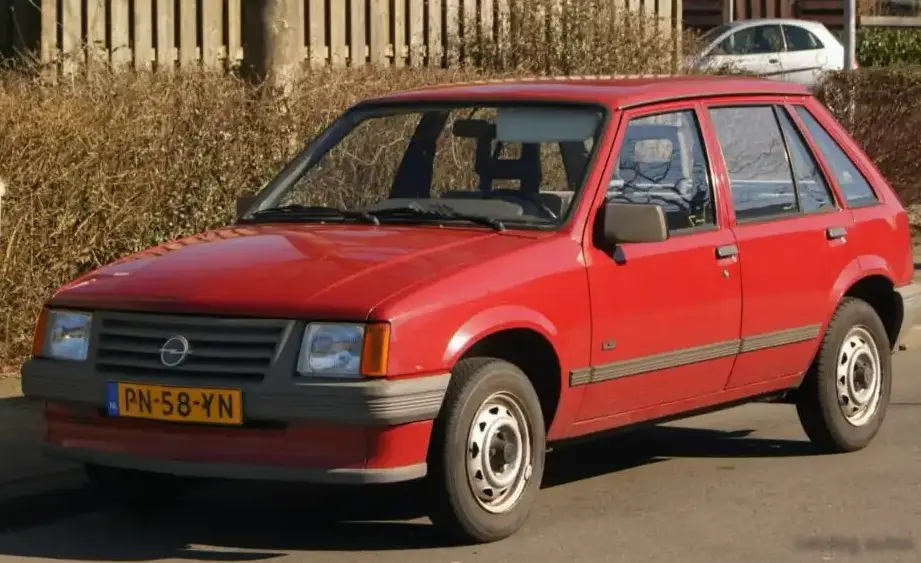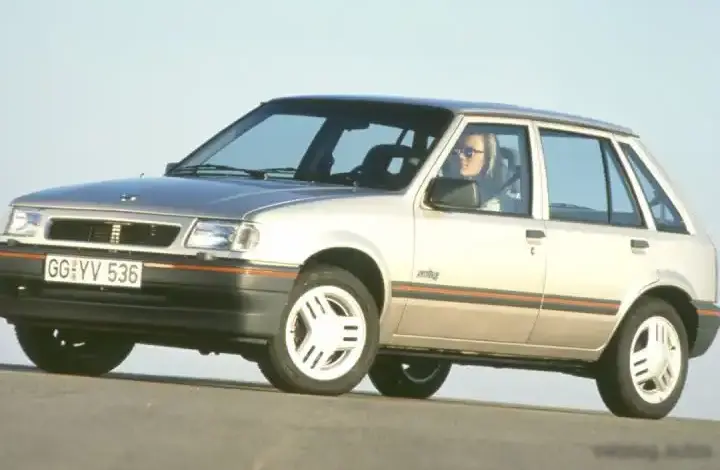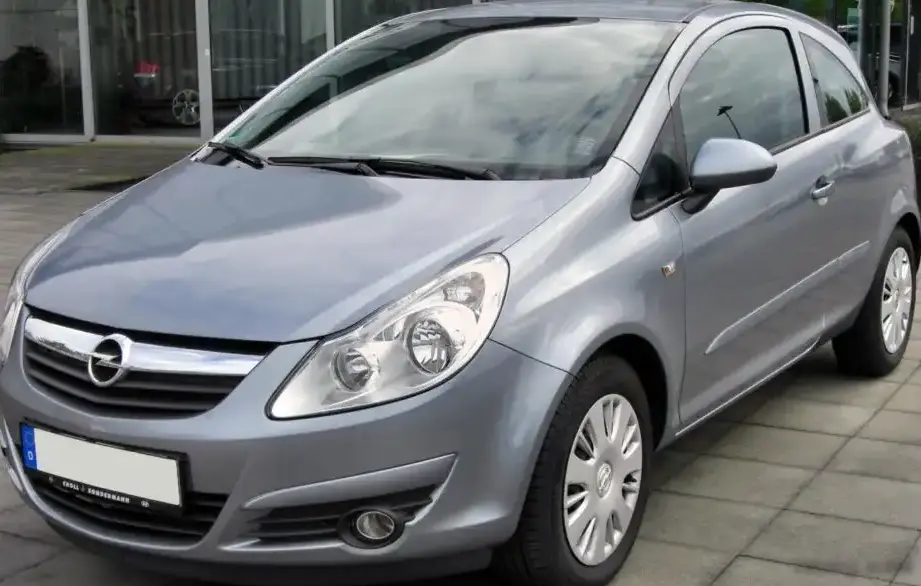
The Opel Corsa D 3-door 1.2i 16V ECOTEC (80 hp) Automatic, produced between October 2006 and October 2009, represented an entry-level offering within the broader Corsa D range (2006-2014). Positioned as a fuel-efficient and affordable option, this variant catered to buyers prioritizing economy and ease of use over outright performance. It was a key model for Opel in the European small car segment, competing with vehicles like the Volkswagen Polo, Ford Fiesta, and Renault Clio. The Corsa D itself was built on the General Motors Gamma platform, shared with other small Opel/Vauxhall and Chevrolet models.
Technical Specifications
| Brand | Opel |
| Model | Corsa |
| Generation | Corsa D 3-door |
| Type (Engine) | 1.2i 16V ECOTEC (80 Hp) Automatic |
| Start of production | October, 2006 |
| End of production | October, 2009 |
| Powertrain Architecture | Internal Combustion engine |
| Body type | Hatchback |
| Seats | 5 |
| Doors | 3 |
| Fuel consumption (urban) | 7.6 l/100 km (30.9 US mpg, 37.2 UK mpg, 13.2 km/l) |
| Fuel consumption (extra urban) | 4.6 l/100 km (51.1 US mpg, 61.4 UK mpg, 21.7 km/l) |
| Fuel consumption (combined) | 5.7 l/100 km (41.3 US mpg, 49.6 UK mpg, 17.5 km/l) |
| CO2 emissions | 139 g/km |
| Fuel Type | Petrol (Gasoline) |
| Acceleration 0 – 100 km/h | 15.4 sec |
| Acceleration 0 – 62 mph | 15.4 sec |
| Acceleration 0 – 60 mph | 14.6 sec |
| Maximum speed | 168 km/h (104.39 mph) |
| Emission standard | Euro 4 |
| Weight-to-power ratio | 14.3 kg/Hp, 69.9 Hp/tonne |
| Weight-to-torque ratio | 10.4 kg/Nm, 96.1 Nm/tonne |
| Power | 80 Hp @ 5600 rpm |
| Power per litre | 65.1 Hp/l |
| Torque | 110 Nm @ 4000 rpm (81.13 lb.-ft. @ 4000 rpm) |
| Engine layout | Front, Transverse |
| Engine Model/Code | Z12XEP |
| Engine displacement | 1229 cm3 (75 cu. in.) |
| Number of cylinders | 4 |
| Engine configuration | Inline |
| Cylinder Bore | 73.4 mm (2.89 in.) |
| Piston Stroke | 72.6 mm (2.86 in.) |
| Compression ratio | 10.5:1 |
| Number of valves per cylinder | 4 |
| Fuel injection system | Multi-port manifold injection |
| Engine aspiration | Naturally aspirated engine |
| Engine oil capacity | 3.5 l (3.7 US qt | 3.08 UK qt) |
| Coolant | 5 l (5.28 US qt | 4.4 UK qt) |
| Kerb Weight | 1145 kg (2524.29 lbs.) |
| Max. weight | 1565 kg (3450.23 lbs.) |
| Max load | 420 kg (925.94 lbs.) |
| Trunk (boot) space – minimum | 285 l (10.06 cu. ft.) |
| Trunk (boot) space – maximum | 1050 l (37.08 cu. ft.) |
| Fuel tank capacity | 44 l (11.62 US gal | 9.68 UK gal) |
| Length | 3999 mm (157.44 in.) |
| Width | 1737 mm (68.39 in.) |
| Height | 1488 mm (58.58 in.) |
| Wheelbase | 2511 mm (98.86 in.) |
| Front track | 1485 mm (58.46 in.) |
| Rear (Back) track | 1478 mm (58.19 in.) |
| Ride height (ground clearance) | 150 mm (5.91 in.) |
| Drag coefficient (Cd) | 0.32 |
| Minimum turning circle | 10.4 m (34.12 ft.) |
| Drivetrain Architecture | ICE to Front Wheels |
| Drive wheel | Front wheel drive |
| Number of gears and type of gearbox | 5 gears, automatic transmission |
| Front suspension | Independent, McPherson with coil spring and anti-roll bar |
| Rear suspension | Rigid axle suspension |
| Front brakes | Ventilated discs |
| Rear brakes | Drum |
| Assisting systems | ABS (Anti-lock braking system) |
| Steering type | Steering rack and pinion |
| Tires size | 185/65 R15 |
| Wheel rims size | 15 |
INTRODUCTION
The Opel Corsa D 3-door 1.2i 16V ECOTEC Automatic, launched in 2006, was a significant update to Opel’s popular supermini. The Corsa D represented a move upmarket for the model, with improved interior quality and a more refined driving experience compared to its predecessor. This particular variant, powered by the 1.2-liter ECOTEC engine and paired with a four-speed automatic transmission, was designed to appeal to drivers seeking a comfortable and economical city car. It occupied the lower end of the Corsa D lineup, serving as the gateway to the range.
Powertrain & Engine Architecture
The heart of this Corsa variant is the Z12XEP engine, a 1.2-liter (1229cc) inline-four cylinder petrol engine. This engine belongs to Opel’s ECOTEC family, known for its focus on fuel efficiency and reduced emissions. It features a single overhead camshaft (SOHC) operating four valves per cylinder. Fuel delivery is managed by a multi-point fuel injection system. The engine produces 80 horsepower at 5600 rpm and 110 Nm (81.13 lb-ft) of torque at 4000 rpm. The four-speed automatic transmission, while providing convenience, was a relatively older design. It featured traditional hydraulic control and lacked the efficiency of more modern automatic gearboxes. The transmission’s gear ratios were optimized for fuel economy rather than rapid acceleration.
Driving Characteristics
The 1.2i Automatic Corsa D offered a relaxed and undemanding driving experience. Acceleration was modest, with a 0-60 mph time of around 14.6 seconds. The automatic transmission contributed to smooth, if somewhat slow, gear changes. In city driving, the car felt perfectly adequate, with sufficient power for navigating urban traffic. However, overtaking on highways required careful planning. Compared to the more powerful 1.4-liter or even the diesel variants, this model lacked punch. The manual transmission versions of the 1.2 offered slightly better performance and fuel economy due to the reduced drivetrain losses. The automatic prioritized comfort and ease of use over sporty driving dynamics.
Equipment & Trim Levels
The 1.2i Automatic typically came with a basic level of equipment. Standard features generally included power steering, central locking, electric front windows, and an adjustable steering column. Safety features included ABS brakes and driver and passenger airbags. Interior upholstery was typically cloth, and the dashboard featured a simple, functional design. Optional extras included air conditioning, alloy wheels, and a CD player. Higher trim levels within the Corsa D range offered more luxurious features such as climate control, upgraded audio systems, and more premium interior materials.
Chassis & Braking
The Corsa D utilized a McPherson strut front suspension and a torsion beam rear suspension. This setup provided a reasonable balance between ride comfort and handling. The front brakes were ventilated discs, while the rear brakes were drums – a cost-saving measure common in this segment. The steering was a rack and pinion system, offering light and precise control. The 185/65 R15 tires provided adequate grip for everyday driving conditions. The relatively lightweight nature of the car helped to compensate for the modest engine output.
Market Reception & Comparison
The Corsa D 1.2i Automatic was generally well-received as an affordable and practical city car. Critics praised its fuel efficiency and comfortable ride. However, the automatic transmission was often criticized for its sluggishness and lack of responsiveness. Compared to rivals like the Ford Fiesta and Volkswagen Polo, the Corsa D offered a competitive package in terms of price and features. The 1.4-liter Corsa D offered significantly better performance, while the 1.3 CDTi diesel provided superior fuel economy. The automatic version was often seen as a compromise, appealing to drivers who prioritized convenience over driving enjoyment.
Legacy
The Z12XEP engine, while generally reliable, is known to be susceptible to timing chain wear if not properly maintained. The four-speed automatic transmission, while durable, is not as efficient as more modern automatic gearboxes. Today, the Corsa D 1.2i Automatic can be found on the used car market at very affordable prices. It remains a viable option for buyers seeking a cheap and cheerful city car, but potential buyers should be aware of the potential for timing chain issues and the limitations of the automatic transmission. Its simplicity and relatively low running costs continue to make it a popular choice for first-time drivers or those on a tight budget.