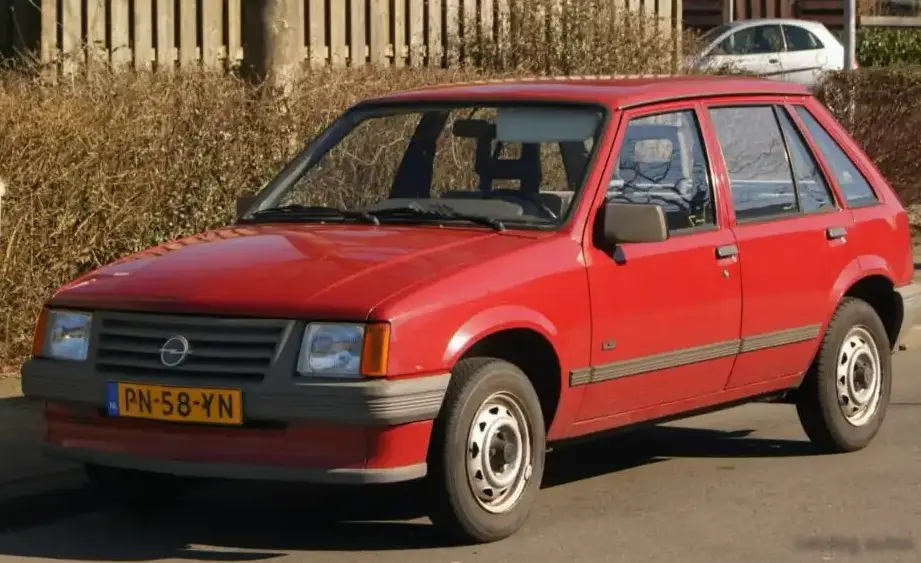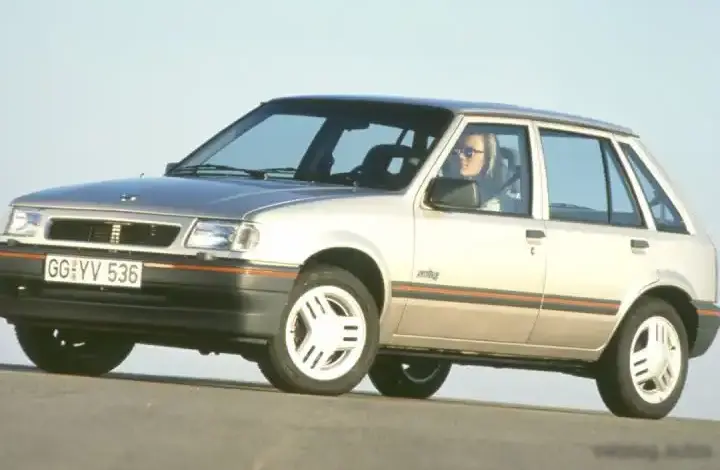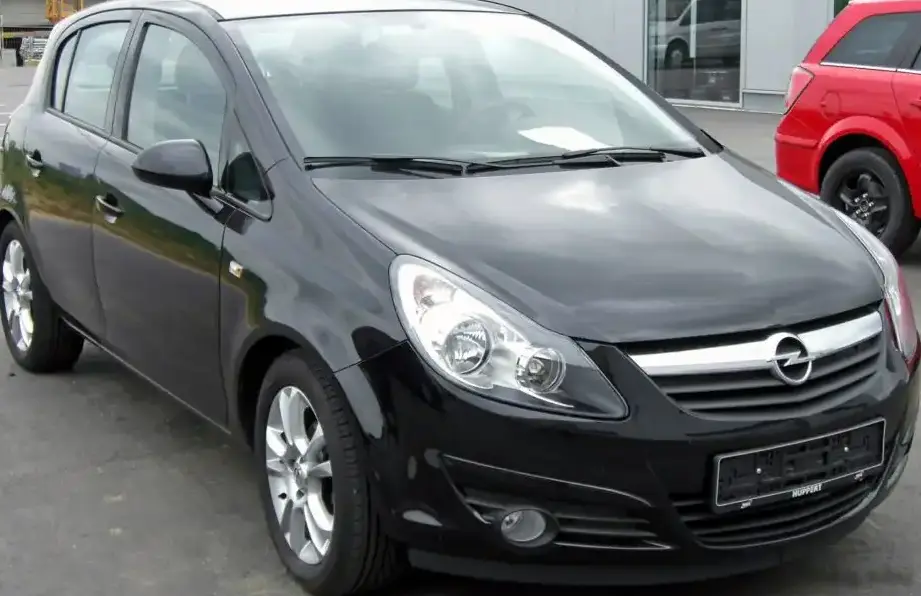
The Opel Corsa D 5-door 1.3 CDTI, producing 75 horsepower, was a popular entry-level variant of the fourth-generation Corsa (D) produced between October 2006 and June 2010. Positioned as a fuel-efficient and affordable option, it played a significant role in Opel’s European market strategy, particularly appealing to buyers seeking low running costs. This model was part of the 1HX0/A3 platform family, shared with other General Motors and Fiat vehicles. It represented a key offering in the supermini segment, competing with vehicles like the Ford Fiesta, Volkswagen Polo, and Renault Clio.
Technical Specifications
| Brand | Opel |
| Model | Corsa |
| Generation | Corsa D 5-door |
| Type (Engine) | 1.3 CDTI (75 Hp) |
| Start of production | October, 2006 |
| End of production | June, 2010 |
| Powertrain Architecture | Internal Combustion engine |
| Body type | Hatchback |
| Seats | 5 |
| Doors | 5 |
| Fuel consumption (urban) | 5.8 l/100 km (40.6 US mpg, 48.7 UK mpg, 17.2 km/l) |
| Fuel consumption (extra urban) | 3.9 l/100 km (60.3 US mpg, 72.4 UK mpg, 25.6 km/l) |
| Fuel consumption (combined) | 4.6 l/100 km (51.1 US mpg, 61.4 UK mpg, 21.7 km/l) |
| Fuel Type | Diesel |
| Acceleration 0 – 100 km/h | 14.5 sec |
| Acceleration 0 – 62 mph | 14.5 sec |
| Acceleration 0 – 60 mph | 13.8 sec |
| Maximum speed | 163 km/h (101.28 mph) |
| Emission standard | Euro 4 |
| Weight-to-power ratio | 15.5 kg/Hp, 64.7 Hp/tonne |
| Weight-to-torque ratio | 6.8 kg/Nm, 146.6 Nm/tonne |
| Power | 75 Hp @ 4000 rpm |
| Power per litre | 60.1 Hp/l |
| Torque | 170 Nm @ 1750-2500 rpm (125.39 lb.-ft. @ 1750-2500 rpm) |
| Engine layout | Front, Transverse |
| Engine Model/Code | Z13DTJ |
| Engine displacement | 1248 cm3 (76.16 cu. in.) |
| Number of cylinders | 4 |
| Engine configuration | Inline |
| Cylinder Bore | 69.6 mm (2.74 in.) |
| Piston Stroke | 82 mm (3.23 in.) |
| Compression ratio | 18:1 |
| Number of valves per cylinder | 4 |
| Fuel injection system | Diesel Commonrail |
| Engine aspiration | Turbocharger, Intercooler |
| Engine oil capacity | 3.2 l (3.38 US qt | 2.82 UK qt) |
| Coolant | 6.3 l (6.66 US qt | 5.54 UK qt) |
| Kerb Weight | 1160 kg (2557.36 lbs.) |
| Max. weight | 1570 kg (3461.26 lbs.) |
| Max load | 410 kg (903.9 lbs.) |
| Trunk (boot) space – minimum | 285 l (10.06 cu. ft.) |
| Trunk (boot) space – maximum | 1100 l (38.85 cu. ft.) |
| Fuel tank capacity | 44 l (11.62 US gal | 9.68 UK gal) |
| Length | 3999 mm (157.44 in.) |
| Width | 1737 mm (68.39 in.) |
| Height | 1488 mm (58.58 in.) |
| Wheelbase | 2511 mm (98.86 in.) |
| Front track | 1485 mm (58.46 in.) |
| Rear (Back) track | 1478 mm (58.19 in.) |
| Drag coefficient (Cd) | 0.32 |
| Minimum turning circle | 10.4 m (34.12 ft.) |
| Drivetrain Architecture | The Internal combustion engine (ICE) drives the front wheels of the vehicle. |
| Drive wheel | Front wheel drive |
| Number of gears and type of gearbox | 5 gears, manual transmission |
| Front suspension | Independent, type McPherson with coil spring and anti-roll bar |
| Rear suspension | Rigid axle suspension |
| Front brakes | Ventilated discs |
| Rear brakes | Drum |
| Assisting systems | ABS (Anti-lock braking system) |
| Steering type | Steering rack and pinion |
| Tires size | 185/65 R15 |
| Wheel rims size | 15 |
Powertrain & Engine Architecture
The heart of the Corsa D 1.3 CDTI was the Z13DTJ engine, a 1.3-liter inline-four cylinder diesel. This engine was a member of Opel/Fiat’s family of small-displacement diesel engines, known for their efficiency. It featured a common rail direct injection system, delivering fuel at extremely high pressure for optimized combustion. A turbocharger with an intercooler was employed to boost power output and improve torque across a wider rev range. The engine utilized four valves per cylinder and a single overhead camshaft. The 75 horsepower output was achieved at 4000 rpm, while peak torque of 170 Nm (125 lb-ft) was available between 1750 and 2500 rpm. This engine was typically paired with a five-speed manual transmission, although an automated manual transmission (Easytronic) was also available as an option. The Easytronic, while offering some convenience, was often criticized for its slow and jerky shifts.
Driving Characteristics
The 1.3 CDTI 75 hp variant of the Corsa D offered modest performance. Acceleration from 0 to 100 km/h (0-62 mph) took around 14.5 seconds, and top speed was limited to 163 km/h (101 mph). Compared to higher-output versions of the Corsa D, such as the 1.7 CDTI, this engine felt noticeably slower, particularly when fully loaded or tackling inclines. The five-speed manual transmission was well-matched to the engine’s characteristics, providing adequate gearing for everyday driving. However, the relatively long gearing emphasized fuel economy over outright performance. The engine was reasonably refined for a diesel of its era, but some engine noise was audible, especially during acceleration. The focus was clearly on maximizing fuel efficiency, making it an ideal choice for urban commuting and long-distance journeys where fuel costs were a primary concern.
Equipment & Trim Levels
The Corsa D 1.3 CDTI 75 hp typically came with a basic level of equipment, reflecting its position as an entry-level model. Standard features generally included power steering, central locking, electric front windows, and an ABS anti-lock braking system. Interior upholstery was typically cloth, and the dashboard featured a simple, functional design. Optional extras included air conditioning, alloy wheels, a CD player, and upgraded trim levels with features like electric rear windows and a trip computer. Higher trim levels, such as ‘Enjoy’ and ‘Cosmo’, offered more comprehensive equipment lists and enhanced interior finishes.
Chassis & Braking
The Corsa D featured a McPherson strut front suspension and a rigid axle rear suspension. This setup provided a reasonable balance between ride comfort and handling. The front brakes were ventilated discs, while the rear brakes were drums. This configuration was typical for vehicles in this weight class and price range. The steering was a rack and pinion system, offering precise and responsive control. The 185/65 R15 tires provided adequate grip in most conditions. A stabilizer bar was fitted to the front suspension to reduce body roll during cornering.
Market Reception & Comparison
The Opel Corsa D 1.3 CDTI 75 hp was generally well-received by critics for its fuel efficiency and affordability. It was praised as a practical and economical choice for city driving. However, some reviewers criticized its lack of power and relatively basic interior. Compared to the more powerful 1.7 CDTI variant, the 1.3 CDTI offered significantly lower performance but superior fuel economy. The 1.7 CDTI was aimed at drivers who prioritized performance, while the 1.3 CDTI catered to those seeking the lowest possible running costs. In terms of reliability, the Z13DTJ engine proved to be generally robust, although issues with the diesel particulate filter (DPF) were sometimes reported, particularly on vehicles used primarily for short journeys.
Legacy
The Opel Corsa D 1.3 CDTI 75 hp remains a common sight on European roads today. Its reputation for fuel efficiency and relatively low maintenance costs has made it a popular choice in the used car market. While not known for its performance, it offers a reliable and economical mode of transportation. The Z13DTJ engine, while not without its quirks, has proven to be a durable unit when properly maintained. Parts availability is generally good, and repair costs are relatively low. This variant of the Corsa D continues to appeal to budget-conscious buyers seeking a practical and dependable supermini.