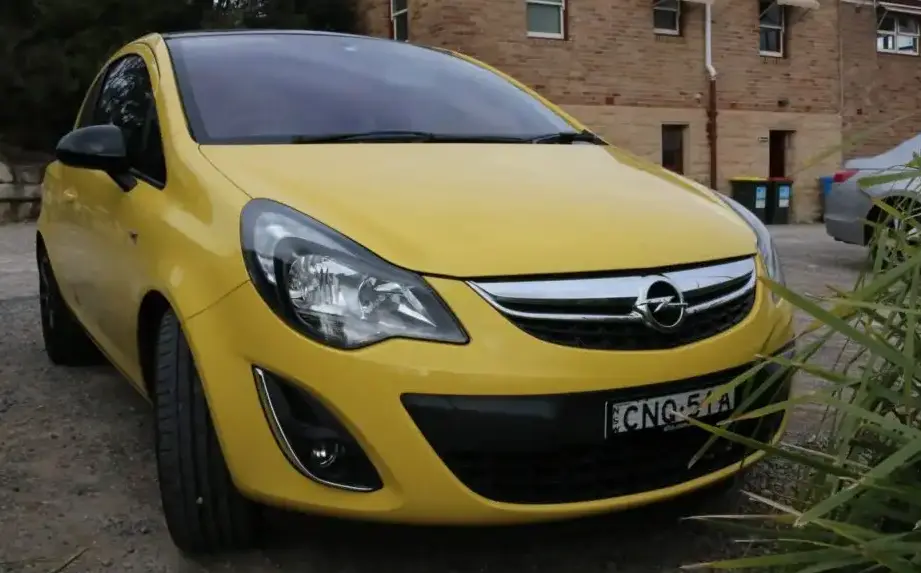
The Opel Corsa D (Facelift, produced 2011-2014) 3-door 1.6 LER (192 hp) Automatic represents a performance-oriented variant within the fourth generation of the Corsa. Introduced as part of the facelift, this model aimed to inject a dose of excitement into the subcompact segment, particularly in European markets. It utilized a turbocharged engine paired with an automatic transmission, a relatively uncommon combination for this class of vehicle at the time. This trim level positioned itself as a sporty alternative to the more economical base models, appealing to drivers seeking a more engaging driving experience without sacrificing practicality.
Technical Specifications
| Brand | Opel |
| Model | Corsa |
| Generation | Corsa D (Facelift 2011) 3-door |
| Type (Engine) | 1.6 LER (192 Hp) Automatic |
| Start of production | 2011 |
| End of production | 2014 |
| Powertrain Architecture | Internal Combustion engine |
| Body type | Hatchback |
| Seats | 5 |
| Doors | 3 |
| Fuel consumption (urban) | 9.8 l/100 km (24 US mpg, 28.8 UK mpg, 10.2 km/l) |
| Fuel consumption (extra urban) | 5.9 l/100 km (39.9 US mpg, 47.9 UK mpg, 16.9 km/l) |
| Fuel consumption (combined) | 7.3 l/100 km (32.2 US mpg, 38.7 UK mpg, 13.7 km/l) |
| Fuel Type | Petrol (Gasoline) |
| Acceleration 0 – 100 km/h | 7.2 sec |
| Acceleration 0 – 62 mph | 7.2 sec |
| Acceleration 0 – 60 mph | 6.8 sec |
| Maximum speed | 225 km/h (139.81 mph) |
| Emission standard | Euro 5 |
| Weight-to-power ratio | 6.3 kg/Hp, 159.6 Hp/tonne |
| Weight-to-torque ratio | 5.2 kg/Nm, 191.2 Nm/tonne |
| Power | 192 Hp @ 5850 rpm |
| Power per litre | 120.2 Hp/l |
| Torque | 230 Nm @ 1950-5850 rpm (169.64 lb.-ft. @ 1950-5850 rpm) |
| Engine layout | Front, Transverse |
| Engine Model/Code | A16LER |
| Engine displacement | 1598 cm3 (97.52 cu. in.) |
| Number of cylinders | 4 |
| Engine configuration | Inline |
| Compression ratio | 8.8:1 |
| Number of valves per cylinder | 4 |
| Fuel injection system | Multi-port manifold injection |
| Engine aspiration | Turbocharger, Intercooler |
| Engine oil capacity | 4.5 l (4.76 US qt | 3.96 UK qt) |
| Coolant capacity | 5.8 l (6.13 US qt | 5.1 UK qt) |
| Kerb Weight | 1203 kg (2652.16 lbs.) |
| Max. weight | 1703 kg (3754.47 lbs.) |
| Max load | 500 kg (1102.31 lbs.) |
| Trunk (boot) space – minimum | 285 l (10.06 cu. ft.) |
| Trunk (boot) space – maximum | 1050 l (37.08 cu. ft.) |
| Fuel tank capacity | 42 l (11.1 US gal | 9.24 UK gal) |
| Length | 3999 mm (157.44 in.) |
| Width | 1737 mm (68.39 in.) |
| Width including mirrors | 1944 mm (76.54 in.) |
| Height | 1488 mm (58.58 in.) |
| Wheelbase | 2511 mm (98.86 in.) |
| Front track | 1485 mm (58.46 in.) |
| Rear (Back) track | 1478 mm (58.19 in.) |
| Ride height (ground clearance) | 150 mm (5.91 in.) |
| Drag coefficient (Cd) | 0.33 |
| Minimum turning circle | 10.4 m (34.12 ft.) |
| Drivetrain Architecture | Front wheel drive |
| Number of gears and type of gearbox | 4 gears, automatic transmission |
| Assisting systems | ABS (Anti-lock braking system) |
| Steering type | Steering rack and pinion |
| Tires size | 215/45 R17 |
| Wheel rims size | 17 |
INTRODUCTION
The Opel Corsa D facelift, launched in 2011, brought a refreshed look and updated engine options to Opel’s popular subcompact. The 3-door 1.6 LER Automatic variant was a standout, offering a significant power boost compared to the standard Corsa models. Built on the 1HX0/A3 platform, shared with other General Motors and Fiat vehicles, the Corsa D aimed to provide a blend of affordability, practicality, and now, with the 1.6 LER, a degree of performance. This model was primarily targeted towards the European market, where smaller, fuel-efficient cars are highly valued, but with a growing demand for more spirited driving experiences.
Powertrain & Engine Architecture
At the heart of the Corsa D 1.6 LER Automatic lies the A16LER engine, a 1.6-liter inline-four cylinder gasoline engine equipped with a turbocharger and intercooler. This engine is a member of Opel’s ‘Family 1’ engine family. The A16LER utilizes multi-point fuel injection and a single overhead camshaft (SOHC) valvetrain with four valves per cylinder. The turbocharger provides a significant increase in power output compared to naturally aspirated engines of similar displacement. The engine produces 192 horsepower at 5850 rpm and 230 Nm (169.64 lb-ft) of torque between 1950 and 5850 rpm. Paired with this engine is a four-speed automatic transmission. While not the most modern transmission in terms of gear count, it was designed to provide smooth shifts and acceptable performance for everyday driving. The transmission’s programming is geared towards balancing fuel efficiency and responsiveness.
Driving Characteristics
The 1.6 LER Automatic Corsa D offers a noticeable step up in performance compared to lower-powered variants. Acceleration from 0-100 km/h (0-62 mph) takes approximately 7.2 seconds, making it one of the quicker cars in its class. The turbocharger provides a good amount of low-end torque, making it easy to accelerate from a standstill or overtake slower traffic. However, the four-speed automatic transmission can sometimes feel a bit dated, lacking the refinement and efficiency of more modern transmissions with six or more gears. Gear changes are generally smooth, but can occasionally be hesitant, especially during quick acceleration. The steering is light and precise, making the car easy to maneuver in urban environments. The suspension is tuned for comfort, providing a reasonably smooth ride, but it can feel a bit soft during spirited cornering.
Equipment & Trim Levels
The Corsa D 1.6 LER Automatic typically came with a decent level of standard equipment. This included air conditioning, power windows, central locking, and an audio system with CD player and MP3 compatibility. Higher trim levels offered additional features such as alloy wheels, fog lights, a leather-wrapped steering wheel, and a more advanced audio system. Optional extras included a sunroof, parking sensors, and a navigation system. Interior upholstery was typically cloth, with the option of leather seats on higher-spec models. The dashboard layout was functional and straightforward, with easy-to-read gauges and controls.
Chassis & Braking
The Corsa D utilizes a MacPherson strut front suspension and a torsion beam rear suspension. This setup provides a good balance between ride comfort and handling. The front brakes are typically ventilated discs, while the rear brakes are often drum brakes, although some higher-spec models may have rear disc brakes. Anti-lock Braking System (ABS) is standard, providing enhanced braking performance and stability. The steering is a rack and pinion system, offering precise and responsive steering feel. The 1.6 LER Automatic models often featured slightly stiffer suspension components compared to the base models to improve handling and reduce body roll.
Market Reception & Comparison
The Corsa D 1.6 LER Automatic received mixed reviews from automotive critics. While the engine was praised for its performance and responsiveness, the four-speed automatic transmission was often criticized for being outdated and lacking refinement. Fuel economy was considered reasonable for a car of this performance level, but not class-leading. Compared to other trims in the Corsa D lineup, such as the 1.3 CDTi diesel or the 1.4-liter gasoline models, the 1.6 LER Automatic offered a more engaging driving experience but at the cost of slightly higher fuel consumption and a higher price tag. It competed with other sporty subcompacts such as the Renault Clio and the Peugeot 208.
Legacy
The Opel Corsa D 1.6 LER Automatic, while not a groundbreaking vehicle, remains a popular choice in the used car market. The A16LER engine is generally considered to be reliable, although regular maintenance is essential. Common issues include turbocharger wear and potential oil leaks. The four-speed automatic transmission is relatively durable, but can be prone to occasional issues with shifting smoothness. Overall, the Corsa D 1.6 LER Automatic offers a good balance of performance, practicality, and affordability, making it a viable option for buyers looking for a sporty and reliable subcompact.