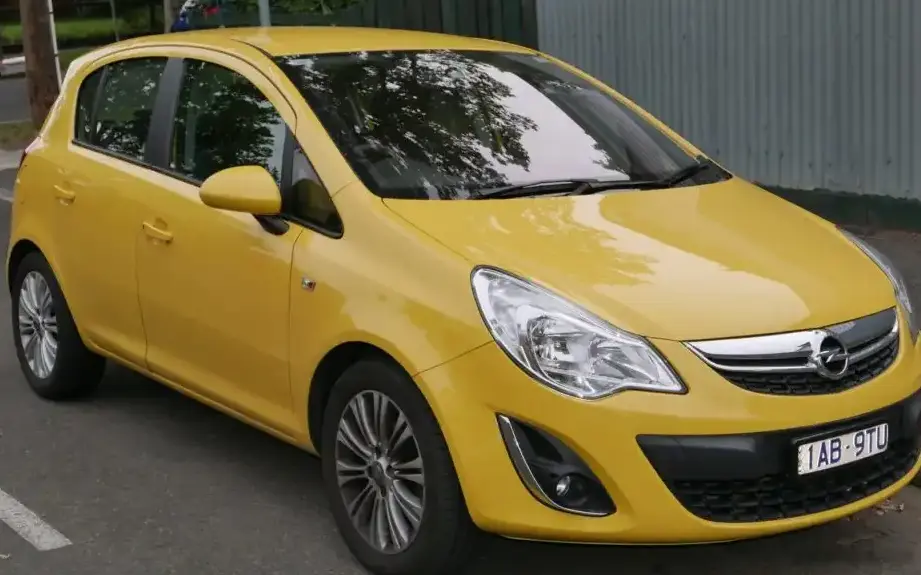
The Opel Corsa D (Facelift, produced from July 2011 to August 2014) 5-door 1.2 LPG variant represented an economical entry point into the Corsa D range, particularly in European markets. This model combined a small-displacement petrol engine with the flexibility of a dedicated Liquefied Petroleum Gas (LPG) system, aiming to reduce running costs and emissions. It sat within the fourth generation of the Corsa (launched in 2006), benefitting from the 2011 facelift which brought styling updates and minor mechanical revisions. The 1.2 LPG was positioned as a budget-friendly option, appealing to drivers prioritizing fuel efficiency over outright performance.
Technical Specifications
| Brand | Opel |
| Model | Corsa |
| Generation | Corsa D (Facelift 2011) 5-door |
| Type (Engine) | 1.2 LPG (85/83 Hp) |
| Start of production | July, 2011 |
| End of production | August, 2014 |
| Powertrain Architecture | Internal Combustion engine |
| Body type | Hatchback |
| Seats | 5 |
| Doors | 5 |
| Fuel consumption (economy) – combined | 5.6 l/100 km (42 US mpg, 50.4 UK mpg, 17.9 km/l) |
| Fuel consumption (economy) – combined (LPG) | 7.1 l/100 km |
| CO2 emissions | 132 g/km |
| CO2 emissions (LPG) | 115 g/km |
| Fuel Type | Petrol / LPG |
| Acceleration 0 – 100 km/h | 13.9 sec |
| Acceleration 0 – 62 mph | 13.9 sec |
| Acceleration 0 – 100 km/h (LPG) | 14.1 sec |
| Acceleration 0 – 60 mph (Calculated) | 13.2 sec |
| Maximum speed | 168 km/h (104.39 mph) |
| Maximum speed (LPG) | 155 km/h |
| Emission standard | Euro 5 |
| Weight-to-power ratio | 13.3 kg/Hp, 75.2 Hp/tonne |
| Weight-to-torque ratio | 9.8 kg/Nm, 101.8 Nm/tonne |
| Power | 85 Hp @ 5600 rpm |
| Power per litre | 69.2 Hp/l |
| Power (LPG) | 83 Hp @ 5600 rpm |
| Power per litre (LPG) | 67.5 Hp/l |
| Torque | 115 Nm @ 4000 rpm (84.82 lb.-ft. @ 4000 rpm) |
| Torque (LPG) | 110 Nm @ 4000 rpm |
| Engine layout | Front, Transverse |
| Engine Model/Code | A12XER |
| Engine displacement | 1229 cm3 (75 cu. in.) |
| Number of cylinders | 4 |
| Engine configuration | Inline |
| Compression ratio | 10.5:1 |
| Number of valves per cylinder | 4 |
| Fuel injection system | Multi-port manifold injection |
| Engine oil capacity | 4 l (4.23 US qt | 3.52 UK qt) |
| Coolant capacity | 6 l (6.34 US qt | 5.28 UK qt) |
| Kerb Weight | 1130 kg (2491.22 lbs) |
| Max. weight | 1555 kg (3428.19 lbs) |
| Max load | 425 kg (936.96 lbs) |
| Length | 3999 mm (157.44 in) |
| Width | 1737 mm (68.39 in) |
| Width including mirrors | 1944 mm (76.54 in) |
| Height | 1488 mm (58.58 in) |
| Wheelbase | 2511 mm (98.86 in) |
| Front track | 1485 mm (58.46 in) |
| Rear track | 1478 mm (58.19 in) |
| Ride height (ground clearance) | 140 mm (5.51 in) |
| Drag coefficient (Cd) | 0.32 |
| Minimum turning circle | 10.4 m (34.12 ft) |
| Drivetrain Architecture | Front wheel drive |
| Number of gears and type of gearbox | 5 gears, manual transmission |
| Front brakes | Ventilated discs |
| Rear brakes | Drum |
| Assisting systems | ABS (Anti-lock braking system) |
| Steering type | Steering rack and pinion |
| Tires size | 185/65 R15 |
| Wheel rims size | 15 |
INTRODUCTION
The Corsa D facelift, launched in 2011, represented a mid-cycle refresh for Opel’s popular supermini. The 1.2 LPG variant, powered by the A12XER engine, was specifically targeted at cost-conscious buyers in countries where LPG infrastructure was well-developed, such as Germany, Poland, and the Netherlands. This model offered a lower total cost of ownership compared to its petrol-only counterparts, thanks to the typically lower price of LPG fuel. The Corsa D, built on the General Motors Gamma platform (also known as 1HX0/A3), aimed to provide a practical and affordable transportation solution in the competitive European B-segment.
Powertrain & Engine Architecture
The heart of the Corsa D 1.2 LPG is the A12XER engine, a 1229cc inline-four cylinder petrol engine. This engine features multi-point fuel injection and four valves per cylinder. The LPG conversion is a dedicated system, meaning it runs entirely on LPG when fuel is available, switching to petrol only when the LPG tank is empty. The A12XER is a relatively simple engine design, prioritizing fuel economy and reliability over high performance. The LPG system itself typically consists of a separate fuel tank, a vaporizer to convert liquid LPG into gas, and modified engine control unit (ECU) mapping to optimize combustion for LPG. The engine produces 85 horsepower on petrol and slightly less, 83 horsepower, when running on LPG. The engine’s relatively low compression ratio of 10.5:1 is suitable for both petrol and LPG operation. The 5-speed manual transmission was the only gearbox option available with this engine.
Driving Characteristics
The 1.2 LPG Corsa D is not a performance-oriented vehicle. With 85 horsepower and 115 Nm of torque, acceleration is modest, taking around 13.9 seconds to reach 62 mph (100 km/h). The engine feels strained when pushed hard, particularly when climbing hills or carrying a full load. The manual transmission helps to extract the most from the engine, but the gear ratios are geared towards economy rather than spirited driving. Compared to the 1.4-liter petrol versions, the 1.2 LPG feels noticeably slower. However, in everyday driving conditions, the engine provides sufficient power for urban commutes and shorter journeys. The LPG system doesn’t significantly alter the driving experience, although some drivers report a slight reduction in throttle response when running on LPG.
Equipment & Trim Levels
The 1.2 LPG variant typically came with a basic level of equipment, reflecting its position as an entry-level model. Standard features generally included power steering, central locking, electric front windows, and an ABS anti-lock braking system. Air conditioning was often an optional extra. Interior trim was typically functional and durable, with cloth upholstery and a simple dashboard layout. Higher trim levels, such as ‘Enjoy’ or ‘Cosmo’, added features like alloy wheels, a CD player, and more sophisticated interior trim. The LPG system itself was integrated into the fuel gauge, displaying the level of both petrol and LPG in the tank.
Chassis & Braking
The Corsa D 1.2 LPG utilizes a MacPherson strut front suspension and a torsion beam rear suspension. The suspension setup is tuned for comfort rather than sporty handling. The front brakes are ventilated discs, providing adequate stopping power, while the rear brakes are drums, a cost-saving measure common in this segment. The steering is a rack and pinion system, offering reasonable precision. The relatively light weight of the vehicle (around 1130 kg) helps to compensate for the engine’s modest power output. Stabilizer bars were fitted to both the front and rear axles to reduce body roll.
Market Reception & Comparison
The Corsa D 1.2 LPG was generally well-received by critics as a practical and economical choice. Its low running costs were a major selling point, particularly in countries with high petrol prices. However, its lack of performance and basic equipment levels were often criticized. Compared to the 1.4-liter petrol versions, the 1.2 LPG offered lower performance but significantly better fuel economy. The 1.3 CDTi diesel version provided even better fuel economy but came with a higher purchase price and potentially higher maintenance costs. The LPG variant appealed to drivers who prioritized affordability and environmental considerations over driving excitement.
Legacy
The Opel Corsa D 1.2 LPG has proven to be a relatively reliable vehicle, with the A12XER engine generally considered durable. The LPG system, if properly maintained, can provide years of trouble-free service. On the used car market, these models are often sought after by buyers looking for an economical and environmentally friendly vehicle. However, potential buyers should be aware of the need for regular LPG system servicing, including checking for leaks and replacing filters. The Corsa D 1.2 LPG represents a practical and affordable option for those seeking a small, economical hatchback.