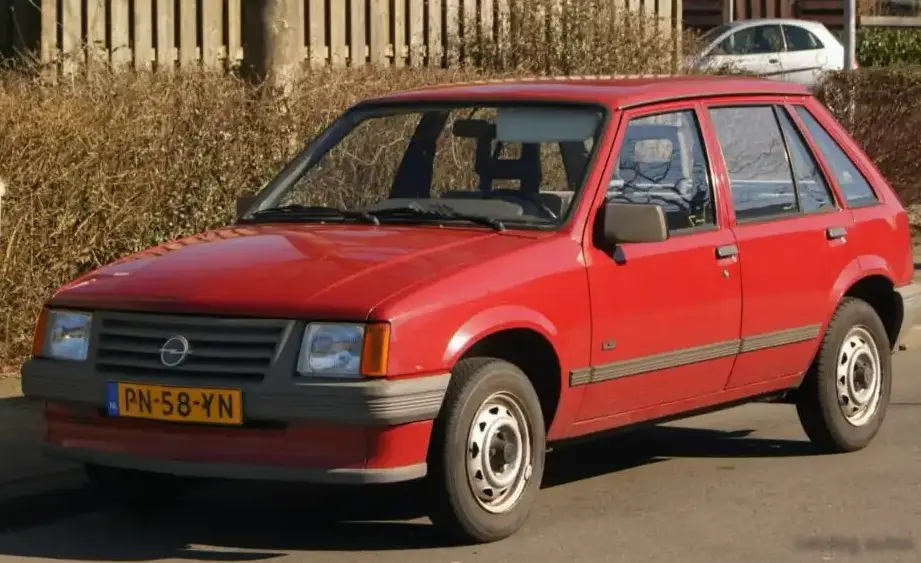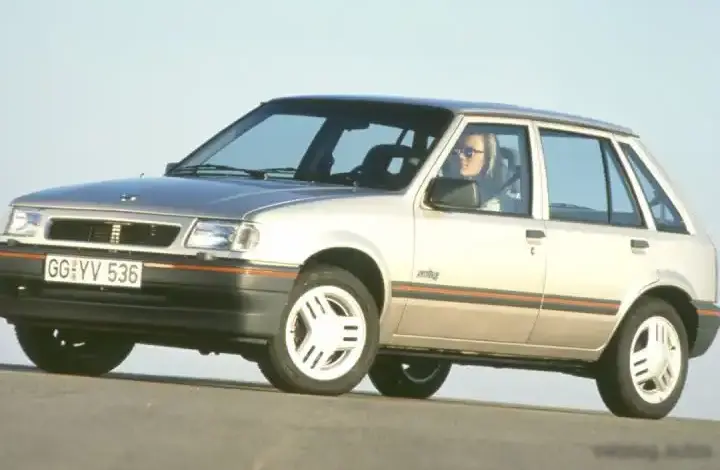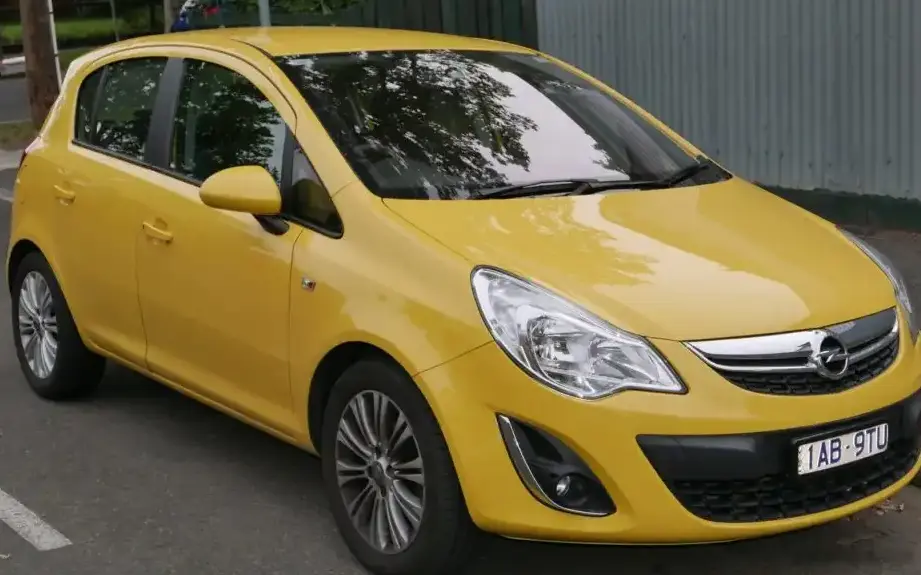
The Opel Corsa D (Facelift, produced from 2011 to August 2014) 5-door 1.4 XER (100 horsepower) represents a significant iteration of Opel’s popular subcompact hatchback. Positioned as a mainstream offering within the Corsa D range, this variant aimed to provide a balance of affordability, fuel efficiency, and practicality for everyday driving. It was a key model for Opel in the European market, competing with vehicles like the Volkswagen Polo, Ford Fiesta, and Renault Clio. This specific configuration, with the 1.4-liter engine and a five-speed manual transmission, was designed to appeal to buyers seeking a reliable and economical city car.
Technical Specifications
| Brand | Opel |
| Model | Corsa |
| Generation | Corsa D (Facelift 2011) 5-door |
| Type (Engine) | 1.4 XER (100 Hp) |
| Start of production | 2011 |
| End of production | August, 2014 |
| Powertrain Architecture | Internal Combustion engine |
| Body type | Hatchback |
| Seats | 5 |
| Doors | 5 |
| Fuel consumption (urban) | 7 l/100 km (33.6 US mpg, 40.4 UK mpg, 14.3 km/l) |
| Fuel consumption (extra urban) | 4.6 l/100 km (51.1 US mpg, 61.4 UK mpg, 21.7 km/l) |
| Fuel consumption (combined) | 5.5 l/100 km (42.8 US mpg, 51.4 UK mpg, 18.2 km/l) |
| Fuel Type | Petrol (Gasoline) |
| Acceleration 0 – 100 km/h | 11.9 sec |
| Acceleration 0 – 62 mph | 11.9 sec |
| Acceleration 0 – 60 mph | 11.3 sec |
| Maximum speed | 180 km/h (111.85 mph) |
| Emission standard | Euro 5 |
| Weight-to-power ratio | 11.6 kg/Hp, 86.2 Hp/tonne |
| Weight-to-torque ratio | 8.9 kg/Nm, 112.1 Nm/tonne |
| Power | 100 Hp @ 6000 rpm |
| Power per litre | 71.5 Hp/l |
| Torque | 130 Nm @ 4000 rpm (95.88 lb.-ft. @ 4000 rpm) |
| Engine layout | Front, Transverse |
| Engine Model/Code | A14XER |
| Engine displacement | 1398 cm3 (85.31 cu. in.) |
| Number of cylinders | 4 |
| Engine configuration | Inline |
| Cylinder Bore | 73.4 mm (2.89 in.) |
| Piston Stroke | 82.6 mm (3.25 in.) |
| Compression ratio | 10.5:1 |
| Number of valves per cylinder | 4 |
| Fuel injection system | Multi-port manifold injection |
| Engine aspiration | Naturally aspirated engine |
| Engine oil capacity | 4 l (4.23 US qt | 3.52 UK qt) |
| Coolant | 6 l (6.34 US qt | 5.28 UK qt) |
| Kerb Weight | 1160 kg (2557.36 lbs.) |
| Max. weight | 1665 kg (3670.7 lbs.) |
| Max load | 505 kg (1113.33 lbs.) |
| Trunk (boot) space – minimum | 285 l (10.06 cu. ft.) |
| Trunk (boot) space – maximum | 1100 l (38.85 cu. ft.) |
| Fuel tank capacity | 42 l (11.1 US gal | 9.24 UK gal) |
| Length | 3999 mm (157.44 in.) |
| Width | 1737 mm (68.39 in.) |
| Width including mirrors | 1944 mm (76.54 in.) |
| Height | 1488 mm (58.58 in.) |
| Wheelbase | 2511 mm (98.86 in.) |
| Front track | 1485 mm (58.46 in.) |
| Rear (Back) track | 1478 mm (58.19 in.) |
| Ride height (ground clearance) | 140 mm (5.51 in.) |
| Drag coefficient (Cd) | 0.32 |
| Minimum turning circle | 10.4 m (34.12 ft.) |
| Drivetrain Architecture | The Internal combustion engine (ICE) drives the front wheels of the vehicle. |
| Drive wheel | Front wheel drive |
| Number of gears and type of gearbox | 5 gears, manual transmission |
| Front brakes | Ventilated discs |
| Rear brakes | Drum |
| Assisting systems | ABS (Anti-lock braking system) |
| Steering type | Steering rack and pinion |
| Tires size | 185/65 R15 |
| Wheel rims size | 15 |
INTRODUCTION
The Corsa D, launched in 2006, represented a significant step forward for Opel in the subcompact segment. The 2011 facelift brought revised styling, improved interior materials, and updated engine options. The 1.4 XER 100 hp variant was a core offering, designed to provide a balance between fuel economy and acceptable performance. It sat in the middle of the Corsa D range, offering more power than the base 1.2-liter engine but less than the more expensive 1.6-liter and turbocharged options. This model was primarily sold in Europe, where subcompact hatchbacks are incredibly popular due to their practicality and affordability.
Powertrain & Engine Architecture
The heart of this Corsa variant is the A14XER engine, a 1.4-liter inline-four cylinder petrol engine. This engine belongs to Opel’s ‘Family 1’ engine family, known for its relatively simple and robust design. The A14XER utilizes a multi-point fuel injection system, delivering fuel directly into the intake ports. It features a single overhead camshaft (SOHC) operating four valves per cylinder. The engine’s 100 horsepower output at 6000 rpm and 130 Nm (95.88 lb-ft) of torque at 4000 rpm are achieved through careful tuning of the engine management system. The five-speed manual transmission was the most common pairing for this engine, offering a good balance of fuel efficiency and drivability. The transmission’s gear ratios were optimized for city driving and highway cruising, though it wasn’t designed for particularly sporty performance.
Driving Characteristics
The 1.4 XER-equipped Corsa D offered a predictable and generally pleasant driving experience. Acceleration from 0-60 mph took around 11.3 seconds, which was adequate for everyday commuting but not particularly brisk. The engine felt relatively responsive at lower RPMs, making it suitable for navigating urban traffic. However, it did require downshifting to maintain momentum when overtaking or climbing hills. Compared to the more powerful 1.6-liter versions, the 1.4 felt noticeably less energetic. The manual transmission was light and easy to use, contributing to a comfortable driving experience. The Corsa D’s suspension was tuned for comfort, providing a reasonably smooth ride over most road surfaces, though it wasn’t particularly engaging for enthusiastic drivers.
Equipment & Trim Levels
The 1.4 XER Corsa D typically came with a reasonable level of standard equipment. This included power steering, central locking, electric front windows, and an audio system with MP3 compatibility. Higher trim levels, such as ‘Enjoy’ or ‘Cosmo’, added features like air conditioning, alloy wheels, a trip computer, and upgraded interior trim. Optional extras included a panoramic sunroof, parking sensors, and a more advanced audio system. Interior upholstery was typically cloth, with a relatively simple and functional dashboard layout. Safety features included ABS brakes, front airbags, and seatbelt pretensioners.
Chassis & Braking
The Corsa D utilized a MacPherson strut front suspension and a torsion beam rear suspension. This setup provided a good balance of ride comfort and handling. The front brakes were ventilated discs, offering good stopping power, while the rear brakes were drums, a cost-saving measure common in this segment. The steering was a rack and pinion system, providing precise and responsive control. The 185/65 R15 tires offered adequate grip in most conditions. The relatively lightweight construction of the Corsa D helped to contribute to its fuel efficiency and agility.
Market Reception & Comparison
The Corsa D 1.4 XER was generally well-received by automotive critics as a practical and affordable city car. It was praised for its fuel efficiency, comfortable ride, and ease of use. However, some critics noted that the engine lacked outright power and that the interior materials were somewhat basic. Compared to the 1.2-liter version, the 1.4 XER offered a noticeable improvement in performance. Compared to the 1.6-liter models, it was less powerful but more fuel-efficient. The 1.3 CDTi diesel variant offered even better fuel economy but at a higher initial cost. The Corsa D consistently ranked well in reliability surveys, making it a popular choice for budget-conscious buyers.
Legacy
The Opel Corsa D 1.4 XER has proven to be a relatively reliable and durable powertrain. The A14XER engine is known for its longevity, provided it is properly maintained. In the used car market, these Corsas are still relatively common and offer good value for money. They are often sought after by first-time drivers or those looking for an economical and practical runabout. While not a particularly exciting car, the Corsa D 1.4 XER remains a solid and dependable choice for everyday transportation.