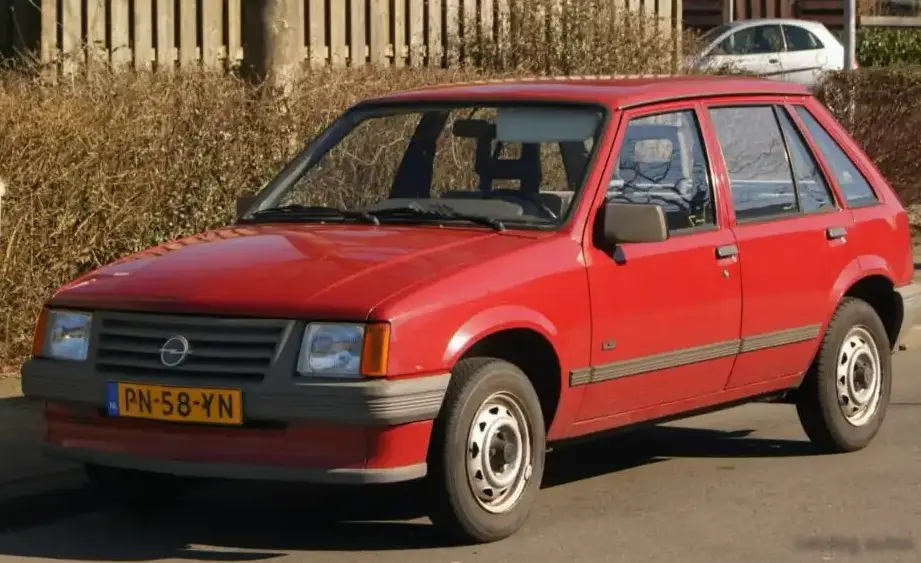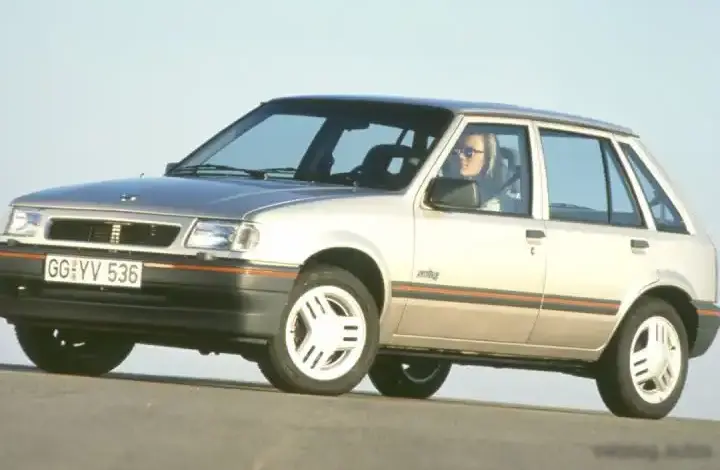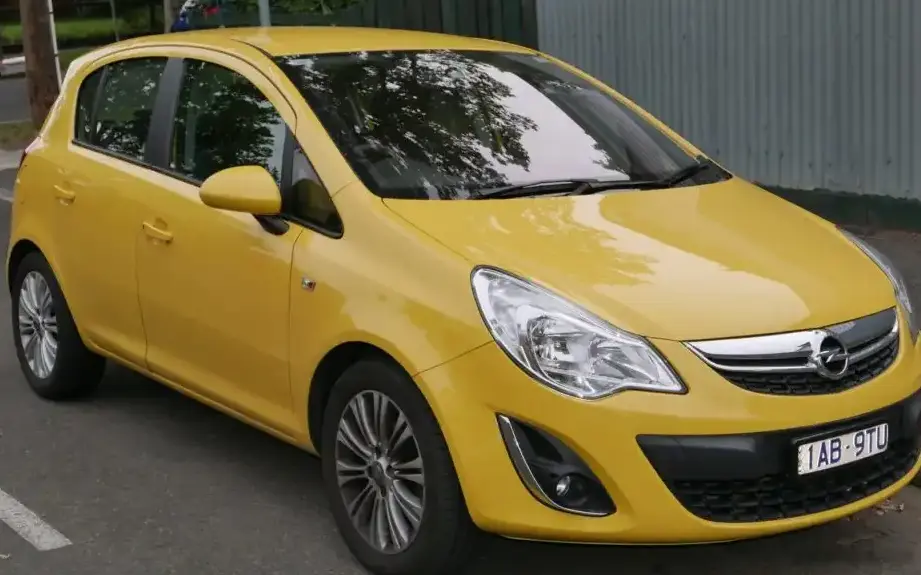
The Opel Corsa D (Facelift, produced from 2011 to October 2013) 5-door 1.7 CDTI, equipped with a 130 horsepower engine, represented a significant offering within the fourth generation Corsa lineup. Positioned as a mid-range option, it bridged the gap between the more economical base models and the performance-oriented variants. This facelift brought styling updates and refinements to the already popular Corsa D, aiming to maintain its competitiveness in the European subcompact hatchback segment. The Corsa D itself was based on the General Motors Gamma platform, shared with other vehicles like the Fiat Grande Punto and the Opel/Vauxhall Meriva.
Technical Specifications
| Brand | Opel |
| Model | Corsa |
| Generation | Corsa D (Facelift 2011) 5-door |
| Type (Engine) | 1.7 CDTI (130 Hp) |
| Start of production | 2011 |
| End of production | October, 2013 |
| Powertrain Architecture | Internal Combustion engine |
| Body type | Hatchback |
| Seats | 5 |
| Doors | 5 |
| Fuel consumption (urban) | 5.7 l/100 km (41.3 US mpg, 49.6 UK mpg, 17.5 km/l) |
| Fuel consumption (extra urban) | 3.9 l/100 km (60.3 US mpg, 72.4 UK mpg, 25.6 km/l) |
| Fuel consumption (combined) | 4.6 l/100 km (51.1 US mpg, 61.4 UK mpg, 21.7 km/l) |
| Fuel Type | Diesel |
| Acceleration 0 – 100 km/h | 10.7 sec |
| Acceleration 0 – 62 mph | 10.7 sec |
| Acceleration 0 – 60 mph | 10.2 sec |
| Maximum speed | 190 km/h (118.06 mph) |
| Emission standard | Euro 5 |
| Weight-to-power ratio | 8.9 kg/Hp, 112.1 Hp/tonne |
| Weight-to-torque ratio | 3.9 kg/Nm, 258.6 Nm/tonne |
| Power | 130 Hp @ 4000 rpm |
| Power per litre | 77.1 Hp/l |
| Torque | 300 Nm @ 2000-2500 rpm (221.27 lb.-ft. @ 2000-2500 rpm) |
| Engine layout | Front, Transverse |
| Engine Model/Code | A17DTS |
| Engine displacement | 1686 cm3 (102.89 cu. in.) |
| Number of cylinders | 4 |
| Engine configuration | Inline |
| Compression ratio | 16.5:1 |
| Number of valves per cylinder | 4 |
| Fuel injection system | Diesel Commonrail |
| Engine aspiration | Turbocharger, Intercooler |
| Engine oil capacity | 5.4 l (5.71 US qt | 4.75 UK qt) |
| Coolant capacity | 7.1 l (7.5 US qt | 6.25 UK qt) |
| Kerb Weight | 1160 kg (2557.36 lbs.) |
| Max. weight | 1585 kg (3494.33 lbs.) |
| Max load | 425 kg (936.96 lbs.) |
| Trunk (boot) space – minimum | 285 l (10.06 cu. ft.) |
| Trunk (boot) space – maximum | 1100 l (38.85 cu. ft.) |
| Fuel tank capacity | 42 l (11.1 US gal | 9.24 UK gal) |
| Length | 3999 mm (157.44 in.) |
| Width | 1737 mm (68.39 in.) |
| Width including mirrors | 1944 mm (76.54 in.) |
| Height | 1488 mm (58.58 in.) |
| Wheelbase | 2511 mm (98.86 in.) |
| Front track | 1485 mm (58.46 in.) |
| Rear (Back) track | 1478 mm (58.19 in.) |
| Ride height (ground clearance) | 140 mm (5.51 in.) |
| Drag coefficient (Cd) | 0.32 |
| Minimum turning circle | 10.4 m (34.12 ft.) |
| Drivetrain Architecture | Front wheel drive |
| Number of gears and type of gearbox | 6 gears, manual transmission |
| Front brakes | Ventilated discs |
| Rear brakes | Disc |
| Assisting systems | ABS (Anti-lock braking system) |
| Steering type | Steering rack and pinion |
| Tires size | 185/65 R15 |
| Wheel rims size | 15 |
INTRODUCTION
The Opel Corsa D facelift, launched in 2011, represented a mid-cycle refresh for the popular subcompact. The 1.7 CDTI 130 hp variant was a key component of the revised lineup, offering a balance of fuel efficiency and respectable performance. This engine, designated A17DTS, was a mainstay in several Opel and Vauxhall models, known for its durability and relatively low running costs. The five-door body style was particularly popular in European markets, offering increased practicality for families and everyday use. This version aimed to appeal to buyers seeking a diesel-powered hatchback with a bit more punch than the base engine options.
Powertrain & Engine Architecture
The heart of this Corsa variant is the 1.7-liter (1686 cc) A17DTS turbodiesel engine. This engine is an inline-four cylinder unit featuring a common rail direct injection system, delivering fuel at extremely high pressure for optimized combustion. The A17DTS utilizes a variable geometry turbocharger (VGT) and an intercooler to boost power output and improve efficiency. The engine boasts 130 horsepower at 4000 rpm and a substantial 300 Nm (221 lb-ft) of torque between 2000 and 2500 rpm. This torque band provides good responsiveness in everyday driving situations. The engine features a 16.5:1 compression ratio, typical for a diesel engine. The 6-speed manual transmission was the standard offering, providing a good spread of gears for both fuel economy and performance. The engine also incorporated a diesel particulate filter (DPF) to meet stringent Euro 5 emission standards.
Driving Characteristics
The 1.7 CDTI 130 hp Corsa D offered a noticeable step up in performance compared to the lower-powered diesel options. While not a sports car, the engine provided ample power for confident overtaking and comfortable cruising on the highway. The 6-speed manual transmission allowed drivers to keep the engine in its optimal torque band, maximizing efficiency and responsiveness. The gear ratios were well-matched for everyday driving, with a relatively long sixth gear for relaxed motorway journeys. Compared to the petrol versions, the diesel offered significantly better fuel economy and a more relaxed driving experience, particularly at higher speeds. However, the diesel engine was noticeably louder and produced more vibration than the gasoline counterparts. The suspension was tuned for comfort, providing a reasonably smooth ride, although it could feel a little unsettled on rougher road surfaces.
Equipment & Trim Levels
The 1.7 CDTI 130 hp Corsa D typically came equipped with a reasonable level of standard equipment. This included air conditioning, power steering, electric front windows, and a basic audio system with CD player. Higher trim levels, such as ‘Sportive’ or ‘SE’, added features like alloy wheels, front fog lights, cruise control, and upgraded interior trim. Optional extras included a panoramic sunroof, parking sensors, and a more advanced infotainment system. Interior upholstery was typically cloth, with the option of leather seats on higher-spec models. The dashboard layout was functional and straightforward, with easy-to-read instruments.
Chassis & Braking
The Corsa D utilized a MacPherson strut front suspension and a torsion beam rear suspension. This setup provided a good balance between ride comfort and handling. The front brakes were ventilated discs, offering good stopping power, while the rear brakes were solid discs. Anti-lock Braking System (ABS) was standard, enhancing safety. The steering was a rack and pinion system, providing precise and responsive control. The 15-inch wheels, fitted with 185/65 R15 tires, were a common specification, offering a good compromise between comfort and grip.
Market Reception & Comparison
The Opel Corsa D 1.7 CDTI 130 hp was generally well-received by automotive critics. It was praised for its fuel efficiency, strong torque output, and comfortable ride. However, some reviewers noted the engine could be a bit noisy and that the interior plastics felt somewhat low-rent. Compared to other diesel-powered subcompacts like the Volkswagen Polo and the Ford Fiesta, the Corsa offered a competitive package in terms of price and performance. The Polo was often considered more refined, while the Fiesta offered a more engaging driving experience. The Corsa’s strength lay in its practicality, affordability, and relatively low running costs.
Legacy
The A17DTS engine proved to be a reliable and durable unit, and many examples are still on the road today. While diesel engines have faced increased scrutiny in recent years due to emissions concerns, the 1.7 CDTI remains a relatively clean and efficient option. On the used car market, the Corsa D 1.7 CDTI 130 hp represents a good value proposition for buyers seeking an economical and practical hatchback. Regular maintenance, including timely oil changes and DPF servicing, is crucial to ensure the long-term reliability of this powertrain. The Corsa D, in general, established itself as a popular and dependable choice in the subcompact segment, and the 1.7 CDTI variant continues to be a viable option for budget-conscious buyers.