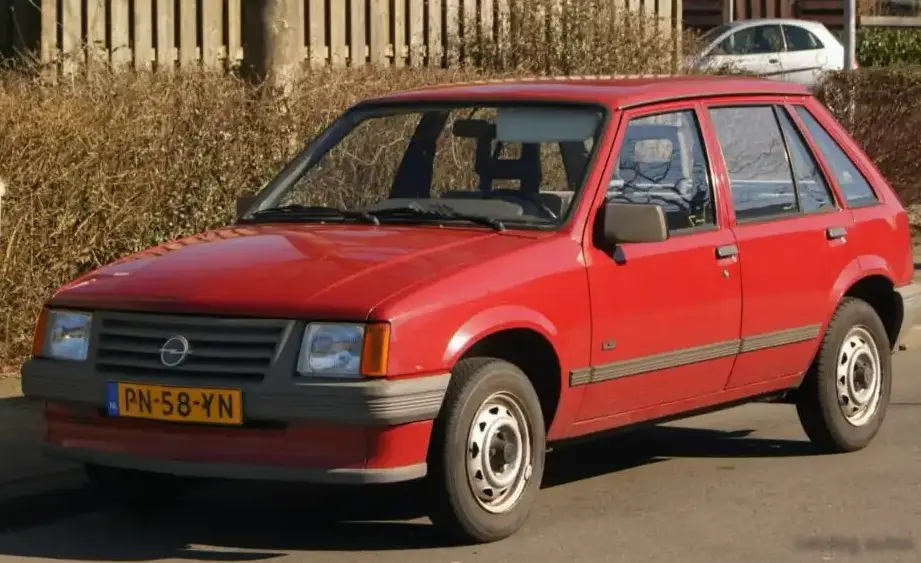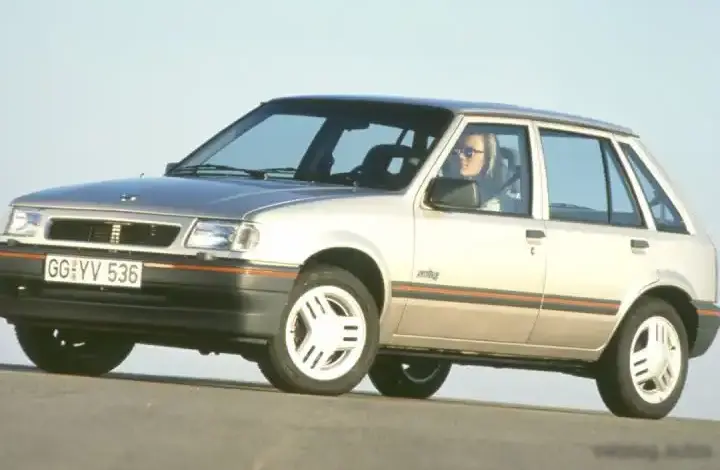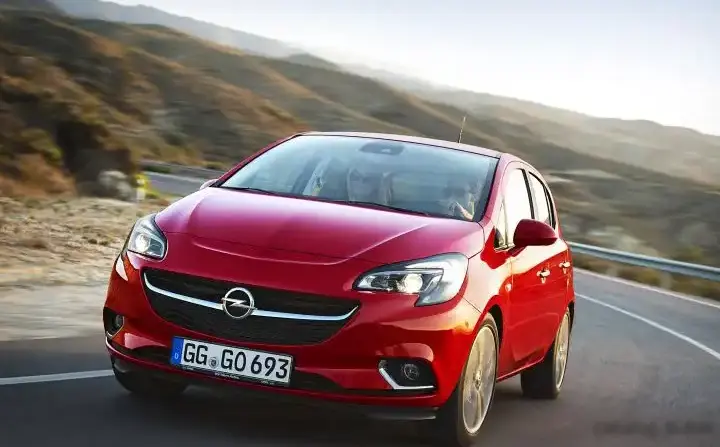
The Opel Corsa E 5-door 1.4 (75 hp) was a subcompact hatchback produced from May 2018 to June 2019. Positioned as an entry-level offering within the Corsa E range, it represented a practical and affordable option for buyers seeking a small, fuel-efficient vehicle. The Corsa E, launched in 2014, was a significant model for Opel, built on the General Motors Gamma II platform, and aimed to modernize the Corsa lineup with improved styling, technology, and driving dynamics. This particular 1.4-liter variant was primarily marketed in Europe, where subcompact hatchbacks are a dominant segment.
Technical Specifications
| Brand | Opel |
| Model | Corsa |
| Generation | Corsa E 5-door |
| Type (Engine) | 1.4 (75 Hp) |
| Start of production | May, 2018 |
| End of production | June, 2019 |
| Powertrain Architecture | Internal Combustion engine |
| Body type | Hatchback |
| Seats | 5 |
| Doors | 5 |
| Fuel consumption (urban) | 6.9 l/100 km (34.1 US mpg, 40.9 UK mpg, 14.5 km/l) |
| Fuel consumption (extra urban) | 4.2 l/100 km (56 US mpg, 67.3 UK mpg, 23.8 km/l) |
| Fuel consumption (combined) | 5.2 l/100 km (45.2 US mpg, 54.3 UK mpg, 19.2 km/l) |
| CO2 emissions | 120 g/km |
| Fuel Type | Petrol (Gasoline) |
| Acceleration 0 – 100 km/h | 14 sec |
| Acceleration 0 – 62 mph | 14 sec |
| Acceleration 0 – 60 mph | 13.3 sec |
| Maximum speed | 167 km/h (103.77 mph) |
| Emission standard | Euro 6d-Temp |
| Weight-to-power ratio | 14.5 kg/Hp, 68.9 Hp/tonne |
| Weight-to-torque ratio | 8.4 kg/Nm, 119.5 Nm/tonne |
| Power | 75 Hp @ 4200-6000 rpm |
| Power per litre | 53.6 Hp/l |
| Torque | 130 Nm @ 4000 rpm (95.88 lb.-ft. @ 4000 rpm) |
| Engine layout | Front, Transverse |
| Engine Model/Code | D14NEJ |
| Engine displacement | 1398 cm3 (85.31 cu. in.) |
| Number of cylinders | 4 |
| Engine configuration | Inline |
| Cylinder Bore | 73.4 mm (2.89 in.) |
| Piston Stroke | 82.6 mm (3.25 in.) |
| Number of valves per cylinder | 4 |
| Engine aspiration | Naturally aspirated engine |
| Engine oil capacity | 4 l (4.23 US qt | 3.52 UK qt) |
| Coolant | 5.1 l (5.39 US qt | 4.49 UK qt) |
| Kerb Weight | 1088 kg (2398.63 lbs.) |
| Max. weight | 1605 kg (3538.42 lbs.) |
| Max load | 517 kg (1139.79 lbs.) |
| Trunk (boot) space – minimum | 285 l (10.06 cu. ft.) |
| Trunk (boot) space – maximum | 1120 l (39.55 cu. ft.) |
| Fuel tank capacity | 45 l (11.89 US gal | 9.9 UK gal) |
| Permitted trailer load with brakes (12%) | 700 kg (1543.24 lbs.) |
| Permitted trailer load without brakes | 540 kg (1190.5 lbs.) |
| Length | 4021 mm (158.31 in.) |
| Width | 1746 mm (68.74 in.) |
| Width including mirrors | 1944 mm (76.54 in.) |
| Height | 1481 mm (58.31 in.) |
| Wheelbase | 2510 mm (98.82 in.) |
| Front track | 1472 mm (57.95 in.) |
| Rear (Back) track | 1464 mm (57.64 in.) |
| Minimum turning circle | 11 m (36.09 ft.) |
| Drivetrain Architecture | The Internal combustion engine (ICE) drives the front wheels of the vehicle. |
| Drive wheel | Front wheel drive |
| Number of gears and type of gearbox | 5 gears, manual transmission |
| Front brakes | Disc |
| Rear brakes | Drum |
| Assisting systems | ABS (Anti-lock braking system) |
| Steering type | Steering rack and pinion |
| Power steering | Electric Steering |
Powertrain & Engine Architecture
The Corsa E 1.4 (75 hp) was powered by the D14NEJ engine, a 1.4-liter inline-four cylinder naturally aspirated gasoline engine. This engine belonged to Opel’s family of small-displacement engines, designed for fuel efficiency and affordability. The D14NEJ featured a multi-point fuel injection system and a single overhead camshaft (SOHC) valvetrain with four valves per cylinder. The engine’s modest output was achieved through a relatively conservative tuning, prioritizing reliability and low running costs over outright performance. The engine was transversely mounted in the front of the vehicle, driving the front wheels. The 5-speed manual transmission was the standard offering, providing a relatively simple and durable drivetrain.
Driving Characteristics
The 1.4-liter, 75 hp Corsa E offered modest performance. Acceleration from 0 to 60 mph took approximately 13.3 seconds, and top speed was around 103.77 mph. The engine felt somewhat strained during brisk acceleration or when carrying a full load of passengers. The 5-speed manual transmission was well-matched to the engine’s characteristics, with gear ratios designed to maximize fuel economy. The gear change was light and precise, but the overall driving experience was geared towards practicality rather than sporty handling. Compared to higher-output Corsa E variants, such as the 1.0 Turbo (115 hp) or the 1.4 Turbo (100 hp), the 1.4 naturally aspirated engine lacked the responsiveness and overall punch of its turbocharged counterparts.
Equipment & Trim Levels
The 1.4 (75 hp) Corsa E typically came with a basic level of equipment, reflecting its position as an entry-level model. Standard features generally included power steering, ABS brakes, a driver’s airbag, and basic audio system with USB connectivity. Interior upholstery was typically cloth, and the dashboard featured a simple, functional design. Optional extras included air conditioning, alloy wheels, and a more advanced infotainment system. Trim levels varied slightly depending on the market, but generally focused on adding convenience and aesthetic enhancements rather than significant performance upgrades.
Chassis & Braking
The Corsa E utilized a MacPherson strut front suspension and a torsion beam rear suspension. This setup provided a reasonable balance between ride comfort and handling. The front brakes were disc brakes, while the rear brakes were drum brakes – a cost-saving measure common in entry-level models. The steering was electrically assisted, providing light and easy steering feel. The chassis was designed to be lightweight, contributing to the car’s fuel efficiency. Stabilizer bars were fitted to both the front and rear axles to reduce body roll during cornering.
Market Reception & Comparison
The Opel Corsa E 1.4 (75 hp) was generally well-received as a practical and affordable city car. Critics praised its fuel efficiency and low running costs, but noted its lack of performance. Compared to other trims in the Corsa E lineup, the 1.4 offered the lowest price point but also the least exciting driving experience. The 1.0 Turbo and 1.4 Turbo variants offered significantly more power and responsiveness, but at a higher cost. In terms of reliability, the D14NEJ engine was generally considered to be a durable and dependable unit, although regular maintenance was essential to ensure long-term reliability.
Legacy
The Opel Corsa E 1.4 (75 hp) remains a relatively common sight on used car markets. Its simple engine design and robust construction contribute to its continued reliability. While not a particularly sought-after model by enthusiasts, it represents a practical and affordable option for buyers seeking a small, fuel-efficient hatchback. The D14NEJ engine, while not known for its performance, is relatively easy to maintain and repair, making it a cost-effective choice for budget-conscious drivers. The Corsa E, as a whole, helped to modernize the Corsa lineup and establish it as a competitive player in the European subcompact hatchback segment.