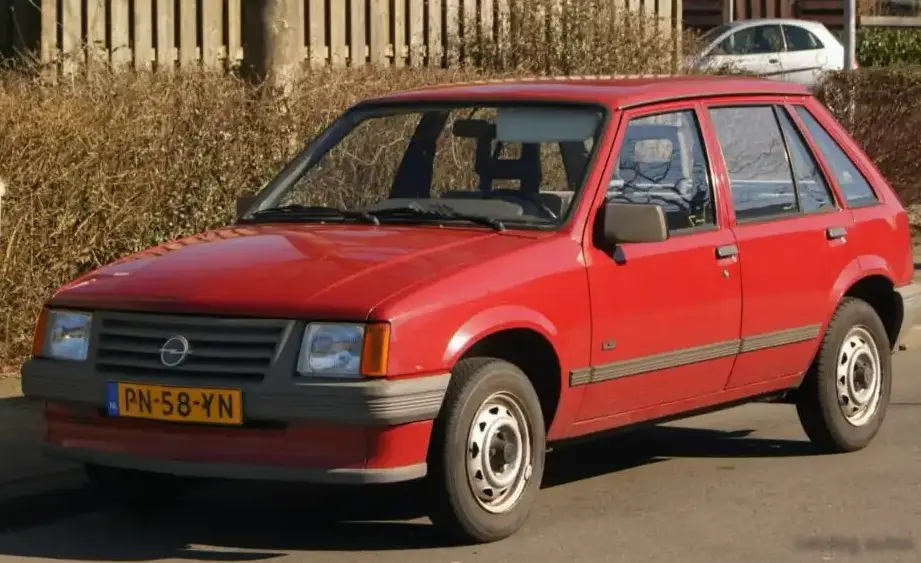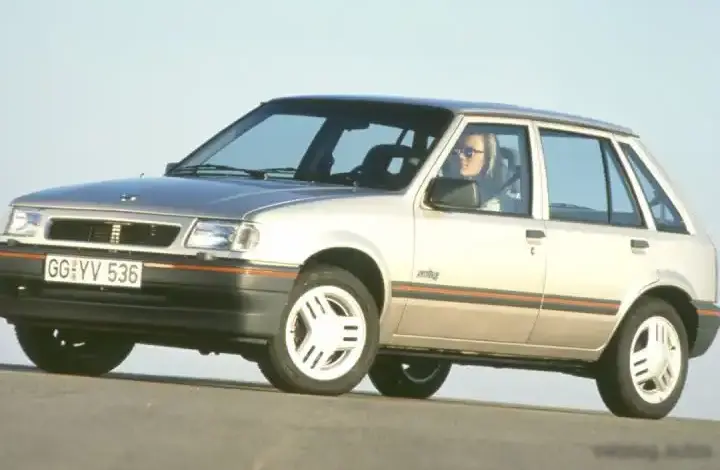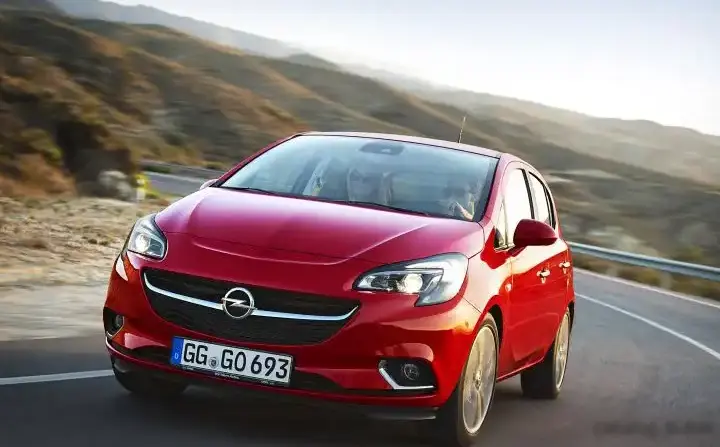
The Opel Corsa E 5-door 1.4 (90 hp) was a mainstream subcompact hatchback produced from May 2018 to June 2019. Positioned as an entry-level offering within the Corsa E range, it served as a more affordable and fuel-efficient alternative to the higher-performance and more technologically advanced trims. The Corsa E, launched in 2014, represented Opel’s fifth generation of the popular Corsa supermini, built on the General Motors Gamma II platform. This variant aimed to provide practical transportation with reasonable running costs, primarily targeting first-time buyers, city commuters, and those seeking a small, economical vehicle.
Technical Specifications
| Brand | Opel |
| Model | Corsa |
| Generation | Corsa E 5-door |
| Type (Engine) | 1.4 (90 Hp) |
| Start of production | May, 2018 |
| End of production | June, 2019 |
| Powertrain Architecture | Internal Combustion engine |
| Body type | Hatchback |
| Seats | 5 |
| Doors | 5 |
| Fuel consumption (urban) | 7.0-7.4 l/100 km (33.6 – 31.8 US mpg, 40.4 – 38.2 UK mpg, 14.3 – 13.5 km/l) |
| Fuel consumption (extra urban) | 4.7-4.9 l/100 km (50 – 48 US mpg, 60.1 – 57.6 UK mpg, 21.3 – 20.4 km/l) |
| Fuel consumption (combined) | 5.6-5.8 l/100 km (42 – 40.6 US mpg, 50.4 – 48.7 UK mpg, 17.9 – 17.2 km/l) |
| CO2 emissions | 128-132 g/km |
| Fuel Type | Petrol (Gasoline) |
| Acceleration 0 – 100 km/h | 13.2 sec |
| Acceleration 0 – 62 mph | 13.2 sec |
| Acceleration 0 – 60 mph | 12.5 sec |
| Maximum speed | 175 km/h (108.74 mph) |
| Emission standard | Euro 6d-Temp |
| Weight-to-power ratio | 12.9 kg/Hp, 77.7 Hp/tonne |
| Weight-to-torque ratio | 8.9 kg/Nm, 112.2 Nm/tonne |
| Power | 90 Hp @ 6000 rpm |
| Power per litre | 64.4 Hp/l |
| Torque | 130 Nm @ 4000 rpm (95.88 lb.-ft. @ 4000 rpm) |
| Engine layout | Front, Transverse |
| Engine Model/Code | D14XEL |
| Engine displacement | 1398 cm3 (85.31 cu. in.) |
| Number of cylinders | 4 |
| Engine configuration | Inline |
| Cylinder Bore | 73.4 mm (2.89 in.) |
| Piston Stroke | 82.6 mm (3.25 in.) |
| Compression ratio | 10.5:1 |
| Number of valves per cylinder | 4 |
| Engine oil capacity | 4 l (4.23 US qt | 3.52 UK qt) |
| Coolant | 5.1 l (5.39 US qt | 4.49 UK qt) |
| Kerb Weight | 1159 kg (2555.16 lbs.) |
| Max. weight | 1630 kg (3593.53 lbs.) |
| Max load | 471 kg (1038.38 lbs.) |
| Trunk (boot) space – minimum | 285 l (10.06 cu. ft.) |
| Trunk (boot) space – maximum | 1120 l (39.55 cu. ft.) |
| Fuel tank capacity | 45 l (11.89 US gal | 9.9 UK gal) |
| Max. roof load | 75 kg (165.35 lbs.) |
| Permitted trailer load with brakes (12%) | 800 kg (1763.7 lbs.) |
| Permitted trailer load without brakes | 550 kg (1212.54 lbs.) |
| Length | 4021 mm (158.31 in.) |
| Width | 1746 mm (68.74 in.) |
| Width including mirrors | 1944 mm (76.54 in.) |
| Height | 1481 mm (58.31 in.) |
| Wheelbase | 2510 mm (98.82 in.) |
| Front track | 1472 mm (57.95 in.) |
| Rear (Back) track | 1464 mm (57.64 in.) |
| Minimum turning circle | 11.2 m (36.75 ft.) |
| Drivetrain Architecture | The Internal combustion engine (ICE) drives the front wheels of the vehicle. |
| Drive wheel | Front wheel drive |
| Number of gears and type of gearbox | 5 gears, manual transmission |
| Front brakes | Disc |
| Rear brakes | Drum |
| Assisting systems | ABS (Anti-lock braking system) |
| Steering type | Steering rack and pinion |
| Power steering | Electric Steering |
| Tires size | 185/70 R14; 185/65 R15; 195/55 R16 |
| Wheel rims size | 14; 15; 16 |
Powertrain & Engine Architecture
The Corsa E 1.4 (90 hp) utilized the D14XEL engine code, a naturally aspirated 1.4-liter inline-four cylinder petrol engine. This engine was part of Opel’s Family 0 small engine family. It featured multi-point fuel injection and a single overhead camshaft (SOHC) valvetrain with two valves per cylinder. The engine’s design prioritized fuel efficiency and smooth operation over outright performance. The 5-speed manual transmission was the standard offering, designed for durability and ease of use. The transmission’s gear ratios were tuned for economy, with a relatively tall final drive to reduce engine speed at highway cruising speeds. This configuration contributed to the car’s fuel-efficient nature but also limited its acceleration capabilities.
Driving Characteristics
The 1.4-liter, 90 hp Corsa E offered modest performance. Acceleration from 0-60 mph took around 12.5 seconds, and top speed was approximately 108.74 mph. The engine felt adequate for city driving and short trips, but struggled when fully loaded or attempting to overtake at higher speeds. The 5-speed manual transmission provided a reasonable driving experience, but the gear ratios were spaced to prioritize fuel economy rather than spirited driving. Compared to the 1.0-liter turbocharged engine available in the Corsa E, the 1.4 offered a more linear power delivery, but lacked the low-end torque of the turbo unit. Against the more powerful 1.4 Turbo (100 hp) or the diesel options, this variant felt noticeably slower.
Equipment & Trim Levels
The 1.4 (90 hp) Corsa E typically came with a basic level of equipment. Standard features generally included power steering, ABS, front airbags, a basic audio system with USB connectivity, and manual air conditioning. Interior upholstery was typically cloth, and the dashboard featured a simple, functional design. Optional extras included alloy wheels, upgraded audio systems, and parking sensors. Trim levels varied slightly depending on the market, but generally offered incremental upgrades in terms of interior trim and exterior styling.
Chassis & Braking
The Corsa E featured a MacPherson strut front suspension and a torsion beam rear suspension. This setup provided a comfortable ride quality, suitable for everyday driving. The front brakes were disc brakes, while the rear brakes were drum brakes – a cost-saving measure common in entry-level trims. ABS (Anti-lock Braking System) was standard, enhancing safety during emergency braking. The suspension was tuned for comfort rather than sporty handling, resulting in a slight degree of body roll during cornering.
Market Reception & Comparison
The Corsa E 1.4 (90 hp) was generally well-received as a practical and affordable supermini. Critics praised its fuel efficiency and comfortable ride, but noted its lack of outright performance. Compared to rivals like the Ford Fiesta and Volkswagen Polo, the Corsa E offered a competitive price point and a decent level of equipment. However, it often lagged behind in terms of driving dynamics and interior refinement. The 1.4-liter engine offered better fuel economy than the 1.4 Turbo, but at the expense of performance. The diesel variants provided even better fuel economy, but came with a higher purchase price and potentially higher maintenance costs.
Legacy
The D14XEL engine, while not known for being particularly exciting, proved to be a relatively reliable unit. Common issues were generally minor, such as oil leaks or sensor failures. The Corsa E 1.4 (90 hp) remains a relatively affordable option on the used car market. Its simplicity and fuel efficiency make it a practical choice for those seeking a low-cost, reliable runabout. However, potential buyers should be aware of its limited performance and the potential for age-related wear and tear.