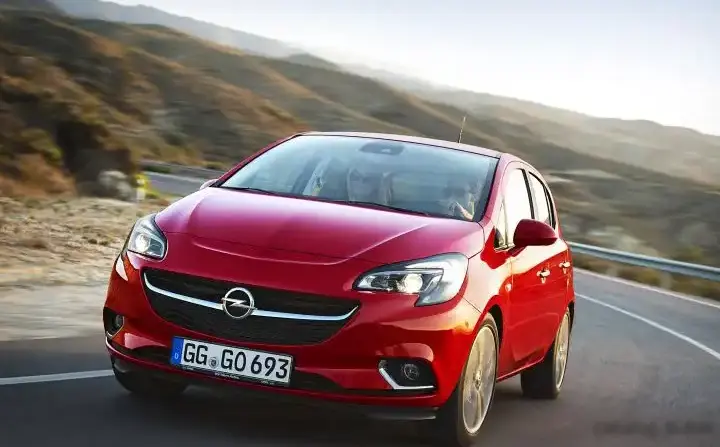
The Opel Corsa E 5-door 1.4 Turbo (100 hp) was a front-wheel-drive hatchback produced from May 2018 to June 2019. Positioned as a mid-range offering within the Corsa E lineup, it aimed to provide a balance between fuel efficiency and performance. This variant was part of the fifth generation of the Corsa, known internally as the 1HX0 model series, and represented Opel’s attempt to modernize its small car offering in a competitive European market. It served as an alternative to naturally aspirated engines and diesel options, appealing to buyers seeking a responsive turbocharged gasoline engine.
Technical Specifications
| Brand | Opel |
| Model | Corsa |
| Generation | Corsa E 5-door |
| Type (Engine) | 1.4 Turbo (100 Hp) |
| Start of production | May, 2018 |
| End of production | June, 2019 |
| Powertrain Architecture | Internal Combustion engine |
| Body type | Hatchback |
| Seats | 5 |
| Doors | 5 |
| Fuel consumption (urban) | 6.9-7.1 l/100 km (34.1 – 33.1 US mpg, 40.9 – 39.8 UK mpg, 14.5 – 14.1 km/l) |
| Fuel consumption (extra urban) | 4.6-4.9 l/100 km (51.1 – 48 US mpg, 61.4 – 57.6 UK mpg, 21.7 – 20.4 km/l) |
| Fuel consumption (combined) | 5.4-5.8 l/100 km (43.6 – 40.6 US mpg, 52.3 – 48.7 UK mpg, 18.5 – 17.2 km/l) |
| CO2 emissions | 125-132 g/km |
| Fuel Type | Petrol (Gasoline) |
| Maximum speed | 185 km/h (114.95 mph) |
| Emission standard | Euro 6d-Temp |
| Weight-to-power ratio | 12.2 kg/Hp, 82.3 Hp/tonne |
| Weight-to-torque ratio | 6.1 kg/Nm, 164.6 Nm/tonne |
| Power | 100 Hp @ 3500-6000 rpm |
| Power per litre | 73.3 Hp/l |
| Torque | 200 Nm @ 1850-3500 rpm (147.51 lb.-ft. @ 1850-3500 rpm) |
| Engine layout | Front, Transverse |
| Engine Model/Code | D14NEJ |
| Engine displacement | 1364 cm3 (83.24 cu. in.) |
| Number of cylinders | 4 |
| Engine configuration | Inline |
| Cylinder Bore | 72.5 mm (2.85 in.) |
| Piston Stroke | 82.6 mm (3.25 in.) |
| Compression ratio | 9.5:1 |
| Number of valves per cylinder | 4 |
| Fuel injection system | Direct injection |
| Engine aspiration | Turbocharger, Intercooler |
| Engine oil capacity | 4 l (4.23 US qt | 3.52 UK qt) |
| Coolant | 5.1 l (5.39 US qt | 4.49 UK qt) |
| Kerb Weight | 1215 kg (2678.62 lbs.) |
| Max. weight | 1710 kg (3769.9 lbs.) |
| Max load | 495 kg (1091.29 lbs.) |
| Trunk (boot) space – minimum | 285 l (10.06 cu. ft.) |
| Trunk (boot) space – maximum | 1120 l (39.55 cu. ft.) |
| Fuel tank capacity | 45 l (11.89 US gal | 9.9 UK gal) |
| Max. roof load | 75 kg (165.35 lbs.) |
| Permitted trailer load with brakes (12%) | 1150 kg (2535.32 lbs.) |
| Permitted trailer load without brakes | 580 kg (1278.68 lbs.) |
| Length | 4021 mm (158.31 in.) |
| Width | 1746 mm (68.74 in.) |
| Width including mirrors | 1944 mm (76.54 in.) |
| Height | 1481 mm (58.31 in.) |
| Wheelbase | 2510 mm (98.82 in.) |
| Front track | 1472 mm (57.95 in.) |
| Rear (Back) track | 1464 mm (57.64 in.) |
| Minimum turning circle (turning diameter) | 11.2 m (36.75 ft.) |
| Drivetrain Architecture | The Internal combustion engine (ICE) drives the front wheels of the vehicle. |
| Drive wheel | Front wheel drive |
| Number of gears and type of gearbox | 6 gears, manual transmission |
| Front brakes | Disc |
| Rear brakes | Disc |
| Assisting systems | ABS (Anti-lock braking system) |
| Steering type | Steering rack and pinion |
| Power steering | Electric Steering |
| Tires size | 185/70 R14; 185/65 R15; 195/55 R16 |
| Wheel rims size | 14; 15; 16 |
Powertrain & Engine Architecture
The heart of the Corsa E 1.4 Turbo was the D14NEJ engine, a 1.4-liter inline-four cylinder gasoline engine. This engine featured direct fuel injection and a turbocharger with an intercooler, allowing it to produce 100 horsepower and 200 Nm (147.51 lb-ft) of torque. The turbocharger provided a noticeable boost in power compared to the naturally aspirated 1.2-liter engines available in other Corsa E trims. The engine utilized a timing chain, contributing to potentially lower long-term maintenance costs compared to engines with timing belts. The engine’s control unit (ECU) managed fuel delivery and ignition timing to optimize performance and efficiency. The 6-speed manual transmission was standard, offering precise gear changes and contributing to a more engaging driving experience.
Driving Characteristics
The 1.4 Turbo offered a significant step up in performance compared to the base Corsa E models. While not a sports car, the turbocharger provided ample power for everyday driving and overtaking maneuvers. The engine delivered its peak torque between 1850 and 3500 rpm, resulting in strong acceleration in the mid-range. The 6-speed manual transmission allowed drivers to keep the engine in its optimal power band. Compared to the higher-output 1.4 Turbo models (which could produce up to 120 hp), this 100 hp version prioritized fuel economy and offered a more relaxed driving experience. The gear ratios were tuned for a balance between acceleration and fuel efficiency, making it suitable for both city and highway driving.
Equipment & Trim Levels
The 1.4 Turbo trim typically included features such as air conditioning, power windows, power door locks, and a basic audio system with USB connectivity. Higher trim levels added features like alloy wheels, a touchscreen infotainment system with Apple CarPlay and Android Auto compatibility, cruise control, and parking sensors. Interior upholstery was typically cloth, with options for upgraded materials available. Safety features included ABS, electronic stability control, and multiple airbags. Optional extras included a panoramic sunroof, heated seats, and a more advanced audio system.
Chassis & Braking
The Corsa E utilized a MacPherson strut front suspension and a torsion beam rear suspension. This setup provided a comfortable ride while maintaining reasonable handling characteristics. The front brakes were disc brakes, while the rear brakes were also disc brakes on most variants, providing adequate stopping power. The electric power steering offered light and precise steering feel. Stabilizer bars were fitted to both the front and rear axles to reduce body roll during cornering. The chassis was designed to be lightweight to maximize fuel efficiency and handling.
Market Reception & Comparison
The Corsa E 1.4 Turbo was generally well-received by automotive critics as a competent and efficient small car. It was praised for its responsive engine, comfortable ride, and relatively low running costs. Compared to the base 1.2-liter models, the 1.4 Turbo offered a noticeable improvement in performance. However, some critics noted that the interior materials were not as premium as those found in some competitors. In terms of fuel economy, the 1.4 Turbo offered competitive figures compared to other turbocharged gasoline engines in its class. Reliability was generally good, although some owners reported minor issues with the turbocharger and fuel injection system.
Legacy
The Opel Corsa E 1.4 Turbo remains a popular choice in the used car market due to its affordability, fuel efficiency, and relatively low maintenance costs. The D14NEJ engine has proven to be reasonably durable, although regular maintenance is essential to ensure its longevity. The availability of spare parts is generally good, and the Corsa E is relatively easy to repair. While it may not offer the same level of refinement or technology as newer small cars, the Corsa E 1.4 Turbo represents a solid and practical option for buyers seeking a reliable and economical hatchback.