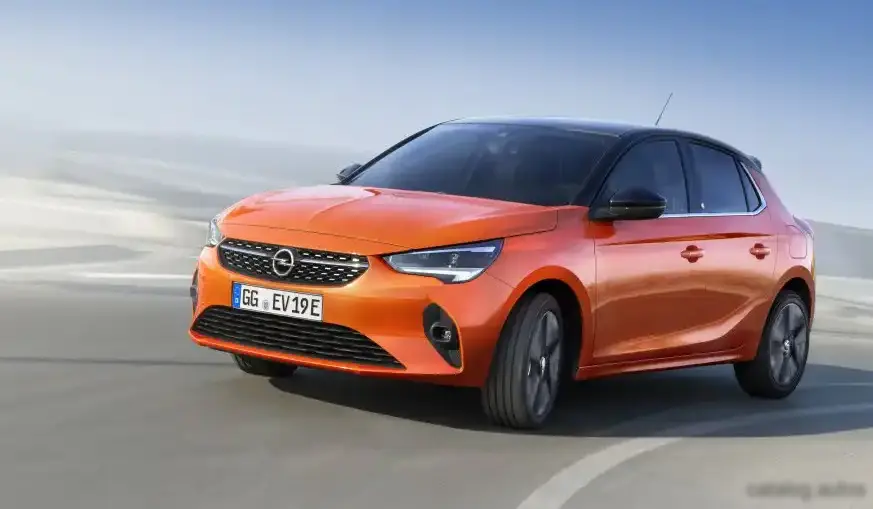
The Opel Corsa F 1.2 Turbo (100 hp) Automatic, produced from July 2019 to July 2023, represents a key variant within the sixth generation of Opel’s popular supermini. Positioned as a mid-range offering, it aimed to balance fuel efficiency with a more accessible level of performance than the base models, while remaining more affordable than the higher-powered trims. This version of the Corsa F was primarily marketed in Europe, where it competed with rivals like the Volkswagen Polo, Renault Clio, and Peugeot 208. It was a significant model for Opel, representing a move towards smaller, more efficient vehicles in a changing automotive landscape.
Technical Specifications
| Brand | Opel |
| Model | Corsa |
| Generation | Corsa F |
| Type (Engine) | 1.2 Turbo (100 Hp) Automatic |
| Start of production | July, 2019 |
| End of production | July, 2023 |
| Powertrain Architecture | Internal Combustion engine |
| Body type | Hatchback |
| Seats | 5 |
| Doors | 5 |
| Fuel consumption (urban) | 5.1 l/100 km (46.1 US mpg) |
| Fuel consumption (extra urban) | 3.9-4.0 l/100 km (60.3 – 58.8 US mpg) |
| Fuel consumption (combined) | 4.3-4.4 l/100 km (54.7 – 53.5 US mpg) |
| CO2 emissions | 99-101 g/km |
| Fuel Type | Petrol (Gasoline) |
| Acceleration 0 – 100 km/h | 10.8 sec |
| Acceleration 0 – 62 mph | 10.8 sec |
| Acceleration 0 – 60 mph | 10.3 sec |
| Maximum speed | 188 km/h (116.82 mph) |
| Emission standard | Euro 6d |
| Weight-to-power ratio | 10.9 kg/Hp |
| Weight-to-torque ratio | 5.3 kg/Nm |
| Power | 100 Hp @ 5500 rpm |
| Torque | 205 Nm @ 1750 rpm (151.2 lb.-ft. @ 1750 rpm) |
| Engine layout | Front, Transverse |
| Engine Model/Code | F12XHL |
| Engine displacement | 1199 cm3 (73.17 cu. in.) |
| Number of cylinders | 3 |
| Engine configuration | Inline |
| Compression ratio | 10.5:1 |
| Fuel injection system | Direct injection |
| Engine oil capacity | 3.5 l (3.7 US qt | 3.08 UK qt) |
| Kerb Weight | 1090 kg (2403.04 lbs.) |
| Max. weight | 1645 kg (3626.6 lbs.) |
| Max load | 555 kg (1223.57 lbs.) |
| Trunk (boot) space – minimum | 309 l (10.91 cu. ft.) |
| Fuel tank capacity | 44 l (11.62 US gal | 9.68 UK gal) |
| Max. roof load | 70 kg (154.32 lbs.) |
| Permitted trailer load with brakes (12%) | 1200 kg (2645.55 lbs.) |
| Permitted trailer load without brakes | 580 kg (1278.68 lbs.) |
| Length | 4060 mm (159.84 in.) |
| Width with mirrors folded | 1765 mm (69.49 in.) |
| Width including mirrors | 1960 mm (77.17 in.) |
| Height | 1435 mm (56.5 in.) |
| Wheelbase | 2538 mm (99.92 in.) |
| Front track | 1501 mm (59.09 in.) |
| Rear (Back) track | 1500 mm (59.06 in.) |
| Drive wheel | Front wheel drive |
| Number of gears and type of gearbox | 8 gears, automatic transmission |
| Tires size | 195/55 R16 |
| Wheel rims size | 6.5J x 16 |
Powertrain & Engine Architecture
The heart of the Corsa F 1.2 Turbo Automatic is the F12XHL engine, a 1.2-liter, three-cylinder turbocharged gasoline engine. This engine is part of Opel’s (and subsequently Stellantis’) Small Engine Family, known for its compact size and efficiency. The F12XHL utilizes direct fuel injection, a technology that improves combustion efficiency and reduces emissions. The turbocharger, coupled with an intercooler, provides a boost in power and torque, overcoming the inherent limitations of a small displacement engine. The engine produces 100 horsepower at 5500 rpm and 205 Nm (151.2 lb-ft) of torque at 1750 rpm. This torque figure is particularly noteworthy for a three-cylinder engine, providing good low-end responsiveness. The engine is paired with an 8-speed automatic transmission, which contributes to smooth gear changes and improved fuel economy. This transmission is a key component in making the car accessible to a wider range of drivers, particularly those who prefer the convenience of an automatic.
Driving Characteristics
The 1.2 Turbo Automatic Corsa F offers a comfortable and generally refined driving experience. While not a performance-oriented variant, the 100 hp engine and 8-speed automatic provide adequate acceleration for everyday driving. The 0-60 mph time of around 10.3 seconds is respectable for a supermini in this class. The automatic transmission is well-tuned, offering smooth shifts and a responsive feel. The gear ratios are optimized for fuel efficiency, but also provide enough power for overtaking maneuvers. Compared to the base 1.2-liter non-turbo engine, the 1.2 Turbo offers a significant improvement in performance. However, it doesn’t match the more spirited driving experience of the Corsa GSi or the diesel variants. The relatively light weight of the Corsa F (around 1090 kg) helps to mitigate the limitations of the engine’s output.
Equipment & Trim Levels
The 1.2 Turbo Automatic trim typically included a good level of standard equipment. Features commonly found in this variant include air conditioning, a touchscreen infotainment system with Apple CarPlay and Android Auto compatibility, Bluetooth connectivity, and power windows. Safety features such as ABS, ESP (Electronic Stability Program), and multiple airbags were also standard. Interior upholstery was typically cloth, with options for upgraded materials available. Optional extras included a panoramic sunroof, heated seats, and advanced driver-assistance systems like lane departure warning and automatic emergency braking. The trim level sat comfortably in the middle of the Corsa F range, offering a balance between affordability and features.
Chassis & Braking
The Corsa F utilizes a MacPherson strut front suspension and a torsion beam rear suspension. This setup provides a good balance between ride comfort and handling. The torsion beam rear suspension is a cost-effective solution commonly found in superminis. Braking on the 1.2 Turbo Automatic typically consisted of disc brakes on the front wheels and drum brakes on the rear wheels. This configuration is typical for this weight class and provides adequate stopping power for everyday driving. The steering is electrically assisted, offering a light and precise feel. Stabilizer bars were fitted to both the front and rear axles to reduce body roll during cornering.
Market Reception & Comparison
The Corsa F 1.2 Turbo Automatic was generally well-received by automotive critics. It was praised for its fuel efficiency, comfortable ride, and well-equipped interior. However, some reviewers noted that the engine could feel strained when fully loaded or during steep climbs. Compared to the 1.2-liter non-turbo version, the 1.2 Turbo offered a noticeable improvement in performance and drivability, justifying the higher price tag. The diesel variants offered even better fuel economy, but at a higher initial cost. The automatic transmission was seen as a positive feature, making the Corsa F more accessible to a wider range of drivers. Fuel economy figures of 4.3-4.4 l/100 km (54.7 – 53.5 US mpg) were competitive within its segment.
Legacy
The Opel Corsa F 1.2 Turbo Automatic has proven to be a relatively reliable vehicle in the used car market. The F12XHL engine, while compact, is generally robust and well-engineered. Common issues reported by owners include occasional turbocharger problems and issues with the automatic transmission’s mechatronic unit, but these are not widespread. The Corsa F’s relatively simple design and readily available parts contribute to its affordability and ease of maintenance. Today, the Corsa F 1.2 Turbo Automatic represents a good value proposition for buyers looking for a fuel-efficient and practical supermini with the convenience of an automatic transmission.