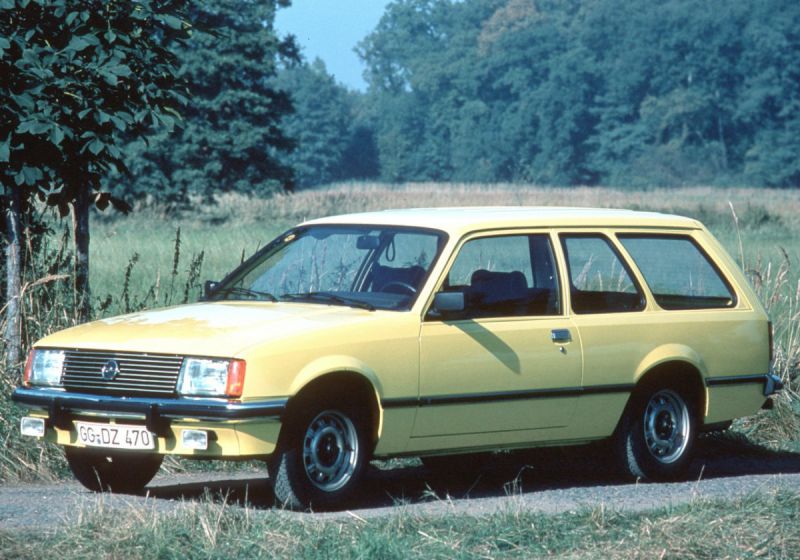
The Opel Rekord E Caravan 2.0 E, produced by the German automaker Opel, represents a significant chapter in European automotive history. Launched in 1977 as part of the Rekord E generation, this mid-size family station wagon (known as an “estate” in Europe) quickly established itself as a cornerstone of practicality and reliability across the continent. While never officially sold in the United States, the Rekord E Caravan embodies the European automotive philosophy of the late 1970s and early 1980s, prioritizing spaciousness, fuel efficiency, and robust engineering for everyday use. The 2.0 E variant, with its 110 horsepower engine, offered a commendable balance of performance and economy, making it a popular choice for families and businesses seeking a versatile and dependable vehicle.
The Opel Rekord E Caravan: A European Family Staple
The Opel Rekord, a nameplate that spanned several generations from 1953 to 1986, was Opel’s answer to the burgeoning demand for affordable, spacious, and reliable family cars in post-war Europe. The Rekord E, specifically, was introduced at a time of significant economic and social shifts, including the lingering effects of the 1973 oil crisis, which placed a greater emphasis on fuel economy and practical design. The Rekord E generation, produced from 1977 to 1986, was a modern evolution of its predecessors, featuring a more contemporary design with cleaner lines and improved aerodynamics, though still retaining a classic rear-wheel-drive layout.
The Caravan designation was Opel’s term for its station wagon models, and the Opel Rekord E Caravan was particularly noteworthy for its immense versatility. Available in both 3-door and 5-door configurations, it catered to a wide range of buyers. The 3-door variant was often preferred by tradespeople or those requiring maximum cargo accessibility with fewer passenger considerations, while the 5-door model served as the quintessential family hauler. Its design language was functional yet elegant for its era, eschewing overt styling flourishes in favor of a timeless, utilitarian aesthetic that resonated with European consumers.
Powertrain and Performance of the Opel Rekord E Caravan 2.0 E
Under the hood, the Opel Rekord E Caravan 2.0 E featured a robust 2.0-liter (1979 cm³ or 120.77 cu. in.) inline-four engine, designated by Opel as the ’20E’ code. This engine was a prime example of Opel’s engineering at the time: a naturally aspirated, single overhead camshaft (SOHC) unit, fed by a carburetor, which was a common fuel delivery system before the widespread adoption of electronic fuel injection. It produced a respectable 110 horsepower at 5400 rpm, delivering a power-per-liter output of 55.6 Hp/l, which was competitive for a mainstream family car of the period.
Torque figures stood at 159 Nm (117.27 lb.-ft.) at a relatively low 3000 rpm, indicating a flexible power band well-suited for daily driving and carrying heavy loads. This engine was mated to a 4-speed manual transmission, a standard offering for many European cars of the era, emphasizing driver engagement and mechanical simplicity. The rear-wheel-drive architecture, a hallmark of traditional Opel sedans and wagons, provided predictable handling characteristics and a robust platform for the vehicle’s intended use.
In terms of performance, the Rekord E Caravan 2.0 E was no sports car, but it offered adequate acceleration and top speed for highway cruising. It could sprint from 0 to 60 mph in approximately 12.4 seconds, with a maximum speed of 109.36 mph (176 km/h). These figures positioned it as a capable and comfortable long-distance cruiser, particularly on Europe’s developing autobahn network. Fuel economy was also a key consideration, and the 2.0 E achieved a combined rating of 25.3 US mpg (9.3 l/100 km), which was considered quite reasonable for a vehicle of its size and capacity in the late 1970s, especially given the ongoing focus on energy conservation.
Design, Interior, and Features
The design of the Opel Rekord E Caravan was characterized by its functional elegance. Its exterior was clean and unadorned, with a large greenhouse providing excellent visibility for the driver and passengers. The overall length of 181.89 inches (4620 mm) and a width of 67.95 inches (1726 mm) gave it a substantial road presence without being overly cumbersome. The wheelbase of 105.04 inches (2668 mm) contributed to a stable ride and generous interior volume.
Inside, the Rekord E Caravan was designed with practicality and durability in mind. It comfortably seated five occupants, with a focus on hard-wearing materials and straightforward ergonomics. The true strength of the Caravan, however, lay in its cargo capacity. With a minimum trunk space of 31.11 cubic feet (881 liters), it could swallow a considerable amount of luggage, groceries, or commercial goods. This made it an invaluable asset for families embarking on vacations or businesses requiring a reliable delivery vehicle.
Chassis and braking systems were conventional but effective for the period. The front wheels were equipped with ventilated disc brakes, offering good stopping power, while the rear wheels utilized drum brakes, a cost-effective and reliable solution for the rear axle of a family wagon. The car’s turning circle of 35.43 feet (10.8 m) ensured reasonable maneuverability in urban environments. While safety features were not as advanced as modern vehicles, the Rekord E provided a solid, reassuring driving experience, typical of German engineering of the era. Its drag coefficient (Cd) of 0.48, though high by today’s standards, represented an improvement over many contemporary designs, reflecting a nascent awareness of aerodynamic efficiency.
Technical Specifications: Opel Rekord E Caravan 2.0 E (110 Hp)
| Category | Specification |
|---|---|
| Brand | Opel |
| Model | Rekord E Caravan |
| Engine Type | 2.0 E (110 Hp) |
| Production Years | 1977 – 1982 |
| Body Type | Station Wagon (Estate), 3-5 Doors, 5 Seats |
| Powertrain Architecture | Internal Combustion Engine, Rear Wheel Drive |
| Performance Specs | |
| Fuel Consumption (Combined) | 25.3 US mpg (9.3 l/100 km) |
| Fuel Type | Petrol (Gasoline) |
| Acceleration 0-60 mph | 12.4 seconds |
| Maximum Speed | 109.36 mph (176 km/h) |
| Weight-to-Power Ratio | 10.4 kg/Hp |
| Engine Specs | |
| Power | 110 Hp @ 5400 rpm |
| Torque | 117.27 lb.-ft. (159 Nm) @ 3000 rpm |
| Engine Model/Code | 20E |
| Engine Displacement | 2.0 liters (1979 cm³, 120.77 cu. in.) |
| Number of Cylinders | 4, Inline |
| Cylinder Bore | 3.74 in. (95 mm) |
| Piston Stroke | 2.75 in. (69.8 mm) |
| Compression Ratio | 9.4:1 |
| Valves per Cylinder | 2 |
| Fuel Injection System | Carburetor |
| Engine Aspiration | Naturally Aspirated |
| Valvetrain | SOHC |
| Dimensions, Space, Volume & Weights | |
| Kerb Weight | 2524.29 lbs. (1145 kg) |
| Max. Weight | 3891.16 lbs. (1765 kg) |
| Max Load | 1366.87 lbs. (620 kg) |
| Trunk (Boot) Space – Minimum | 31.11 cu. ft. (881 l) |
| Fuel Tank Capacity | 18.49 US gal (70 l) |
| Permitted Trailer Load with Brakes (12%) | 3306.93 lbs. (1500 kg) |
| Permitted Trailer Load without Brakes | 1289.7 lbs. (585 kg) |
| Length | 181.89 in. (4620 mm) |
| Width | 67.95 in. (1726 mm) |
| Height | 57.87 in. (1470 mm) |
| Wheelbase | 105.04 in. (2668 mm) |
| Front Track | 56.5 in. (1435 mm) |
| Rear Track | 55.59 in. (1412 mm) |
| Drag Coefficient (Cd) | 0.48 |
| Minimum Turning Circle | 35.43 ft. (10.8 m) |
| Drivetrain, Brakes & Suspension Specs | |
| Drive Wheel | Rear Wheel Drive |
| Number of Gears & Type of Gearbox | 4 gears, Manual Transmission |
| Front Brakes | Ventilated Discs |
| Rear Brakes | Drum |
Legacy and Market Impact
The Opel Rekord E Caravan, particularly in its 2.0 E guise, carved out a significant niche in the European automotive landscape. It was a car that embodied the aspirations of the middle class, offering a blend of space, comfort, and affordability that few rivals could match. Its reputation for robustness and ease of maintenance made it a favorite among families, small businesses, and even taxi operators across Germany and other European countries. It was a workhorse, a family friend, and a reliable partner, all rolled into one.
In its primary market, the Rekord E Caravan faced competition from other European manufacturers. Key rivals included the Ford Granada Turnier (station wagon), the Volkswagen Passat Variant (B1 and later B2 generations), and to some extent, more premium offerings like the entry-level Mercedes-Benz W123 T-Model. While the Mercedes offered more prestige and luxury, the Rekord E Caravan provided a compelling value proposition without sacrificing too much in terms of comfort or capability. Its straightforward engineering and widespread dealer network also contributed to its enduring popularity.
The Rekord E generation, including the Caravan, was instrumental in bridging the gap between Opel’s more traditionally styled vehicles of the 1960s and 70s and the increasingly aerodynamic and technologically advanced models that would define the 1980s. Its design, while not revolutionary, was evolutionary, setting the stage for future Opel models. When production of the Rekord E series concluded in 1986, it was succeeded by the Opel Omega (known as the Vauxhall Carlton in the UK), a car that continued the legacy of the large family sedan and wagon but with a decidedly more modern approach to design, engineering, and feature content.
Today, the Opel Rekord E Caravan 2.0 E is remembered as a classic example of a utilitarian European family car. While not a collector’s item in the same vein as some exotic sports cars, it holds a special place in the hearts of those who grew up with it, representing a period of automotive history when practicality, durability, and straightforward engineering were paramount. Its enduring presence on European roads, even decades after its production ceased, is a testament to its quality and the indelible mark it left on the automotive culture of its time.