The Opel Rekord E Caravan: A European Mainstay of Practicality and Evolution
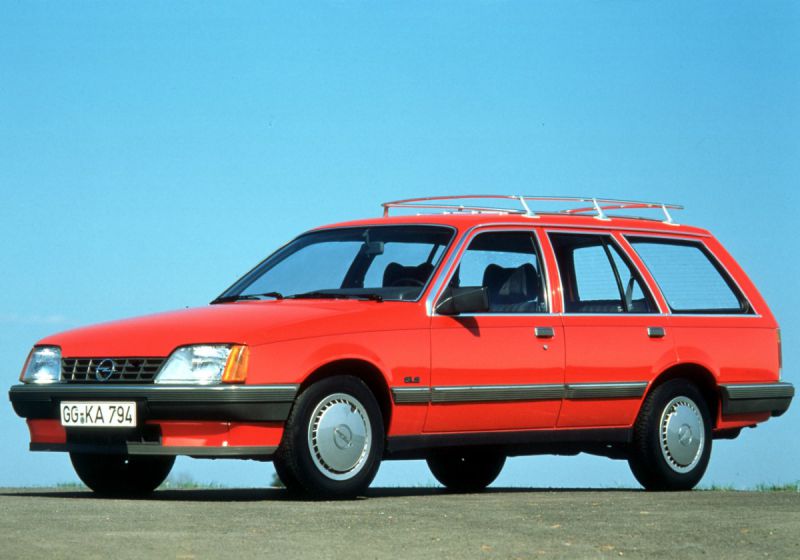
The Opel Rekord, a nameplate synonymous with reliable and practical family motoring across Europe for decades, saw its final iteration in the E generation. Specifically, the Opel Rekord E Caravan, particularly the facelifted model introduced in 1982, represented the culmination of this long-running series. This detailed article focuses on the 1.8 E CAT variant, produced from August 1985 to August 1986, a model that underscored Opel’s commitment to efficiency and utility in the mid-1980s European market. As a five-door, five-seat station wagon (or “estate” as it’s known in Europe), the Rekord E Caravan was a ubiquitous sight on European roads, serving as a dependable workhorse for families and businesses alike. While never officially sold in the United States, its design philosophy and engineering ethos mirrored the global automotive trends of its era, emphasizing robust mechanics, spacious interiors, and a straightforward driving experience.
Evolution of the Opel Rekord E Caravan
The Rekord E generation debuted in 1977, succeeding the popular Rekord D. Its design was a contemporary interpretation of Opel’s established styling cues, featuring clean lines and a functional aesthetic. The significant facelift in 1982 brought a more aerodynamic front fascia, revised taillights, and updated interior appointments, aiming to keep the model competitive against rivals like the Ford Sierra and Volkswagen Passat. The introduction of the ‘CAT’ (Catalytic Converter) designation in models like the 1.8 E CAT in 1985 marked a crucial step towards addressing burgeoning environmental concerns in Europe, a trend that would rapidly accelerate in the coming decades. This specific variant, therefore, is not just a representation of the Rekord’s enduring practicality but also a snapshot of a transitional period in automotive engineering, balancing traditional ruggedness with emerging environmental responsibility.
Engine and Performance: The Opel Rekord E Caravan 1.8 E CAT’s Heart
Powering this particular Opel Rekord E Caravan was the C18NV engine, a 1.8-liter (1796 cm3 or 109.6 cu. in.) inline-four cylinder unit. This naturally aspirated engine featured a Single Overhead Camshaft (SOHC) valvetrain with two valves per cylinder, a common and reliable configuration for mass-market vehicles of the time. Fuel delivery was managed by a multi-port manifold injection system, a more advanced setup compared to carburetors, contributing to better fuel efficiency and emissions control. The engine produced a respectable 100 horsepower at 5800 rpm and 103.26 lb.-ft. of torque at 3000 rpm. This power output, combined with a relatively low compression ratio of 8.9:1, indicated an engine designed for durability and smooth operation rather than outright high performance, perfectly suiting its family-oriented mission.
The Rekord E Caravan 1.8 E CAT transmitted its power to the rear wheels via a five-speed manual transmission, a setup favored for its robustness and direct feel. This drivetrain architecture, with its rear-wheel drive (RWD) configuration, provided predictable handling characteristics and was a hallmark of Opel’s larger vehicles for many years. Performance figures were adequate for the era: a 0-60 mph acceleration time of 13.3 seconds and a top speed of 106.88 mph. While not blistering, these numbers were competitive for a mid-size family station wagon in the mid-1980s. Fuel economy was also quite commendable, with a combined rating of 27.7 US mpg (8.5 l/100 km), making it an economical choice for long-distance travel and daily commuting. The vehicle’s weight-to-power ratio stood at 11.6 kg/Hp (approximately 25.57 lbs/Hp), further highlighting its utilitarian focus.
Design and Features: Form Follows Function
The design of the Opel Rekord E Caravan was quintessentially 1980s European – practical, understated, and built to withstand the rigors of daily life. Its five-door station wagon body type offered immense practicality, making it an ideal choice for families requiring ample cargo space. With a length of 184.17 inches, a width of 67.72 inches, and a height of 58.07 inches, the Rekord E Caravan was a substantial vehicle for its class. The wheelbase of 105.04 inches contributed to a stable ride and a spacious cabin for five occupants. The interior, though not luxurious, was designed for comfort and durability, featuring hard-wearing materials and a straightforward dashboard layout, typical of Opel’s focus on ergonomics and ease of use.
Key features for its time included the aforementioned multi-port fuel injection and catalytic converter, which were significant advancements in engine management and environmental responsibility. The vehicle’s robust construction was evident in its kerb weight of 2546.34 lbs, with a maximum permissible weight of 3902.18 lbs, allowing for a substantial payload of 1355.84 lbs. The large 18.49 US gallon fuel tank capacity provided an impressive cruising range, a crucial attribute for a family touring car. Braking duties were handled by ventilated discs at the front, offering good stopping power, while the rear utilized drum brakes, a common and cost-effective solution for non-performance-oriented vehicles of the period. The turning circle of 35.43 feet made it reasonably maneuverable for its size, an important consideration for urban driving in European cities.
Technical Specifications: Opel Rekord E Caravan (facelift 1982) 1.8 E CAT (100 Hp)
The following table provides a comprehensive overview of the technical data for the Opel Rekord E Caravan 1.8 E CAT (100 Hp).
| Category | Specification | Value |
|---|---|---|
| General Information | ||
| Brand | Opel | |
| Model | Rekord E Caravan (facelift 1982) | |
| Type (Engine) | 1.8 E CAT (100 Hp) | |
| Production Start | August, 1985 | |
| Production End | August, 1986 | |
| Powertrain Architecture | Internal Combustion Engine, Rear Wheel Drive | |
| Body Type | Station Wagon (Estate) | 5 Doors, 5 Seats |
| Performance Specifications | ||
| Fuel Consumption (Combined) | 27.7 US mpg (8.5 l/100 km) | |
| Fuel Type | Petrol (Gasoline) | |
| Acceleration 0-60 mph | 13.3 sec | |
| Acceleration 0-100 km/h | 14 sec | |
| Maximum Speed | 106.88 mph (172 km/h) | |
| Weight-to-Power Ratio | 11.6 kg/Hp (86.6 Hp/tonne) | |
| Weight-to-Torque Ratio | 8.3 kg/Nm (121.2 Nm/tonne) | |
| Engine Specifications | ||
| Power | 100 Hp @ 5800 rpm | |
| Torque | 103.26 lb.-ft. (140 Nm) @ 3000 rpm | |
| Engine Model/Code | C18NV | |
| Engine Displacement | 1.8 liters (1796 cm3 / 109.6 cu. in.) | |
| Number of Cylinders | 4 | Inline |
| Cylinder Bore | 3.34 in. (84.8 mm) | |
| Piston Stroke | 3.13 in. (79.5 mm) | |
| Compression Ratio | 8.9:1 | |
| Valves per Cylinder | 2 | |
| Fuel Injection System | Multi-port manifold injection | |
| Engine Aspiration | Naturally aspirated | |
| Valvetrain | SOHC | |
| Engine Oil Capacity | 3.17 US qt (3 l) | |
| Coolant Capacity | 7.93 US qt (7.5 l) | |
| Space, Volume, and Weights | ||
| Kerb Weight | 2546.34 lbs (1155 kg) | |
| Max. Weight | 3902.18 lbs (1770 kg) | |
| Max Load | 1355.84 lbs (615 kg) | |
| Fuel Tank Capacity | 18.49 US gal (70 l) | |
| Permitted Trailer Load (with brakes) | 2204.62 lbs (1000 kg) | |
| Permitted Trailer Load (without brakes) | 1179.47 lbs (535 kg) | |
| Dimensions | ||
| Length | 184.17 in. (4678 mm) | |
| Width | 67.72 in. (1720 mm) | |
| Height | 58.07 in. (1475 mm) | |
| Wheelbase | 105.04 in. (2668 mm) | |
| Front Track | 56.5 in. (1435 mm) | |
| Rear Track | 56.38 in. (1432 mm) | |
| Ride Height (Ground Clearance) | 5.51 in. (140 mm) | |
| Minimum Turning Circle | 35.43 ft. (10.8 m) | |
| Drivetrain, Brakes, and Suspension | ||
| Drive Wheel | Rear Wheel Drive | |
| Gearbox | 5-speed manual transmission | |
| Front Brakes | Ventilated discs | |
| Rear Brakes | Drum | |
Legacy and Market Impact of the Opel Rekord E Caravan
The Opel Rekord E Caravan, particularly in its facelifted form, holds a significant place in European automotive history. It was one of the last bastions of traditional rear-wheel-drive family cars from a mainstream European manufacturer before front-wheel-drive became the dominant architecture. For decades, the Rekord series had built a formidable reputation for reliability, spaciousness, and straightforward engineering, qualities that resonated deeply with European consumers seeking dependable transportation. The E generation, and especially the Caravan variant, was the embodiment of this philosophy, offering a practical and unpretentious package that excelled in its role as a family hauler or a versatile commercial vehicle.
In its primary market, the Rekord E Caravan faced stiff competition from other European manufacturers. Key rivals included the Ford Sierra Estate, which offered a more aerodynamic and modern design, the Volkswagen Passat Variant, known for its robust engineering and eventually its transition to front-wheel drive, and French competitors like the Renault 21 Nevada and Peugeot 505 Break. Despite these formidable adversaries, the Rekord maintained a strong following due to its proven track record and competitive pricing. Its robust construction and ease of maintenance made it a popular choice for second-hand buyers as well, further cementing its legacy as a durable and cost-effective vehicle.
The 1.8 E CAT variant, produced in its final years, also represents a transitional moment regarding environmental consciousness. The inclusion of a catalytic converter, while standard on most cars today, was a relatively advanced feature for a mainstream European model in the mid-1980s, signaling Opel’s proactive approach to meeting emerging emissions standards. This foresight contributed to the Rekord E’s adaptability in an evolving regulatory landscape.
The Rekord E Caravan ultimately paved the way for its successor, the Opel Omega, which debuted in 1986. The Omega continued the Rekord’s legacy of providing a spacious, comfortable, and rear-wheel-drive platform for the executive and family car segments, albeit with a more modern design and advanced technology. While the Rekord nameplate might not be widely recognized in North America, its impact on European motoring was profound, shaping the expectations for mid-size family cars for generations. The Opel Rekord E Caravan remains a testament to practical engineering, enduring reliability, and a pivotal era in European automotive design and development.