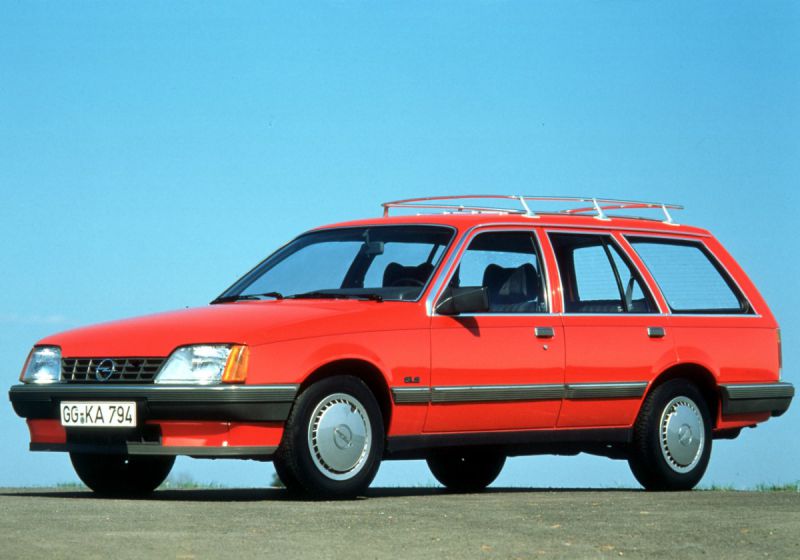
The Opel Rekord E Caravan (facelift 1982) 2.0 E (110 Hp): A European Mainstay
The Opel Rekord E Caravan (facelift 1982) 2.0 E (110 Hp) represents a significant iteration of a vehicle that was a true staple of the European automotive landscape for decades. Produced by the German automaker Opel, a subsidiary of General Motors at the time, the Rekord was a mid-size car that consistently offered practicality, reliability, and value. The E-generation, launched in 1977, received a notable facelift in September 1982, bringing updated styling and mechanical refinements that aimed to keep it competitive in a rapidly evolving market. This particular variant, the 2.0 E Caravan, was a five-door station wagon (often referred to as an “estate” in Europe), designed to cater to families and businesses requiring ample cargo space and robust performance without excessive cost. While never officially sold in the United States, the Rekord E played a crucial role in Opel’s strategy to dominate the European family car segment, providing a sensible and well-engineered alternative to domestic and other imported brands. Its blend of a straightforward, naturally aspirated engine, rear-wheel drive architecture, and functional design made it a common sight on European roads throughout the 1980s.
Engine and Performance of the Opel Rekord E Caravan (facelift 1982) 2.0 E (110 Hp)
Under the hood of the Opel Rekord E Caravan (facelift 1982) 2.0 E (110 Hp) lay Opel’s venerable 2.0-liter “CIH” (Cam-In-Head) engine, specifically the 20E model. This inline four-cylinder powerplant, with an engine displacement of 1979 cubic centimeters (120.77 cubic inches), was a naturally aspirated unit known for its robust construction and relatively smooth power delivery. It featured a single overhead camshaft (SOHC) valvetrain with two valves per cylinder, a common and reliable configuration for the era. Fueling was managed by a multi-port manifold injection system, a more advanced setup compared to the carbureted versions, contributing to improved efficiency and responsiveness.
The engine produced a respectable 110 horsepower at 5400 revolutions per minute, yielding a power per liter figure of 55.6 horsepower per liter. Torque output was equally solid for its class, peaking at 119.49 pound-feet (162 Nm) at a relatively low 3000 rpm. This meant that the Rekord offered good pulling power from low engine speeds, ideal for hauling passengers and cargo, or for relaxed cruising.
Performance figures for the Rekord E Caravan 2.0 E were quite competitive for a family station wagon of the early 1980s. It could accelerate from 0 to 60 miles per hour in a calculated 12.4 seconds (0-100 km/h in 13 seconds), and reach a maximum speed of 112.47 mph (181 km/h). These numbers positioned it as a capable performer for daily driving and highway travel. Fuel economy was rated at 26.4 US miles per gallon (8.9 liters per 100 kilometers) in a combined cycle, which was a reasonable figure for a two-liter gasoline engine in a car of this size and weight, especially considering the technology of the time. The engine’s compression ratio stood at 9.4:1, indicating a design focused on a balance of performance and compatibility with standard petrol (gasoline) fuels available in Europe.
Design and Features
The Opel Rekord E Caravan (facelift 1982) maintained the practical and somewhat understated design philosophy characteristic of Opel vehicles. As a five-door station wagon, its primary focus was on utility and interior space. The facelift in 1982 brought subtle but effective cosmetic changes, including revised headlamps, grille, and taillights, giving it a slightly more modern appearance that aligned with the emerging design trends of the mid-1980s. Its overall length measured 184.17 inches (4678 mm), with a width of 67.72 inches (1720 mm) and a height of 58.07 inches (1475 mm). The wheelbase of 105.04 inches (2668 mm) provided a stable ride and contributed to a spacious cabin.
The Caravan body style was inherently versatile, offering seating for five occupants with generous headroom and legroom, along with a substantial cargo area. The rear hatch provided easy access for loading and unloading luggage, groceries, or larger items. With a curb weight of 2535.32 pounds (1150 kg) and a maximum permissible weight of 3968.32 pounds (1800 kg), it boasted a maximum payload capacity of 1433 pounds (650 kg), highlighting its capability as a workhorse. The vehicle’s dimensions, combined with a relatively tight turning circle of 35.43 feet (10.8 meters), made it maneuverable for its size, a desirable trait for urban European environments.
From a mechanical standpoint, the Rekord E Caravan featured a rear-wheel-drive architecture, which was typical for many European sedans and wagons of its era, known for its balanced handling characteristics. The drivetrain utilized a 5-speed manual transmission, offering a good balance of performance and fuel economy for highway driving. Braking was handled by ventilated discs at the front for effective stopping power, complemented by drum brakes at the rear, a common setup for the time. The suspension was designed for comfort and stability, capable of handling varying road conditions and loads. The large 18.49 US gallon (70-liter) fuel tank provided an excellent cruising range, a practical feature for long-distance European travel.
Technical Specifications
| Category | Specification | US Equivalent (where applicable) |
|---|---|---|
| General Information | ||
| Brand | Opel | |
| Model | Rekord E Caravan (facelift 1982) | |
| Engine Type | 2.0 E (110 Hp) | |
| Production Start | September, 1982 | |
| Production End | August, 1984 | |
| Powertrain Architecture | Internal Combustion Engine | |
| Body Type | Station Wagon (Estate) | |
| Seats | 5 | |
| Doors | 5 | |
| Performance Specs | ||
| Fuel Consumption (Combined) | 8.9 l/100 km | 26.4 US mpg |
| Fuel Type | Petrol (Gasoline) | |
| Acceleration 0-60 mph | 12.4 sec | |
| Acceleration 0-100 km/h | 13 sec | |
| Maximum Speed | 181 km/h | 112.47 mph |
| Weight-to-Power Ratio | 10.5 kg/Hp | 95.7 Hp/tonne |
| Weight-to-Torque Ratio | 7.1 kg/Nm | 140.9 Nm/tonne |
| Engine Specs | ||
| Power | 110 Hp @ 5400 rpm | |
| Power per Liter | 55.6 Hp/l | |
| Torque | 162 Nm @ 3000 rpm | 119.49 lb.-ft. @ 3000 rpm |
| Engine Model/Code | 20E | |
| Engine Displacement | 1979 cm3 | 120.77 cu. in. |
| Number of Cylinders | 4 | |
| Engine Configuration | Inline | |
| Cylinder Bore | 95 mm | 3.74 in. |
| Piston Stroke | 69.8 mm | 2.75 in. |
| Compression Ratio | 9.4:1 | |
| Valves per Cylinder | 2 | |
| Fuel Injection System | Multi-port manifold injection | |
| Engine Aspiration | Naturally aspirated | |
| Valvetrain | SOHC | |
| Engine Oil Capacity | 3.8 l | 4.02 US qt |
| Engine Oil Specification | (Information not provided) | |
| Coolant Capacity | 6.1 l | 6.45 US qt |
| Space, Volume and Weights | ||
| Kerb Weight | 1150 kg | 2535.32 lbs. |
| Max. Weight | 1800 kg | 3968.32 lbs. |
| Max Load | 650 kg | 1433 lbs. |
| Fuel Tank Capacity | 70 l | 18.49 US gal |
| Permitted Trailer Load (with brakes) | 1250 kg | 2755.78 lbs. |
| Permitted Trailer Load (without brakes) | 535 kg | 1179.47 lbs. |
| Dimensions | ||
| Length | 4678 mm | 184.17 in. |
| Width | 1720 mm | 67.72 in. |
| Height | 1475 mm | 58.07 in. |
| Wheelbase | 2668 mm | 105.04 in. |
| Front Track | 1435 mm | 56.5 in. |
| Rear Track | 1432 mm | 56.38 in. |
| Ride Height (Ground Clearance) | 140 mm | 5.51 in. |
| Drag Coefficient (Cd) | 0.40 | |
| Minimum Turning Circle | 10.8 m | 35.43 ft. |
| Drivetrain, Brakes and Suspension | ||
| Drivetrain Architecture | Rear wheel drive, Internal Combustion Engine | |
| Drive Wheel | Rear wheel drive | |
| Gearbox | 5 gears, manual transmission | |
| Front Brakes | Ventilated discs | |
| Rear Brakes | Drum |
Legacy and Market Impact
The Opel Rekord E, particularly in its facelifted 1982 form and as a Caravan, cemented its reputation as a highly dependable and practical family car across Europe. It faced stiff competition in the mid-size segment from rivals such as the Ford Granada (later Ford Sierra), Volkswagen Passat, and even more premium offerings like the Volvo 240/740 series or the Mercedes-Benz W123 T-model (station wagon). However, the Rekord carved out its niche by offering a compelling combination of space, proven mechanicals, and competitive pricing.
Its rear-wheel-drive layout, while becoming less common in mainstream European cars by the late 1980s, was still favored by many for its predictable handling characteristics, especially when loaded. The 2.0 E engine, with 110 horsepower, was considered a strong performer for its class, offering enough grunt for autobahn cruising and comfortable long-distance travel, a critical factor for European buyers. The large fuel tank capacity further underscored its suitability for extended journeys.
The Rekord E Caravan’s robust construction and ease of maintenance contributed to its longevity, with many examples serving families and businesses for well over a decade. It was a car that didn’t necessarily excite with cutting-edge technology or flamboyant styling, but it excelled in its primary mission: providing reliable, no-nonsense transportation with ample utility. This focus on practicality and durability made it a favorite among those who valued substance over flash.
While its successor, the Opel Omega, would eventually replace the Rekord in 1986, the Rekord E’s influence endured. It represented the culmination of Opel’s traditional approach to the mid-size segment, a testament to engineering that prioritized everyday usability and long-term ownership. Today, the Opel Rekord E Caravan is remembered as an icon of 1980s European motoring, a testament to a bygone era when straightforward, robust design and mechanical simplicity were highly prized. Its legacy is one of unwavering service, practicality, and a quiet competence that defined a generation of European family vehicles.