The Opel Rekord E Caravan: A European Workhorse of the Early 1980s
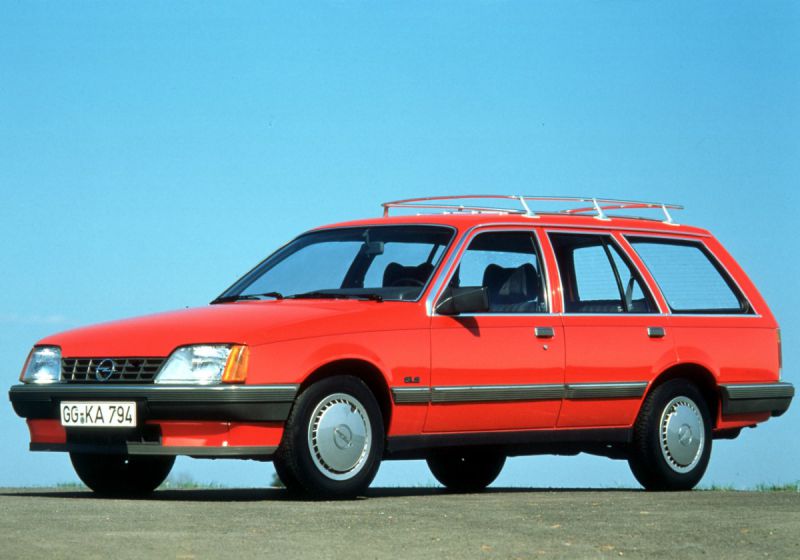
The Opel Rekord E Caravan (facelift 1982) 2.0 S (98 Hp) Automatic represents a significant iteration of a foundational model in the European automotive landscape. As a product of Opel, a long-standing German subsidiary of General Motors, the Rekord series was a ubiquitous sight across Europe, serving as a reliable and practical mid-size family car for decades. The E generation, produced from 1977 to 1986, received a notable facelift in 1982, which refined its aesthetics and updated some mechanical components, ensuring its competitiveness in a challenging market. This particular variant, the 2.0 S with an automatic transmission, epitomized the blend of utility, comfort, and accessible performance that made the Rekord Caravan a popular choice for families and businesses alike. While never officially sold in the United States, its design philosophy and engineering ethos mirrored the global strategies of its parent company, GM, adapted specifically for European tastes and regulations.
Evolution and Market Position of the Opel Rekord E Caravan
The Opel Rekord E was the final generation of a nameplate that began in 1953. By the early 1980s, the automotive market in Europe was undergoing rapid changes, with increasing demands for fuel efficiency, improved safety, and more sophisticated design. The 1982 facelift for the Opel Rekord E Caravan addressed these trends, offering a refreshed appearance with a more aerodynamic front end and updated interior features. It maintained its core identity as a spacious and robust station wagon (or “estate” as it’s known in Europe), a body style highly valued for its versatility. Positioned as a direct competitor to models like the Ford Sierra, Volkswagen Passat, and Peugeot 505, the Rekord E Caravan was a cornerstone of Opel’s lineup, providing a practical solution for those needing ample cargo space without moving into the larger executive segments.
Engine and Performance of the Opel Rekord E Caravan
Powering the Opel Rekord E Caravan (facelift 1982) 2.0 S (98 Hp) Automatic was Opel’s venerable 2.0-liter “CIH” (Cam-in-Head) inline-four engine, specifically the 20S variant. This engine, with a displacement of 1979 cubic centimeters (120.77 cu. in.), was a naturally aspirated unit, utilizing a carburetion system for fuel delivery. It featured a SOHC (Single Overhead Camshaft) valvetrain with two valves per cylinder, a common and reliable configuration for the era. The engine produced a respectable 98 horsepower at 5400 rpm, which, when combined with 112.85 lb.-ft. of torque peaking at 3800 rpm, provided adequate motivation for the family wagon.
This powertrain was mated to a 3-speed automatic transmission, a choice that emphasized smooth, effortless driving over outright performance or fuel economy. The Rekord E Caravan maintained a traditional rear-wheel-drive architecture, a layout favored by many European manufacturers for its balanced handling characteristics and robustness, especially when carrying heavy loads. Performance figures for this combination included an acceleration time from 0 to 60 mph in 14.3 seconds, with a top speed of 105.01 mph. While not blistering by modern standards, these figures were competitive for a mid-size automatic station wagon of the early 1980s, designed more for comfortable cruising on autobahns and navigating city streets than for track performance. Fuel economy was rated at a combined 18.1 US mpg (13 l/100 km), which was typical for a carbureted 2.0-liter engine with an older automatic transmission during that period. The engine’s solid construction and straightforward design contributed to its reputation for durability and ease of maintenance.
Design and Features of the Opel Rekord E Caravan
The 1982 facelift brought a more contemporary look to the Opel Rekord E Caravan, softening some of the sharper lines of the original E1 model. The design remained fundamentally functional and unpretentious, reflecting its role as a practical family vehicle. The station wagon body style, with its 3 to 5 doors (depending on market and specific configuration, though 5-door was more common for the Caravan), provided generous cargo capacity and easy access. With an overall length of 184.17 inches (4678 mm), a width of 67.72 inches (1720 mm), and a height of 58.07 inches (1475 mm), the Rekord Caravan offered a substantial footprint, ensuring interior spaciousness for five occupants and their luggage. The wheelbase measured 105.04 inches (2668 mm), contributing to a stable ride quality.
Inside, the Rekord E Caravan emphasized ergonomics and durability. While features were modest by today’s standards, they were appropriate for the era. Expect comfortable cloth seating, a clear and logical dashboard layout, and practical storage solutions. Safety features were basic, typically including three-point seatbelts and a sturdy body structure. Braking was handled by ventilated discs at the front and drum brakes at the rear, a conventional setup for the time, providing adequate stopping power. The suspension system was designed to offer a comfortable ride while handling varying loads, a crucial aspect for a station wagon. The car’s drag coefficient (Cd) of 0.40 was relatively high compared to later, more aerodynamically optimized designs but was not uncommon for a boxier vehicle of the early 1980s, particularly a station wagon. Its turning circle of 35.43 feet (10.8 m) made it reasonably maneuverable for its size.
Technical Specifications
| Category | Specification |
|---|---|
| Brand | Opel |
| Model | Rekord |
| Generation | Rekord E Caravan (facelift 1982) |
| Type (Engine) | 2.0 S (98 Hp) Automatic |
| Start of production | 1982 year |
| End of production | 1984 year |
| Powertrain Architecture | Internal Combustion engine |
| Body type | Station wagon (estate) |
| Seats | 5 |
| Doors | 3-5 |
| Performance Specs | |
| Fuel consumption (combined) | 13 l/100 km (18.1 US mpg) |
| Fuel Type | Petrol (Gasoline) |
| Acceleration 0 – 60 mph | 14.3 sec |
| Maximum speed | 105.01 mph (169 km/h) |
| Weight-to-power ratio | 12 kg/Hp (83.1 Hp/tonne) |
| Weight-to-torque ratio | 7.7 kg/Nm (129.7 Nm/tonne) |
| Engine Specs | |
| Power | 98 Hp @ 5400 rpm |
| Power per litre | 49.5 Hp/l |
| Torque | 112.85 lb.-ft. @ 3800 rpm (153 Nm) |
| Engine Model/Code | 20S |
| Engine displacement | 2.0 l (1979 cm³ / 120.77 cu. in.) |
| Number of cylinders | 4 |
| Engine configuration | Inline |
| Cylinder Bore | 3.74 in. (95 mm) |
| Piston Stroke | 2.75 in. (69.8 mm) |
| Compression ratio | 9:1 |
| Number of valves per cylinder | 2 |
| Fuel injection system | Carburettor |
| Engine aspiration | Naturally aspirated engine |
| Valvetrain | SOHC |
| Engine oil capacity | 4.02 US qt (3.8 l) |
| Coolant | 6.45 US qt (6.1 l) |
| Space, Volume and Weights | |
| Kerb Weight | 2601.45 lbs (1180 kg) |
| Max. weight | 3968.32 lbs (1800 kg) |
| Max load | 1366.87 lbs (620 kg) |
| Fuel tank capacity | 18.49 US gal (70 l) |
| Dimensions | |
| Length | 184.17 in. (4678 mm) |
| Width | 67.72 in. (1720 mm) |
| Height | 58.07 in. (1475 mm) |
| Wheelbase | 105.04 in. (2668 mm) |
| Front track | 56.5 in. (1435 mm) |
| Rear (Back) track | 56.38 in. (1432 mm) |
| Ride height (ground clearance) | 5.51 in. (140 mm) |
| Drag coefficient (Cd) | 0.40 |
| Minimum turning circle (turning diameter) | 35.43 ft. (10.8 m) |
| Drivetrain, Brakes and Suspension Specs | |
| Drivetrain Architecture | The Internal combustion engine (ICE) drives the rear wheels of the vehicle. |
| Drive wheel | Rear wheel drive |
| Number of gears and type of gearbox | 3 gears, automatic transmission |
| Front brakes | Ventilated discs |
| Rear brakes | Drum |
Legacy and Market Impact of the Opel Rekord E Caravan
The Opel Rekord E Caravan, particularly the facelifted 1982 model, carved out a strong legacy as a quintessential European family car. In its primary markets across continental Europe and the UK (where it was sold as the Vauxhall Carlton), it was renowned for its robust construction, spacious interior, and straightforward mechanics. Opel, as a key player in the European automotive scene, relied heavily on the Rekord to compete against rivals like Ford’s Taunus/Cortina and later the Sierra, as well as offerings from Volkswagen, Peugeot, and Renault. The Rekord’s reputation for reliability and its ability to withstand the rigors of daily family life, often including heavy loads and long-distance travel, made it a popular choice not just for private buyers but also for fleet operators and small businesses.
During the early 1980s, the automotive industry was navigating economic shifts and increasing global competition. The Rekord E Caravan’s blend of traditional engineering (like its rear-wheel drive and carbureted engine) with updated styling and practical features allowed it to remain relevant. It wasn’t a car that broke new ground in terms of revolutionary technology, but rather perfected the formula of a dependable and affordable mid-size vehicle. Its strong sales performance contributed significantly to Opel’s market share throughout its production run.
The Rekord E generation marked the end of an era for Opel. Its direct successor, the Opel Omega (Vauxhall Carlton Mk2), introduced in 1986, brought a more modern, aerodynamic design and advanced engineering, signaling a new direction for the brand. However, the Rekord’s enduring presence on European roads for decades after its production ceased spoke volumes about its fundamental soundness and the affection it garnered among its owners. It remains a classic representation of European automotive design and engineering from a period of significant transition in the industry, embodying the practical virtues that defined a generation of family transportation. Its impact continues to be recognized by enthusiasts and collectors who appreciate its robust build and historical significance as a workhorse that helped millions of European families and businesses get where they needed to go.