The Opel Rekord E Caravan (facelift 1982) 2.3 D (65 Hp): A European Mainstay
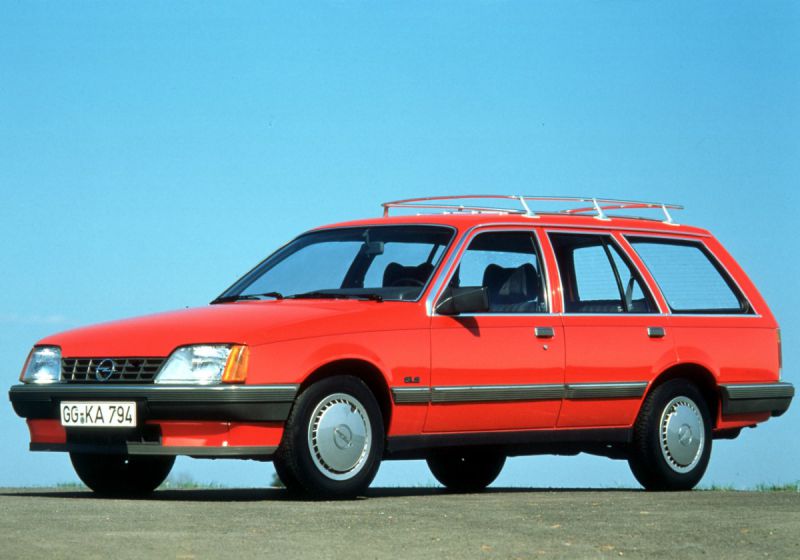
The Opel Rekord E Caravan (facelift 1982) 2.3 D (65 Hp) represents a significant chapter in European automotive history, embodying the practical, durable, and economical ethos of its era. As a product of Opel, a German marque long integrated into General Motors’ European operations, the Rekord series was a ubiquitous sight on European roads, serving countless families and businesses. The E generation, produced from 1977 to 1986, was Opel’s answer to the mid-size (often referred to as a large family car in Europe) segment, offering a compelling blend of space, comfort, and reliability. The 1982 facelift brought subtle but effective styling updates and mechanical refinements, ensuring the Rekord remained competitive in a challenging market. This particular variant, the 2.3 D Caravan, highlights the growing importance of diesel power for fuel efficiency and longevity, especially in the practical station wagon (estate) body style, making it a true European workhorse.
Engineering and Performance of the Opel Rekord E Caravan (facelift 1982) 2.3 D (65 Hp)
At the heart of the Opel Rekord E Caravan (facelift 1982) 2.3 D (65 Hp) lay a powertrain engineered for endurance and economy rather than outright speed. The vehicle was propelled by a naturally aspirated 2.3-liter (2260 cm3 or 137.91 cubic inches) inline four-cylinder diesel engine, designated with the code 23D. This robust unit produced 65 horsepower at a relatively low 4200 revolutions per minute (rpm), a figure that, while modest by modern standards, was entirely respectable for a family diesel in the early 1980s. More crucial for its intended purpose was the torque output: 127 Newton-meters (93.67 lb.-ft.) delivered at just 2500 rpm. This low-end torque was vital for hauling cargo, towing, and navigating varied road conditions without constant gear changes, making it highly practical for daily use.
The engine featured a SOHC (Single Overhead Camshaft) valvetrain and relied on a precombustion chamber injection system, a common and reliable method for diesel engines of that period, known for its smoother operation compared to direct injection systems of the time. With a high compression ratio of 22:1, the engine was designed for efficient combustion of diesel fuel. Power was routed to the rear wheels via a five-speed manual transmission, offering a good balance between acceleration and highway cruising economy. This rear-wheel-drive architecture was traditional for Opel’s larger models and contributed to a predictable and stable driving experience, especially when fully loaded.
Performance figures for the 2.3 D were, as expected, geared towards practicality over exhilaration. The Rekord E Caravan took approximately 23.8 seconds to accelerate from 0 to 60 miles per hour, and its top speed was around 91.96 miles per hour (148 km/h). These numbers clearly indicate that the vehicle was not designed for spirited driving but rather for reliable, long-distance travel. Where it truly shone was in its fuel economy. With a combined consumption rating of 7.3 liters per 100 kilometers, or approximately 32.2 US miles per gallon, the diesel Rekord offered impressive efficiency for a car of its size and weight, a major selling point in an era of fluctuating fuel prices.
Design and Features
The Opel Rekord E Caravan (facelift 1982) was a quintessential European station wagon, designed with an emphasis on utility and spaciousness. The “Caravan” designation was Opel’s long-standing term for its station wagon variants, highlighting their capability for travel and cargo. The facelifted E generation maintained the Rekord’s clean, functional lines but introduced updated front and rear fascias, including new headlights, grille, and taillights, giving it a more contemporary appearance for the mid-1980s. Its overall length of 184.17 inches (4678 mm) and width of 67.72 inches (1720 mm) placed it firmly in the large family car segment, offering substantial interior volume.
The body style typically featured five doors, though some markets might have seen a three-door option, providing easy access to both the passenger compartment and the generously sized cargo area. With seating for five occupants, the Rekord Caravan was a popular choice for families and tradespeople alike. The interior, while not luxurious by today’s standards, was ergonomically laid out and built to withstand the rigors of daily use. Features of the era focused on durability and functionality: comfortable cloth or vinyl seating, a clear instrument cluster, and often practical amenities like a sturdy roof rack (optional or standard depending on trim) for additional carrying capacity. Safety features were rudimentary compared to modern vehicles but included essentials like seatbelts and a robust chassis structure. The spacious trunk, combined with the ability to fold down the rear seats, transformed the Caravan into a highly versatile load-hauler, a key attribute for its target demographic.
Its substantial wheelbase of 105.04 inches (2668 mm) contributed to a stable ride, while the ground clearance of 5.51 inches (140 mm) was adequate for various road conditions. The vehicle’s turning circle of 35.43 feet (10.8 meters) indicated decent maneuverability for its size. The suspension system, featuring ventilated discs at the front and reliable drum brakes at the rear, provided adequate stopping power for a vehicle of its weight and performance capabilities.
Technical Specifications: Opel Rekord E Caravan (facelift 1982) 2.3 D (65 Hp)
| Category | Specification | US Equivalent / Notes |
|---|---|---|
| General Information | ||
| Brand | Opel | |
| Model | Rekord E Caravan (facelift 1982) | |
| Type (Engine) | 2.3 D (65 Hp) | |
| Start of Production | September, 1982 | |
| End of Production | July, 1983 | |
| Powertrain Architecture | Internal Combustion Engine | |
| Body Type | Station wagon (estate) | |
| Seats | 5 | |
| Doors | 3-5 | |
| Performance Specifications | ||
| Fuel Consumption (combined) | 7.3 l/100 km | 32.2 US mpg |
| Fuel Type | Diesel | |
| Acceleration 0 – 60 mph | 23.8 sec | |
| Maximum Speed | 148 km/h | 91.96 mph |
| Weight-to-Power Ratio | 19.6 kg/Hp | 43.21 lbs/Hp |
| Weight-to-Torque Ratio | 10 kg/Nm | 99.6 Nm/tonne |
| Engine Specifications | ||
| Power | 65 Hp @ 4200 rpm | |
| Power per Liter | 28.8 Hp/l | |
| Torque | 127 Nm @ 2500 rpm | 93.67 lb.-ft. @ 2500 rpm |
| Engine Model/Code | 23D | |
| Engine Displacement | 2260 cm3 | 2.3 Liters (137.91 cu. in.) |
| Number of Cylinders | 4 | |
| Engine Configuration | Inline | |
| Cylinder Bore | 92 mm | 3.62 in. |
| Piston Stroke | 85 mm | 3.35 in. |
| Compression Ratio | 22:1 | |
| Number of Valves per Cylinder | 2 | |
| Fuel Injection System | Precombustion chamber injection | |
| Engine Aspiration | Naturally aspirated engine | |
| Valvetrain | SOHC | |
| Engine Oil Capacity | 5.5 l | 5.81 US qt |
| Coolant Capacity | 11.5 l | 12.15 US qt |
| Dimensions, Volume, and Weights | ||
| Kerb Weight | 1275 kg | 2810.89 lbs. |
| Maximum Weight | 1900 kg | 4188.78 lbs. |
| Max Load | 625 kg | 1377.89 lbs. |
| Fuel Tank Capacity | 70 l | 18.49 US gal |
| Permitted Trailer Load with Brakes (12%) | 1000 kg | 2204.62 lbs. |
| Permitted Trailer Load without Brakes | 535 kg | 1179.47 lbs. |
| Length | 4678 mm | 184.17 in. |
| Width | 1720 mm | 67.72 in. |
| Height | 1475 mm | 58.07 in. |
| Wheelbase | 2668 mm | 105.04 in. |
| Front Track | 1435 mm | 56.5 in. |
| Rear Track | 1432 mm | 56.38 in. |
| Ride Height (Ground Clearance) | 140 mm | 5.51 in. |
| Minimum Turning Circle | 10.8 m | 35.43 ft. |
| Drivetrain, Brakes, and Suspension | ||
| Drivetrain Architecture | Internal Combustion engine drives the rear wheels | Rear-wheel drive |
| Drive Wheel | Rear wheel drive | |
| Number of Gears and Type of Gearbox | 5 gears, manual transmission | |
| Front Brakes | Ventilated discs | |
| Rear Brakes | Drum | |
Legacy and Market Impact
The Opel Rekord E Caravan (facelift 1982) 2.3 D (65 Hp) carved out a significant legacy in Europe as a symbol of practical, no-nonsense motoring. It was not a car that sought to redefine luxury or performance, but rather to excel in the fundamentals that mattered most to a broad segment of the European population: reliability, spaciousness, and economy. Its reputation as a robust and dependable vehicle made it a favorite among families, small businesses, and even taxi operators across Germany and beyond.
In its primary European market, the Rekord E faced stiff competition from a variety of domestic and international rivals. Key competitors included the Ford Granada and later the Ford Sierra (depending on market and size segment overlap), the Volkswagen Passat (though often slightly smaller), the Peugeot 505, and the Volvo 240 and 740 series. Against these, the Rekord distinguished itself with its strong Opel brand loyalty, competitive pricing, and particularly the appeal of its diesel variants for their running costs and durability. The 2.3 D model, in particular, was a strong contender in the diesel segment, offering a compelling alternative to more expensive options from Mercedes-Benz or BMW, which also offered diesel station wagons.
The Rekord series as a whole played a crucial role in maintaining Opel’s strong market position throughout the 1970s and early 1980s. It represented the traditional rear-wheel-drive large sedan and station wagon philosophy that had characterized much of European automotive design for decades. The E generation was, however, one of the last of its kind for Opel. As the automotive landscape shifted towards more aerodynamic designs, front-wheel drive, and increasingly sophisticated technology, the Rekord eventually gave way to the Opel Omega (known as the Vauxhall Carlton in the UK and often as the Cadillac Catera in the US), which introduced a more modern design and retained a rear-wheel-drive platform but with a distinctly contemporary approach. The Rekord E, and particularly the diesel Caravan variant, therefore stands as a significant historical marker, representing the culmination of a classic era of European family car design and engineering, celebrated for its enduring utility and economic sensibility.