Opel Rekord E (facelift 1982) 2.0 E
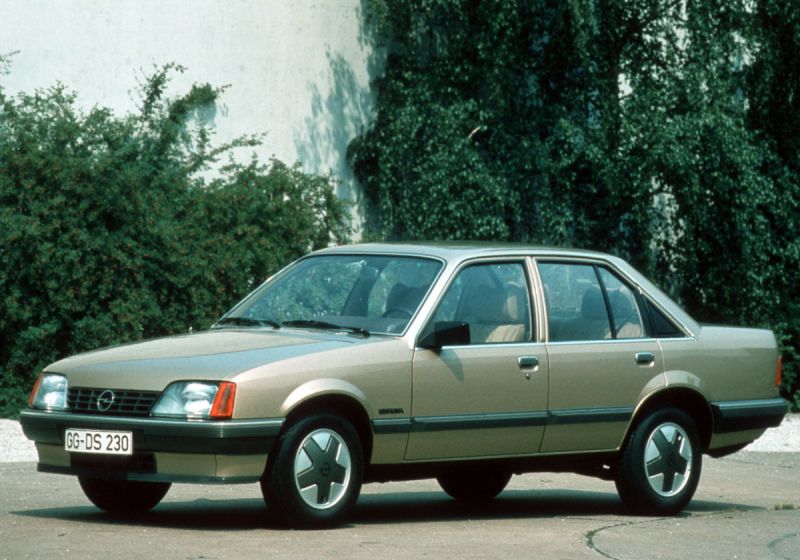
The Opel Rekord E (facelift 1982) 2.0 E represents a significant iteration of the fifth-generation Opel Rekord, a prominent mid-size executive car manufactured by the German automaker Opel. Introduced in September 1982, this facelifted model of the Rekord E series served as a crucial offering in the European market, particularly in Germany and other parts of Western Europe, before its production concluded in August 1984. While never officially sold in the United States, the Rekord E played a vital role in its home market, embodying the practical, robust, and moderately upscale family sedan segment. This particular variant, equipped with the 2.0 E engine, was a popular choice, blending respectable performance with a focus on fuel efficiency for its time.
The Rekord E, initially launched in 1977, received a substantial refresh in 1982, bringing updated styling cues, improved aerodynamics, and refined powertrains. The 2.0 E model, with its fuel-injected engine, stood out as a capable and economical option within the lineup, appealing to a broad demographic of buyers seeking a reliable and comfortable vehicle for both personal and business use. Its rear-wheel-drive architecture and conventional sedan body style were hallmarks of European automotive design during this era.
Engine and Performance of the Opel Rekord E (facelift 1982) 2.0 E
Under the hood, the Opel Rekord E (facelift 1982) 2.0 E featured a naturally aspirated 2.0-liter (1979 cm³ or 120.77 cu. in.) inline four-cylinder engine, designated by the code 20E. This powerplant was a sophisticated unit for its time, employing a multi-port manifold injection system, which contributed to both its power output and improved fuel efficiency compared to carbureted alternatives. With a single overhead camshaft (SOHC) valvetrain and two valves per cylinder, the engine produced a healthy 110 horsepower at 5400 revolutions per minute (rpm).
Torque delivery was equally impressive for a car of its class and era, peaking at 119.49 lb.-ft. (162 Nm) at a relatively low 3000 rpm. This meant that the 2.0 E offered good pulling power from lower engine speeds, making it responsive in everyday driving conditions and capable of handling highway cruising with ease. The engine’s compression ratio stood at 9:1, indicative of its design for regular unleaded gasoline, which was becoming more prevalent in Europe.
Power was sent to the rear wheels via a standard 5-speed manual transmission, a desirable feature for enthusiasts and those seeking better fuel economy on longer journeys. This drivetrain architecture, typical of Opel’s larger sedans, provided a balanced driving experience. In terms of outright performance, the Rekord E 2.0 E could accelerate from 0 to 60 miles per hour in a respectable 11.4 seconds, with a top speed of 116.2 mph (187 km/h). These figures positioned it competitively against other European mid-size sedans of the early 1980s.
Fuel economy was a notable aspect of the 2.0 E, with a combined rating of 27.4 US miles per gallon (8.6 l/100 km). This efficiency, combined with a generous 17.17 US gallon (65 l) fuel tank, provided a substantial cruising range, making it a practical choice for long-distance travel across Europe. The engine’s design emphasized durability and ease of maintenance, contributing to the Rekord’s reputation as a reliable workhorse.
Design and Features
The Opel Rekord E (facelift 1982) retained the fundamental architecture of the Rekord E generation but incorporated several styling refinements that modernized its appearance. As a four-door, five-seat sedan, it offered practical and spacious accommodation for families and business professionals alike. The facelift brought a more aerodynamic front fascia, updated grille, and revised taillight clusters, contributing to a lower drag coefficient of 0.36. While this might seem high by modern standards, it was a commendable figure for a family sedan in the early 1980s and played a role in improving both performance and fuel efficiency.
Dimensions of the Rekord E 2.0 E were substantial, with an overall length of 183.15 inches (4652 mm), a width of 67.95 inches (1726 mm), and a height of 55.91 inches (1420 mm). Its wheelbase of 105.04 inches (2668 mm) provided a stable ride and contributed to ample interior space, particularly for rear-seat passengers. The vehicle’s kerb weight stood at 2502.25 pounds (1135 kg), reflecting a solid construction without being excessively heavy, which benefited both performance and handling.
Inside, the Rekord E offered a comfortable and functional cabin. While specific luxury features varied by trim level, the 2.0 E typically came with a well-appointed interior, durable upholstery, and an ergonomic dashboard layout. The large trunk space of 17.3 cubic feet (490 liters) was a significant selling point, making it highly practical for family vacations or carrying substantial luggage. Safety features, typical for the era, included a robust body shell, seatbelts, and a dual-circuit braking system with ventilated discs at the front and drums at the rear, providing adequate stopping power. The turning circle of 35.43 feet (10.8 m) ensured reasonable maneuverability for a car of its size in urban environments.
Technical Specifications
| Category | Specification |
|---|---|
| General Information | |
| Brand | Opel |
| Model | Rekord E (facelift 1982) 2.0 E (110 Hp) |
| Production Start | September, 1982 |
| Production End | August, 1984 |
| Body Type | Sedan |
| Doors | 4 |
| Seats | 5 |
| Drivetrain Architecture | Internal Combustion engine, Rear-wheel drive |
| Performance Specs | |
| Fuel Consumption (Combined) | 8.6 l/100 km (27.4 US mpg) |
| Fuel Type | Petrol (Gasoline) |
| Acceleration 0-60 mph | 11.4 seconds |
| Acceleration 0-62 mph (0-100 km/h) | 12 seconds |
| Maximum Speed | 116.2 mph (187 km/h) |
| Weight-to-Power Ratio | 10.3 kg/Hp (96.9 Hp/tonne) |
| Weight-to-Torque Ratio | 7 kg/Nm (142.7 Nm/tonne) |
| Engine Specs | |
| Power | 110 Hp @ 5400 rpm |
| Power per liter | 55.6 Hp/l |
| Torque | 119.49 lb.-ft. (162 Nm) @ 3000 rpm |
| Engine Model/Code | 20E |
| Engine Displacement | 1979 cm³ (120.77 cu. in.) |
| Number of Cylinders | 4, Inline |
| Cylinder Bore | 3.74 in. (95 mm) |
| Piston Stroke | 2.75 in. (69.8 mm) |
| Compression Ratio | 9:1 |
| Valves per Cylinder | 2 |
| Fuel Injection System | Multi-port manifold injection |
| Engine Aspiration | Naturally aspirated |
| Valvetrain | SOHC |
| Engine Oil Capacity | 4.02 US qt (3.8 l) |
| Coolant Capacity | 6.45 US qt (6.1 l) |
| Dimensions, Volume & Weights | |
| Kerb Weight | 2502.25 lbs. (1135 kg) |
| Maximum Weight | 3714.79 lbs. (1685 kg) |
| Maximum Load | 1212.54 lbs. (550 kg) |
| Trunk (Boot) Space – Minimum | 17.3 cu. ft. (490 l) |
| Fuel Tank Capacity | 17.17 US gal (65 l) |
| Permitted Trailer Load (with brakes, 12%) | 2755.78 lbs. (1250 kg) |
| Length | 183.15 in. (4652 mm) |
| Width | 67.95 in. (1726 mm) |
| Height | 55.91 in. (1420 mm) |
| Wheelbase | 105.04 in. (2668 mm) |
| Front Track | 56.5 in. (1435 mm) |
| Rear Track | 55.59 in. (1412 mm) |
| Ride Height (Ground Clearance) | 5.51 in. (140 mm) |
| Drag Coefficient (Cd) | 0.36 |
| Minimum Turning Circle | 35.43 ft. (10.8 m) |
| Drivetrain, Brakes & Suspension | |
| Drive Wheel | Rear wheel drive |
| Gearbox Type | 5-speed manual transmission |
| Front Brakes | Ventilated discs |
| Rear Brakes | Drum |
Legacy and Market Impact
The Opel Rekord series, and particularly the E generation, held a formidable position in the European automotive landscape. The Opel Rekord E (facelift 1982) 2.0 E continued this legacy, cementing Opel’s reputation as a manufacturer of reliable, well-built, and practical family cars. In the early 1980s, the European market for mid-size sedans was highly competitive, with a diverse range of offerings from both mainstream and premium brands.
Key competitors for the Rekord E included the Ford Granada, another staple of the European family car segment, as well as more premium offerings like the Mercedes-Benz W123 and the BMW 5 Series. While the Rekord E might not have had the aspirational cachet of its German luxury rivals, it offered a compelling blend of space, comfort, and respectable performance at a more accessible price point. Its robust construction and straightforward mechanicals also contributed to lower ownership costs, which was a significant factor for many European buyers.
The facelifted Rekord E, produced for a relatively short period from 1982 to 1984, served as a bridge between the earlier E-generation models and its more modern successor, the Opel Omega (Vauxhall Carlton in the UK), which was introduced in late 1986. The Rekord E’s design, while updated, remained somewhat traditional compared to the more aerodynamically radical designs that would emerge later in the decade. However, its classic proportions and rear-wheel-drive layout appealed to a loyal customer base.
The 2.0 E variant, with its fuel injection and 5-speed manual transmission, was particularly well-regarded for its balance of power and economy, a critical consideration during an era of fluctuating fuel prices. It demonstrated Opel’s commitment to integrating advanced engine technology into its mainstream models. Although the Rekord nameplate eventually retired, its influence on Opel’s subsequent executive sedans, particularly in terms of engineering robustness and market positioning, is undeniable. Today, the Rekord E is remembered as a sturdy, dependable, and representative example of European family motoring from the early 1980s, a testament to Opel’s engineering prowess during that period.