The Opel Rekord E (facelift 1982) 2.0 S (100 Hp) Automatic: A European Mid-Size Standard
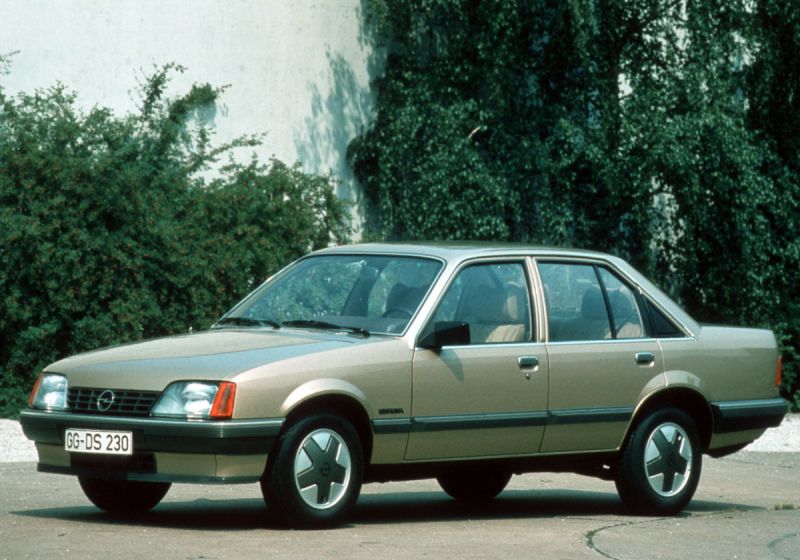
The Opel Rekord E (facelift 1982) 2.0 S (100 Hp) Automatic represents a significant iteration of a long-standing and highly successful European mid-size car series. Produced by the German automaker Opel, a subsidiary of General Motors, the Rekord line was a cornerstone of the European automotive landscape for decades. The E generation, launched in 1977, received a substantial refresh in September 1982, bringing updated styling and mechanical refinements that aimed to keep it competitive in a rapidly evolving market. This particular variant, the 2.0 S with its 100 horsepower engine and automatic transmission, was positioned as a comfortable and practical family sedan, primarily serving markets across Europe and beyond, where it was known for its robust construction and dependable performance. While never officially sold in the United States, the Rekord E played a crucial role in shaping the European perception of a reliable, spacious, and affordable executive-class vehicle, laying the groundwork for future Opel models.
Engine and Performance of the Opel Rekord E (facelift 1982)
At the heart of the Opel Rekord E (facelift 1982) 2.0 S (100 Hp) Automatic lies a robust and well-proven powertrain, engineered for durability and smooth operation rather than outright speed. The engine, designated as the 20S, is a naturally aspirated, inline four-cylinder unit with a displacement of 1,979 cubic centimeters (120.77 cubic inches). This engine employs a Single Overhead Camshaft (SOHC) valvetrain with two valves per cylinder, a common and reliable configuration for the era. Fuel delivery was managed by a carburetor system, typical for early 1980s European vehicles, providing a balance of cost-effectiveness and sufficient performance.
The engine generates a respectable 100 horsepower (Hp) at 5400 revolutions per minute (rpm), translating to a power-per-liter output of 50.5 Hp/l. Torque figures stand at 153 Newton-meters (112.85 pound-feet) delivered at a relatively low 3800 rpm, indicating a flexible engine well-suited for everyday driving and urban conditions. This torque characteristic, combined with a compression ratio of 9:1, provided adequate pulling power across the rev range.
Power was channeled to the rear wheels via a three-speed automatic transmission. While modern automatics boast many more gears, a three-speed unit was standard for a vehicle of this class in the early 1980s, prioritizing smooth shifts and ease of use over ultimate fuel efficiency or blistering acceleration. The Rekord E 2.0 S Automatic could accelerate from 0 to 60 miles per hour in 13.3 seconds, reaching a top speed of 108.74 mph (175 km/h). These figures, while not exhilarating by today’s standards, were competitive for a family sedan in its segment during that period, offering sufficient capability for highway cruising and comfortable commuting across Europe’s diverse road networks. The combined fuel economy was rated at 9.1 liters per 100 kilometers, which translates to approximately 25.8 US miles per gallon, a practical figure for a gasoline-powered car of its size and era.
Design and Features of the Opel Rekord E (facelift 1982)
The Opel Rekord E (facelift 1982) maintained the traditional sedan body style, a popular choice for families and business users in Europe. This particular model featured a four-door configuration, offering easy access to its five-seat interior. The facelift introduced in 1982 brought subtle but effective styling updates. While retaining the Rekord E’s overall boxy, functional aesthetic, the refresh incorporated more modern design cues, including revised front and rear fascias, updated lighting, and improved aerodynamic profiling. The drag coefficient (Cd) of 0.36 was quite respectable for a sedan of its time, contributing to both fuel efficiency and reduced wind noise at higher speeds.
With an overall length of 183.15 inches (4652 mm), a width of 67.95 inches (1726 mm), and a height of 55.91 inches (1420 mm), the Rekord E offered substantial interior space for its class. The wheelbase measured 105.04 inches (2668 mm), contributing to a stable ride and generous legroom for passengers. The trunk capacity was a significant selling point, offering a minimum of 17.3 cubic feet (490 liters) of cargo space, making it highly practical for family vacations or professional use. The fuel tank capacity of 17.17 US gallons (65 liters) provided a decent cruising range.
Inside, the Rekord E featured a straightforward and ergonomic dashboard layout, prioritizing functionality and durability. While lacking the advanced electronics of modern vehicles, it provided essential instrumentation and controls within easy reach. Materials were robust, designed to withstand years of use. Safety features for the era included ventilated disc brakes at the front, offering improved stopping power and fade resistance compared to solid discs, coupled with drum brakes at the rear, a common setup for mid-range sedans of the early 1980s. The car’s kerb weight of 2502.25 pounds (1135 kg) contributed to a solid feel on the road, while its maximum permitted load of 1212.54 pounds (550 kg) underscored its utility as a family workhorse.
Technical Specifications for the Opel Rekord E (facelift 1982) 2.0 S (100 Hp) Automatic
| Category | Specification |
|---|---|
| General Information | |
| Brand | Opel |
| Model | Rekord E (facelift 1982) |
| Type (Engine) | 2.0 S (100 Hp) Automatic |
| Start of Production | September, 1982 |
| End of Production | August, 1984 |
| Body type | Sedan |
| Seats | 5 |
| Doors | 4 |
| Powertrain Architecture | Internal Combustion engine |
| Performance Specs | |
| Fuel Consumption (Combined) | 9.1 l/100 km (25.8 US mpg / 31 UK mpg) |
| Fuel Type | Petrol (Gasoline) |
| Acceleration 0-60 mph | 13.3 seconds |
| Acceleration 0-100 km/h | 14 seconds |
| Maximum Speed | 175 km/h (108.74 mph) |
| Weight-to-power ratio | 11.4 kg/Hp (88.1 Hp/tonne) |
| Weight-to-torque ratio | 7.4 kg/Nm (134.8 Nm/tonne) |
| Engine Specs | |
| Power | 100 Hp @ 5400 rpm |
| Power per liter | 50.5 Hp/l |
| Torque | 153 Nm @ 3800 rpm (112.85 lb.-ft. @ 3800 rpm) |
| Engine Model/Code | 20S |
| Engine Displacement | 1979 cm3 (120.77 cu. in.) |
| Number of Cylinders | 4 |
| Engine Configuration | Inline |
| Cylinder Bore | 95 mm (3.74 in.) |
| Piston Stroke | 69.8 mm (2.75 in.) |
| Compression Ratio | 9:1 |
| Valves per Cylinder | 2 |
| Fuel Injection System | Carburetor |
| Engine Aspiration | Naturally aspirated |
| Valvetrain | SOHC |
| Engine Oil Capacity | 3.8 l (4.02 US qt) |
| Engine Oil Specification | Not specified in data |
| Coolant Capacity | 6.1 l (6.45 US qt) |
| Space, Volume and Weights | |
| Kerb Weight | 1135 kg (2502.25 lbs.) |
| Max. Weight | 1685 kg (3714.79 lbs.) |
| Max Load | 550 kg (1212.54 lbs.) |
| Trunk (boot) space – minimum | 490 l (17.3 cu. ft.) |
| Fuel Tank Capacity | 65 l (17.17 US gal) |
| Permitted trailer load with brakes (12%) | 1250 kg (2755.78 lbs.) |
| Dimensions | |
| Length | 4652 mm (183.15 in.) |
| Width | 1726 mm (67.95 in.) |
| Height | 1420 mm (55.91 in.) |
| Wheelbase | 2668 mm (105.04 in.) |
| Front Track | 1435 mm (56.5 in.) |
| Rear (Back) Track | 1412 mm (55.59 in.) |
| Ride Height (Ground Clearance) | 140 mm (5.51 in.) |
| Drag Coefficient (Cd) | 0.36 |
| Minimum Turning Circle (Turning Diameter) | 10.8 m (35.43 ft.) |
| Drivetrain, Brakes and Suspension Specs | |
| Drivetrain Architecture | Rear wheel drive |
| Drive Wheel | Rear wheel drive |
| Number of gears and type of gearbox | 3 gears, automatic transmission |
| Front Brakes | Ventilated discs |
| Rear Brakes | Drum |
Legacy and Market Impact
The Opel Rekord E, particularly its facelifted version from 1982 to 1984, held a significant position in the European automotive market. It was a staple choice for families, sales representatives, and even taxi services across Germany and other European nations, renowned for its reliability, spaciousness, and relatively low running costs. The 2.0 S variant with the automatic transmission, while not the most powerful or fuel-efficient in the Rekord lineup, offered a comfortable and effortless driving experience, appealing to those who valued convenience in urban and highway environments.
In its competitive landscape, the Opel Rekord E faced strong rivals such as the Ford Sierra, which debuted in 1982 with a more radical aerodynamic design, the Volkswagen Passat (known as the Quantum in some markets), and French competitors like the Renault 20/25. It also contended with more premium offerings from Volvo (e.g., the 240 series) and entry-level models from Mercedes-Benz and BMW. Despite the increased competition and changing design trends, the Rekord E maintained its market share by offering a compelling package of traditional German engineering, practicality, and value.
The Rekord series itself has a long and storied history, dating back to the 1950s, evolving through various generations to meet the changing demands of the European consumer. The E generation, including the 1982 facelift, marked a period of transition for Opel, as it navigated increasing demands for fuel efficiency, improved aerodynamics, and enhanced safety features. While the 2.0 S Automatic might seem rudimentary by today’s standards, it embodied the state-of-the-art for mass-market family transportation in the early 1980s.
The production of the Rekord E concluded in August 1984, making way for its successor, the Opel Omega (Vauxhall Carlton in the UK). The Omega built upon the Rekord’s legacy, bringing further advancements in design, technology, and performance, cementing Opel’s position in the mid-size executive segment. Today, the Opel Rekord E is remembered as a classic European workhorse, a testament to practical design and robust engineering that served millions of drivers faithfully for decades.